

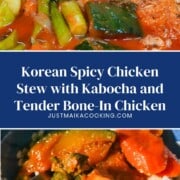
This Korean spicy chicken stew starts with golden-seared chicken and vegetables sautéed in the flavorful browned bits left in the pot. My Korean-inspired dakbokkeumtang recipe adds large chunks of kabocha and optional yu choy sum to a savory, slightly sweet gochujang braise that goes perfectly with white rice.
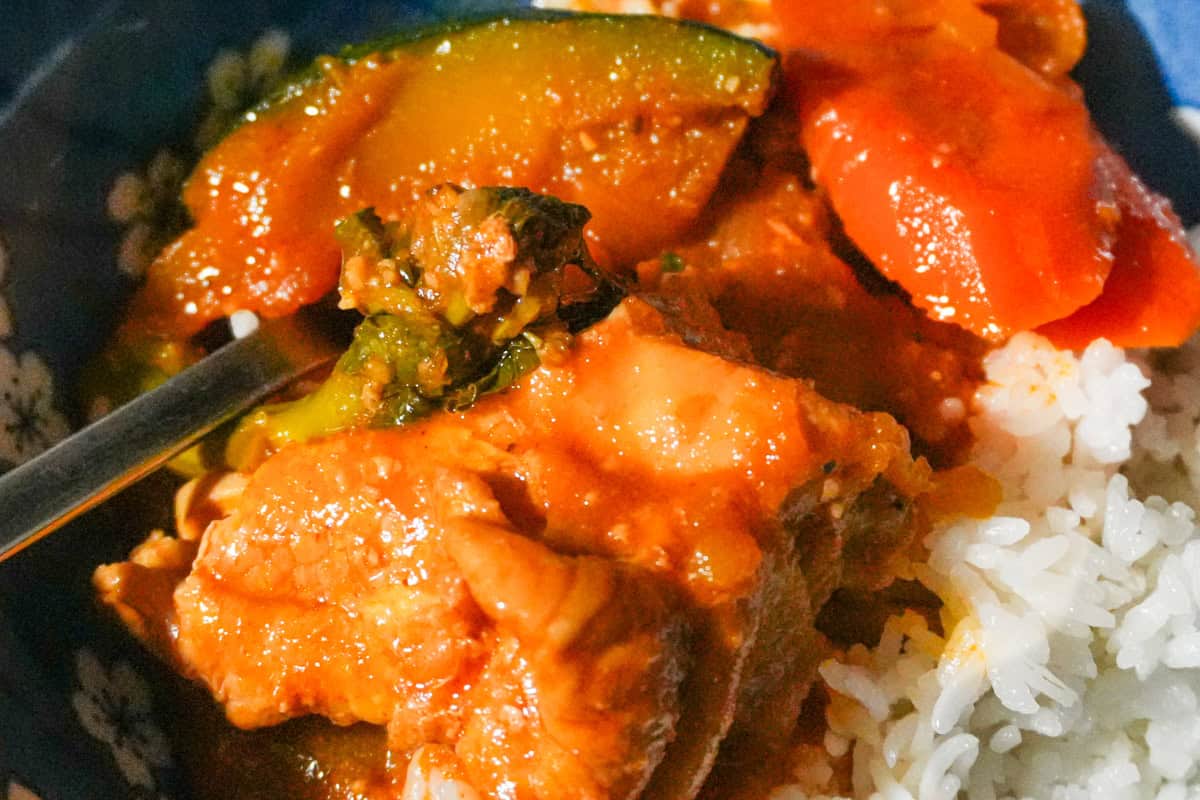
Table of Contents
Jump to:
- Golden-Seared Chicken Meets Sweet Kabocha
- Why You'll Love This Recipe
- Ingredients with Steps
- Culinary Glossary
- Instructions with Pictures
- Equipment You'll Need (With Alternatives)
- Kitchen Tools I Use and Recommend
- Storage and Reheating
- Substitutions
- Variations
- 5 Quick Cooking Tips
- Frequently Asked Questions
- More Comforting Recipes
- Cooking Tips and Tutorials
- 📖 Recipe
- Have a Comment or Question?
Golden-Seared Chicken Meets Sweet Kabocha
My version of the Korean spicy braised chicken starts by building flavor in a Dutch oven. First, sear the seasoned chicken, leaving a golden-brown fond that becomes part of the sauce as the onions, scallions, and cooking liquid loosen it from the bottom. Gochujang, gochugaru, Korean garlic and ginger pastes, soy sauce, oyster sauce, and blue agave syrup make a spicy sauce with savory depth and a little sweetness. Add the kabocha toward the end so it softens without disappearing into the stew. The finished sauce is loose enough to spoon over a bowl of rice, making this a satisfying dinner for cold weather or any evening you want something hearty.
Why You'll Love This Recipe
- Flavor from the first step: Searing the chicken creates golden-brown bits that enrich the braising sauce. Learn more: Cooking Tips for Searing Chicken.
- Hearty comfort food: Bone-in chicken, carrots, and kabocha make a filling meal alongside white rice. Find more comfort food recipes.
- Sweet-and-spicy balance: The squash and agave complement the spicy gochujang sauce.
- Flexible chicken options: Use a whole chicken cut into pieces, thighs, drumsticks, whole wings, or a combination. Learn How to Cut Up a Whole Chicken | Step-by-Step Guide.
- Optional leafy greens: Add yu choy sum near the end for tender stems and leaves without a separate vegetable dish.
Note From Chef Maika
To me, this is a stick-to-your-ribs kind of comfort meal. I use a whole chicken cut into pieces, sear it until golden brown, and use that fond to build flavor in the vegetables and sauce. I like jarred Korean garlic and ginger pastes for convenience and blue agave syrup because it mixes easily into the sauce. The large chunks of kabocha finish cooking with the chicken, and sometimes I add yu choy sum. I often leave the greens whole, then cut them with kitchen shears once the stew is finished. White rice is my favorite way to enjoy all that sauce.
Recommended Reads
Ingredients with Steps
Season the chicken with salt and black pepper, sear it in hot cooking oil, then transfer it to a plate. Sauté the onion and scallions (green onion) in the same pot, then add the carrots. Mix gochujang, gochugaru, Korean garlic paste, Korean ginger paste, soy sauce, oyster sauce, blue agave syrup, and black pepper. Return the seared chicken to the vegetables, spoon over the sauce, and add water or chicken broth. Cover and simmer, adding kabocha and yu choy sum toward the end. Adjust the sauce consistency, and then serve with white rice.
Culinary Glossary
This section provides concise definitions of key ingredients and techniques to help you understand and improve your cooking skills for this post. Find More Terms: Culinary Glossary.
Ingredients
- Gochujang: Korean fermented red pepper paste that contributes chili heat, sweetness, and savory flavor. This chili paste is used in this sauce.
- Gochugaru: Korean red pepper flakes, also called Korean chili flakes, that add heat and red color.
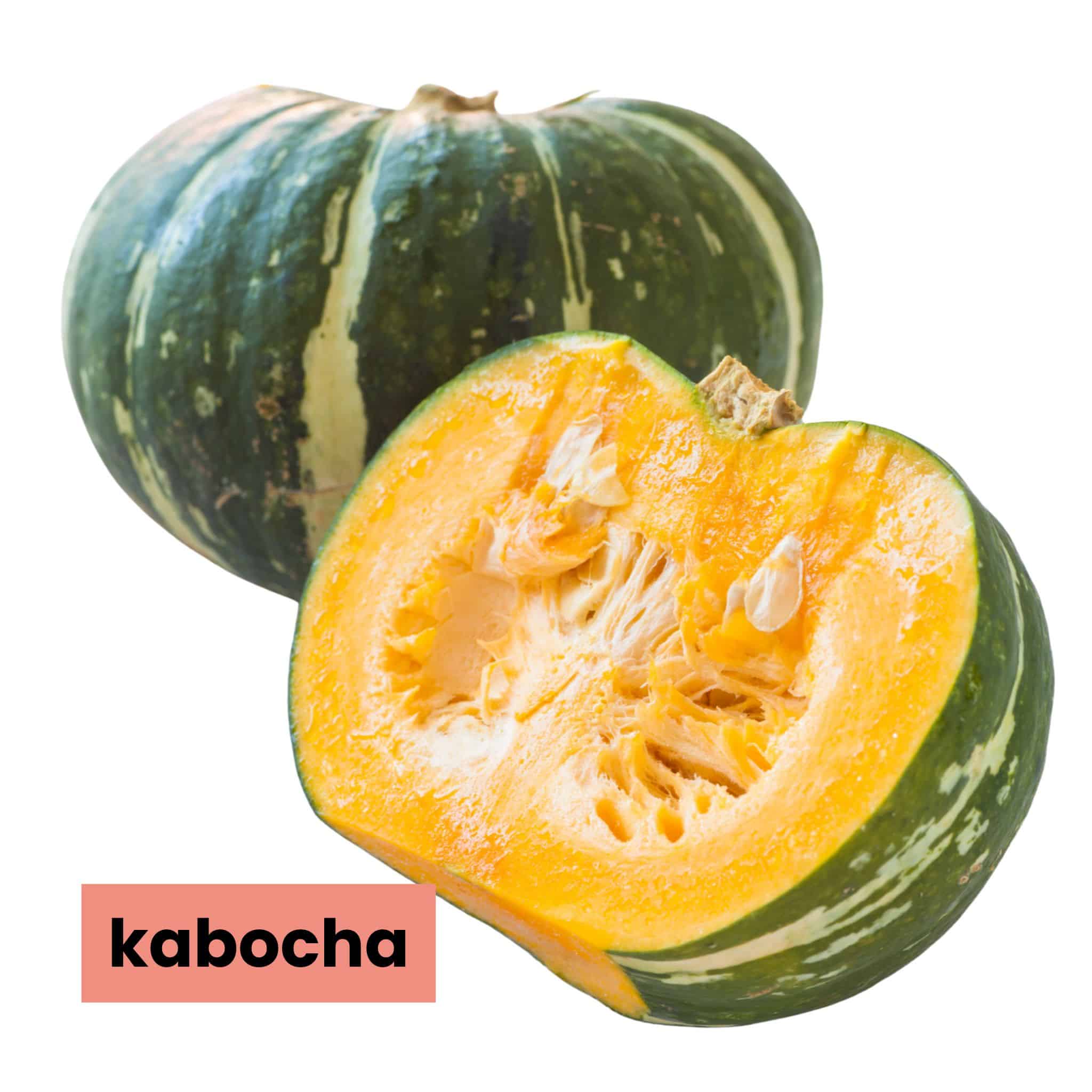
- Kabocha: A winter squash with dense flesh that becomes tender and naturally sweet when cooked.
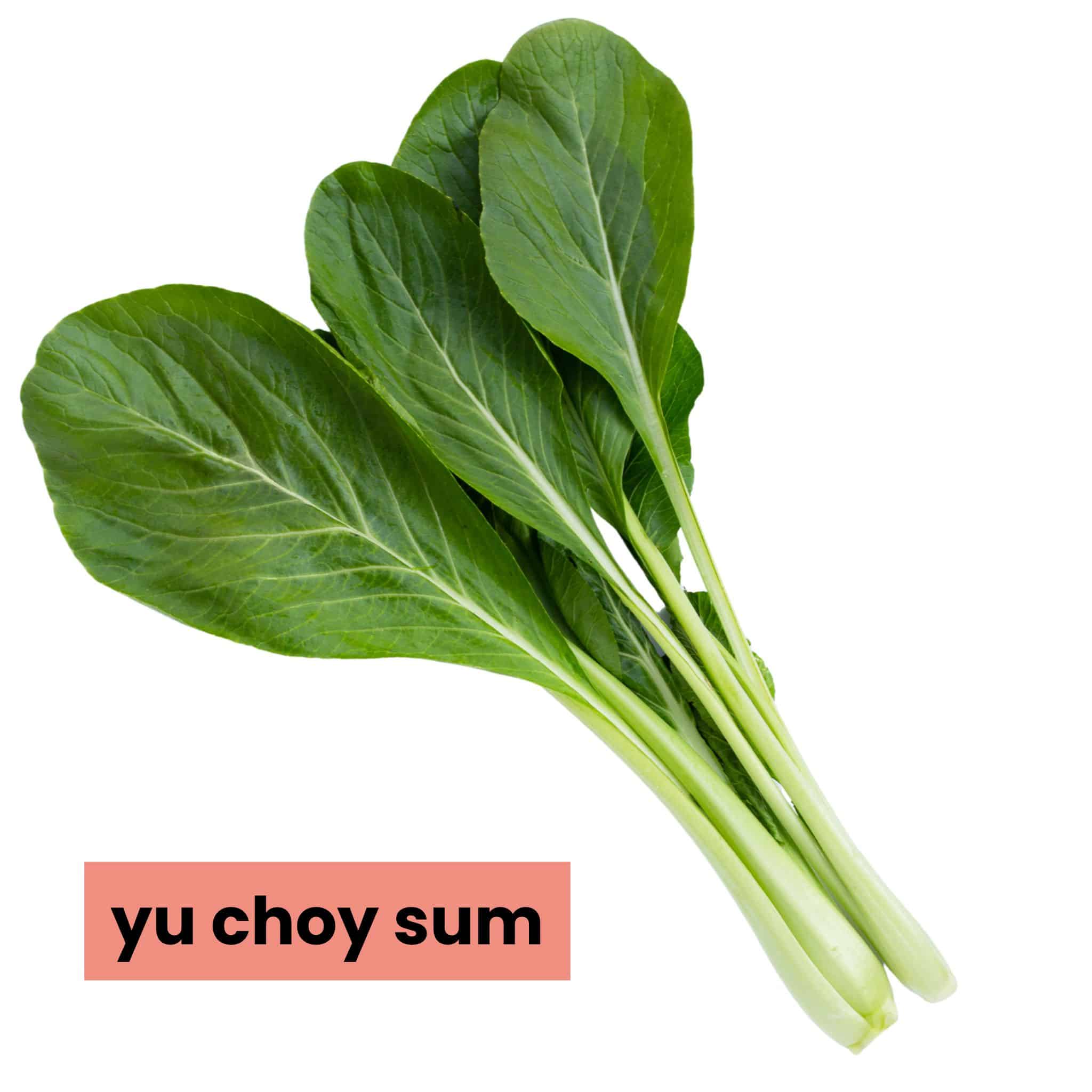
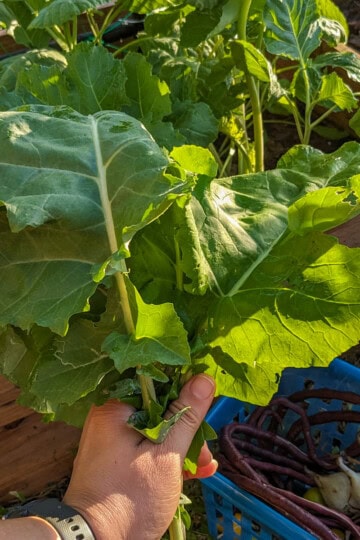
- Yu choy sum: A leafy green vegetable with edible stems, leaves, and sometimes small yellow flowers.
- Korean garlic and ginger pastes: Jarred garlic and ginger preparations you can stir directly into the sauce without extra mincing.
- Scallions: Also called green onions, these add a fresh onion flavor near the end of cooking.
- Oyster sauce: A savory condiment made with oyster extracts that can add depth to the sauce.
Techniques
- Searing: Browning the surface of food in a hot pan to develop flavor.
- Fond: The browned bits left on the bottom of the pot after searing.
- Deglazing: Adding liquid and scraping gently to release fond into a sauce.
- Braising: Gently cooking food with liquid in a covered pot until tender.
- Reducing: Simmering uncovered to evaporate liquid and concentrate the sauce.
Instructions with Pictures
Follow the instructions and cooking tips below using the step-by-step picture guide.
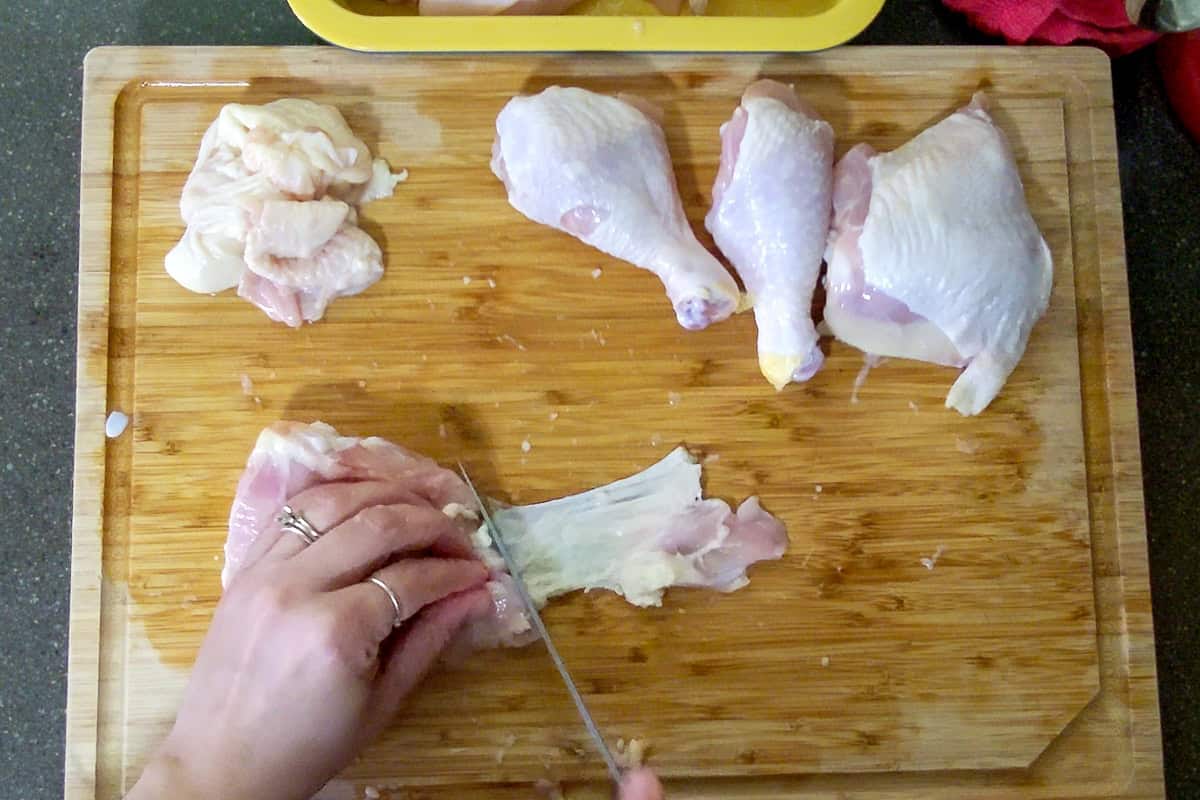
Prepare and Season the Chicken.
Pat the bone-in chicken pieces dry, then season with salt and black pepper. If using a whole chicken, cut it into serving pieces or ask your butcher to do this.
Prepare the onion, scallions, carrots, and kabocha. Keep the squash separate for later. Wash the optional yu choy sum thoroughly and trim tough ends. Separate thick stems from leafy portions if needed.
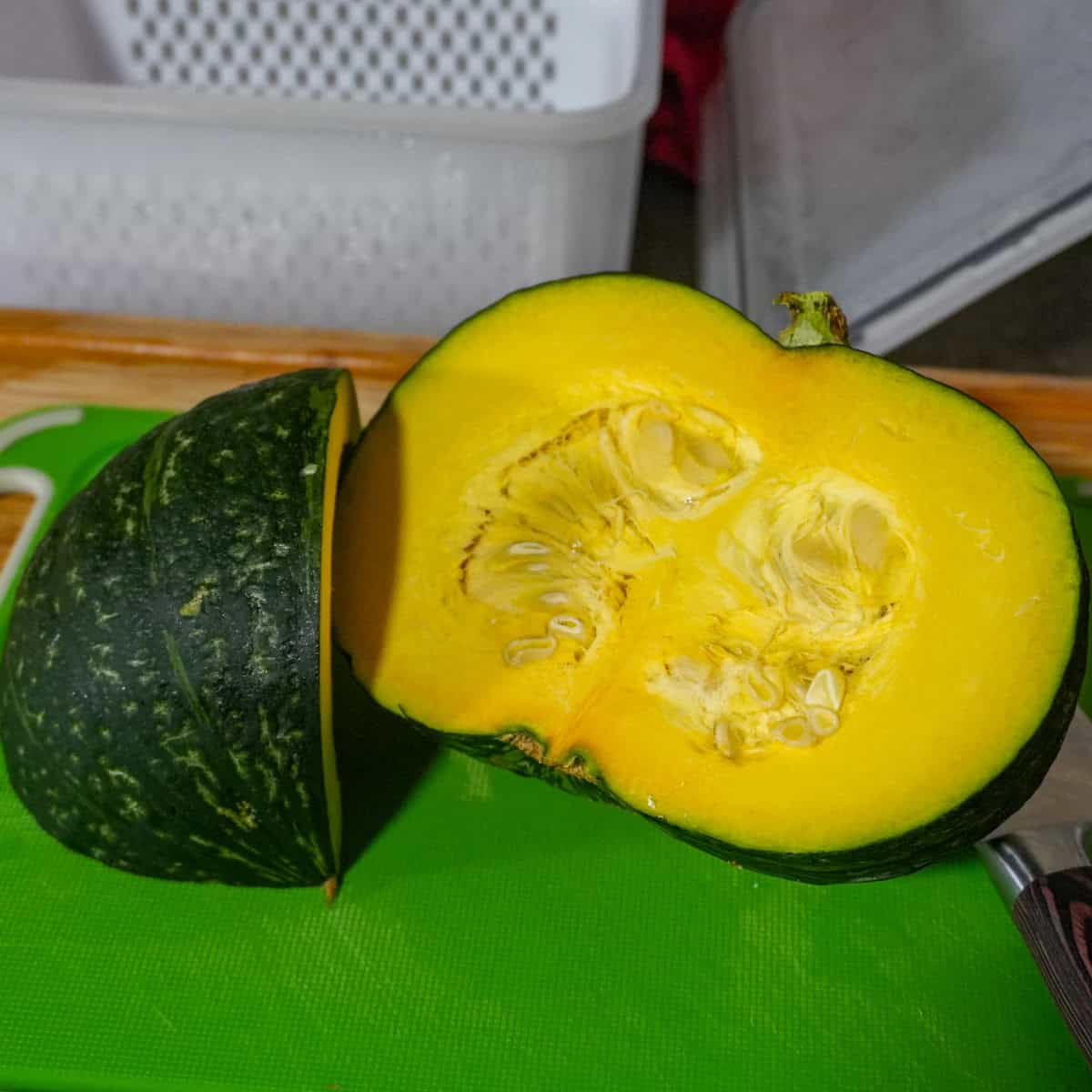
Remove the kabocha seeds and cut the squash into large chunks.
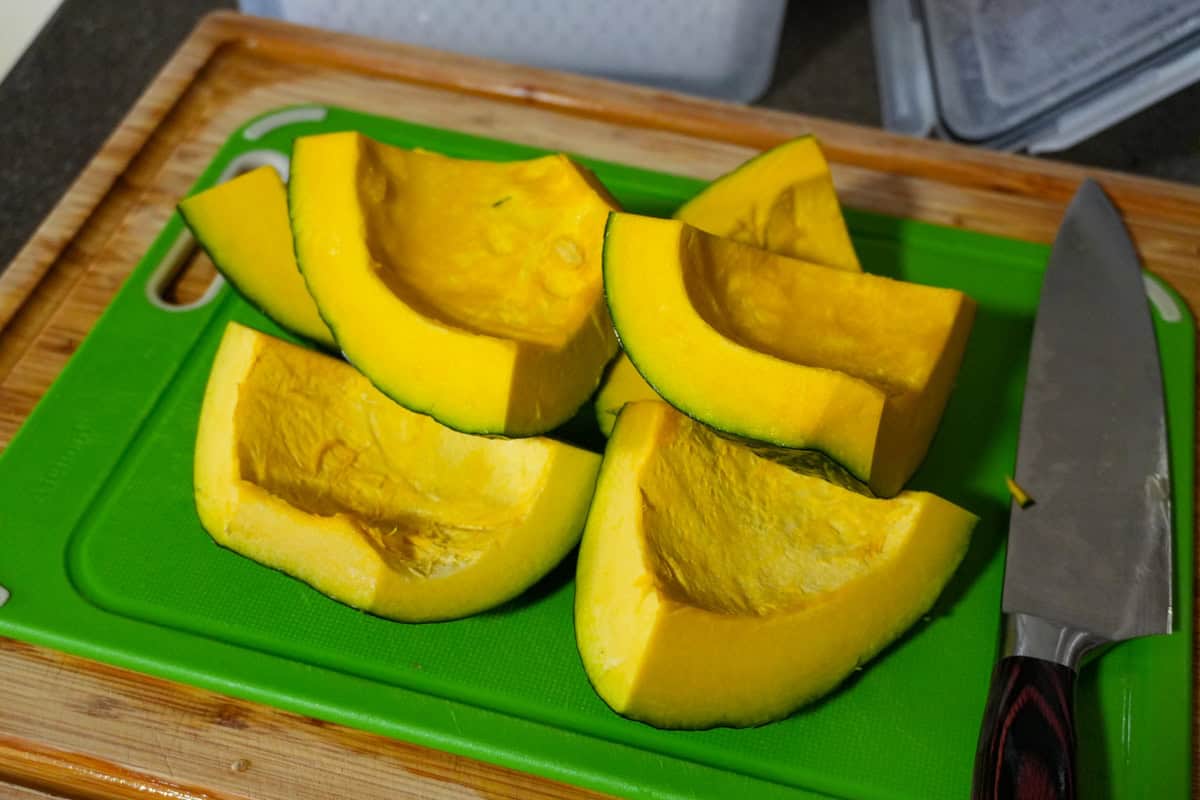
Keep it separate from the other vegetables so you can add it later.
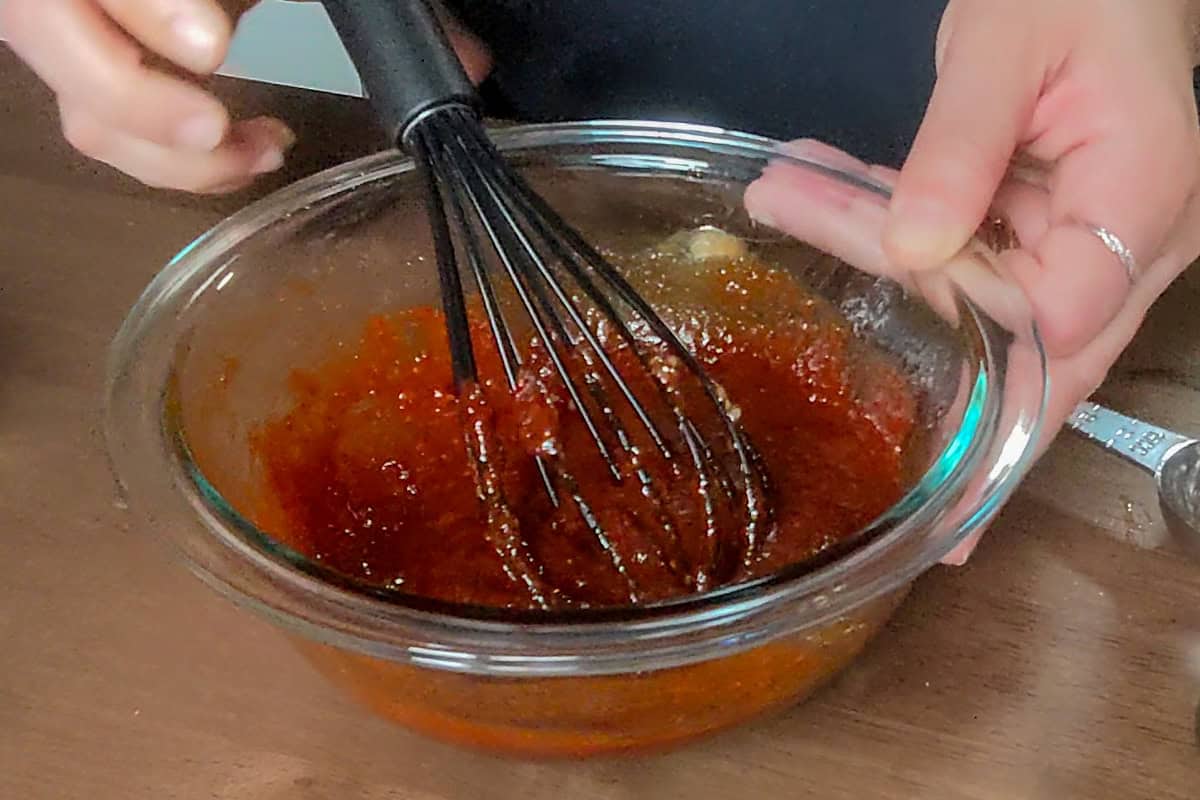
Get glass mixing bowls and silicone whisks.
Mix the Braising Sauce.
In a small bowl, mix the gochujang, gochugaru, jarred Korean garlic paste, Korean ginger paste, soy sauce, oyster sauce, blue agave syrup, and black pepper.
You can replace the agave with Korean corn syrup, brown sugar, or white sugar. Stir until the sauce is combined, dissolving as much granulated sugar as possible.
Find gochujang and gochugaru at Korean markets, Asian grocery stores, or in the international aisle of some supermarkets.
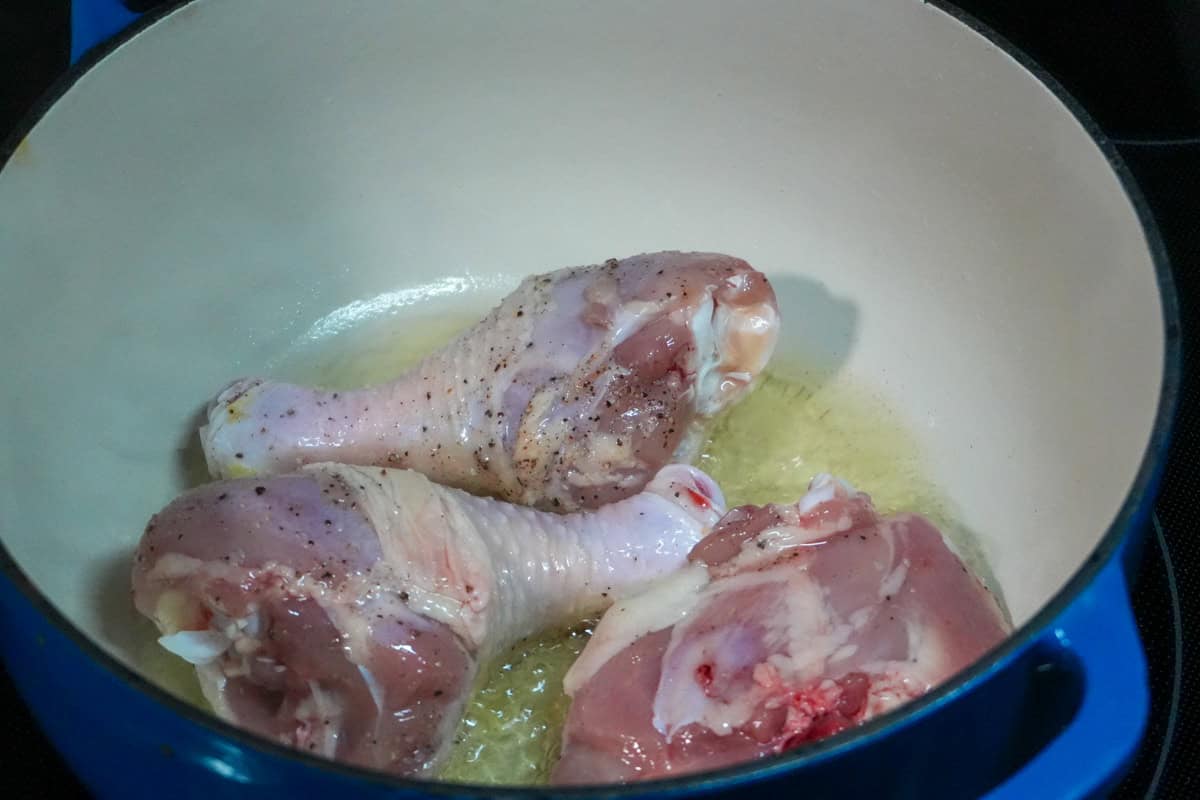
Sear Until Golden Brown. Heat the cooking oil in a Dutch oven over medium-high heat. Sear the chicken in batches until golden brown on all sides, then transfer it to a plate.
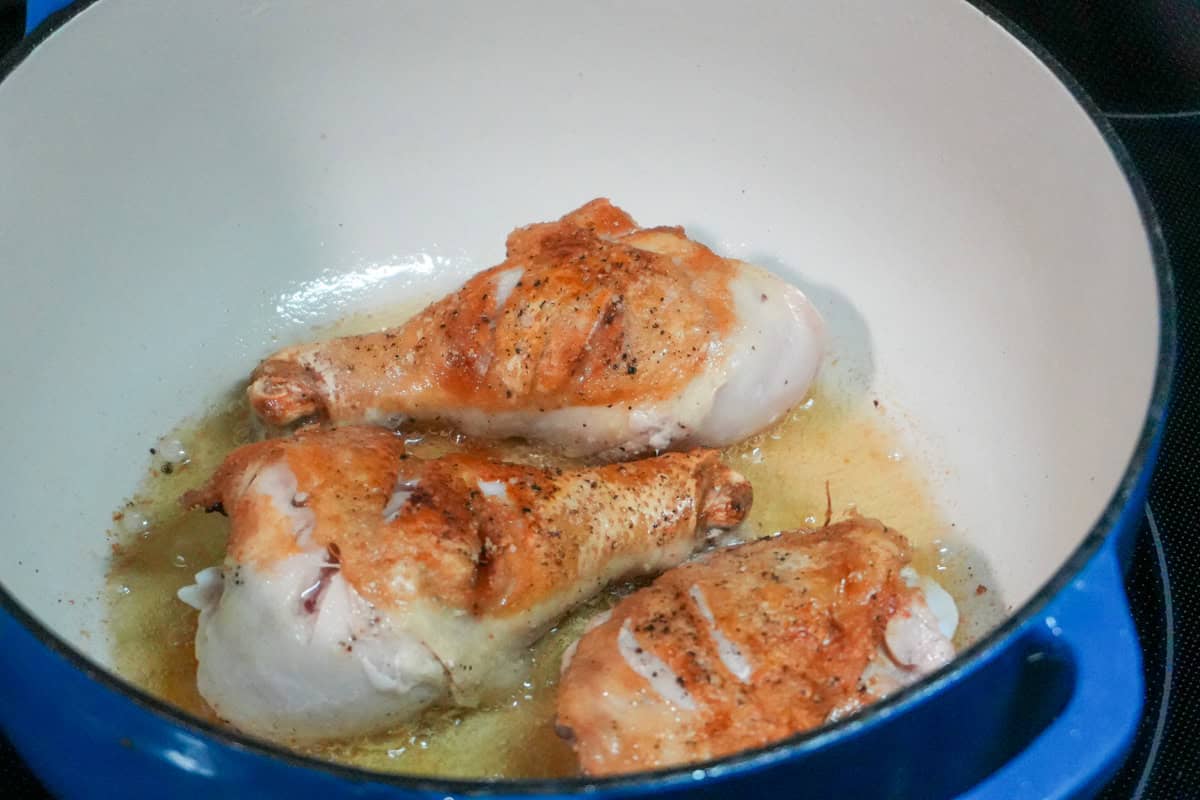
Leave space between pieces and let them brown before turning. The chicken is not fully cooked yet. Leave the golden-brown fond in the pot, but lower the heat if it starts getting too dark.
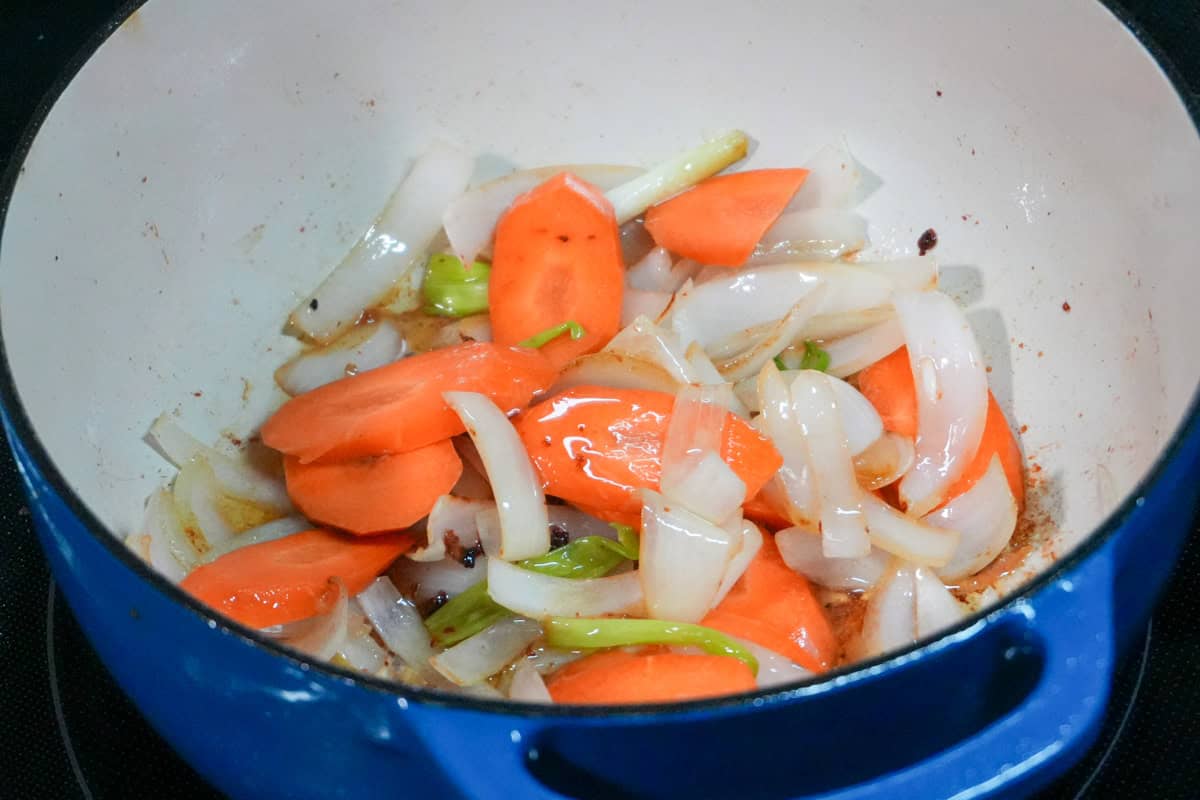
The vegetables release moisture that helps loosen the fond. If the bottom is becoming too dark or dry, add a splash of the cooking liquid and scrape gently with a wooden spoon.
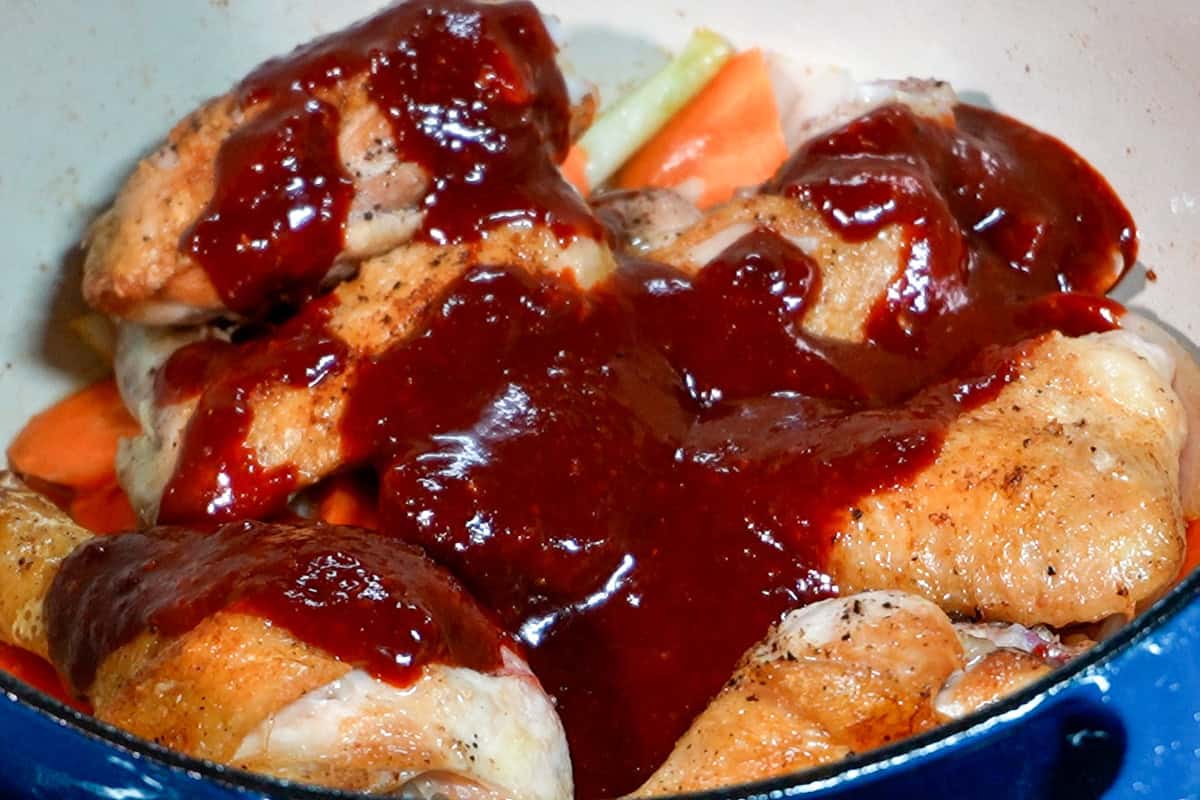
Return the Chicken and Start Braising. Arrange the seared chicken over the vegetables and add any juices from the plate. Spoon the sauce over the chicken, then pour in the water or low-sodium chicken broth.
Gently loosen the remaining fond. Bring to a simmer, cover, and reduce the heat to maintain gentle bubbling. Begin checking the chicken after about 15-20 minutes; the exact timing depends on the size of the pieces.
Keep enough liquid in the pot to prevent scorching. The chicken does not need to be completely submerged.
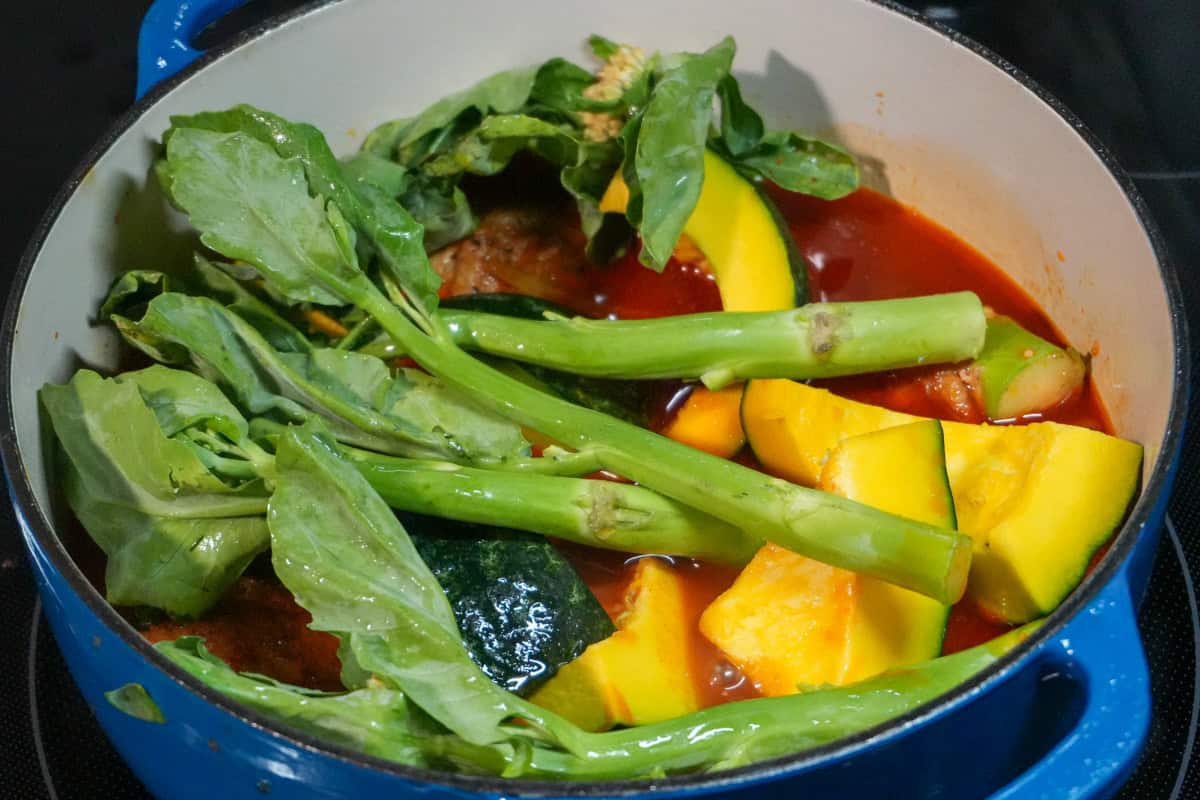
Add the Kabocha and Thick Stems. When the chicken is nearly cooked through, nestle the large kabocha chunks and yu choy sum stems into the sauce. Cover and continue simmering until tender, allowing roughly 15-20 minutes for large squash chunks and checking as they cook.
Turn the squash gently if necessary. If any chicken pieces finish before the squash, remove them temporarily and return them at the end.
(Optional)Finish with the Leafy Greens. Add the yu choy sum leaves during the final few minutes instead and cover until wilted and tender.
For slender yu choy sum, leave it whole and add it near the end, nestling the stems into the sauce. Check for tenderness rather than giving delicate leaves the full squash cooking time.

Chef Maika's Tip: Remember, the greens and squash will create their own liquid during cooking; keep this in mind when adding more broth or water.
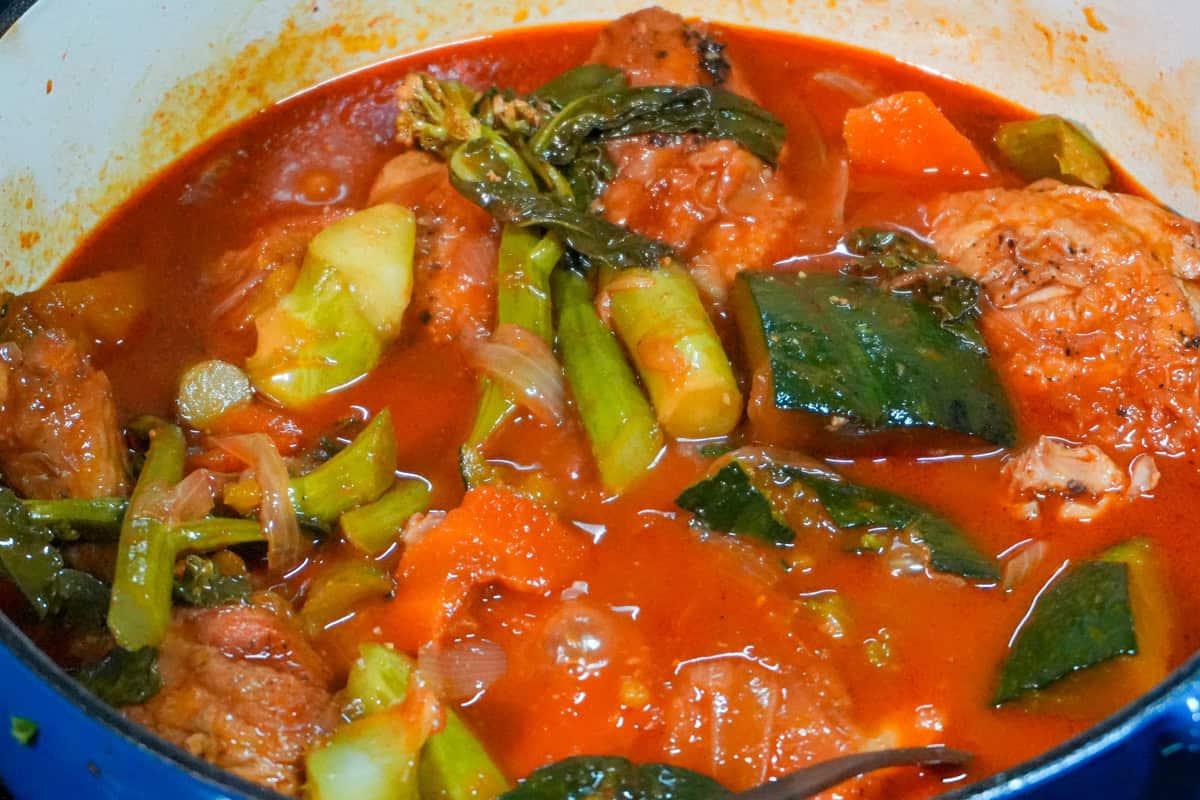
Adjust the Sauce and Serve. Check that every chicken piece reaches at least 165°F in the thickest part, away from the bone. If needed, simmer uncovered briefly to reduce the sauce. Aim for a spoonable stew consistency with enough sauce for rice.
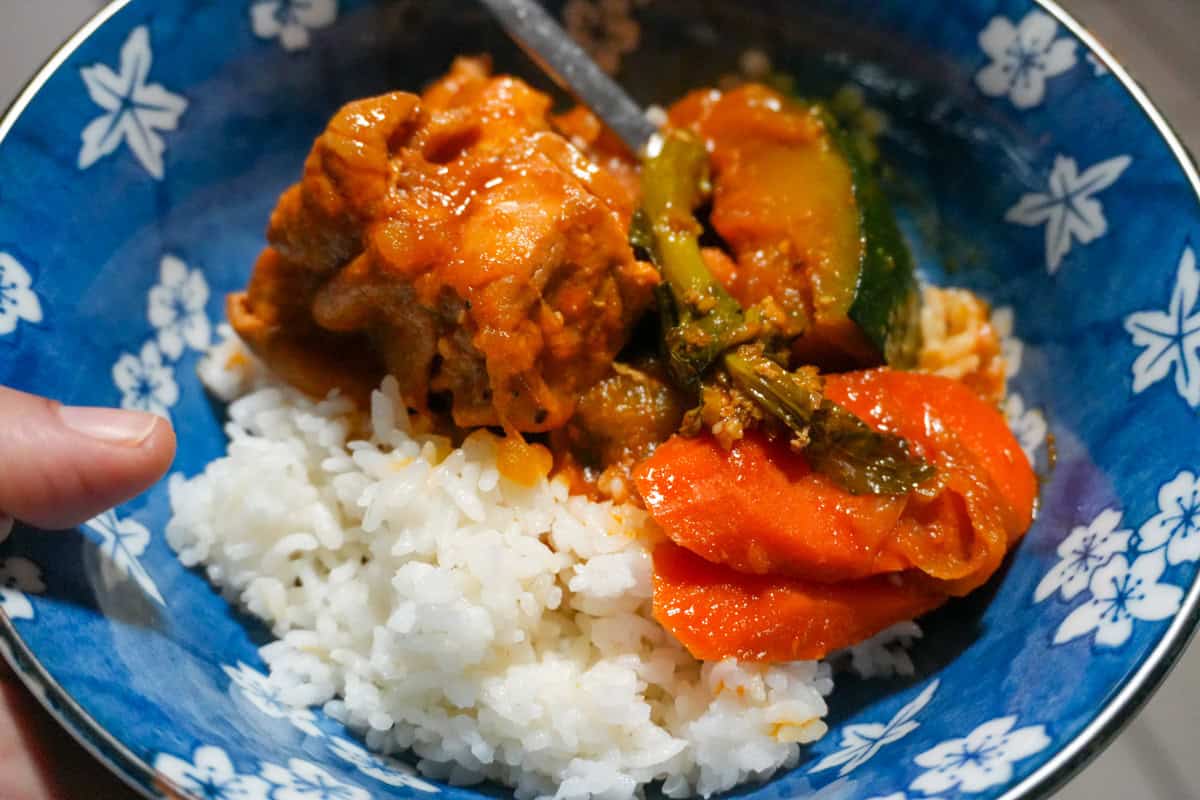
Turn off the heat, taste, and adjust the seasoning. Use tongs and clean kitchen shears to cut whole cooked greens into bite-size pieces. Serve with white rice.
Equipment You'll Need (With Alternatives)
Here's what you'll need to be efficient, plus easy swaps if you don't have everything on hand.
- Dutch oven with a lid: Sear and braise in the same pot (a heavy, lidded pot with a wide base).
- Chef's knife and cutting board: Prepare the vegetables and chicken (buy pre-cut chicken to simplify preparation).
- Small bowl and spoon: Combine the sauce (a measuring jug and fork).
- Measuring cups and spoons: Measure the sauce ingredients and braising liquid.
- Tongs and a plate: Turn and temporarily hold the seared chicken.
- Wooden spoon: Stir vegetables and loosen fond (a heat-safe spatula suitable for your pot).
- Kitchen shears: Cut whole cooked greens (a knife and clean cutting board).
- Food thermometer: Check chicken doneness.
- Rice cooker: Prepare the rice alongside the stew (or use a saucepan with a fitted lid).
Kitchen Tools I Use and Recommend
These are some of the kitchen tools I personally use that make cooking faster and easier. If you're building your kitchen setup or upgrading your tools, these are great places to start. More Kitchen Must-Haves - Find other tools I use here.
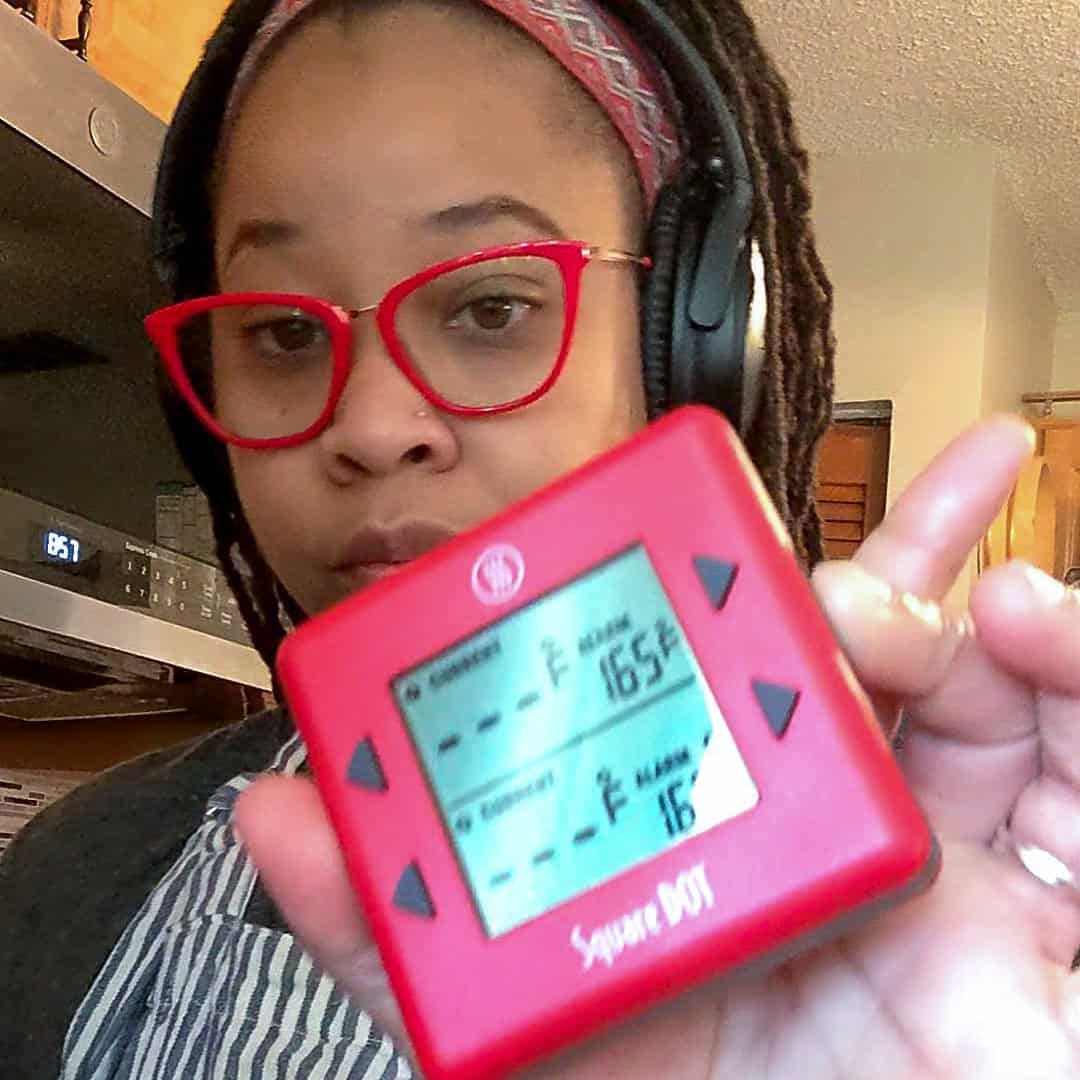
My Review: I finally used the ThermoWorks Square Dot®, and it's as great as my colleagues said. It's precise and easy to use, and America's Test Kitchen recommends it. ThermoWorks even provides helpful care and usage guides, so it earns a 5 out of 5 from me. The Square Dot® offers dual-temperature tracking and a clear display, making it easy to monitor both food and oven temperatures for accurate cooking.
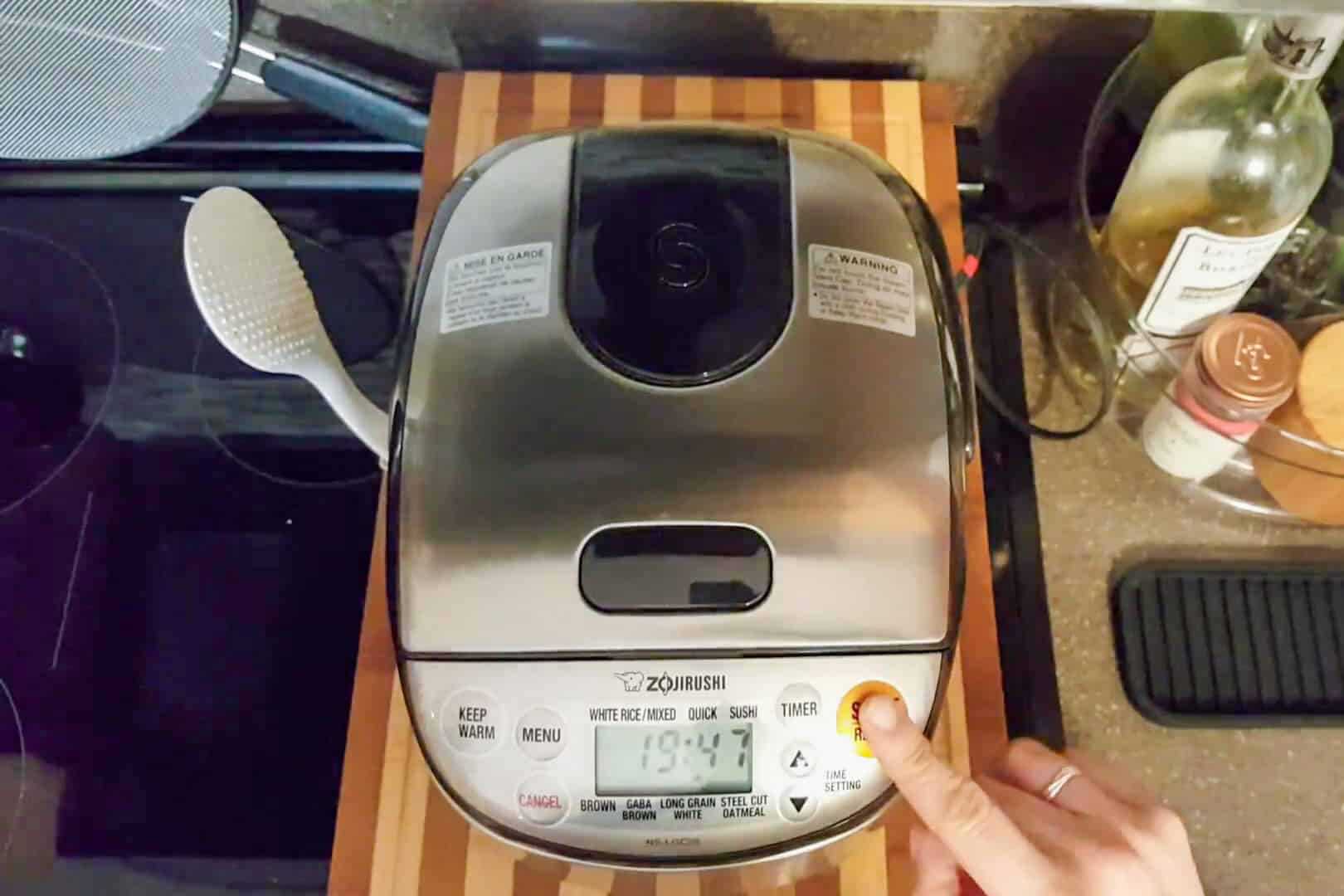
My Review: I absolutely love my Zojirushi NS-LGC05XB Micom Rice Cooker & Warmer. It’s hands down one of my favorite kitchen appliances. What really sold me is how precise it is; every batch of rice or quinoa comes out perfectly fluffy and evenly cooked, no guesswork needed. I also appreciate the variety of settings it offers, whether I’m making brown rice, multigrain rice, white rice, sushi rice, or even quick-cooking something simple, it handles it effortlessly. And let’s not forget the charming little songs it plays when it starts and finishes such a fun, quirky touch that always makes me smile while cooking.
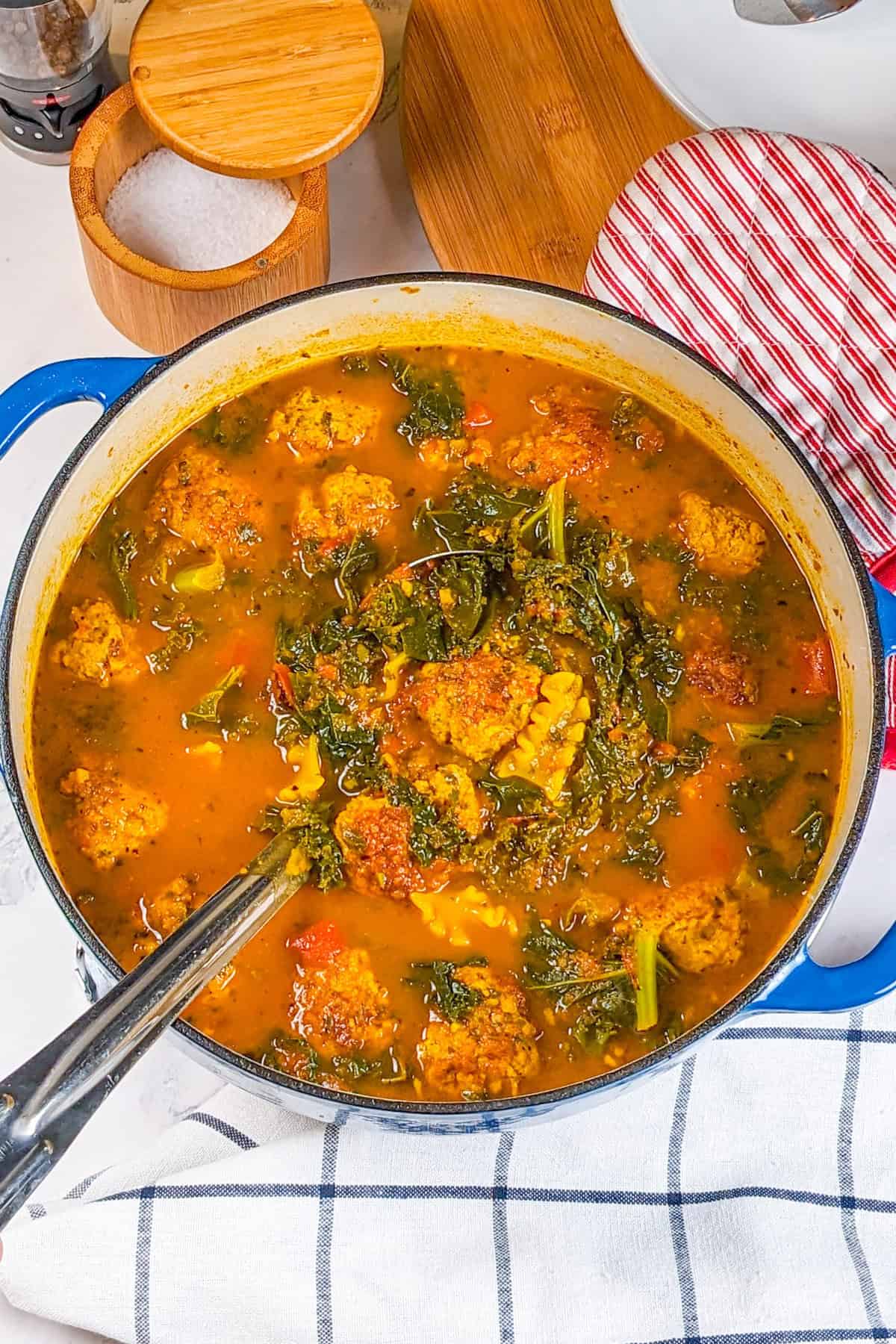
My Review: Lodge Cast Iron has been a family-owned company in South Pittsburg, Tennessee, for 125 years. Their cookware, known for its dependability, is made of rugged, seasoned cast iron for excellent heat retention and durability. This is still my go-to Dutch oven. You'll find it in a lot of my recent videos. It's heavy, durable, non-stick, and it holds heat well. Also, a big lesson: never preheat an enameled Dutch oven without oil. This will crack the enamel. I learned this the hard way.
My Review: If you're looking for the best versatile tool in the kitchen, the Korean Barbecue Shears are the perfect choice. These stainless steel scissors are built to last, durable, and ready to tackle raw and cooked foods with ease. Inspired by Koreans who use kitchen shears to cut scallions, pork belly, and meats over the pot or grill without a cutting board, I bought these for their practicality. They've become essential for portioning ribs, trimming meats, or prepping veggies, thanks to their sharp, long, serrated blades. If you haven’t tried proper kitchen shears, start with these!

My Review: The PAUDIN 8-inch Chef's Knife is an absolute standout in both sharpness and craftsmanship. It stays incredibly sharp through regular use, making prep work effortless. The high-carbon stainless steel blade showcases PAUDIN’s attention to detail, while the ergonomic handle provides a comfortable grip for extended use. Despite its premium feel, this knife is impressively affordable, offering exceptional quality without the high price tag. That’s why I’ve recently switched all my knives to PAUDIN—they truly deliver on durability, beauty, and performance. If you want a reliable, well-crafted knife at a great value, this is the one to get!

My Review: I love the clean, classic look of this Pyrex 3-piece glass mixing bowl set. It’s a staple in my kitchen. Pyrex is known for its durability, and these bowls definitely live up to that reputation. I use them for everything from mixing batters to storing leftovers, and their microwave-safe feature makes them super multifunctional. They’re also easy to clean and stack nicely in the cabinet. The only reason this isn’t a five-star for me is that I always have that little fear of breaking them when I’m using or storing them, even though they’re made to last.
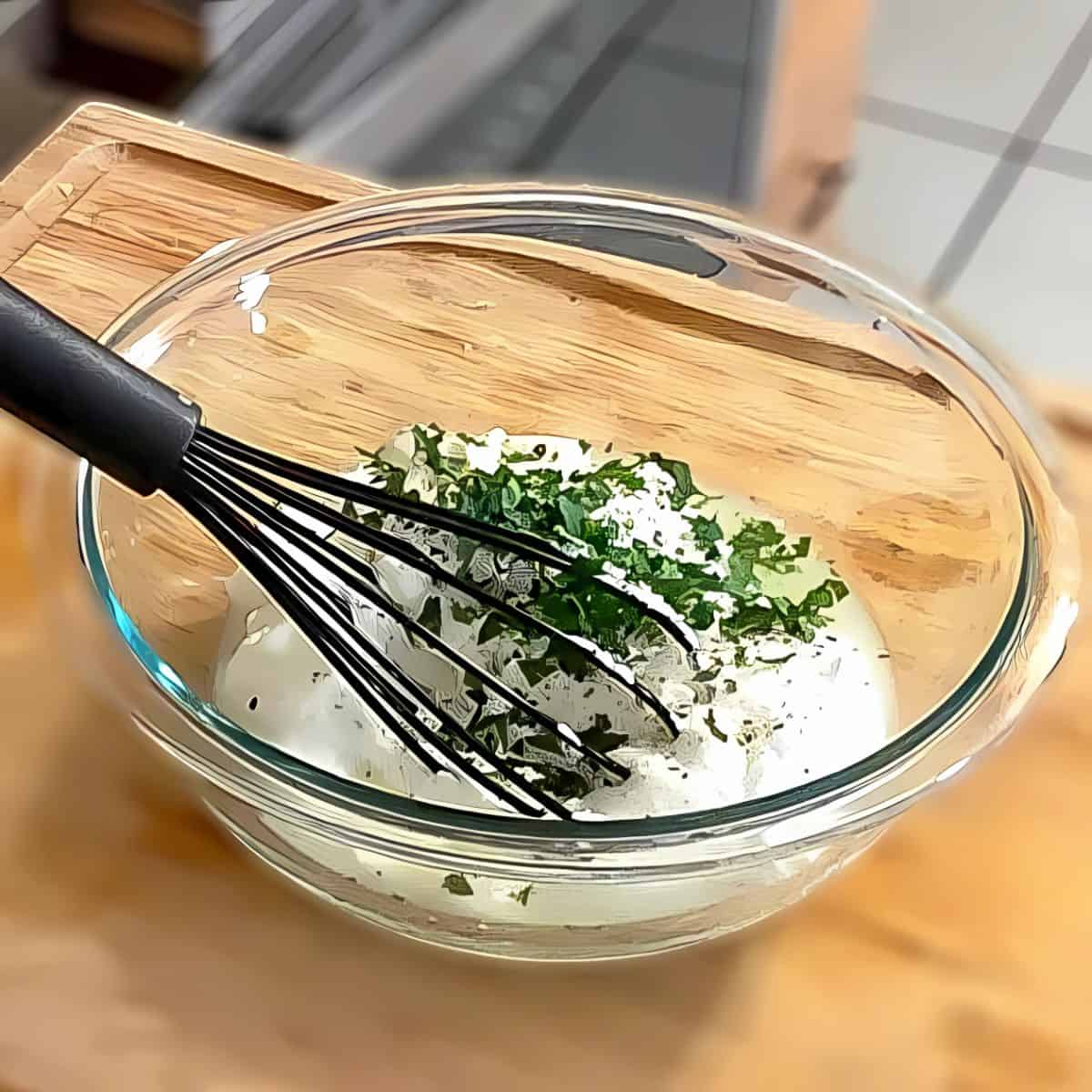
My Review: First of all, I love the look of these Walfos silicone whisks. The sleek design instantly caught my eye. They’re sturdy, heat-resistant, and perfect for mixing in non-stick pans without scratching. A dependable, stylish set that gets regular use in my kitchen.
Storage and Reheating
Learn how to properly store leftovers and reheat them to keep them fresh and flavorful. Learn more about Understanding Food Temperature Safety Zones: Cook, Store & Serve Safely.
- Refrigerate: Divide into shallow containers and refrigerate within two hours, or one hour when the surrounding temperature exceeds 90°F. Do not leave the entire pot out to cool. Keep at 40°F or below and use within 3-4 days.
- Freeze: Freeze portions in freezer-safe containers for up to 3-4 months for best quality. Kabocha and greens will soften after thawing. Store rice separately.
- Reheat: Thaw in the refrigerator. Add a splash of water or broth and reheat on the stove, bringing the sauce to a boil and checking that the food reaches 165°F throughout. Stir gently to preserve the squash. For microwave reheating, cover with a vented lid, stir or turn between intervals, and check several spots.
Substitutions
Find easy ingredient swaps to fit dietary needs or what you already have in your pantry.
Dairy Free
This recipe is dairy-free as written.
Gluten-Free
- Soy sauce: Regular soy sauce commonly contains wheat. Use gluten-free tamari.
- Gochujang: Some varieties contain wheat or barley. Choose a gluten-free version.
- Oyster sauce: Some versions contain wheat-based ingredients. Substitute gluten-free oyster sauce.
Vegetarian
This chicken stew is not vegetarian. A vegetarian adaptation would require replacing the chicken, oyster sauce, and chicken broth (if used), and adjusting the cooking method and timing.
Convenience
- Chicken: Use pre-cut bone-in thighs, drumsticks, whole wings, or mixed pieces.
- Garlic and ginger: Use the jarred Korean pastes as the primary ingredients. Freshly minced garlic and ginger are alternatives in the same amounts.
- Sweetener: Replace blue agave syrup with Korean corn syrup, brown sugar, or white sugar.
- Liquid: Use water instead of low-sodium chicken broth.
- Kabocha: Use pre-cut kabocha if available, choosing large chunks.
- Greens: Omit the optional yu choy sum or use baby bok choy, cooking until the stems are tender.
Change Heat Level - Modify the recipe's heat level to your liking and learn more about the Scoville Scale and Chili Pairings.
Variations
Explore fun twists and creative ways to make this recipe your own.
- All-drumstick stew: Use similarly sized drumsticks for more even cooking.
- Thigh-and-wing combination: Use bone-in thighs and whole wings, removing smaller pieces temporarily if they finish first.
- Mushroom addition: Add thickly sliced mushrooms with the kabocha.
- Sweet potato option: Replace kabocha with large sweet potato chunks and check frequently for tenderness.
5 Quick Cooking Tips
Cook's Notebook is your Cooking Tips Resource Guide. Become a better home cook with tips to help you cook more efficiently.
- Dry before seasoning: Pat the chicken dry so its surface browns more readily. Get Cooking Tips for Searing Chicken.
- Sear in batches: Leave space between pieces to avoid crowding the pot. Learn How to Roast Food: The Fundamental Principles of Roasting.
- Protect the fond: Keep browned bits golden and loosen them before they burn.
- Add squash late: Large chunks need enough time to soften without breaking down.
- Finish gently: Maintain a gentle simmer and add delicate leaves near the end.
Support Global Food Bloggers
Looking for the classic Korean dish? Check out Korean Bapsang and Maangchi for their version of the spicy Korean chicken stew called dakbokkeumtang/Dakdoritang (dak dori tang).
Frequently Asked Questions
Here is a list of common questions I have answered. If you have any questions, please write them in the comments below.
Both work. Cut a whole chicken into bone-in serving pieces, or use thighs, drumsticks, whole wings, or a combination. Use the total chicken weight listed in the recipe card when substituting parts. Smaller pieces and breast meat may finish earlier, so check them individually.
Searing develops a browned surface and leaves fond in the Dutch oven. Sautéing the vegetables and adding liquid incorporate those browned bits into the sauce. It is the starting point for my version's flavor.
I add both at the same time; however, you can add the kabocha when the chicken is nearly cooked through. You can add thick yu choy stems at this stage, while the leafy portions go in during the last few minutes. Add slender whole greens near the end, then cut with kitchen shears after cooking.
Korean corn syrup, brown sugar, or white sugar can replace it. Agave mixes easily into the sauce; stir in granulated sugar until it dissolves. Taste the finished sauce and adjust if needed.
Aim for a spoonable stew consistency, with enough sauce to enjoy over rice. If too thin, simmer uncovered briefly. If too thick, add a splash of water or broth. Stir gently to keep the tender squash intact.
More Comforting Recipes
Find more hearty chicken meals and vegetable-filled dinners to add to your regular rotation.
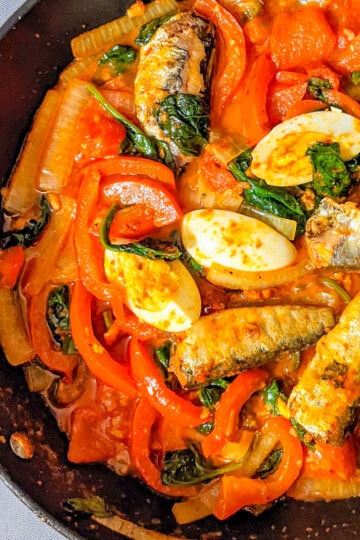
- Harissa Smoked Sardines with Spinach and Boiled Egg
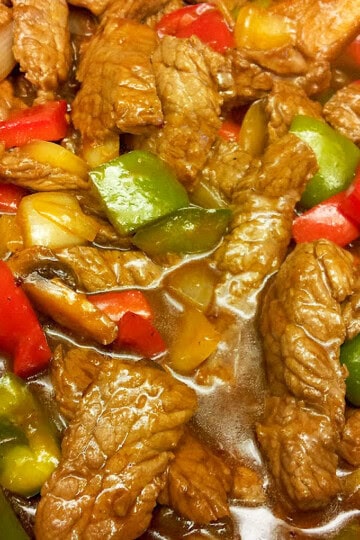
- Chinese Pepper Steak with Red Wine and Hoisin Sauce
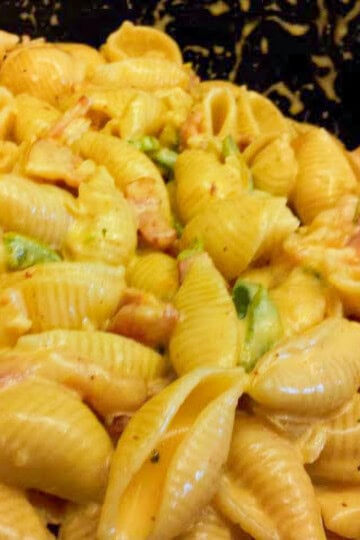
- Bacon Jalapeño Mac and Cheese
- Crispy Garlic Parmesan Baked Chicken

Cooking Tips and Tutorials
If you found this tutorial helpful, you'll love my Cook's Notebook collection. From knife skills and flavor bases to time-saving tricks and essential equipment guides, this section is packed with chef-tested lessons to help you cook with confidence.
- Seasonal Produce Guide: What Fruits and Vegetables Are in Season?
- How to Roast Food: The Fundamental Principles of Roasting
- 2026 Fall Seasonal Produce Guide: Fruits and Vegetables to Enjoy This Season
- Indian Cooking Techniques That Changed How I Think About Food
📖 Recipe
Braised Korean Spicy Chicken Stew with Kabocha
Ingredients
Chicken and Vegetables
- 1 small whole chicken about 3 pounds, cut into bone-in serving pieces, or an equivalent weight of bone-in thighs, drumsticks, whole wings, or mixed pieces
- 1 teaspoon kosher salt plus more to taste
- ½ teaspoon ground black pepper
- 2 tablespoons neutral cooking oil such as avocado or canola oil
- 1 medium yellow onion cut into wedges
- 2 scallions trimmed and cut into 2-inch pieces
- 1 large carrot cut into thick slices
- 1 pound kabocha squash weighed after removing seeds, cut into large wedges, scrubbed skin left on or peeled
- 2 cups low-sodium chicken broth plus more as needed
- 1 small bunch yu choy sum about 6-8 ounces, thoroughly washed and tough ends trimmed, optional
- Cooked white rice for serving
Spicy Braising Sauce
- 3 tablespoons gochujang Korean red pepper paste
- 2 tablespoons gochugaru Korean red pepper flakes, or less to taste
- 1 tablespoon jarred Korean garlic paste
- 1 teaspoon jarred Korean ginger paste
- 3 tablespoons soy sauce
- 1 tablespoon oyster sauce
- 2 tablespoons blue agave syrup or Korean corn syrup, brown sugar, or white sugar
- ¼ teaspoon ground black pepper
Equipment
- Food thermometer
Instructions
- Prepare the ingredients: Pat the chicken dry and season with salt and black pepper. Prepare the vegetables, keeping the kabocha separate. If using yu choy sum, separate the thicker stems from the leafy portions, leaving slender stems attached to the leaves.
- Mix the sauce: In a small bowl, stir together the gochujang, gochugaru, Korean garlic paste, Korean ginger paste, soy sauce, oyster sauce, agave syrup, and black pepper until well combined.
- Sear the chicken: Heat the cooking oil in a Dutch oven over medium-high heat. Add the chicken in batches and sear until golden brown on all sides, about 10-15 minutes total, depending on the pot size and chicken pieces. Transfer to a plate. Leave the golden-brown fond in the pot; the chicken will finish cooking during the braise.
- Sauté the vegetables: Reduce heat to medium. Add the onion and scallions and sauté until softened and the onion is translucent, about 3-5 minutes. Add the carrot and cook for another 1-2 minutes. If the fond begins darkening too quickly, add a splash of the chicken broth and scrape gently to loosen it.
- Start the braise: Return the chicken and any accumulated juices to the Dutch oven, arranging it over the vegetables. Spoon the sauce over the chicken, then pour in the low-sodium chicken broth. Gently loosen any remaining fond from the bottom. Bring to a simmer, cover, and reduce the heat to maintain gentle bubbling. Simmer for about 15-20 minutes, turning the chicken occasionally.
- Add the squash and greens: When the chicken is nearly cooked through, nestle the kabocha and yu choy sum into the sauce. Cover and simmer for about 15-25 minutes, until the squash and stems are tender and the chicken reaches an internal temperature of 165 °F. Gently turn the squash if needed, avoiding vigorous stirring. Add a splash of chicken broth if the pot becomes too dry.
- Adjust and serve: If needed, simmer uncovered briefly to reduce the sauce to a spoonable stew consistency. Leave enough sauce to enjoy with rice. Turn off the heat, taste, and adjust the seasoning. Use clean kitchen shears and tongs to cut the cooked greens into bite-size pieces if desired. Serve hot with white rice.
Notes
- Chicken options: A whole chicken cut into pieces, bone-in thighs, drumsticks, or whole wings all work. Cooking time depends on the size and type of pieces. Remove breast pieces temporarily if they finish before the dark meat becomes tender.
- Golden fond: The browned bits left after searing add flavor to the braising sauce. Keep them golden brown rather than letting them burn.
- Low-sodium chicken broth: Use it for the braise and any additional liquid needed to loosen the fond or adjust the sauce.
- Finish with the leaves. I sometimes add the leafy portions of the yu choy sum during the final 3-5 minutes of cooking.
- Kabocha timing: Add the squash toward the end so it finishes cooking alongside the chicken while keeping its shape.
- Sweetener options: I prefer blue agave syrup because it mixes easily into the sauce. Korean corn syrup, brown sugar, or white sugar also work.
- Sauce consistency: Aim for a stew with plenty of sauce, not a thick glaze. Add chicken broth as needed or simmer uncovered briefly to reduce.
- Heat level: For less heat, begin with less gochugaru. Gochujang also contributes spiciness.
Nutrition

Subscribe to my YouTube Channel
SUBSCRIBE↗: 👈To my YouTube Channel to Get Notifications of New Videos.


Chef Maika Frederic-Liebman
Chef and Educator
Professionally trained Haitian-American chef Maika Frederic created Just Maika Cooking, where she shares globally inspired recipes, cooking techniques, ingredient guides, and food safety tips to help home cooks become more creative and confident in the kitchen. Combining years of professional culinary experience with a passion for teaching, she makes global flavors approachable through practical, accessible instruction for cooks of every skill level.
Have a Comment or Question?
If you have a question or comment about this post, please post it below. You will receive a prompt response. It also helps our other readers to stay informed. Thanks!
Leave a Reply