

Learn how to cut and roast cauliflower steaks so they stay together and cook until fork-tender with golden-brown, crispy edges. This easy cauliflower steak recipe uses simple seasonings and a hot oven for a versatile vegetable side dish or vegetarian main course.
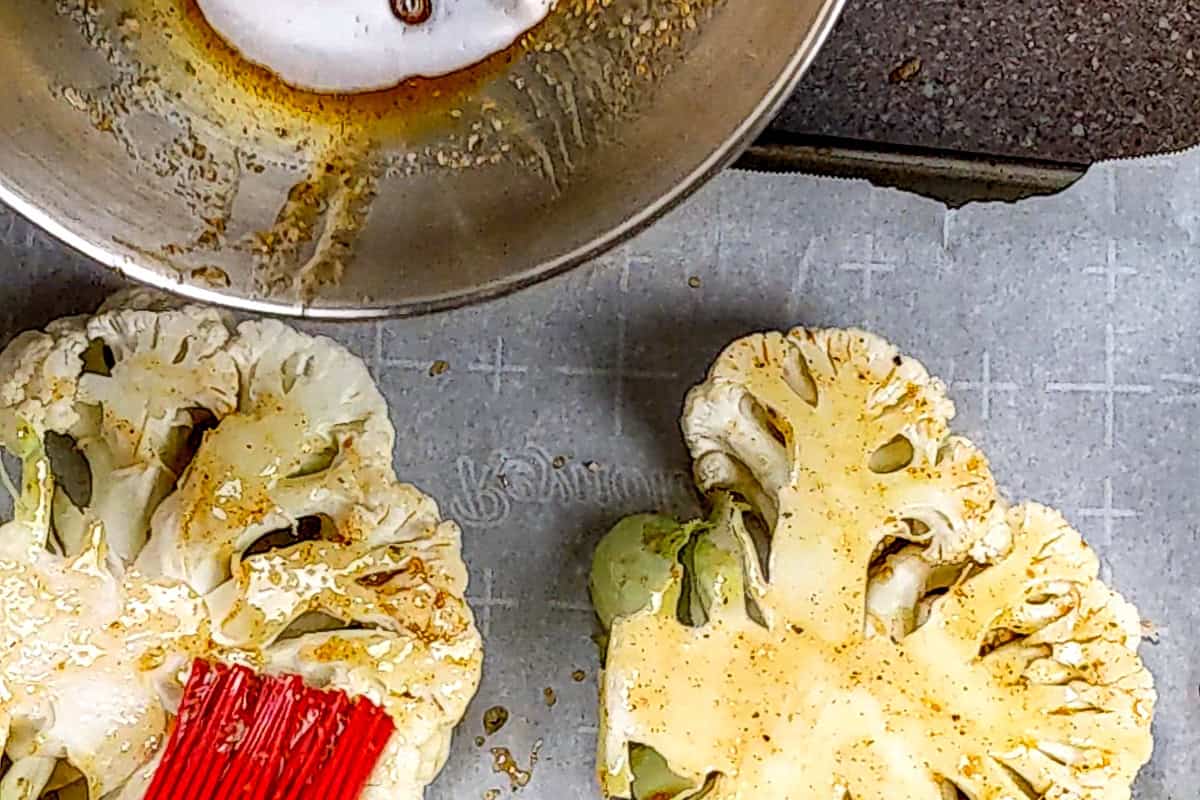
Table of Contents
Jump to:
- An Easy Cauliflower Steak Recipe with Crispy, Golden Edges
- Why You'll Love This Recipe
- Ingredients with Steps
- Culinary Glossary
- Instructions with Pictures
- Equipment You'll Need (With Alternatives)
- Kitchen Tools I Use and Recommend
- Storage and Reheating
- Substitutions
- Variations
- 5 Quick Cooking Tips
- Frequently Asked Questions
- More Side Dish Recipes
- Cooking Tips and Tutorials
- 📖 Recipe
- Have a Comment or Question?
An Easy Cauliflower Steak Recipe with Crispy, Golden Edges
Turning a whole head of cauliflower into thick, steak-like slabs is easier than it looks once you know which part of the vegetable you need to keep intact. This cauliflower steak recipe uses high-heat roasting to create a tender center and beautifully browned edges while teaching you a simple cutting technique you can use whenever you want something different from traditional roasted cauliflower florets.
Why You'll Love This Recipe
- Simple technique: Keeping the cauliflower core intact is the key to cutting thick steaks that hold together.
- Golden brown edges: A hot oven helps create deeply roasted surfaces and crispy edges while the center becomes tender.
- Easy seasonings: Garlic powder, sea salt, black pepper, and avocado oil create a simple base you can customize.
- Less food waste: Loose florets and smaller pieces can roast on the same baking sheet instead of being discarded.
- Versatile vegetable: Serve roasted cauliflower steaks as a side dish or build them into a vegetarian main course with protein, grains, and your favorite sauce.
Note From Chef Maika
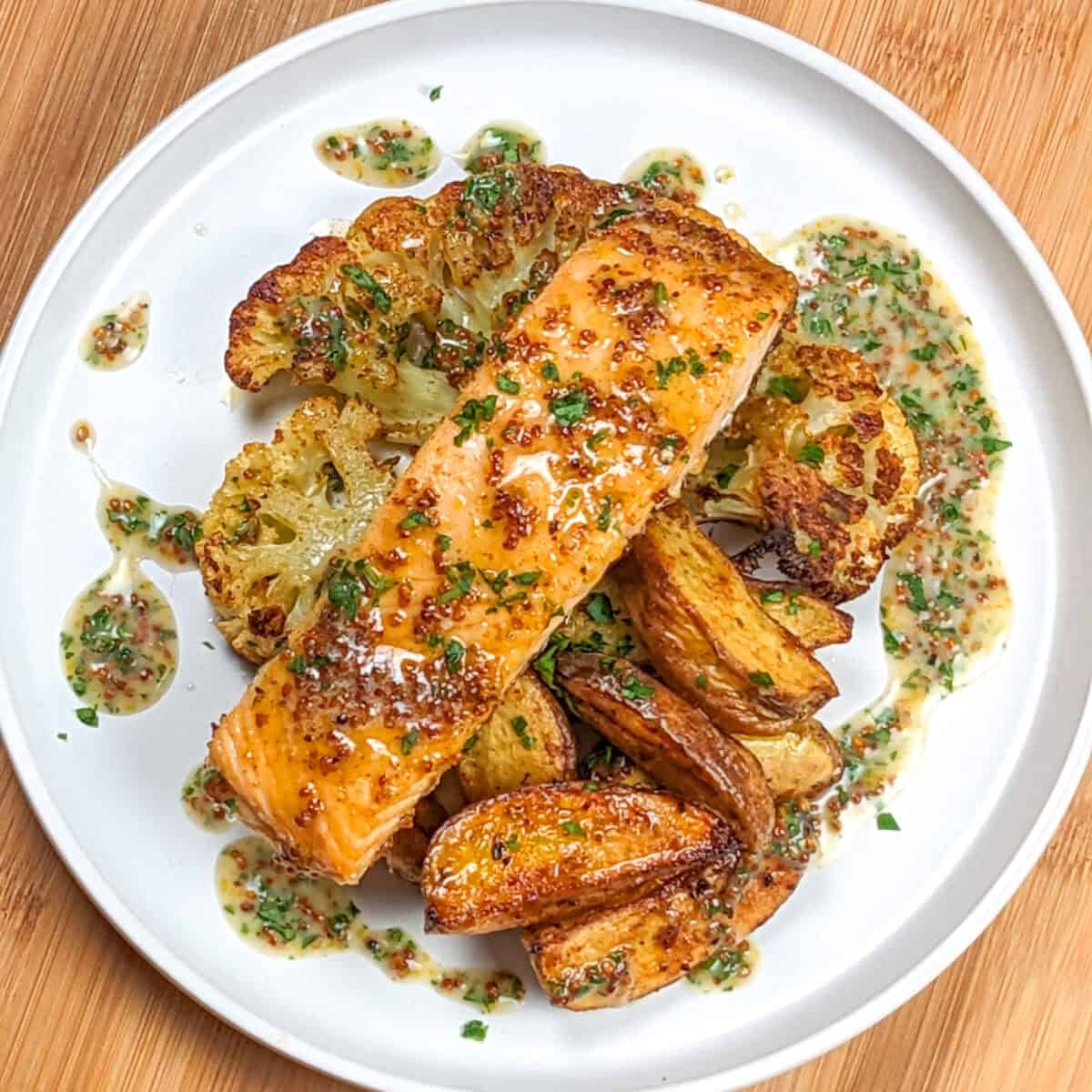
This cauliflower steak recipe actually started as part of my Cajun Honey Mustard Salmon with Cauliflower Steaks and Potatoes. I wanted to pull the cauliflower technique out and give it its own space because learning how to cut through the core, keep the steaks together, and roast them properly is useful well beyond one recipe.
It is also a great example of something I teach throughout my roasting recipes: how you cut a vegetable affects how it cooks. A thick cauliflower steak needs enough time for the center to soften, while the exposed surface needs high, dry heat to develop those golden-brown roasted edges.
And don't worry if every piece doesn't look like a perfect steak. The center slices will naturally hold together better. Roast the loose florets right alongside them and enjoy those crispy little pieces, too.
Recommended Reads
Ingredients with Steps
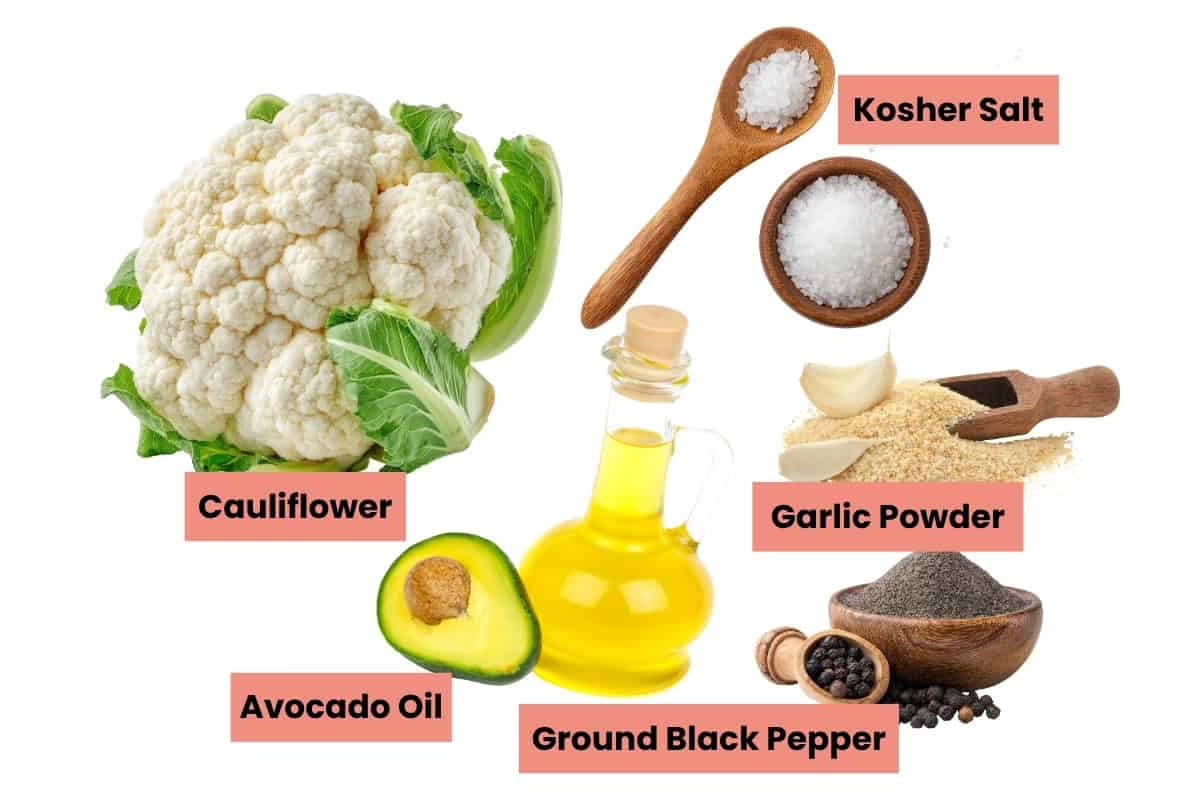
Remove the tough outer leaves from a large head of cauliflower, keeping the core intact, then cut the head vertically into thick steaks. Combine avocado oil, garlic powder, sea salt, and black pepper, then brush the seasoning mixture over both sides of the cauliflower steaks and any loose florets. Arrange everything in a single layer on a prepared baking sheet and roast in a hot oven, flipping halfway through, until the centers are fork-tender and the surfaces are golden brown with crispy edges.
Culinary Glossary
This section provides concise definitions of key ingredients and techniques to enhance understanding and improve cooking skills related to this post. Find More Terms: Culinary Glossary.
Ingredients
- Cauliflower: A cruciferous vegetable made of tightly packed florets attached to a thick central core and stem.
- Avocado oil: A neutral-flavored cooking oil suitable for high-temperature cooking methods such as roasting. Heart-healthy, High-Smoke-Point Oils for Cooking.
- Garlic powder: Dried, finely ground garlic that distributes easily throughout a seasoning mixture.
Techniques
- Cauliflower steak: A thick slice cut vertically through a whole cauliflower with part of the core attached to hold the florets together.
- Roasting: A dry-heat cooking method that surrounds food with hot air, cooking the interior while encouraging browning on the surface.
- Fork tender: A doneness test in which a fork or small knife can easily pierce the food without it becoming mushy.
- Browning: The development of deeper color and flavor on the surface of food as it cooks under high heat. How to Roast Food: The Fundamental Principles of Roasting.
Instructions with Pictures
Follow the instructions and cooking tips below using the step-by-step picture guide.
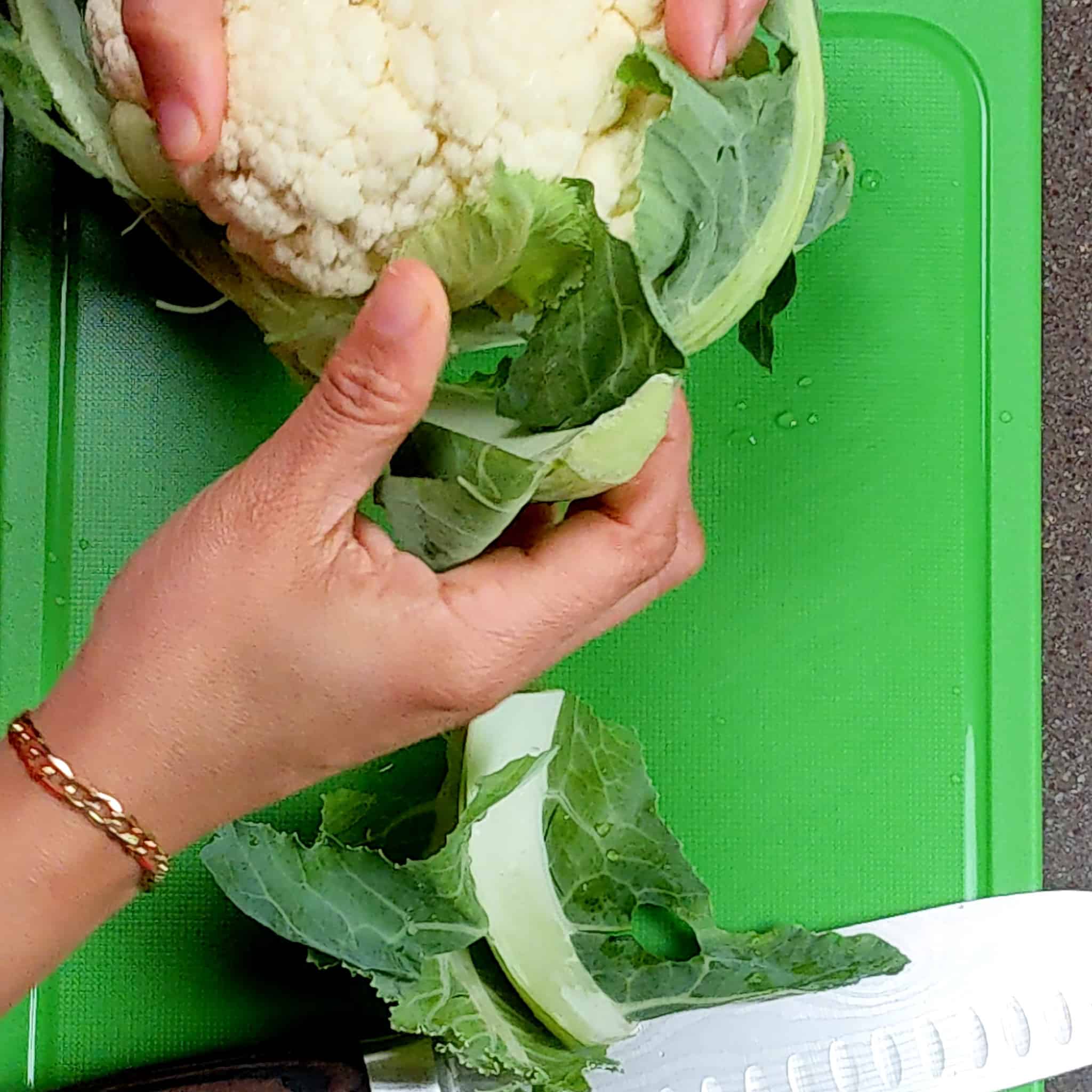
Prepare the Cauliflower: Remove the tough outer leaves surrounding the cauliflower.
Trim the very bottom of the stem if necessary, but do not remove the center core. The core is what holds the florets together when you cut the cauliflower into thick steaks.
If you wash the cauliflower before cutting, dry it thoroughly. Excess surface moisture has to evaporate before the cauliflower can begin to brown properly in the oven.
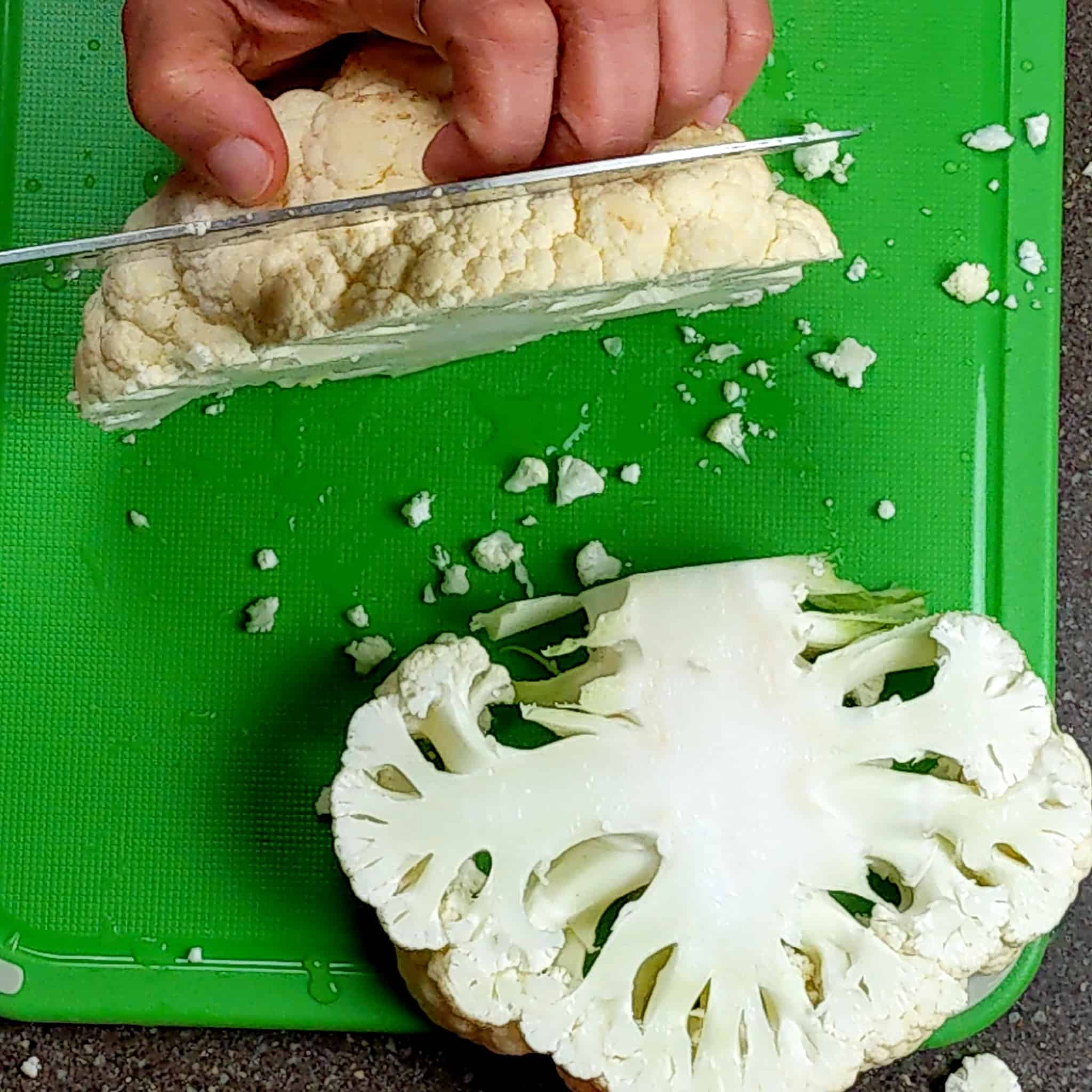
Cut the Cauliflower into Steaks: Place the cauliflower stem-side down on a large cutting board.
Using a sharp chef's knife, cut vertically through the center of the cauliflower head. Continue cutting approximately 1-inch-thick slices while keeping part of the core attached to each steak.
The center of the cauliflower head will produce the strongest steaks because those slices contain more of the core.
As you reach the outer sides of the cauliflower, some pieces will naturally separate into loose florets. Keep them for roasting.
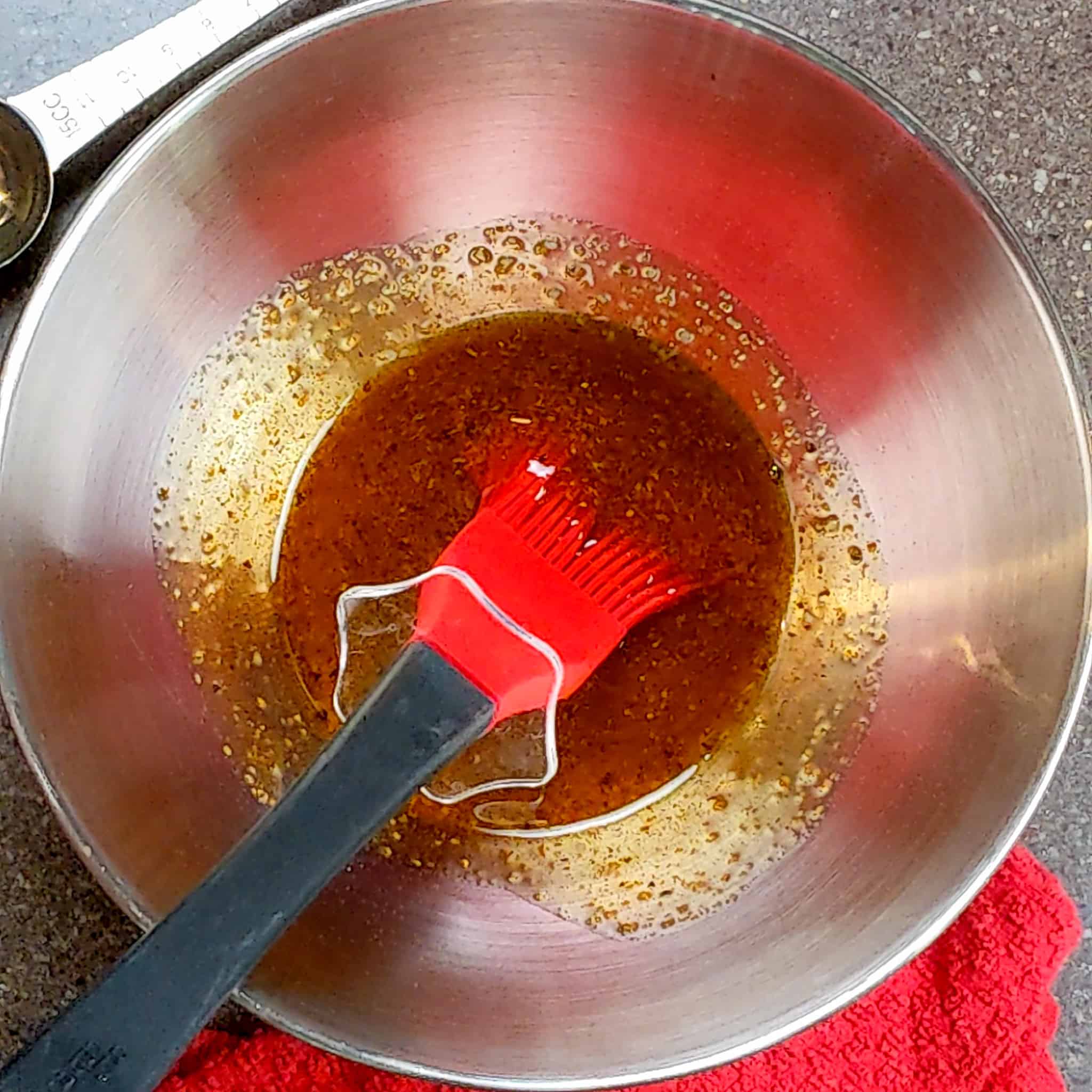
Make the Seasoning Mixture: In a small bowl, combine the avocado oil, garlic powder, sea salt, and black pepper.
Stir until the seasonings are evenly distributed.
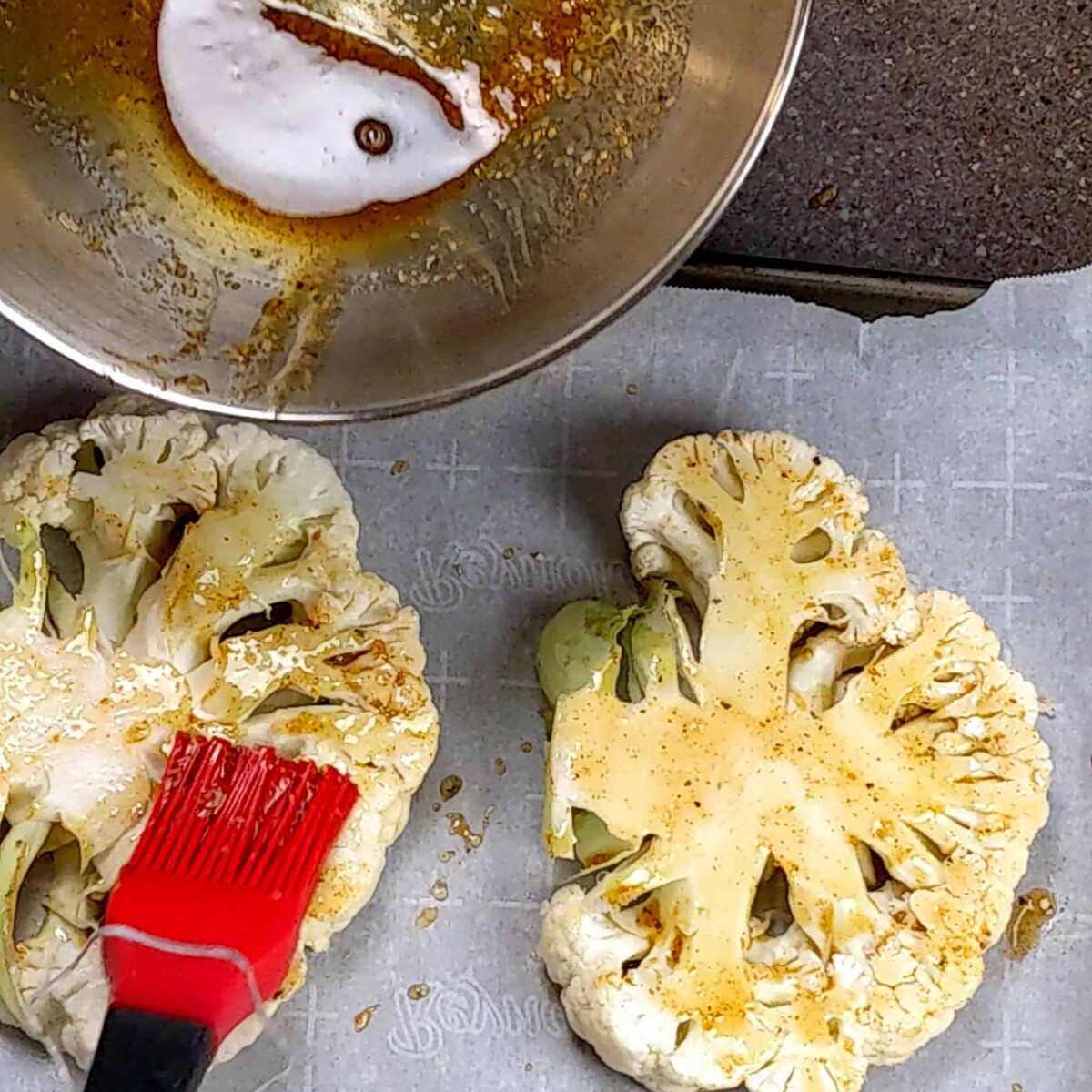
Season Both Sides: Arrange the cauliflower steaks on a parchment-lined rimmed baking sheet.
Using a pastry brush, coat one side of each cauliflower steak with the seasoning mixture. Carefully flip the steaks and brush the second side.
Toss or brush the loose florets with the remaining seasoning mixture and arrange them around the steaks.
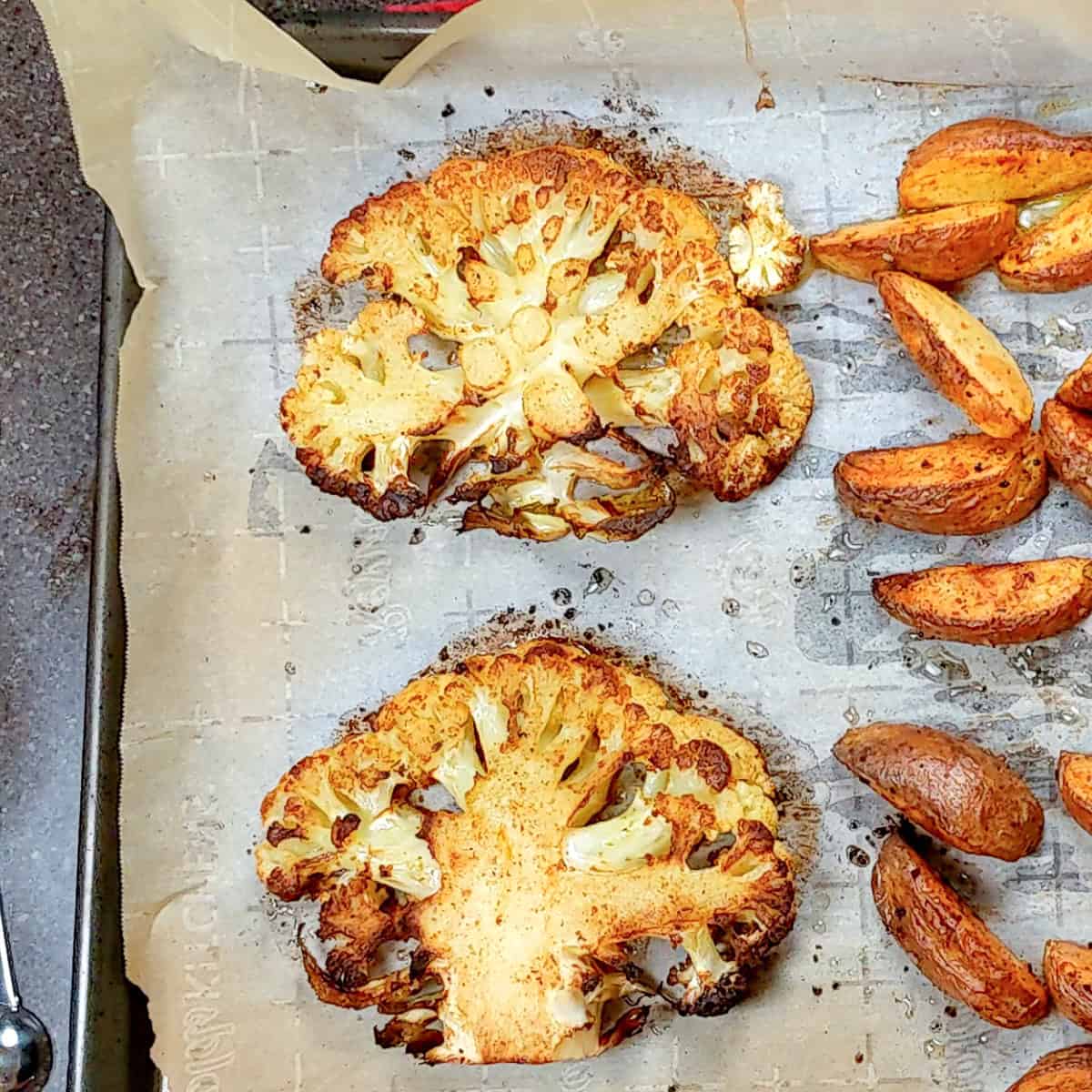
Roast the Cauliflower Steaks: Preheat the oven to 425°F.
Arrange the cauliflower steaks and loose florets in a single layer, leaving space between pieces. Roast for 15 minutes.
Carefully flip each cauliflower steak using a wide spatula. Return the baking sheet to the oven and roast for about 15 more minutes.
The cauliflower should take about 30 minutes total, depending on the steak thickness and cauliflower size.
Check the thickest portion near the core. The cauliflower is ready when a fork or paring knife slides in easily and the outside has developed golden brown areas and crispy edges.
Don't Throw Away the Loose Florets: Not every slice from a whole head of cauliflower will become a perfect steak, and that's normal.
The outer pieces aren't attached to as much of the core, so they're more likely to separate.
Roast those smaller pieces on the same prepared sheet pan. Because they're smaller than the thick steaks, check them earlier and remove any pieces that are browning too much before the steaks are finished.
Equipment You'll Need (With Alternatives)
Here's what you'll need to be efficient, plus easy swaps if you don't have everything on hand.
- Large cutting board: Provides a stable surface for cutting the whole cauliflower. Use another sturdy, non-slip cutting surface if needed.
- Chef's knife: Cuts cleanly through the cauliflower florets, stem, and core. Use another large, sharp kitchen knife if needed.
- Small bowl: Holds the seasoning mixture. A measuring cup or small food-prep container also works.
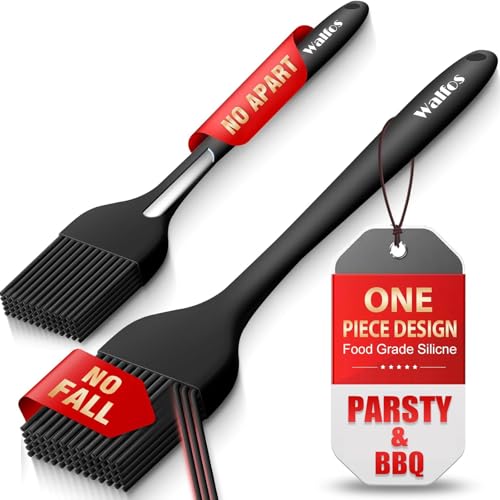
- Pastry brush: Distributes the seasoned oil over both sides of the cauliflower. Clean hands or the back of a spoon can also work.
- Large rimmed baking sheet: Gives the cauliflower enough space to roast in a single layer. Use two smaller sheet pans if necessary.
- Parchment paper: Helps prevent sticking and makes cleanup easier. You can lightly oil the baking sheet or use a silicone mat instead.
- Wide spatula: Supports the cauliflower steaks while flipping. A large fish spatula or turner works well.
Kitchen Tools I Use and Recommend
These are some of the kitchen tools I personally use that make cooking faster and easier. If you're building your kitchen setup or upgrading your tools, these are great places to start. More Kitchen Must-Haves - Find other tools I use here.
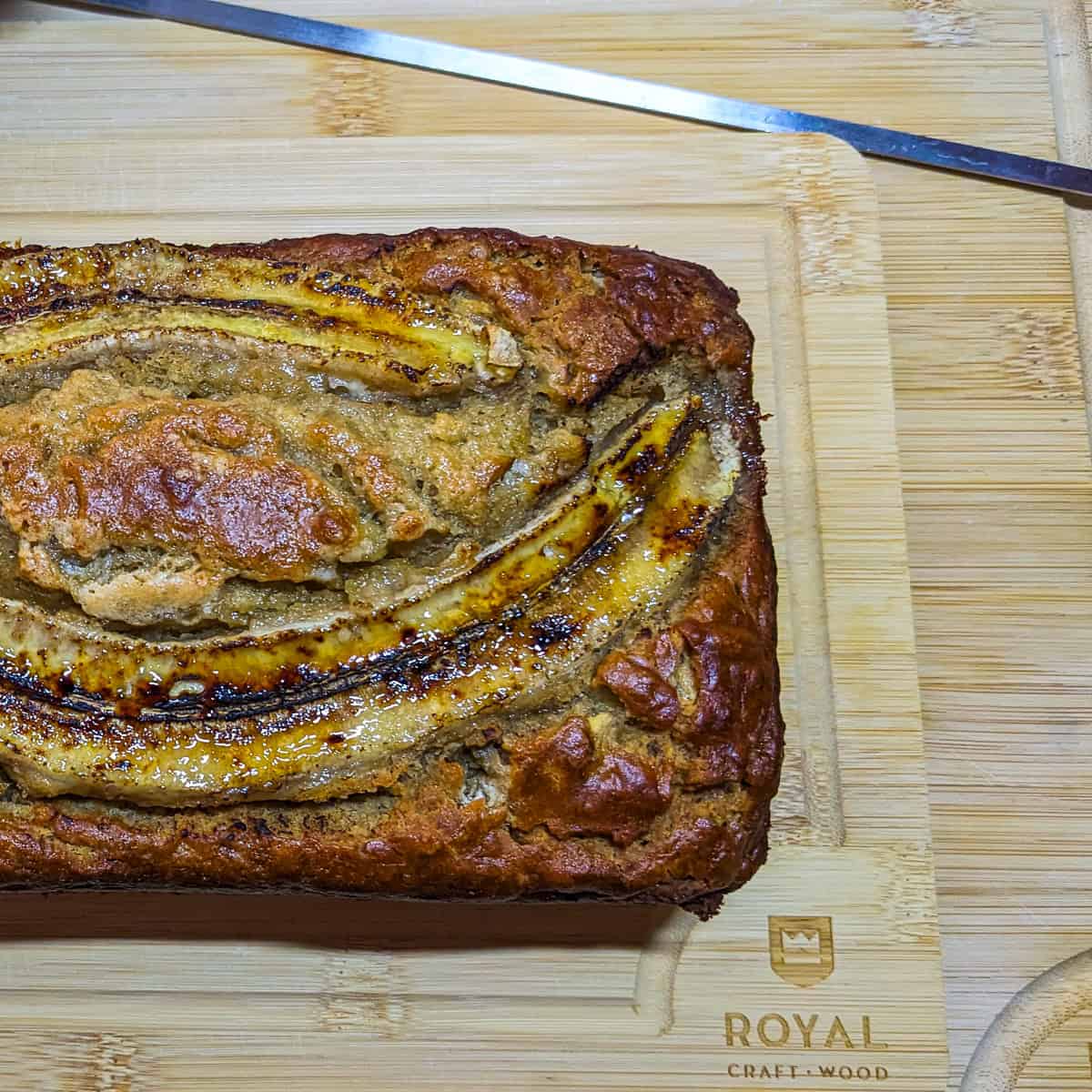
My Review: I love that this bamboo cutting board set came in so many convenient sizes; it makes it easy to grab exactly what I need, whether I’m chopping herbs or breaking down meat. The bright tones of the wood really stood out to me; they look beautiful on camera and bring a nice pop of warmth to my kitchen. It’s especially come in handy during meal prep or when I have someone else helping me; everyone gets their own board! I also appreciate how lightweight yet sturdy they are, making them easy to move around while still holding up to serious chopping. Definitely a great gift for yourself or anyone who loves to cook or entertain. P.S. My hubby accidentally placed it in the dishwasher. And guess what? It didn't warp. A+!
My Review: I've been using the Carlisle FoodService Products Saf-T-Grip Board-Mate Nonslip Cutting Board Mat since my professional kitchen days, and it’s still a staple in my home kitchen today. This mat does exactly what it promises: it anchors your cutting board in place, no slipping, sliding, or unexpected wobbles while you're slicing, dicing, or carving. At 16" x 10" (no longer available; go for the 18" x 13"), it fits perfectly under most standard boards, eliminating the need to fuss with damp paper towels or dishcloths. From breaking down poultry to prepping vegetables to portioning proteins, this mat provides the commercial-kitchen-level stability that helps prevent knife accidents and makes prep work feel much more secure. It’s durable, easy to rinse clean, and has held up through years of constant use. If you're serious about knife safety or just tired of chasing your cutting board around the counter, this is absolutely worth the investment. I gave this a four-star rating because if your board is warped, you will need to use a towel instead. The mat needs to grip the flat board.

My Review: The PAUDIN 8-inch Chef's Knife is an absolute standout in both sharpness and craftsmanship. It stays incredibly sharp through regular use, making prep work effortless. The high-carbon stainless steel blade showcases PAUDIN’s attention to detail, while the ergonomic handle provides a comfortable grip for extended use. Despite its premium feel, this knife is impressively affordable, offering exceptional quality without the high price tag. That’s why I’ve recently switched all my knives to PAUDIN—they truly deliver on durability, beauty, and performance. If you want a reliable, well-crafted knife at a great value, this is the one to get!

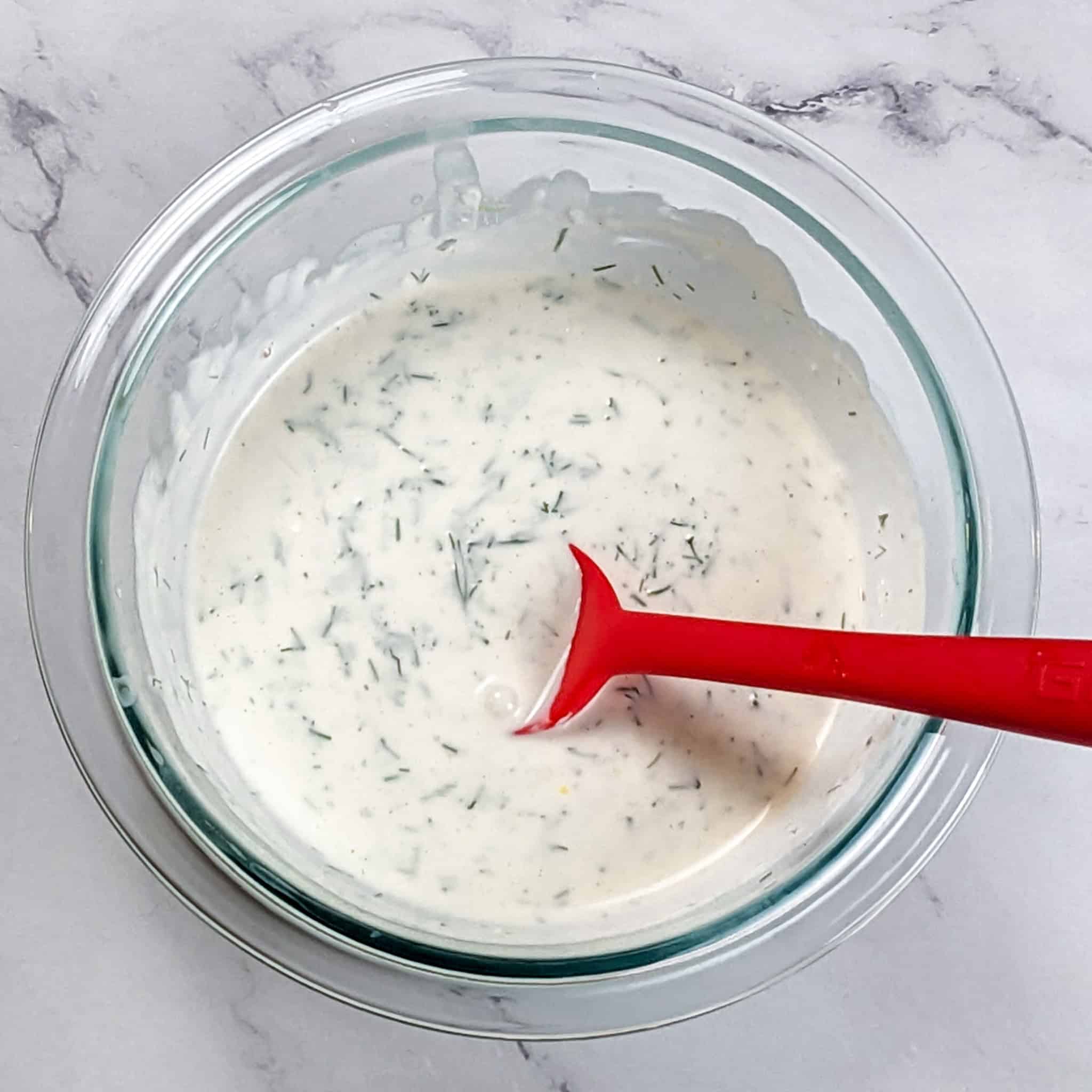
My Review: I love the clean, classic look of this Pyrex 3-piece glass mixing bowl set. It’s a staple in my kitchen. Pyrex is known for its durability, and these bowls definitely live up to that reputation. I use them for everything from mixing batters to storing leftovers, and their microwave-safe feature makes them super multifunctional. They’re also easy to clean and stack nicely in the cabinet. The only reason this isn’t a five-star for me is that I always have that little fear of breaking them when I’m using or storing them, even though they’re made to last.
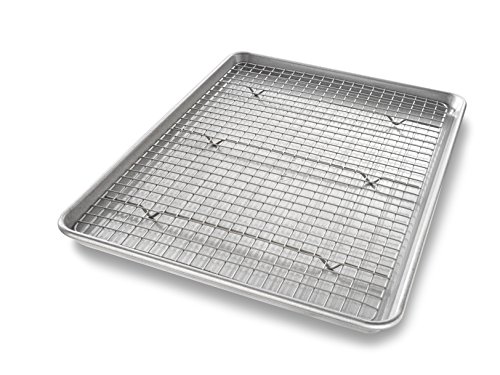
My Review: The USA Pan Bakeware Half Sheet Baking Pan and Nonstick Cooling Rack Set is such a smart buy, it’s incredibly convenient to have both the pan and rack come together as a set. You never know when you’ll need the rack for roasting, cooling, or glazing, and having it perfectly fitted to the pan saves so much time and hassle. The pan itself is super sturdy with excellent heat distribution, and the nonstick rack makes cleanup a breeze. I’ve used it for everything from baking cookies to roasting vegetables and even draining fried foods. It’s one of those kitchen upgrades that just makes life easier.
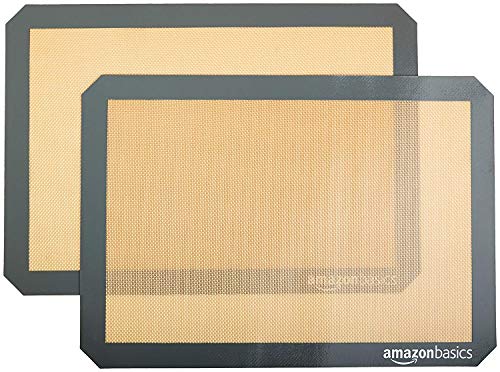
My Review: This Amazon Basics Silicone Baking Mat works exactly as it should: non-stick, easy to clean, and a perfect eco-friendly swap for parchment paper or foil. I toss it in the dishwasher after use, and it saves me from scrubbing sheet pans. If you own sheet pans, this is the companion you need. I first saw bakers using these in hotel kitchens, and now I can’t imagine cooking without one!
My Review: I originally purchased the LISOS Wide Silicone Egg Spatula for its intended use with a Japanese tamagoyaki pan, but I've found myself reaching for it for so much more. The wide, flexible surface is especially useful when I'm roasting vegetables in my air fryer or on a sheet pan in the oven because I can scoop up a larger portion at once instead of chasing individual pieces around the pan.
What I love most is that it's not just a tamagoyaki spatula. I use it for omelets, roasted vegetables, and other foods that benefit from a wider surface when lifting, flipping, or transferring. It's one of those simple kitchen tools that ended up being much more versatile than I expected.
Try a wide spatula when transferring roasted vegetables from your air fryer basket or sheet pan. The extra surface area helps you scoop up several pieces at once, especially smaller vegetables that tend to scatter when you're using a traditional narrow spatula.

Notable Mention
Storage and Reheating
Learn how to properly store leftovers and reheat them to keep them fresh and flavorful. Learn more about Understanding Food Temperature Safety Zones: Cook, Store & Serve Safely.
Refrigerator
Allow leftover cauliflower steaks to cool before transferring them to an airtight container. Then, refrigerate for up to 3 to 4 days.
Freezer
You can freeze roasted cauliflower, but freezing and thawing will soften its texture. If you want to serve the leftovers as cauliflower steaks again, refrigeration works better. But freeze them if you plan to repurpose the cauliflower in soups, curries, mashed cauliflower, or another dish where the softer texture matters less.
Air Fryer
Reheat cauliflower steaks in the air fryer at 375°F for approximately 3 to 5 minutes, or until heated through and the edges begin to crisp again.
Oven
Place the cauliflower steaks on a baking sheet and reheat at 400°F for approximately 8 to 10 minutes, or until heated through.
Microwave
Microwave leftover cauliflower until heated through. Even though this is the quickest method, the cauliflower will stay softer because the microwave won't recreate the dry-roasting environment that produced the original crispy edges.
Substitutions
Find easy ingredient swaps to fit dietary needs or what you already have in your pantry.
Dairy Free
This cauliflower steak recipe is already dairy-free as written.
Gluten-Free
This cauliflower steak recipe is naturally gluten-free as written.
Vegetarian
This recipe is already vegetarian. However, if you're serving the cauliflower steaks as a vegetarian main dish instead of a side dish, pair them with a protein source such as chickpeas, lentils, beans, tofu, or another protein that fits your meal.
Convenience
- Avocado oil: Substitute another neutral oil suitable for high-heat roasting.
- Garlic powder: Replace with your favorite all-purpose seasoning, another dry seasoning blend, or garlic paste.
- Kosher salt: Use sea salt instead.
- Whole cauliflower: Smaller heads will work, but they will produce smaller steaks and may cook more quickly.
Change Heat Level - Modify the recipe's heat level to your liking and learn more about the Scoville Scale and Chili Pairings.
Variations
Explore fun twists and creative ways to make this recipe your own.
- Cajun Cauliflower Steaks: Bring the cauliflower back to the recipe that inspired this standalone version by seasoning it with Cajun seasoning before roasting.
- Spicy Cauliflower Steaks: Add cayenne pepper or red pepper flakes to the seasoning mixture for extra heat.
- Curry Cauliflower Steaks: Add curry powder to the oil mixture for a warm, aromatic seasoning variation.
- Lemon Parmesan Cauliflower Steaks: Finish the roasted steaks with fresh lemon juice, lemon zest, and grated Parmesan cheese.
- Cauliflower Steaks with Chimichurri: Keep the roasted cauliflower simply seasoned and spoon chimichurri sauce over the top before serving.
- Pesto Cauliflower Steaks: Serve the finished cauliflower with basil pesto for an easy herb-forward variation.
5 Quick Cooking Tips
Cook's Notebook is your Cooking Tips Resource Guide. Become a better home cook with tips to help you cook more efficiently.
- Keep the core intact: The center core holds the florets together and gives your cauliflower steaks their structure.
- Cut thick slices: Aim for approximately 1-inch slices so the steaks are sturdy enough to flip while still becoming tender.
- Dry before roasting: Removing excess surface moisture helps the cauliflower begin browning sooner. How to Roast Food: The Fundamental Principles of Roasting.
- Give the pieces space: Crowding traps steam around the cauliflower, which can leave it soft and pale instead of golden brown.
- Use a wide spatula: Supporting most of the steak from underneath makes it less likely to break when you flip it.
Frequently Asked Questions
Here is a list of common questions I have answered. If you have any questions, please write them in the comments below.
The core is what holds the cauliflower florets together. If you remove it before cutting, or cut slices that don't contain enough of the center core, the cauliflower will separate into florets. Even when you cut it correctly, the outer slices may still fall apart. That's normal, so roast those smaller pieces alongside the steaks.
Cut cauliflower steaks approximately 1 inch thick. Thick slices have enough structure to survive seasoning and flipping while still allowing the center to become fork-tender during roasting.
No. Roast the cauliflower directly from raw. Boiling or blanching isn't necessary and introduces additional moisture, which can work against the browning you're trying to achieve in the oven.
Too much surface moisture, an overcrowded baking sheet, or an oven that hasn't fully preheated can interfere with browning. Dry the cauliflower thoroughly, arrange the pieces with space between them, and wait until the oven reaches 425°F before roasting.
Yes, as long as your air fryer basket is large enough to hold the cauliflower steak without crowding it. Because an air fryer circulates hot air efficiently, the cauliflower may cook faster than it does in the oven. Start checking it earlier and cook until the center is fork-tender with browned edges.
More Side Dish Recipes
Get creative; find more delicious sides to mix and match with your meal plan.
- Instant Pot Collard Greens with Smoked Turkey
- 5-Minute Chunky Dijon Lemon Mustard Remoulade Sauce Recipe
- How to Cook Perfect Jasmine Rice in a Rice Cooker
- Fresh Cranberry Ginger Chutney | Quick and Easy
Cooking Tips and Tutorials
If you found this tutorial helpful, you'll love my Cook's Notebook collection. From knife skills and flavor bases to time-saving tricks and essential equipment guides, this section is packed with chef-tested lessons to help you cook with confidence.
- Seasonal Produce Guide: What Fruits and Vegetables Are in Season?
- How to Roast Food: The Fundamental Principles of Roasting
- 2026 Fall Seasonal Produce Guide: Fruits and Vegetables to Enjoy This Season
- Indian Cooking Techniques That Changed How I Think About Food
📖 Recipe
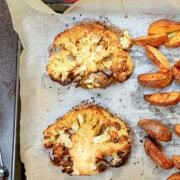
Roasted Cauliflower Steaks
Ingredients
- 1 large head cauliflower
- 3 tablespoons avocado oil
- 1 teaspoon garlic powder
- ½ teaspoon kosher salt
- ¼ teaspoon ground black pepper
Equipment
- Silicone Mat or Parchment paper
- Wide spatula or regular spatula
Instructions
- Save Time in the Kitchen: Read the instructions thoroughly, then gather and prep all your ingredients before cooking! Learn Prepping Tips.
- Preheat the oven: Preheat the oven to 425 °F. Line a large rimmed baking sheet with parchment paper.
- Prepare the cauliflower: Remove the tough outer leaves from 1 large head of cauliflower. Trim only the very bottom of the stem, keeping the center core intact so it can hold the cauliflower steaks together.
- Cut the steaks: Place the cauliflower stem-side down on a cutting board. Using a sharp chef's knife, cut vertically through the cauliflower into approximately 1-inch-thick steaks. Keep any loose florets and smaller pieces for roasting alongside the steaks.
- Make the seasoning mixture: In a small bowl, combine 3 tablespoons avocado oil, 1 teaspoon garlic powder, ½ teaspoon kosher salt, and ¼ teaspoon ground black pepper.
- Season the cauliflower: Arrange the cauliflower steaks and loose florets on the prepared baking sheet. Using a pastry brush, brush the seasoning mixture evenly over both sides of the cauliflower.
- Roast: Arrange the cauliflower in a single layer with space between the pieces. Roast at 425 °F for 15 minutes.
- Flip and finish roasting: Carefully flip the cauliflower steaks with a wide spatula. Roast for another 15 minutes, or until the thickest part of the cauliflower is fork-tender and the surfaces are golden brown with crispy edges.
- Serve: Serve the roasted cauliflower steaks hot as a side dish or finish with your favorite sauce, fresh herbs, lemon juice, or grated Parmesan cheese.
Notes
Nutrition


Chef Maika Frederic-Liebman
Chef and Educator
Professionally trained Haitian-American chef Maika Frederic is the creator of Just Maika Cooking, where she shares globally inspired recipes, cooking techniques, ingredient guides, and food safety tips designed to help home cooks become more creative and confident in the kitchen. Combining years of professional culinary experience with a passion for teaching, she makes global flavors approachable through practical, accessible instruction for cooks of every skill level.
SUBSCRIBE: 👈To my YouTube Channel to Get Notifications of New Videos.
Have a Comment or Question?
If you have a question or comment about this post, please post it below. You will receive a prompt response. It also helps our other readers to stay informed. Thanks!

Leave a Reply