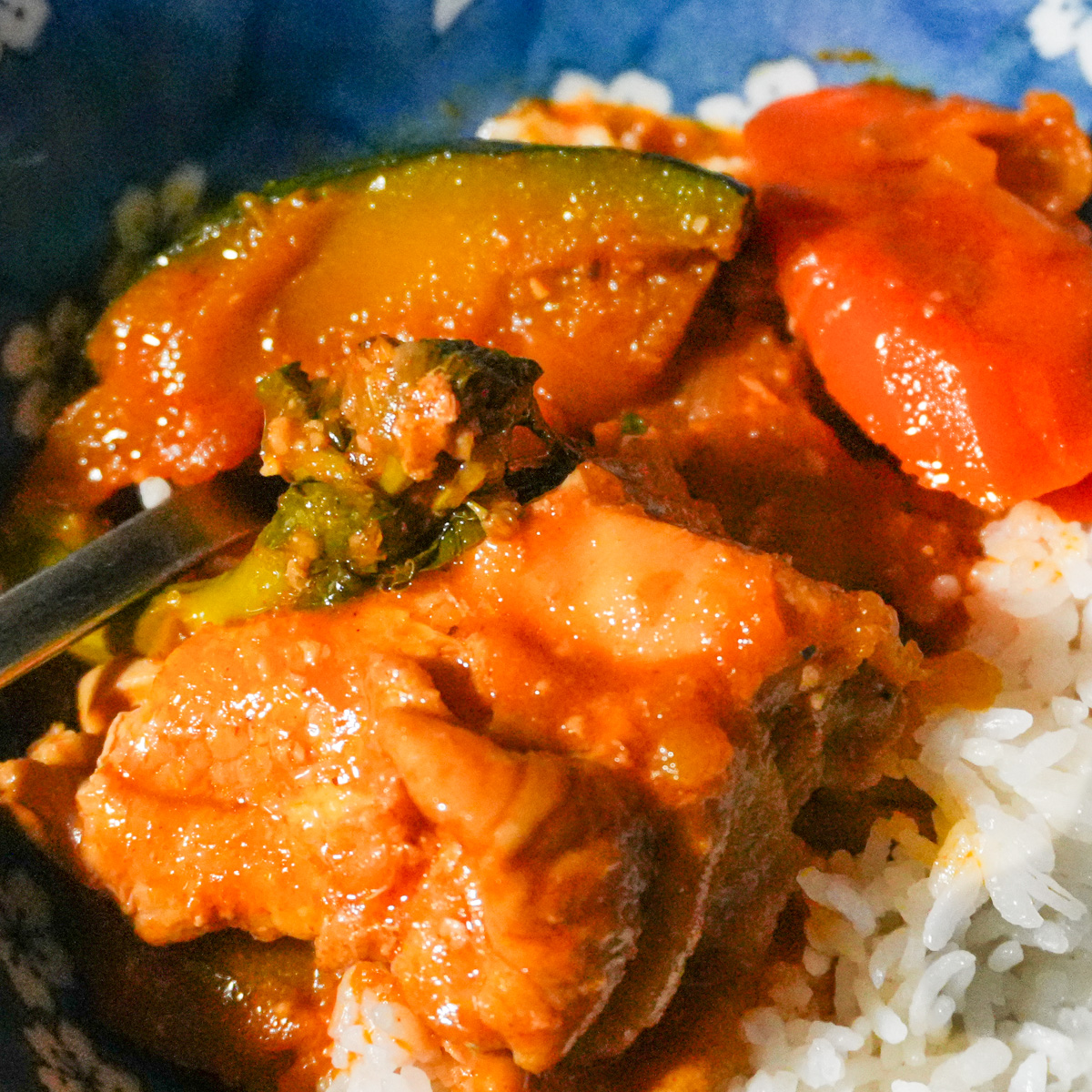
Braised Korean Spicy Chicken Stew with Kabocha
My Korean-inspired dakbokkeumtang starts with seasoned chicken seared until golden brown, then braised with vegetables in a spicy, savory, slightly sweet sauce. Large chunks of kabocha and optional yu choy sum finish cooking in the stew for a hearty meal to serve with white rice.
Servings 4 servings
Calories: 623kcal
Ingredients
Chicken and Vegetables
- 1 small whole chicken about 3 pounds, cut into bone-in serving pieces, or an equivalent weight of bone-in thighs, drumsticks, whole wings, or mixed pieces
- 1 teaspoon kosher salt plus more to taste
- ½ teaspoon ground black pepper
- 2 tablespoons neutral cooking oil such as avocado or canola oil
- 1 medium yellow onion cut into wedges
- 2 scallions trimmed and cut into 2-inch pieces
- 1 large carrot cut into thick slices
- 1 pound kabocha squash weighed after removing seeds, cut into large wedges, scrubbed skin left on or peeled
- 2 cups low-sodium chicken broth plus more as needed
- 1 small bunch yu choy sum about 6-8 ounces, thoroughly washed and tough ends trimmed, optional
- Cooked white rice for serving
Spicy Braising Sauce
- 3 tablespoons gochujang Korean red pepper paste
- 2 tablespoons gochugaru Korean red pepper flakes, or less to taste
- 1 tablespoon jarred Korean garlic paste
- 1 teaspoon jarred Korean ginger paste
- 3 tablespoons soy sauce
- 1 tablespoon oyster sauce
- 2 tablespoons blue agave syrup or Korean corn syrup, brown sugar, or white sugar
- ¼ teaspoon ground black pepper
Equipment
- Food thermometer
Instructions
- Prepare the ingredients: Pat the chicken dry and season with salt and black pepper. Prepare the vegetables, keeping the kabocha separate. If using yu choy sum, separate the thicker stems from the leafy portions, leaving slender stems attached to the leaves.
- Mix the sauce: In a small bowl, stir together the gochujang, gochugaru, Korean garlic paste, Korean ginger paste, soy sauce, oyster sauce, agave syrup, and black pepper until well combined.
- Sear the chicken: Heat the cooking oil in a Dutch oven over medium-high heat. Add the chicken in batches and sear until golden brown on all sides, about 10-15 minutes total, depending on the pot size and chicken pieces. Transfer to a plate. Leave the golden-brown fond in the pot; the chicken will finish cooking during the braise.
- Sauté the vegetables: Reduce heat to medium. Add the onion and scallions and sauté until softened and the onion is translucent, about 3-5 minutes. Add the carrot and cook for another 1-2 minutes. If the fond begins darkening too quickly, add a splash of the chicken broth and scrape gently to loosen it.
- Start the braise: Return the chicken and any accumulated juices to the Dutch oven, arranging it over the vegetables. Spoon the sauce over the chicken, then pour in the low-sodium chicken broth. Gently loosen any remaining fond from the bottom. Bring to a simmer, cover, and reduce the heat to maintain gentle bubbling. Simmer for about 15-20 minutes, turning the chicken occasionally.
- Add the squash and greens: When the chicken is nearly cooked through, nestle the kabocha and yu choy sum into the sauce. Cover and simmer for about 15-25 minutes, until the squash and stems are tender and the chicken reaches an internal temperature of 165 °F. Gently turn the squash if needed, avoiding vigorous stirring. Add a splash of chicken broth if the pot becomes too dry.
- Adjust and serve: If needed, simmer uncovered briefly to reduce the sauce to a spoonable stew consistency. Leave enough sauce to enjoy with rice. Turn off the heat, taste, and adjust the seasoning. Use clean kitchen shears and tongs to cut the cooked greens into bite-size pieces if desired. Serve hot with white rice.
Notes
- Chicken options: A whole chicken cut into pieces, bone-in thighs, drumsticks, or whole wings all work. Cooking time depends on the size and type of pieces. Remove breast pieces temporarily if they finish before the dark meat becomes tender.
- Golden fond: The browned bits left after searing add flavor to the braising sauce. Keep them golden brown rather than letting them burn.
- Low-sodium chicken broth: Use it for the braise and any additional liquid needed to loosen the fond or adjust the sauce.
- Finish with the leaves. I sometimes add the leafy portions of the yu choy sum during the final 3-5 minutes of cooking.
- Kabocha timing: Add the squash toward the end so it finishes cooking alongside the chicken while keeping its shape.
- Sweetener options: I prefer blue agave syrup because it mixes easily into the sauce. Korean corn syrup, brown sugar, or white sugar also work.
- Sauce consistency: Aim for a stew with plenty of sauce, not a thick glaze. Add chicken broth as needed or simmer uncovered briefly to reduce.
- Heat level: For less heat, begin with less gochugaru. Gochujang also contributes spiciness.
Nutrition
Calories: 623kcal | Carbohydrates: 32g | Protein: 42g | Fat: 37g | Saturated Fat: 9g | Polyunsaturated Fat: 8g | Monounsaturated Fat: 17g | Trans Fat: 0.2g | Cholesterol: 143mg | Sodium: 1716mg | Potassium: 1147mg | Fiber: 5g | Sugar: 14g | Vitamin A: 6101IU | Vitamin C: 26mg | Calcium: 103mg | Iron: 4mg
Tried this recipe?Please Leave a Review!

