

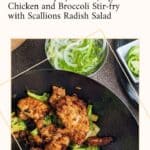
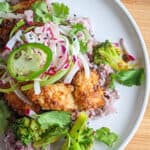
Korean chili paste and brown sugar mixture coats crispy chicken pieces marinated in ginger and garlic, then they are stir-fried with crunchy steamed broccoli, served with rice, and topped with a fresh mixture of scallions, onions, radish, and jalapenos for a quick and easy gochujang chicken stir-fry.

Table of Contents
Jump to:
- Irresistible Flavor and Texture
- Korean Cuisine
- What is Gochujang?
- Korean Fried Chicken = KFC
- Ingredients and Steps
- Watch How to Slice Radish
- Culinary Glossary
- Substitutions
- Variations
- Equipment List
- Kitchen Must-Haves Reviews
- Storage and Reheating
- Cooking Tips
- Frequently Asked Questions
- Asian Recipes
- Cooking Tips and Tutorials
- 📖 Recipe
- Have a Comment or Question?
Irresistible Flavor and Texture
This Sweet, Spicy, Sticky Gochujang Chicken Stir-Fry is a quick weeknight dinner. Crispy, bite-sized pieces of chicken are marinated in a flavorful blend of ginger and garlic, then coated in a sweet-and-spicy gochujang and brown sugar mixture.
Stir-fried with crunchy steamed broccoli and served over rice, this Korean chicken stir-fry is topped with a refreshing mix of scallions, onions, radishes, and jalapenos for an easy recipe that brings the bold flavors of Korean flavors to your kitchen.
Korean Cuisine
Korean cuisine has its origins deeply rooted in ancient agricultural traditions and has been shaped by neighboring countries such as China and Japan. Over the centuries, Korean food has evolved, focusing on fermentation, preservation, and vibrant flavors.
This cuisine has gained global popularity for its unique combination of spicy, sweet, and savory tastes, and dishes like kimchi, bibimbap, and Korean BBQ have become beloved worldwide. The rise of Korean pop culture, including K-dramas and K-pop, has further fueled global interest in Korean cooking.

Looking for authentic Korean recipes? Check out Stella-n-Spice and My Korean Kitchen.
What is Gochujang?

Gochujang is a traditional Korean chili paste made from red chili powder, fermented soybeans, glutinous rice, and salt. Its history dates back to the 18th century, when it was commonly used in Korean households for its rich, spicy, and slightly sweet flavor.
It is a staple in Korean cooking, used in a variety of dishes, such as bibimbap and tteokbokki, as well as in marinades for meats. Its versatility and depth of flavor make it an essential ingredient in creating Korean dishes, especially in recipes like this gochujang chicken stir-fry.
Korean Fried Chicken = KFC
Living in South Florida, I'm fortunate to be surrounded by several Korean restaurants, including one dedicated solely to Korean fried chicken. There's a Korean fried chicken place close to where I live that I absolutely love.
Their "Soy Garlic Spring Onion Chicken" dish, with ultra-crispy potato-starch-battered chicken wings smothered in a gochujang sweet-and-spicy glaze and topped with freshly sliced onions, is one of my favorites. The combination of sticky sauce, hot and crispy chicken, and raw onions is simply irresistible!
However, since I can't indulge in this all the time, I created this chicken and broccoli stir-fry to satisfy my cravings without the guilt of devouring a box of spicy chicken wings. While this gochujang chicken stir-fry isn't quite the same as traditional Korean fried chicken, it's a quick way to enjoy the flavors I love, using ingredients I always have on hand.
Chinese American Influence
To show that the migration of people worldwide creates stories that become history and a timeline of the cuisine we know today, notice that this chicken and broccoli stir-fry dish is also influenced by Chinese American cuisine, as it adds broccoli to the chicken pieces in the stir-fry.

You can also catch a quick glimpse of the American Chinese cuisine timeline in my Hot Honey Sesame Chicken with Napa Cabbage Stir-Fry recipe post.
Korean Food Comfort
Korean cuisine gives me serious "from anotha' motha'" vibes. If you're not familiar with that saying, it means a friend you're so close to that they feel like family. That's exactly how Korean food feels to me, like a distant relative's cooking that I grew up on.
There's something about the flavors and techniques in Korean dishes that brings me so much comfort, and I have a deep respect for South Korean culture. You can read more about this culinary "bromance" in my Beef Flavored Seaweed Ramyun with Egg, Gochujang, and Mushrooms recipe post.
Recommended Reads
- Kimchi Fried Rice Recipe - Simple Base You Can Build On
- Quick Korean Vegetable Ramen (Easy Veggie Noodle Bowl)
- Sesame Chili Salmon Rice Bowl
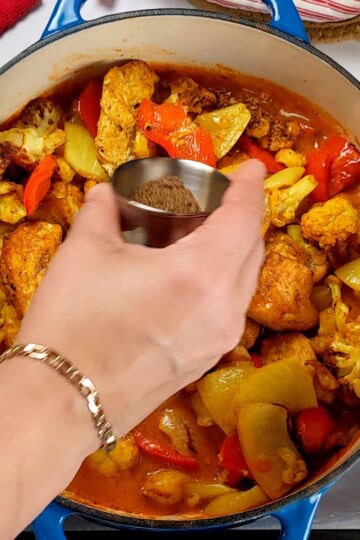
- Chicken Curry Stir-Fry with Coconut Rice and Beans
- Chicken Stir-Fry with Mushrooms, Peppers, and Green Beans in Hoisin Sauce
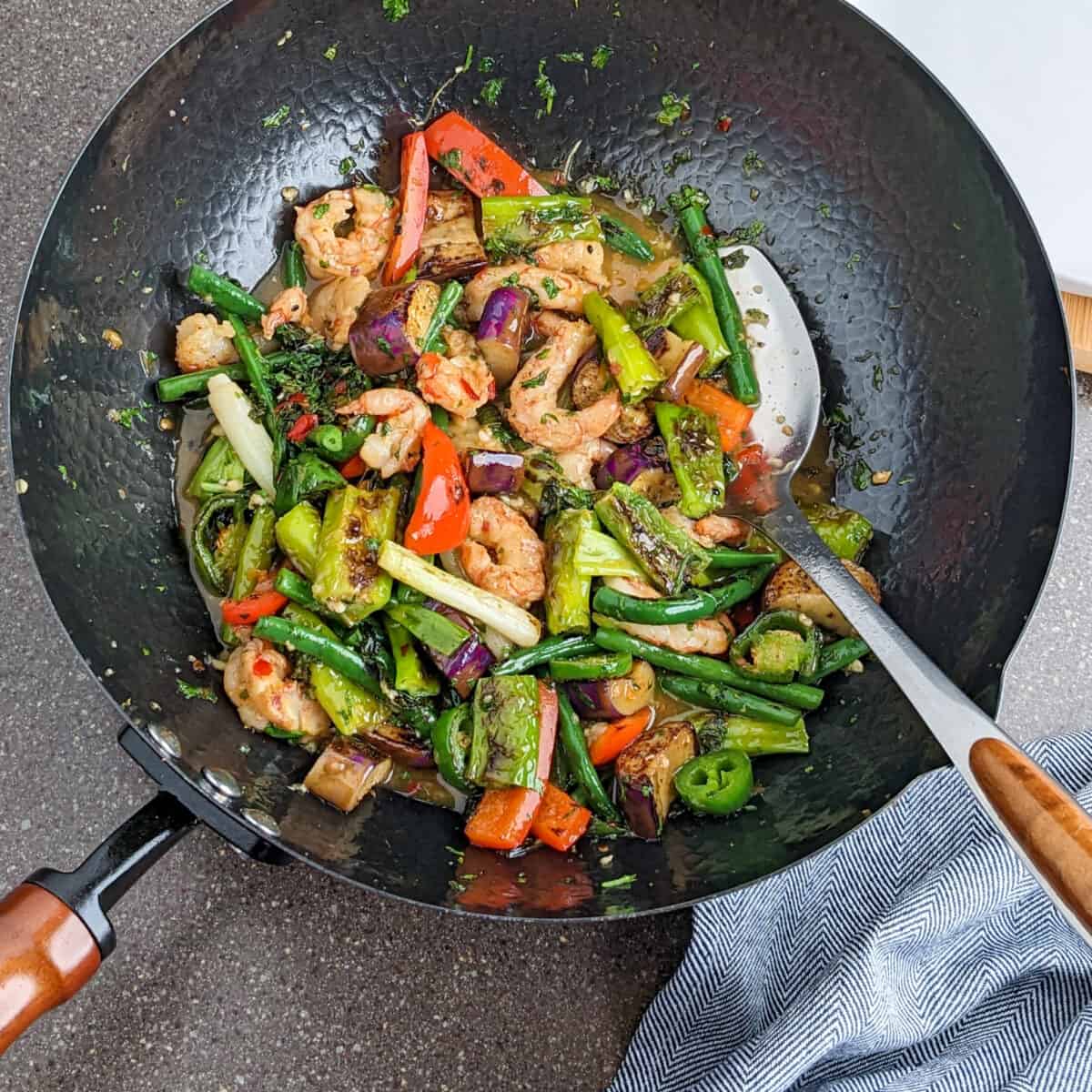
- Shishito Eggplant Shrimp Stir-Fry
- Korean-Style Beef Short Ribs with Smashed Sweet Potato
- Beef Flavored Seaweed Ramyun with Egg, Gochujang, and Mushrooms

Ingredients and Steps
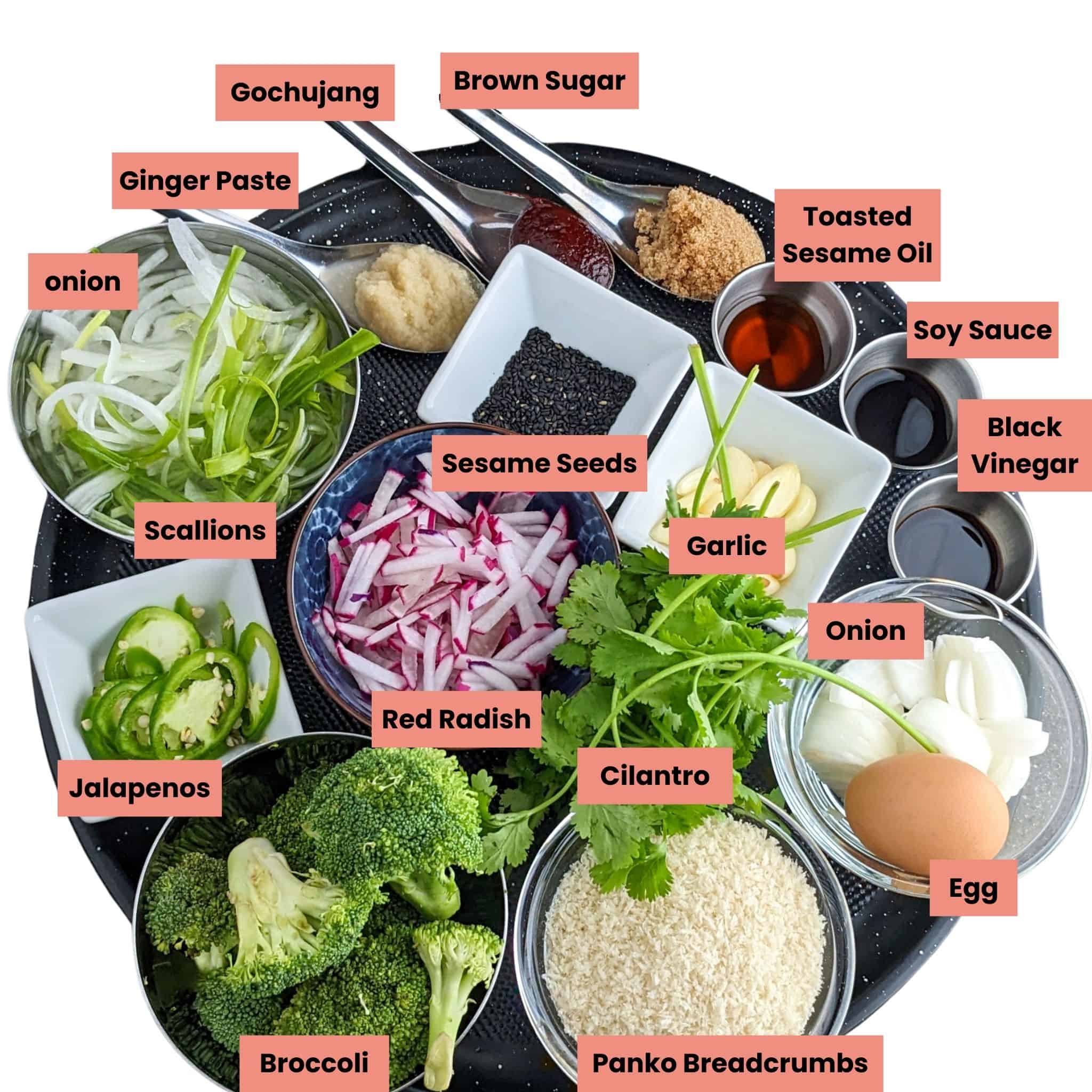
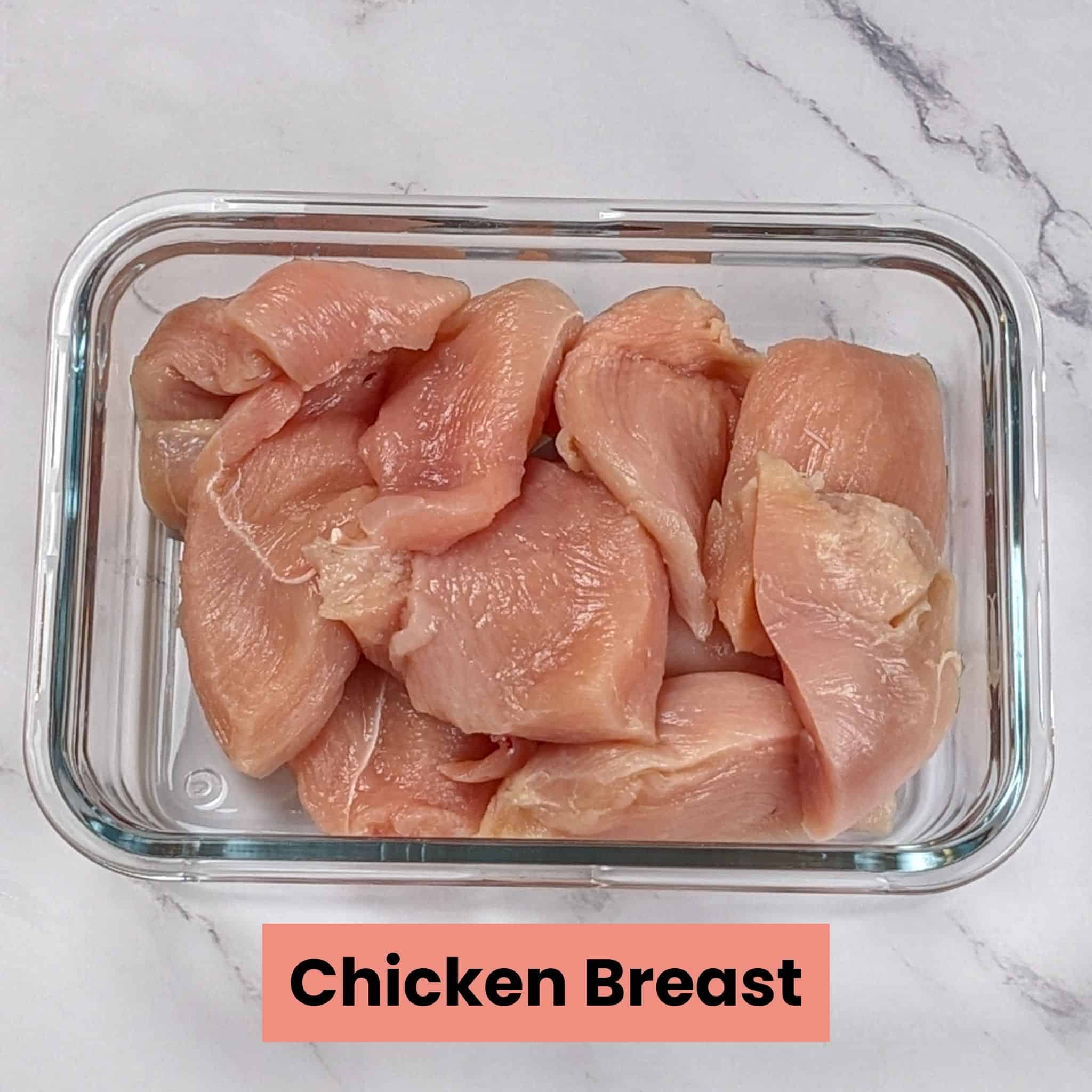
Before starting, ensure you have cooked rice and steamed or boiled broccoli florets ready. Prepare the boneless skinless chicken breast by blending onion, ginger, and garlic into a paste, then mix with the chicken, egg, and panko breadcrumbs in a sealable bag.
For the air fryer, preheat to 390°F and cook the chicken for 8 minutes. Preheat the oven to 400°F. Place the chicken on a parchment-lined sheet pan and bake for 15-20 minutes, flipping halfway.
While the chicken cooks, prepare a garnish by slicing scallions, onion, red radish, and cilantro, and place them in iced water to keep them crisp. Make the sauce by combining gochujang paste, brown sugar, low-sodium soy sauce, black vinegar, sesame oil, and water.
Heat the sauce in a wok or frying pan, add the chicken and broccoli, and remove from the heat immediately. Serve over the prepared rice.
Watch How to Slice Radish

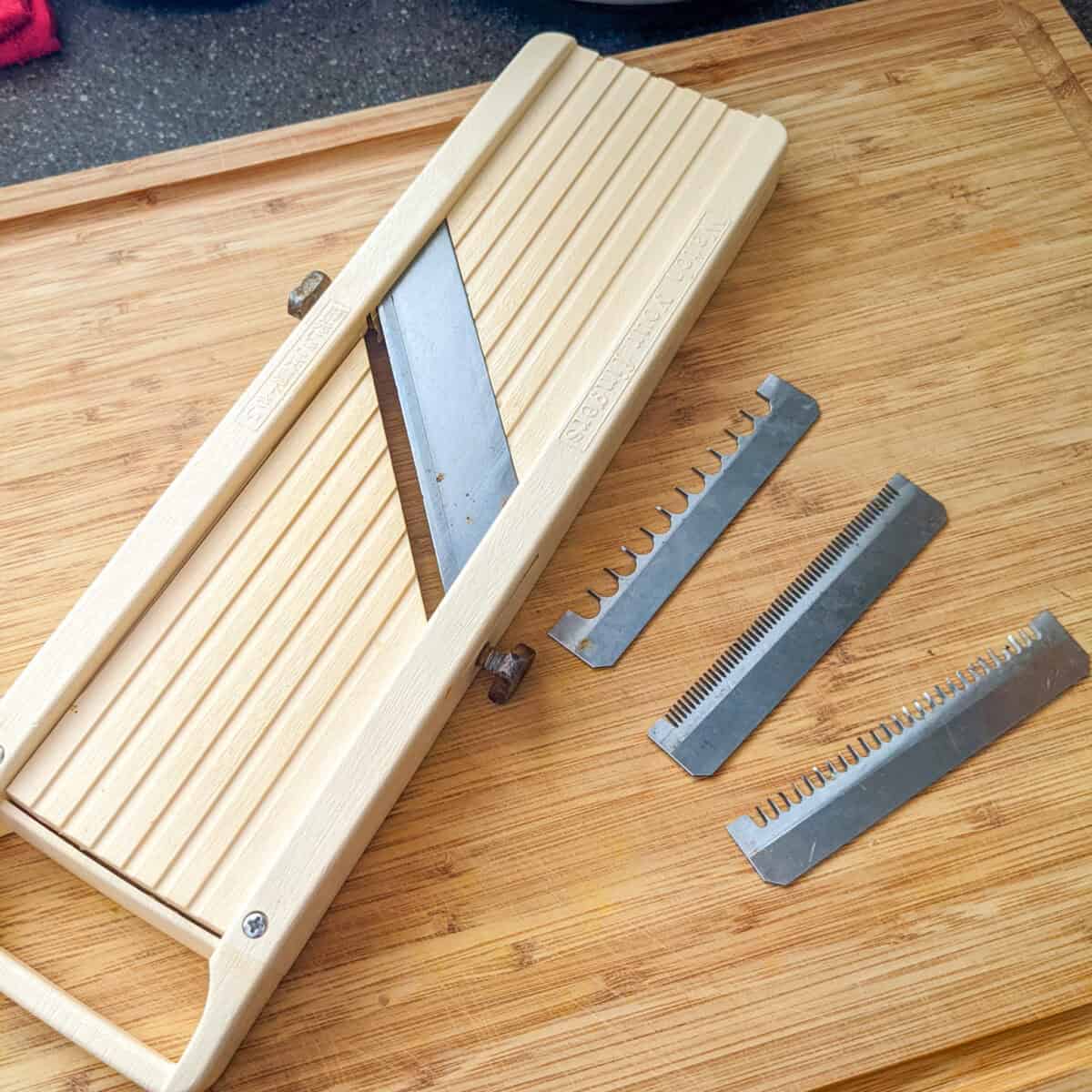
For perfectly sliced radishes and restaurant-quality salads, a Japanese mandoline is essential. This tool provides precise, uniform, paper-thin slices, ensuring even cooking and an attractive presentation. It saves time in the kitchen, effortlessly slicing in seconds, and offers versatility with adjustable settings to control thickness, making it perfect for everything from delicate radish slices to hearty potato chips.
Culinary Glossary
This section provides concise definitions of key ingredients and techniques to enhance understanding and improve cooking skills related to this recipe.
- Gochujang - A Korean chili paste made from red chili powder, fermented soybeans, glutinous rice, and salt.
- Panko Bread Crumbs - They are Japanese-style breadcrumbs known for their light, airy texture, which creates a crispier coating than Italian breadcrumbs, making them perfect for frying or baking.
- Scallions - Also known as green onions, are long, slender vegetables with a mild onion flavor. Both the white base and green tops are edible and add a fresh, delicate flavor to dishes.
- Red Radish - They are small, round root vegetables with a crisp texture and a sharp, peppery flavor. They add a vibrant color and crunch to salads and garnishes.
- Cilantro - (aka Coriander Leaves) is an herb with a bright, citrusy flavor that is often compared to parsley. When shopping, look for its distinct, feathery leaves, which are usually more delicate and fragrant than parsley's broader, flat leaves.
- Chinese Black Vinegar - A dark, complex vinegar with a rich, smoky flavor commonly used in Asian cooking. It can often be found in the international aisle of grocery stores or in Asian markets.
- Toasted Sesame Oil - This has a deep, nutty flavor compared to regular sesame oil, which is light and neutral. The toasted version is typically used as a finishing oil, adding a rich, aromatic touch to dishes. Learn more about this in Heart Healthy, High Smoke Point Oils for Cooking.
Substitutions
Find easy ingredient swaps to fit dietary needs or what you already have in your pantry. By the way, the links in this section may take you to an external site to shop for that item.
Dairy-Free
- Yay! This recipe is already dairy-free!
Gluten-Free
- Panko Bread Crumbs - Use gluten-free panko breadcrumbs or crushed rice crackers to bread the chicken.
- Low-Sodium Soy Sauce - Traditionally made with wheat. Substitute with gluten-free soy sauce, tamari, or coconut aminos.
- Chinese Black Vinegar - It is typically made from grains such as rice, wheat, or millet, and some varieties may contain wheat or barley, making it not always gluten-free. However, gluten-free Chinese black vinegar is available, made entirely from rice.
Vegetarian
- Boneless, Skinless Chicken Breast - To make this recipe vegetarian, replace the chicken with tofu, tempeh, or oyster mushrooms, and marinate them similarly to the chicken.
Convenience
- Gochujang - Substitute with sriracha mixed with a bit of honey for a similar spicy-sweet flavor.
- Brown Sugar: -Use honey, maple syrup, or a sugar substitute like coconut sugar.
- Black Vinegar - Swap with balsamic vinegar or rice vinegar.
- Boneless Skinless Chicken Breast - Substitute with boneless skinless chicken thighs for a juicier result.
- Cooked Rice - Jasmine rice, basmati rice, or short-grain sushi rice work well with this dish. I used multigrain rice mixed with sushi rice at a 1 to 3-ratio. Learn more.
- Red Radish - Pick up some crunchy julienne White Korean Pickled Radish, then toss it with the onions, scallions, and jalapenos.
- Quick Stir-Fry Sauce Prep Idea: Combine ½ cup of Teriyaki sauce with 2 tablespoons of Gochujang. However, it won't taste quite the same, but it will get you there. Taste for sweetness and add more sugar if needed before cooking this mixture.
Change Heat Level - Modify the gochujang chicken and broccoli stir-fry recipe's heat level to your liking, and learn more about the Scoville Scale and Chili Pairings.
Variations
Explore fun twists and creative ways to make this recipe your own.
- Korean Fried Chicken Sandwich - Omit the rice and broccoli and make a gojuchang chicken sandwich with the onion garnish and extra sauce. Instead of making chicken pieces, butterfly the chicken, then cut it into 4 cutlets. Then toss in the egg mixture and panko, then air fry. Also, use a toasted buttered brioche bun.
- More Steamed Vegetables - Add sugar snap peas, snow peas, asparagus, green beans, napa cabbage, carrots, bok choy, and/or bell pepper for extra crunch and color. I suggest doubling the sauce recipe to handle the additional vegetables.
- The Sauce is a Keeper - Use the recipe's sauce for fried chicken or baked chicken wings.
- Korean Fried Shrimp - Try shrimp in this recipe instead of chicken.
- Stir-Fry Noodles - Replace the rice with your favorite spicy instant noodles. Firstly, boil the noodles, drain most of the water, and add the seasoning packet. Then combine and add the chicken, broccoli, stir-fry, and top with the vegetable garnish.
Equipment List
Here's what you'll need to make this recipe with ease. By the way, the links in this section may take you to an external site to shop for that item.
- Air Fryer or Oven- Used to cook breaded chicken. This recipe was developed using the Ninja Foodi 5-in-1 Indoor Grill. However, you can try baking in the oven if you do not have an air fryer. The steps for each are on the recipe card.
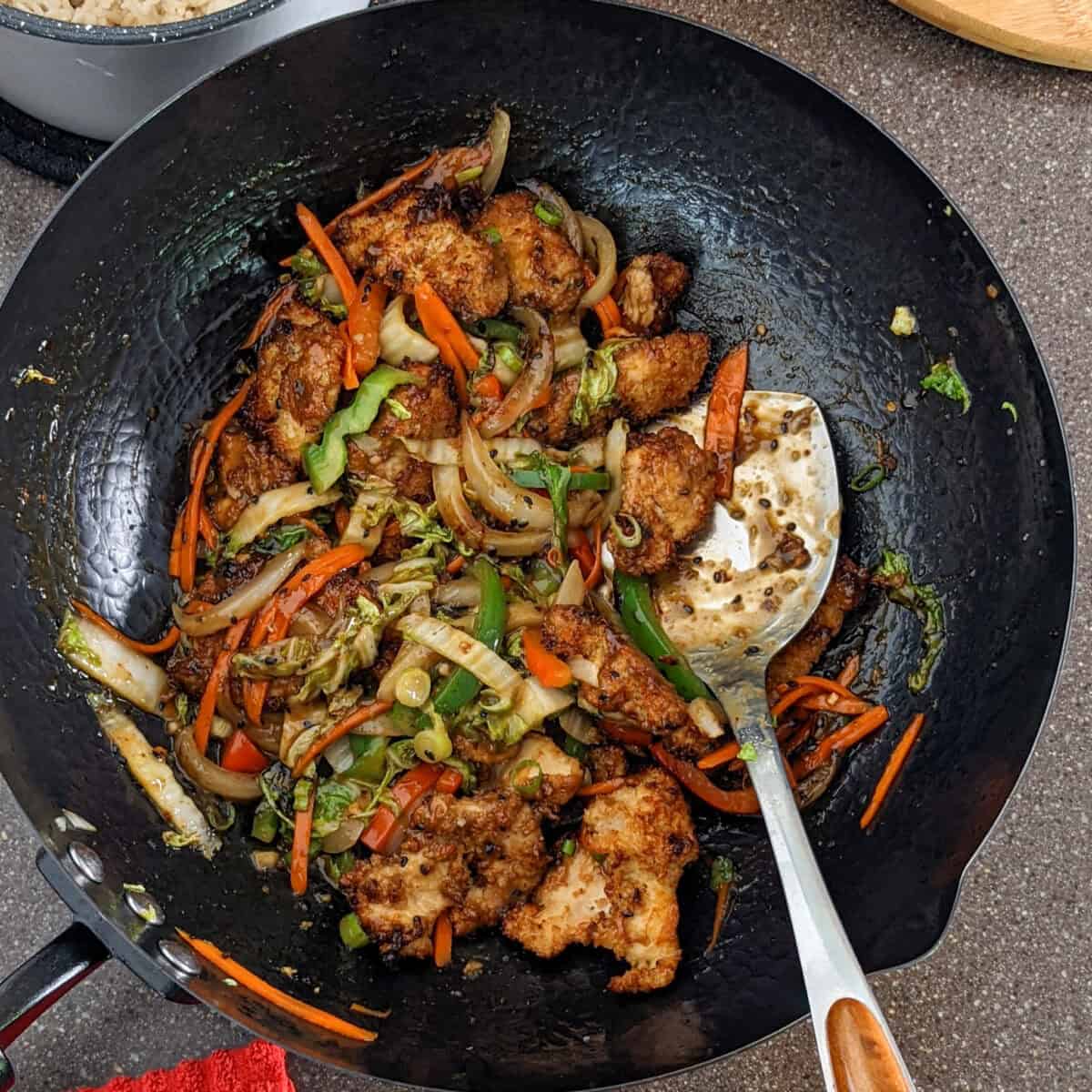
- Wok - Used for making the sauce and quickly stir-frying the chicken and broccoli on high heat. In addition, I developed this recipe using the Bielmeier Carbon Steel Wok. It is also thoughtfully packaged with easy instructions on seasoning the pan. It is lightweight and the perfect size to store, but it comes with a wooden or glass lid and utensils. Check out 15 Things to Know on How to Use a Wok.
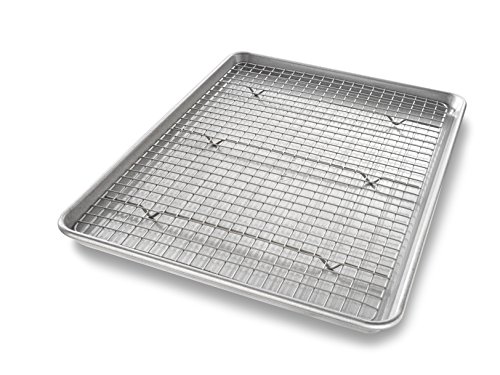
- Sheet Pan or Tray - Used to hold the air-fried chicken or to bake in the oven. I suggest using a metal tray, like the Nordic Ware Natural Aluminum Commercial Baker's Half Sheet Pan, since it is the perfect size to place next to the stove to keep ingredients warm.
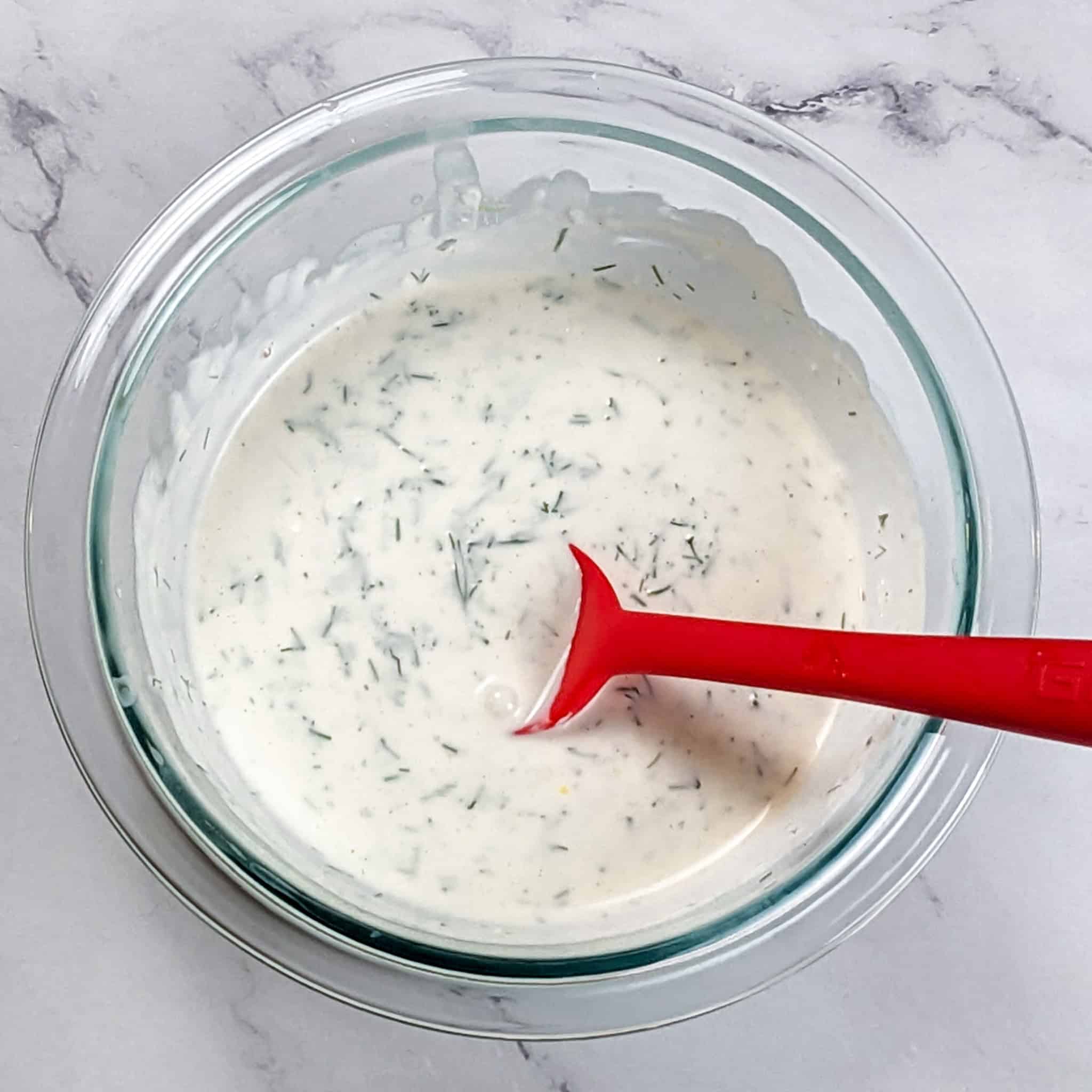
- Mixing Bowls- These are used for the ice bath to crisp the garnish and for combining ingredients such as marinade, sauce, or breading mixtures.
- Wok Spatula - Perfect for tossing and stirring ingredients in the wok without scratching the surface.
- Food Processor - Blends ingredients like onion, ginger, and garlic into a smooth paste. I used the KitchenAid 3.5 Cup Food Chopper to develop this recipe.
- Resealable Bag - Used for marinating and breading the chicken efficiently without
- mess.
Kitchen Must-Haves Reviews
Find a collection of my reviews of kitchen equipment that I have purchased or recommend. Kitchen Must-Haves - Find other tools I use here.
My Review: The wok is hands down my favorite for cooking. The size is perfect, not too big, not too small, and the flat bottom makes it super easy to use on any stovetop, especially for stir-fries and high-heat cooking. I was also impressed by the thoughtful design and the sleek packaging, which honestly makes it a great gift for anyone who loves to cook. What really stood out was the thorough set of instructions included on how to season and care for the wok, perfect for novice wok users who might feel intimidated. It’s a beautiful, functional piece that’s earned its permanent spot in my kitchen. Read my article on using a wok here.
Review: The Cosori Turbo Blaze Air Fryer has been an absolute big help in my kitchen! The large basket is perfect for cooking larger portions, and cleanup is a breeze: just toss it in the dishwasher, and it comes out spotless and undamaged. I also love the thoughtful design, with a flat grid basket and silicone feet that prevent scratching and are super easy to remove and reinsert. The big, clear display with multiple preset temperature and time options makes cooking so quick and hassle-free, taking all the guesswork out of the process. Honestly, I love it so much that I haven’t had to pull out my Ninja air fryer since getting this one! I even ended up buying one for my mom!
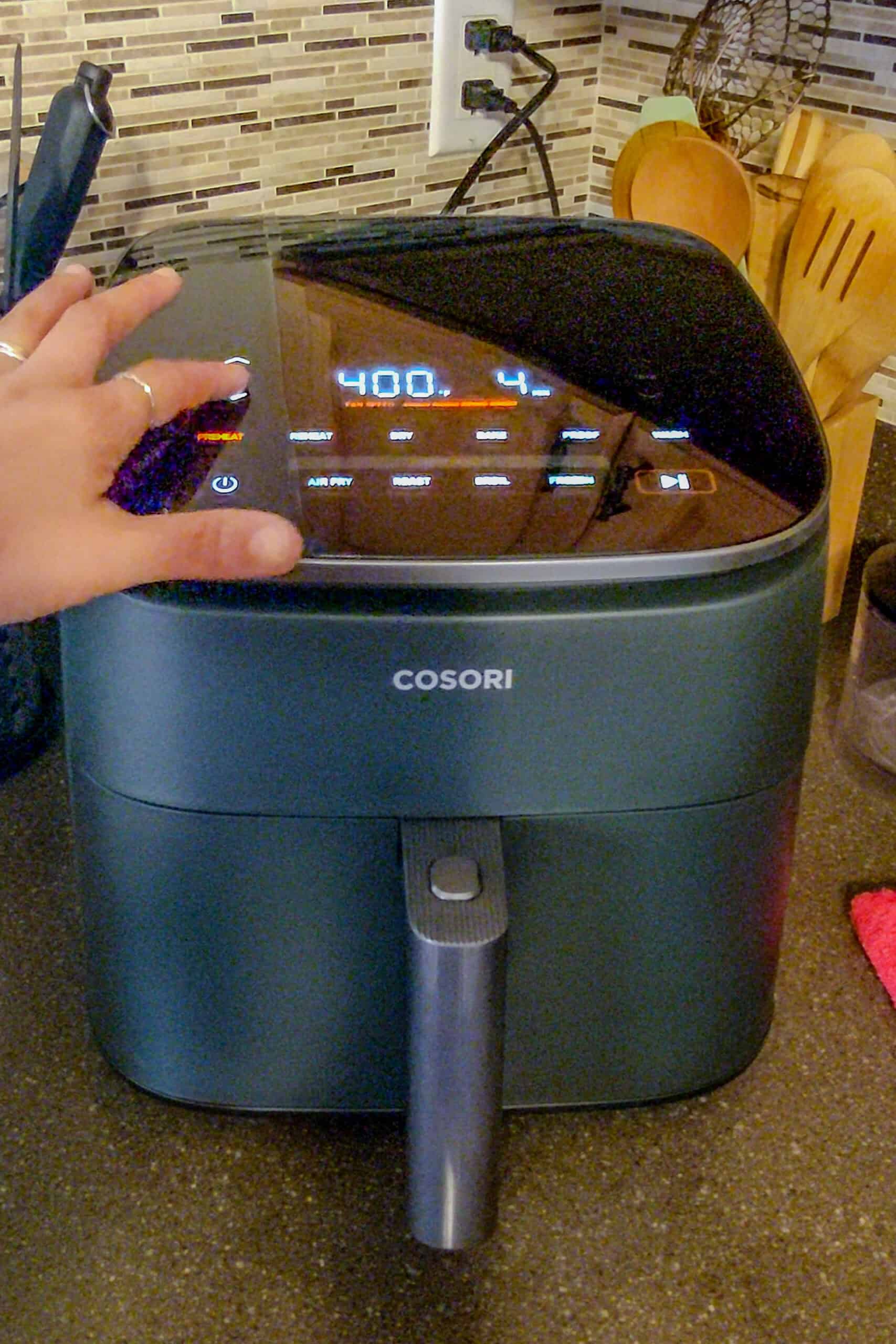
My Review: I use this must-have air fryer practically every day! Most of my recipes call for it. It is quick and easy to use. Also, it’s multifunctional, with not only an air fryer option but also roast, grill, bake, and even a dehydrate function. Setting the time and temperature is easy with soft, clearly labeled buttons. See the results with my Air Fryer Branzino with Lemon Potatoes and Vegetables recipe. 08/19/24: I rate this product 4 out of 5 for space and convenience. It takes up a lot of space.
Additionally, it has many components that need cleaning and is not dishwasher-safe. I suggest hand washing after every use to prevent chipping. However, I refuse to give this equipment away; as an air fryer, it's the best I've had so far.

My Review: The USA Pan Bakeware Half Sheet Baking Pan and Nonstick Cooling Rack Set is such a smart buy, it’s incredibly convenient to have both the pan and rack come together as a set. You never know when you’ll need the rack for roasting, cooling, or glazing, and having it perfectly fitted to the pan saves so much time and hassle. The pan itself is super sturdy with excellent heat distribution, and the nonstick rack makes cleanup a breeze. I’ve used it for everything from baking cookies to roasting vegetables and even draining fried foods. It’s one of those kitchen upgrades that just makes life easier.
My Review: I love the clean, classic look of this Pyrex 3-piece glass mixing bowl set. It’s a staple in my kitchen. Pyrex is known for its durability, and these bowls definitely live up to that reputation. I use them for everything from mixing batters to storing leftovers, and their microwave-safe feature makes them super multifunctional. They’re also easy to clean and stack nicely in the cabinet. The only reason this isn’t a five-star for me is that I always have that little fear of breaking them when I’m using or storing them, even though they’re made to last.
My Review: These 304 stainless steel wok tools (e.g., the soup ladle and wok spatula) are incredibly well-made and beautifully designed. The long, heat-resistant wooden handles make them perfect for both my indoor and outdoor woks, giving me the reach I need while staying cool to the touch. They look great hanging in my kitchen and have held up well with frequent use, making them reliable tools I always reach for when stir-frying or preparing soups.

My Review: I’ve had my Benriner Mandoline Slicer for over 20 years, and it’s still one of the most reliable tools in my kitchen. While I own the older model, the new version is nearly identical, featuring the same chef-trusted quality, sharp Japanese stainless steel blades, and simple, effective design. It’s been a huge help with meal prep, especially when I need consistent, thin slices fast. Benriner has always been the original go-to mandoline in professional kitchens, and for good reason: it just works. If you want to learn more about how to safely and efficiently use a Japanese mandoline, check out my full guide on the Japanese Mandoline here.
Storage and Reheating
Learn how to properly store leftovers and reheat them to keep them fresh and flavorful. Learn more about Understanding Food Temperature Safety Zones: Cook, Store & Serve Safely.
- Refrigerator - Store the chicken, broccoli stir-fry, and rice in an airtight container. For the vegetable garnish, you can also store it in an airtight food container lined with a damp, folded paper towel at the bottom; it will last 2 days.
- Freezer - First, allow the cooked chicken and broccoli to cool completely. Transfer the stir-fry into an airtight container or freezer-safe zip-top bag, removing as much air as possible to prevent freezer burn. Label the container with the date and contents, and freeze for up to 3 months. When ready to eat, thaw the stir-fry in the refrigerator overnight.
- Reheat - In a wok or skillet over medium heat until warmed through, adding a splash of water or broth if needed to loosen the sauce. Serve over freshly cooked rice and garnish with fresh scallions, onions, radishes, and jalapenos for the best flavor and texture.
Airtight Food Containers: I interchange glass food storage containers with plastic clip-on lids. I always suggest glass storage containers because they can be microwaved, hold food without staining, and maintain a more stable temperature, keeping food fresher for longer. I recommend checking out these airtight food containers on Amazon.
Cooking Tips
Your Cooking Tips Resource Guide - Become a better home cook with tips to help you cook more efficiently on the Cook's Notebook tab.
Extra Crispy Chicken
Make sure the chicken pieces are evenly spaced in the air fryer or on the sheet pan, allowing air to circulate properly.
When Stir-frying
It is essential to have all your ingredients prepped and ready to go, and to keep them close by; since it is a rapid process, you don't want your sauce to dry out or your ingredients to burn. I used avocado oil because it has a high smoke point.
Don't have a food processor?
- Garlic - Smash the garlic cloves with the side of your knife to make them flat and mince finely
- Onion - Use a box grater and place it directly on your cutting board over a flat plate or large bowl. Cut the onion in half and use the side with the big holes (i.e., course grate) or chop finely.
- Ginger - Peel the ginger root with a spoon by scraping the skin off and use the box grater on the side with the small holes (i.e., fine grate) to grate it.
- Then, combine all the ingredients.
Don't have an air fryer?
Try baking it in the oven at 390°F for 10 to 15 minutes. However, this is suggested by experience; this suggestion has not yet been recipe-tested. In addition, use a half-sheet pan with a rack.
Slicing Chicken Trick
Thaw out only halfway to get even slices if using frozen chicken. Learn and see how to slice frozen chicken.
Breading Chicken Alternative
Another option is to use a shallow container with a lid or a Batter Bowl. To begin with, make a layer of bread crumbs. Then, add several chicken pieces without overcrowding the container and place the lid on. Afterward, hold the container tightly and shake well.
Finally, remove the breaded chicken pieces. If you need to add more breadcrumbs, do so. Then, repeat the process until all the chicken pieces are coated with panko.

Frequently Asked Questions
Steaming or boiling the broccoli for about two to three minutes before stir-frying creates a more tender broccoli. In contrast, going straight into the wok raw results in unevenly cooked broccoli.
Yes, boneless skinless chicken thighs are a great alternative and will make the dish juicier.
The key to tender chicken in stir-fries is to slice it thin and cook it on high heat for a short time to prevent it from drying out.
Yes, you can prepare the chicken and sauce ahead of time, but it's best to stir-fry just before serving.
Store leftovers in an airtight container in the refrigerator for up to 3 days. Reheat in a wok or microwave.
Absolutely! Add more gochujang or sprinkle in some crushed red pepper flakes to increase the heat.
Yes, reduce the amount of brown sugar or replace it with a sugar substitute to lessen the sweetness.
Avoid using refined oils like extra-virgin olive oil and toasted sesame oil; these are not high-smoke-point oils. You might get away with regular olive oil, but it is not recommended.
In addition, toasted sesame oil should be used towards the end, not as a cooking oil. The same goes for regular sesame oil; if you use it as a cooking oil, mix it with a neutral vegetable oil with a high smoking point.
Asian Recipes
Looking for other Asian-inspired recipes like this? Try these:
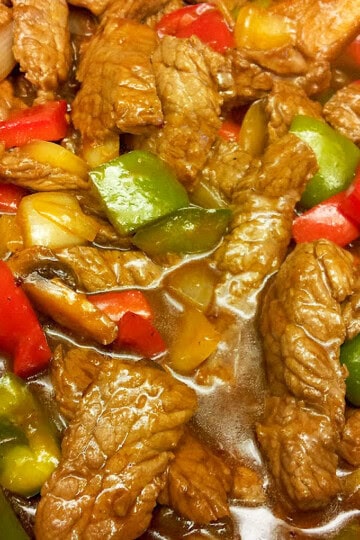
- Chinese Pepper Steak with Red Wine and Hoisin Sauce
- Indian Cooking Techniques That Changed How I Think About Food
- Quick and Fresh Stir-Fry Recipes for Spring and Summer
- Spicy Garlic Chili Coconut Curry Sauce for Pasta and More
Cooking Tips and Tutorials
If you found this tutorial helpful, you'll love my Cook's Notebook collection. From knife skills and flavor bases to time-saving tricks and essential equipment guides, this section is packed with chef-tested lessons to help you cook with confidence.
- Seasonal Produce Guide: What Fruits and Vegetables Are in Season?
- How to Roast Food: The Fundamental Principles of Roasting
- 2026 Fall Seasonal Produce Guide: Fruits and Vegetables to Enjoy This Season
- What Is Emulsification? A Simple Guide to Creamier Sauces and Dressings
📖 Recipe
Sweet Spicy Sticky Gochujang Chicken Stir Fry
Ingredients
For Crispy Chicken
- 3 cloves garlic cloves
- ¼ cup onion large chop
- 1 tablespoon ginger
- 1 large egg
- 1 pound boneless skinless chicken breast thinly sliced
- salt and pepper
- 1 cup panko breadcrumbs
For Sweet and Spicy Gochujang Sauce
- 2 tablespoons gochujang paste
- 2 tablespoons brown sugar
- 2 tablespoons low-sodium soy sauce
- 2 tablespoons Chinese black vinegar
- 2 tablespoons toasted sesame oil
- 2 tablespoons water
For Stir-fry
- 2 tablespoons avocado oil
- 2 cups steamed broccoli florets
Garnish and Sides
- 3-4 medium scallions
- 1 small onion
- 6-8 sprigs cilantro leaves
- 3-4 medium red radish
- 2 jalapenos
- 1 teaspoon black sesame seeds
- 2 cups cooked rice
Equipment
Instructions
- Save time in the kitchen: Read the instructions thoroughly, then gather and prep all your ingredients before cooking! Learn Prepping Tips.
- Before Starting the Recipe: Ensure you have cooked rice and broccoli (steamed or boiled for 3 minutes). To develop this recipe, I used Korean-style multigrain rice.
- Prepare the Chicken: In a medium mixing bowl, beat the egg and set aside. Combine onion, ginger, and garlic in a food processor and blend into a paste. Then, combine the chicken, paste, and egg in the sealable bag. Pour the panko into the bag, shake to coat each chicken piece, and set aside.
- For the Air Fryer: Preheat your air fryer to 390 °F and set the cooking timer to 8 minutes. Lay the chicken pieces flat with at least a ½-inch space between them in the basket. You may have to repeat this process if you do not have enough space. Once the chicken is cooked, set it aside on a sheet pan or tray (or leave it in the air fryer with it turned off).
- For the Oven: Preheat your oven to 400 °F and line a sheet pan with parchment paper. Place the breaded chicken in a single layer on the sheet pan. Lightly spray or drizzle the tops with olive oil to help them crisp up. Bake in the preheated oven for 15-20 minutes, flipping halfway through, until the chicken is golden brown and cooked through, reaching an internal temperature of 165 degrees Fahrenheit.
- Make the Garnish: Fill a medium bowl with iced water while the chicken cooks. Then, thinly slice the scallions, onion, and red radish and place them in the bowl. Add the cilantro as well; this helps them stay crisp and fresh, enhancing their texture and flavor. Finally, thinly slice the jalapeno and set them aside. Immediately wash your hands and tools after slicing chilies, and do not rub your eyes.
- Make the Sauce: In a small mixing bowl, combine the gochujang, brown sugar, soy sauce, black vinegar, sesame oil, and water; mix well and set aside. Heat the wok or a large frying pan with oil on medium-high heat. Slowly pour in the sauce mixture, but it will bubble up quickly. Toss in the chicken and broccoli and remove from the heat immediately.
- Serve: Plate up the rice and top it with the chicken. Drain the scallion mixture from the iced water, shake off any excess water, and place it on the chicken. Then garnish with the jalapenos and black sesame seeds.
Video
Nutrition
Subscribe to My YouTube
SUBSCRIBE: 👈To my YouTube Channel to Get Notifications of New Videos.
Have a Comment or Question?
If you have a question or comment about this chicken and broccoli recipe, please post it below. You will definitely get a quick response. It also helps our other readers to stay informed. Thanks!
Leave a Reply