


Choosing between an indoor grill pan and an outdoor grill can completely change how you cook at home. In this guide, you'll learn the key differences, pros and cons, and which option best fits your cooking style, space, and equipment.
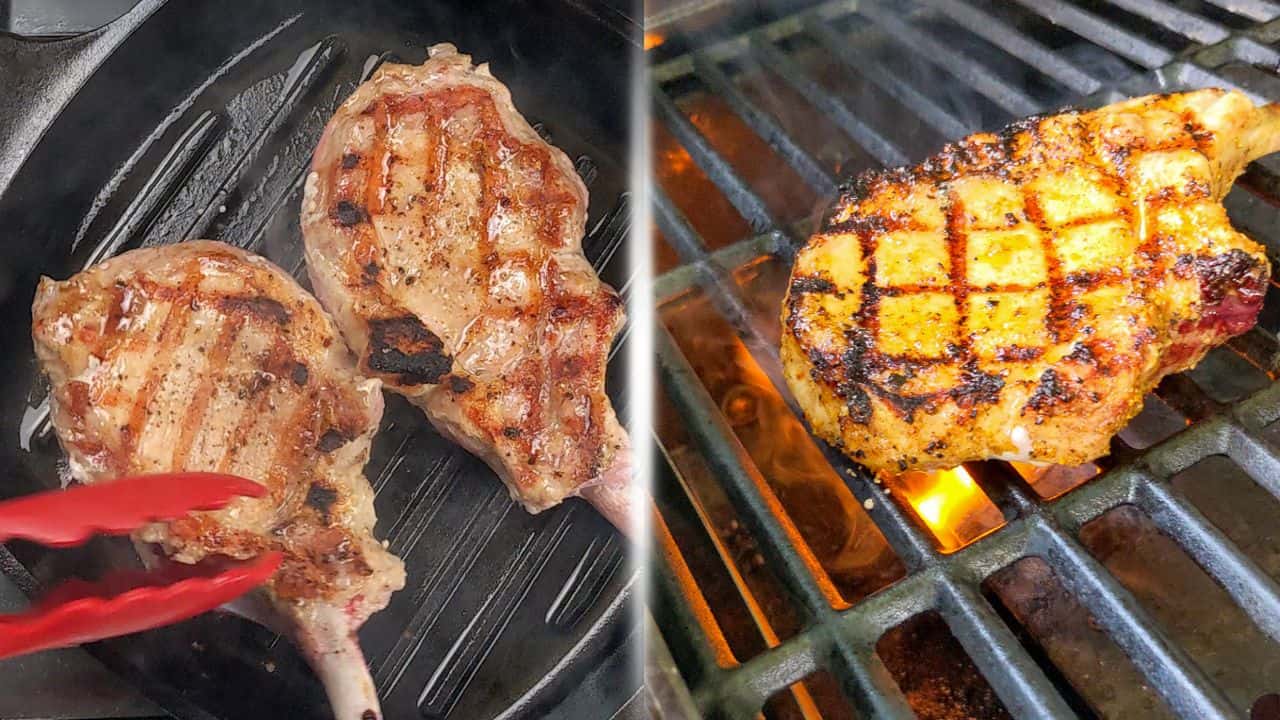
Table of Contents
Jump to:
- A Complete Guide for Better Results
- Note From Chef Maika
- What Is an Indoor Grill Pan?
- When an Indoor Grill Pan Works Best
- What Is an Outdoor Grill?
- Indoor Grill Pan vs Outdoor Grill: Key Differences Explained
- When to Use an Indoor Grill Pan vs Outdoor Grill
- Can You Get the Same Flavor Indoors?
- What to Look for in a Grill Pan
- Recommended Grill Pans for Indoor Grilling
- What Makes One Cast Iron Grill Pan Different From Another?
- 5 Common Mistakes When Using a Grill Pan
- Frequently Asked Questions
- More Kitchen Essentials and Tips
- Cooking Tips and Tutorials
- Have a Comment or Question?
A Complete Guide for Better Results
Indoor grilling and outdoor grilling both deliver bold flavor, but they work very differently depending on your setup. Whether you're cooking on a stove top grill pan or using a gas or charcoal grill outside, your results come down to heat, timing, and the tools you're working with.

In this guide, I'll break down indoor grill pan vs. outdoor grill, when to use each, and how to choose the best option for your kitchen, lifestyle, and cooking goals.
Note From Chef Maika
As a chef, I use both indoor grill pans and outdoor grills depending on the situation. When I need speed and convenience, I reach for my grill pan. But when flavor is the priority, especially for entertaining, nothing replaces cooking over an open flame. Knowing when to use each is what really improves your results.
Indoor Grill Pan vs Outdoor Grill: What's the Difference?
An indoor grill pan is used on a stove top and is designed for convenience, smaller portions, and year-round cooking. An outdoor grill uses open flame or charcoal to deliver higher heat and a stronger smoky flavor, making it better for larger meals and more intense searing.
Choosing the Right Grill Setup for Your Kitchen
The best option depends on how you cook day to day. If you want quick meals with easy cleanup, an indoor grill pan is a reliable choice. If you're focused on flavor, high heat, and cooking for a group, an outdoor grill gives you more flexibility and power.
What Is an Indoor Grill Pan?
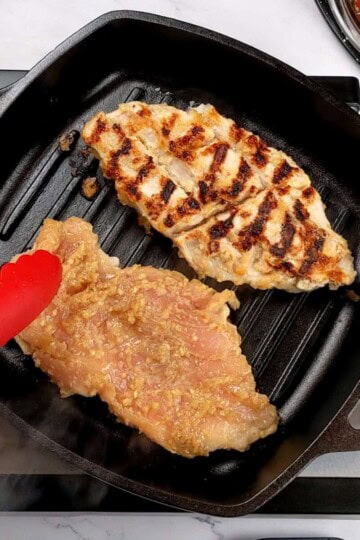
An indoor grill pan is a stovetop pan designed with raised ridges that mimic the surface of an outdoor grill. It allows you to cook over high heat and create grill marks on proteins and vegetables without needing to step outside.
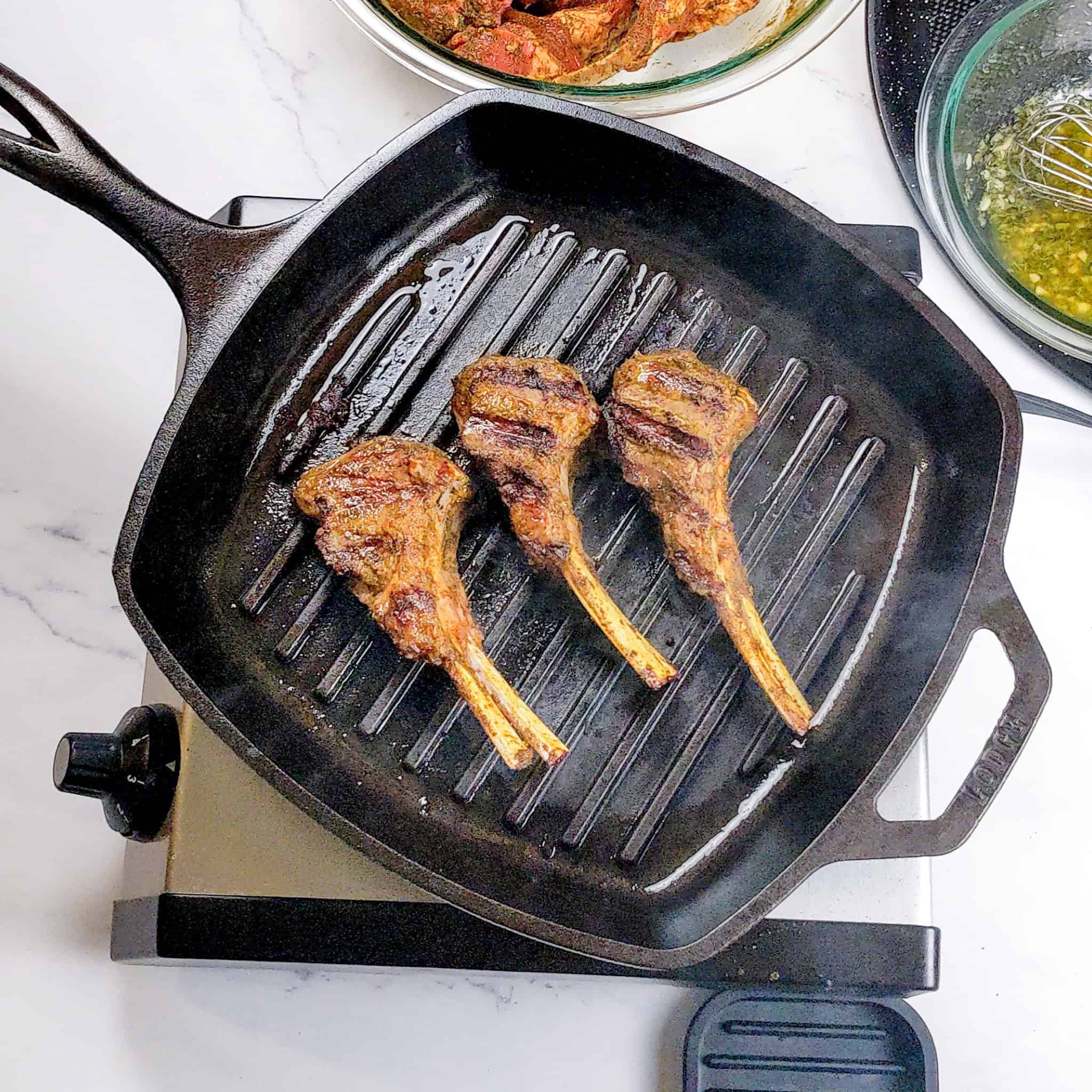
Most indoor grill pans are made from cast iron or heavy-duty nonstick materials, and they're built to retain heat well so you can achieve a proper sear on a standard stove top.
Why Use an Indoor Grill Pan?
Indoor grill pans are ideal for everyday cooking. They're convenient for indoor use, work on most stovetops, and make it easy to create grill marks while maintaining better control over heat.
Cast Iron vs Nonstick Grill Pans
When choosing an indoor grill pan, you'll typically see two main options.
- Cast-iron grill pan - Retains heat extremely well, delivers better sear, and creates more defined grill marks.
- Nonstick grill pan - Easier cleanup, lighter weight, but doesn't achieve the same high-heat performance.
If your goal is a perfect sear and deeper flavor, cast iron is the better choice. Get more tips with my Best Cast Iron Skillet Care | Cooking, Cleaning to Seasoning guide.
My Go-To Indoor Grill Pan
Most of my cast-iron cookware is from Lodge Cast Iron, and that's intentional. They've been around for over 100 years, founded in 1896, and in my experience, they're one of the most affordable, reliable, and accessible brands you can find.
You can pick up Lodge products almost anywhere, online or in-store, and I always know what to expect in terms of performance. When I recommend equipment, I prefer to speak from what I've actually used in my own kitchen, and Lodge has consistently delivered for me.
Here are the cast-iron grill pans I personally use and recommend for stovetop grilling:
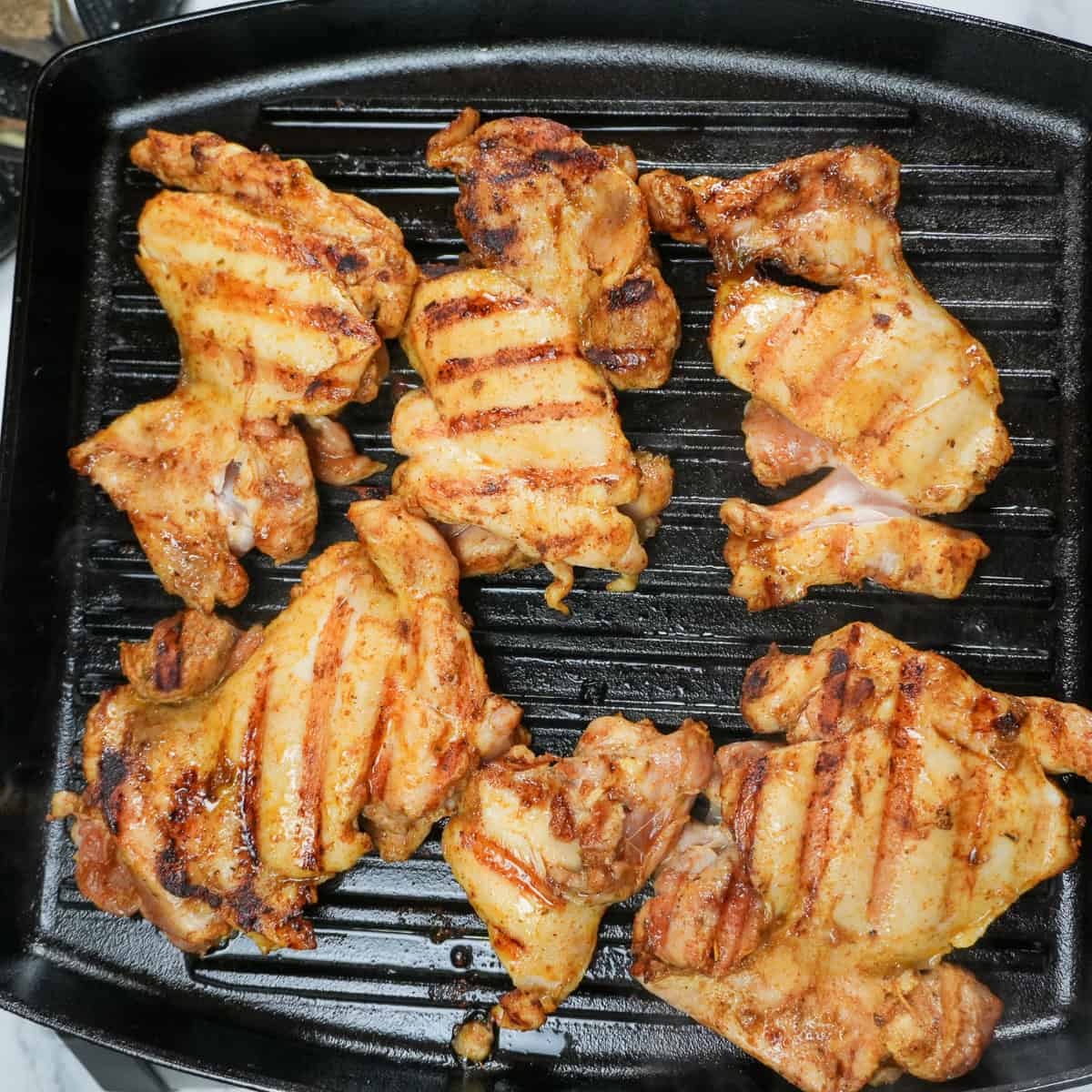
My Review: I was thrilled when Lodge introduced its Blacklock 12-Inch Triple-Seasoned Cast Iron Grill Pan. It combines the durability I’ve always trusted from the brand with a much lighter design that makes it a breeze to handle. The larger square surface was a welcome upgrade, easily fitting about 1 ¾ pounds of boneless, skinless chicken thighs with room to spare, and the triple seasoning provided a naturally nonstick finish right out of the box. I’ve been cooking with Lodge cast iron for years, and once again, they didn’t disappoint. This pan is built to last a lifetime while still making everyday cooking feel effortless. Check out my cast-iron care guide to keep yours in top shape!
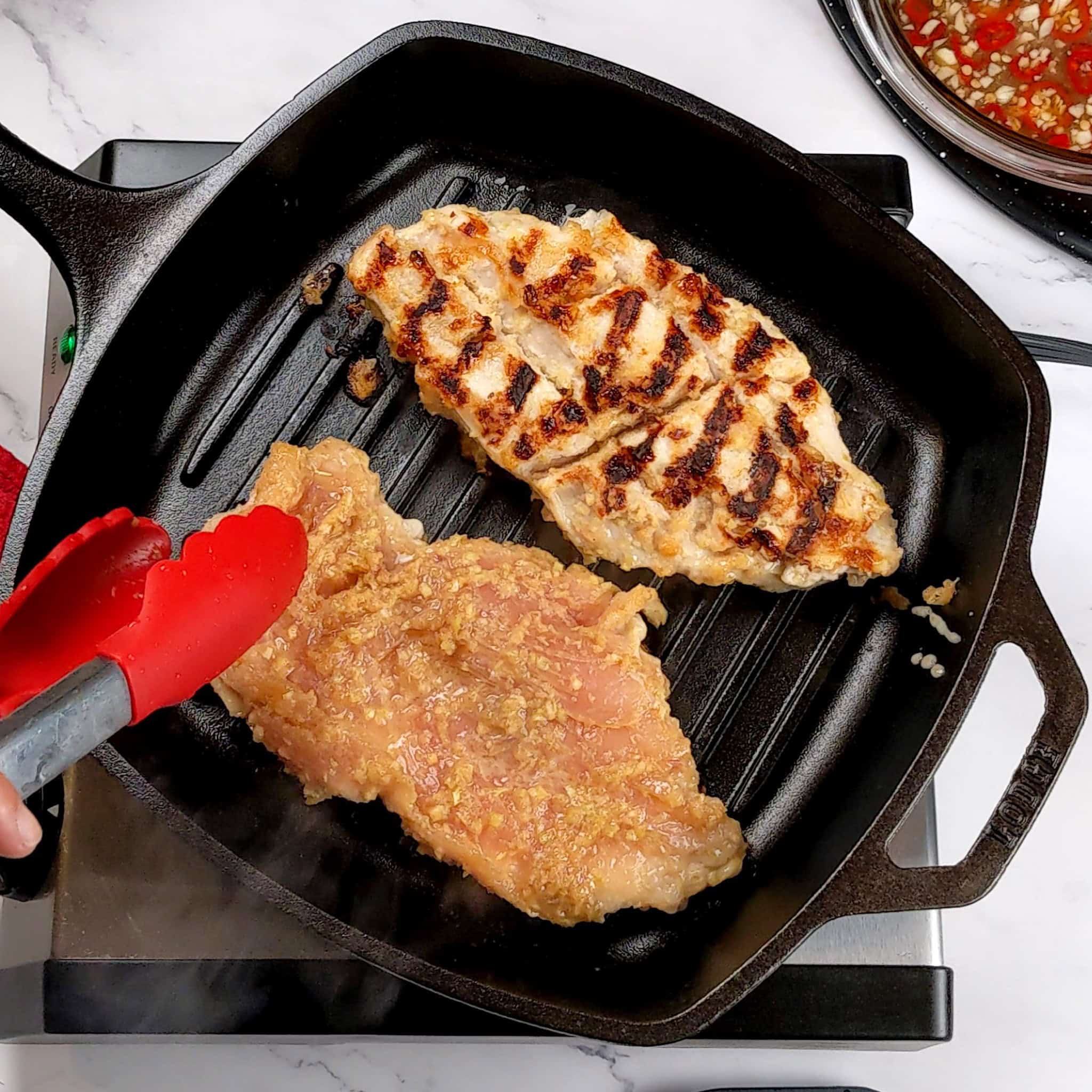
My Review: The Lodge 10.5-inch Cast Iron Square Grill Pan with the red silicone handle has become my go-to for indoor grilling. I love how it gives my proteins, seafood, and vegetables beautiful grill marks and a delicious charred flavor without firing up the outdoor grill. The compact size is super convenient, especially when cooking for one or two, and it heats evenly, as you’d expect from good cast iron. If you're grilling kebabs, I recommend using smaller skewers; 7 inches works best, since the 10.5-inch skewers are measured from the wide top rim, not the actual grill base. This pan brings the outdoor grilling vibe right into your kitchen! Check out my cast-iron care guide to keep yours in top shape!
When an Indoor Grill Pan Works Best
An indoor grill pan is the better choice when:
- You need a quick meal without having to set up an outdoor grill.
- You're cooking smaller portions.
- You want more control over heat and timing.
- You're cooking indoors year-round.
What Is an Outdoor Grill?
An outdoor grill is a cooking setup that uses open flame or indirect heat from a gas grill or charcoal grill to cook food over grates. This method allows you to reach higher temperatures than most stovetops, creating a deeper sear and that signature smoky flavor.
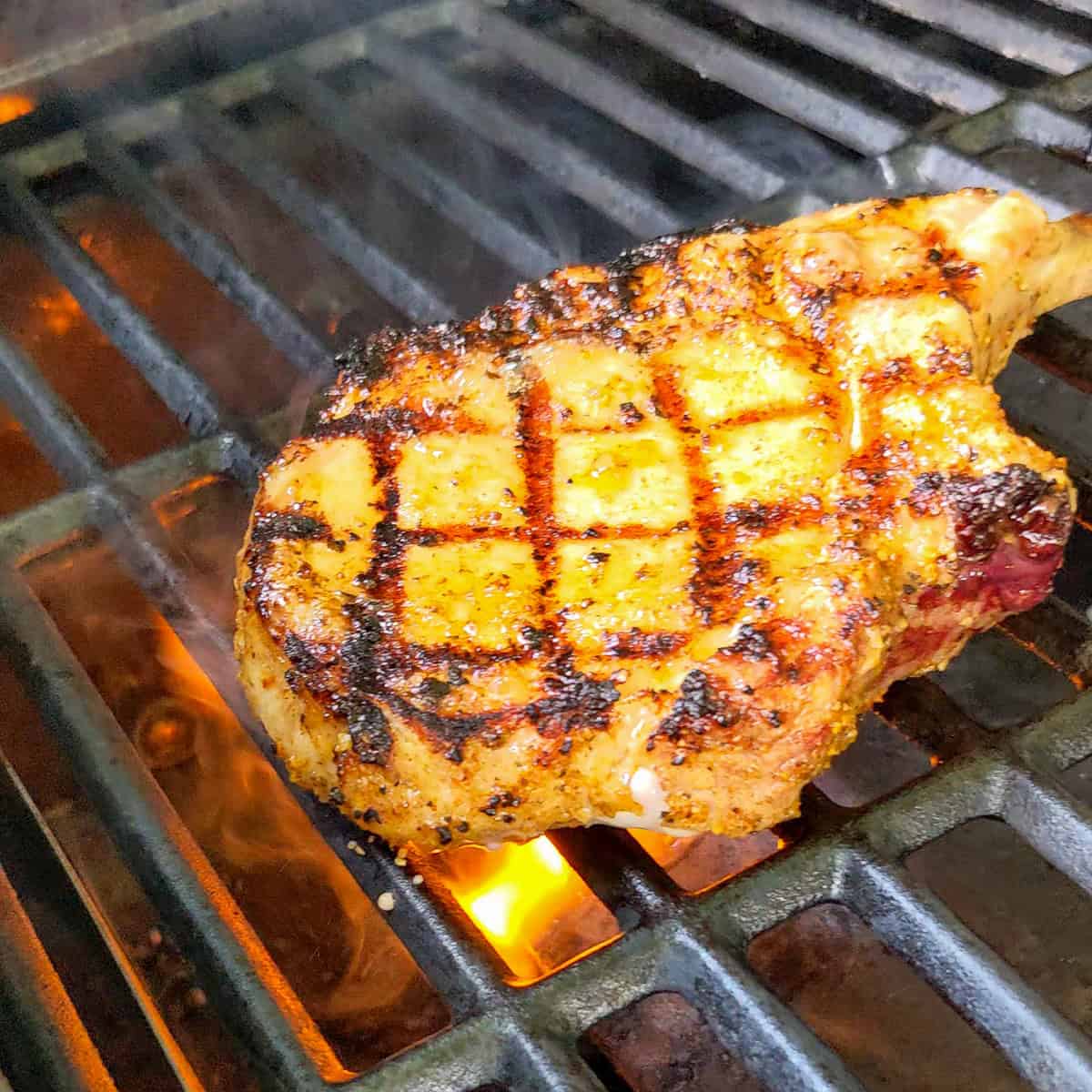
Outdoor grilling is ideal when you want bold flavor, more cooking space, and the ability to cook multiple items at once.
Gas Grill vs Charcoal Grill
The type of grill you use affects both flavor and cooking style.
- Gas grill - Heats up quickly, is easy to control, and delivers consistent cooking.
- Charcoal grill - Takes longer to heat but delivers a stronger smoky flavor and more intense heat.
Both can produce excellent results, but charcoal is often preferred for flavor, while gas is favored for convenience.
Why Outdoor Grills Perform Better at High Heat
One of the biggest advantages of outdoor grilling is the ability to cook over high heat and hot grates, which helps create a perfect sear and deeper char marks.
This is what gives grilled food its signature texture and flavor, and it's harder to fully replicate with indoor grilling.
What Is an Outdoor Grill Pan?
An outdoor grill pan is a flat or perforated pan designed to sit directly on top of grill grates. It's used to cook smaller or delicate foods that might fall through the grates.
- Why it matters - Gives you more control when cooking vegetables, seafood, or chopped ingredients
- Common types - Cast iron grill pans, perforated grill trays, and flat griddle-style pans
- Best for - Shrimp, sliced vegetables, fish, and smaller cuts of meat
Grill Grates vs Grill Pans
Outdoor grills typically use metal grates, but adding a grill pan expands what you can cook.
- Grill grates - Best for steaks, chicken, and larger cuts of meat.
- Grill pans - Better for smaller, delicate, or mixed ingredients.
Using both together gives you flexibility and better control during outdoor grilling.
When an Outdoor Grill Works Best
An outdoor grill is the better choice when:
- You're cooking for a group or hosting.
- You want a strong smoky flavor.
- You're working with larger cuts of meat.
- You need higher heat for searing.
Indoor Grill Pan vs Outdoor Grill: Key Differences Explained
Choosing between an indoor grill pan and an outdoor grill comes down to how you cook, the level of heat you need, and the kind of flavor you're trying to achieve. While both methods can produce great results, they perform very differently in a home kitchen.
Side-by-Side Comparison
This side-by-side comparison makes it easier to see how indoor grill pans and outdoor grills differ in performance, flavor, and everyday use.
| Feature | Indoor Grill Pan | Outdoor Grill |
|---|---|---|
| Heat Source | Stove top | Gas grill or charcoal grill |
| Heat Level | Medium to high heat | Very high heat |
| Flavor | Light char, minimal smoky flavor | Strong smoky flavor |
| Grill Marks | Visible grill marks | Deep char marks from open flame |
| Cooking Space | Small to medium (limited batch cooking) | Large surface area |
| Convenience | Easy, quick setup | Requires setup, fuel, and outdoor space |
| Weather Dependent | No | Yes |
| Cleanup | Easier | More involved |
| Best Use Case | Weeknight meals, small portions | Entertaining, large cuts of meat |
Heat and Cooking Performance
Outdoor grills have a clear advantage when it comes to high heat and hot grates, which makes it easier to achieve a perfect sear and deep char marks. Whereas, indoor grill pans can still reach high heat, especially with a cast-iron grill pan, but they don't produce the same level of intensity or open-flame cooking.
Flavor Differences
The biggest difference between indoor and outdoor grilling is flavor.
- Outdoor grills create a true smoky flavor from open flame or charcoal
- Indoor grill pans provide a clean sear with light char, but little to no smoke flavor
If flavor is your priority, outdoor grilling has the edge. If convenience matters more, indoor grilling is often the better choice.
Convenience and Everyday Use
Indoor grill pans are built for everyday cooking.
- Quick to heat up.
- Easy to clean.
- Perfect for small meals.
Outdoor grills require more effort but offer more cooking power.
- Longer setup time.
- More space is required.
- Better for cooking in larger batches.
Cooking Capacity
If you're cooking for one or two people, an indoor grill pan is usually enough. If you're cooking for a group or entertaining, an outdoor grill gives you the space and flexibility to cook multiple items at once.
Which One Should You Use?
- Choose an indoor grill pan if you want convenience, quick meals, and easy cleanup
- Choose an outdoor grill if you want high heat, smoky flavor, and larger cooking capacity
When to Use an Indoor Grill Pan vs Outdoor Grill
Choosing the right option isn't just about equipment; it's about how you cook day to day. Both indoor grill pans and outdoor grills have their place, and knowing when to use each will help you get better results with less effort.
When to Use an Indoor Grill Pan
An indoor grill pan is the better choice when you need speed, convenience, and control.
- Weeknight meals - Quick cooking with minimal setup.
- Indoor use year-round - No need to worry about the weather.
- Small portions - Ideal for cooking for one or two people.
- Controlled heat cooking - Easier to manage temperature on a stove top.
- Low-smoke cooking - Great when you want grill marks without a lot of smoke.
Indoor grill pans, especially cast-iron models, are perfect for fast meals with a solid texture and light char.
When to Use an Outdoor Grill
An outdoor grill is the better choice when flavor and cooking capacity are the priority.
- Cooking for a group - Larger surface area for multiple items.
- High-heat searing - Great for steaks, chicken, and thicker cuts.
- Smoky flavor - Achieved through charcoal or open flame cooking.
- Weekend or leisure cooking - When you have time to prep and grill.
- Layered cooking methods - Direct heat and indirect heat options.
Using a gas grill or charcoal grill gives you the flexibility to cook with both high heat and indirect heat, depending on the dish.
Can You Use Both Together?
Yes, and this is where many home cooks level up their cooking. You can use an outdoor grill for high-heat searing, then finish smaller or delicate items in a grill pan or griddle pan for the grill. Indoors, you can use a grill pan for quick meals while saving outdoor grilling for more flavor-focused cooking.
Can You Get the Same Flavor Indoors?
Short answer: not exactly, but you can get close. The biggest difference between indoor grilling and outdoor grilling comes down to smoky flavor and how heat interacts with food.
Why Outdoor Grills Taste Different
Outdoor grills, especially charcoal grills, create flavor through a combination of open flame, high heat, and smoke. As fat drips onto hot grates or coals, it creates smoke that rises back into the food, adding depth and that classic grilled taste.
This is what gives outdoor grilling its signature:
- Smoky flavor.
- Deep char marks.
- Layered, slightly smoky aroma.
What Indoor Grill Pans Can (and Can't) Do
Indoor grill pans can still deliver excellent results, especially when used correctly.
- They create grill marks and a solid sear.
- They cook evenly on a flat cooking surface.
- They offer better control over temperature.
However, they don't produce the same level of smoke, so the flavor will be cleaner and less intense compared to an outdoor grill.
How to Boost Flavor When Grilling Indoors
If you're using an indoor grill pan, there are a few ways to enhance flavor and get closer to that grilled taste.
- Preheat your pan properly: High heat helps develop a better sear.
- Use the right oil: High-smoke-point oils help create better browning.
- Season well: Bold seasoning helps compensate for less smoke.
- Finish with flavor: Add citrus, herbs, or finishing sauces after cooking.
You can also incorporate ingredients like smoked spices or finishing oils to add depth without creating excessive smoke indoors.
What to Look for in a Grill Pan
Not all grill pans perform the same. If you want consistent results when indoor grilling, focus on a few key features that affect heat, control, and overall cooking performance.
Material Matters: Cast Iron vs Nonstick
The material of your grill pan directly impacts how well it handles heat.
- Cast-iron grill pan - Holds heat extremely well, ideal for high-heat cooking, and creates better grill marks and sear.
- Nonstick grill pan - Easier cleanup and lighter weight, but doesn't perform as well at high temperatures.
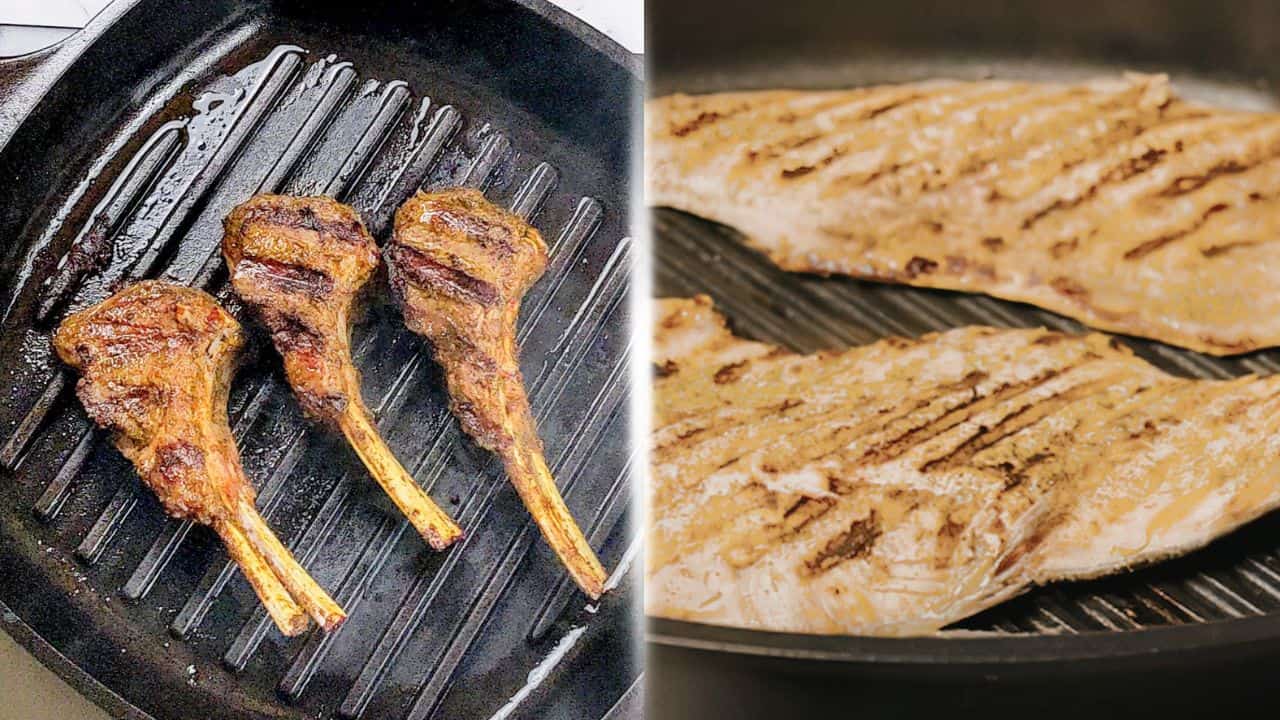
If your goal is a perfect sear and deeper flavor, cast iron is the better long-term choice.
Heat Retention and High Heat Performance
A good grill pan should be able to handle high heat without warping or losing temperature.
This is especially important for:
- Creating grill marks.
- Achieving even cooking.
- Avoiding steaming instead of searing.
Heavier pans, especially cast iron, tend to perform better in this area.
Size and Cooking Surface
Choose a grill pan based on how you typically cook.
- Smaller pans - Good for quick meals or cooking for one
- Larger pans - Better for cooking multiple portions at once
Look for a pan with enough surface area to avoid overcrowding, which can reduce heat and affect texture.
Handle Design and Safety
When cooking at high heat, the handle design matters more than most people think.
- Long handles help keep your hands away from the heat.
- Helper handles make it easier to lift heavier pans.
- Make sure the handle feels secure when moving the pan.
Recommended Grill Pans for Indoor Grilling
When choosing the best grill pan for your kitchen, focus on performance, durability, and how often you plan to use it. Here are a few grill pans I recommend based on performance, affordability, and current trends among home cooks.
Best Cast-Iron Grill Pan (My Go-To)
Lodge Cast Iron Grill Pans
This is the grill pan I personally use, and it's my top recommendation for most home cooks.
- Why I recommend it - Lodge has been around for over 100 years, and their products are consistently reliable.
- Performance - Excellent heat retention for high-heat cooking and strong grill marks
- Accessibility - Easy to find in stores and online.
- Best for - Anyone who wants a dependable, long-term grill pan.
This is the one I trust because I know exactly how it performs every time I use it.
My Review: I was thrilled when Lodge introduced its Blacklock 12-Inch Triple-Seasoned Cast Iron Grill Pan. It combines the durability I’ve always trusted from the brand with a much lighter design that makes it a breeze to handle. The larger square surface was a welcome upgrade, easily fitting about 1 ¾ pounds of boneless, skinless chicken thighs with room to spare, and the triple seasoning provided a naturally nonstick finish right out of the box. I’ve been cooking with Lodge cast iron for years, and once again, they didn’t disappoint. This pan is built to last a lifetime while still making everyday cooking feel effortless. Check out my cast-iron care guide to keep yours in top shape!
My Review: The Lodge 10.5-inch Cast Iron Square Grill Pan with the red silicone handle has become my go-to for indoor grilling. I love how it gives my proteins, seafood, and vegetables beautiful grill marks and a delicious charred flavor without firing up the outdoor grill. The compact size is super convenient, especially when cooking for one or two, and it heats evenly, as you’d expect from good cast iron. If you're grilling kebabs, I recommend using smaller skewers; 7 inches works best, since the 10.5-inch skewers are measured from the wide top rim, not the actual grill base. This pan brings the outdoor grilling vibe right into your kitchen! Check out my cast-iron care guide to keep yours in top shape!
Affordable Cast-Iron Runner-Up
Victoria Cast Iron Grill Pan
If you're looking for a slightly more budget-friendly or alternative option, Victoria is a solid choice.
- Pre-seasoned and ready to use.
- Good heat retention.
- Often slightly lower price point, depending on availability.
Great option if Lodge is unavailable or you want to compare.
My Recommendation: If you’re looking for a reliable cast-iron grill pan with a strong history behind it, Victoria is a brand worth considering. Known for its long-standing craftsmanship, this pan offers solid performance with thoughtful details that stand out right away. The 10-inch square size works well for everyday meals, especially for one to two people, but if you’re planning to cook skewers, they’ll need to be on the shorter side, around 7 to 8 inches, to fit comfortably on the pan. One detail I really appreciate is that Victoria uses 100% kosher-certified, non-GMO flaxseed oil for seasoning, which shows a level of care and intention you don’t always see. Like most cast-iron grill pans, it holds heat well, making it a strong option for high-heat cooking, developing grill marks, and getting a solid sear. I’ve also seen reviews mentioning concerns about sticking and rusting, and it’s important to understand that this comes with the territory of cast iron. It’s not a traditional nonstick surface, and there’s no shortcut here. Cast iron requires proper care, including drying it well and lightly oiling it after cleaning, and over time, it becomes more naturally nonstick as the seasoning builds. If you’re someone who appreciates craftsmanship and wants a pan that improves with use, this is a great option to try.

Best Nonstick Grill Pan (Performance + Convenience)
All-Clad Hard Anodized Grill Pan
If you want a nonstick grill pan that can handle more heat and perform more consistently, All-Clad is a strong choice.
- Why it stands out - More durable than most nonstick pans and handles higher heat better
- Performance - Produces a better sear compared to lighter nonstick options
- Best for - Home cooks who want easier cleanup without sacrificing too much performance
From my experience, this is a more reliable option if you still want nonstick but need something that can keep up with everyday cooking.
My Recommendation: All-Clad is a brand I’ve trusted since my time working in professional kitchens, and it’s still a go-to for me today. With over 55 years of experience and roots in Pennsylvania, they’ve built a reputation for producing reliable cookware that performs consistently. Their hard-anodized grill pans are designed to handle higher heat better than most nonstick options, which makes a noticeable difference when you’re trying to get a proper sear without switching to cast iron. That said, even if a product is labeled dishwasher safe, nonstick cookware still requires proper care to maintain its performance. I always recommend washing nonstick pans by hand to extend their lifespan, but if you do use a dishwasher, placing them on the top rack is the safest option. If you’re looking for a nonstick grill pan that balances performance and convenience, this is a solid choice backed by real-world reliability.

Best Nonstick Grill Pan (Easy Cleanup Option)
GreenPan Nonstick Grill Pan
If you prefer something lighter and easier to clean, this is a solid nonstick option for indoor grilling.
- Why it stands out - Ceramic nonstick coating with a smoother cooking surface.
- Ease of use - Food releases easily, making cleanup faster.
- Best for - Quick meals, vegetables, and lighter proteins.
Important to know: Nonstick grill pans, including GreenPan, are not designed for very high heat like cast iron. Cooking on high heat can lead to staining or discoloration over time, which is common with this type of cookware.
If your goal is a strong sear and long-term durability, cast iron is the better choice. If you want easy cleanup and convenience, this is still a good option when used correctly. Ideal if you don't want the maintenance of cast iron.
My Recommendation: I tread lightly when recommending this one. The GreenPan Paris Pro is built for convenience with a PFAS-free ceramic nonstick coating and easy cleanup, and it’s a good fit if you prioritize low maintenance and a cleaner look over time. That said, it’s not the best tool for high-heat searing. Ceramic nonstick performs best at moderate heat and with lighter oils like avocado oil, canola oil, or grapeseed oil used in controlled amounts. You can push it higher, but that’s when you start to lose what makes it appealing in the first place: easy release and long-term durability. In other words, you can try for a stronger sear, but with convenience, something is usually traded off. Where this pan shines is everyday use: quick meals, vegetables, and lighter proteins with minimal sticking and straightforward cleanup. The eco-friendly ceramic coating is a nice bonus, but like I always say, weigh the pros and cons against your cooking style and how you actually use your pans day to day.

Trending Grill Pan for 2026
Staub Enameled Cast Iron Grill Pan
This is gaining popularity due to its design, versatility, and modern cooking needs.
- Premium build with excellent heat retention
- Easier maintenance than raw cast iron
- Durable and long-lasting
A great option for cooks who want cast iron performance with less upkeep.
My Recommendation: Staub sits in that premium category where you’re paying for the brand, but also for the craftsmanship behind it. Known for high-quality French cookware, their pieces are built to last and can easily become something you keep for years, even generations. This grill pan delivers what you’d expect from cast iron at this level: strong heat retention, consistent cooking, and a durable enameled finish that doesn’t require traditional seasoning. That said, I’m a little more selective when it comes to investing in a grill pan at this price point. Personally, I see more value in Staub’s Dutch ovens because of their versatility, but if you’re someone who loves premium cookware and wants that same level of quality across your kitchen, this is still a solid option. It’s definitely a splurge, but if you’ve got the budget and appreciate craftsmanship, you’ll get exactly what you expect from this brand.

The best grill pan ultimately comes down to how you cook, whether you prioritize high heat performance, easy cleanup, or long-term durability.
What Makes One Cast Iron Grill Pan Different From Another?
Not All Cast Iron Is Finished the Same
Even though cast iron is cast iron, the surface finish can vary.
- Some brands have a rougher texture (like many Lodge pans), which still performs well but takes a little more time to build a smoother seasoning.
- Others, like Victoria, often feel slightly smoother out of the box, which some cooks prefer.
Remember: Over time, both improve with seasoning, but the initial feel can differ.
Weight and Thickness
Cast-iron pans aren't all built the same in terms of weight.
- Heavier pans - Hold heat longer and give a stronger sear
- Slightly lighter pans - Heat up faster and are easier to handle
Keep in Mind: This affects how quickly your pan responds and how easy it is to maneuver on the stove.
Grill Ridge Design (THIS ONE MATTERS A LOT)
This is one of the biggest differences for grill pans.
- Higher, more defined ridges
- Lower or flatter ridges
Important: If grill marks matter to you, ridge height matters.
Pre-Seasoning Quality
Most modern cast-iron pans come pre-seasoned, but the quality of that seasoning varies.
- Some pans are ready to use immediately.
- Others benefit from an extra layer of seasoning before first use.
This affects: Early performance, sticking, and ease of cooking.
Handle Design and Comfort
This is often overlooked but important.
- Longer handles = better control and safer with high heat.
- Helper handles = easier to lift heavier pans.
Remember: Especially important for grill pans, which can get heavy.
Brand Consistency and Trust
This is where your point about Victoria vs Lodge fits perfectly. Some of these brands have been around for decades because they consistently deliver reliable cookware. The difference isn't just the pan, it's:
- knowing what to expect every time
- quality control
- consistency
5 Common Mistakes When Using a Grill Pan
Using an indoor grill pan seems simple, but a few small mistakes can prevent you from getting the best results. If your food isn't developing grill marks or a proper sear, chances are one of these issues is getting in the way.
1. Not Preheating the Grill Pan
One of the most common mistakes is not letting the pan get hot enough before adding food. A grill pan needs high heat to create proper grill marks and sear. If the pan isn't preheated, your food will cook unevenly and may stick.
2. Overcrowding the Pan
Adding too much food at once lowers the pan's temperature. This leads to steaming instead of searing, uneven cooking, and weaker grill marks. Cook in batches if needed to maintain heat and get better results.
3. Using the Wrong Heat Level
Many home cooks keep the heat too low when using a grill pan. To get a perfect sear and char marks, you need medium-high to high heat. Lower heat won't give you the texture or color you're looking for.
4. Not Drying Ingredients Properly
Excess moisture prevents browning. If your ingredients are wet, they will eventually steam instead of sear, stick to the pan, and lose texture. So remember to pat the proteins and vegetables dry before placing them in the pan.
5. Moving Food Too Soon
Let the food sit long enough to develop grill marks before flipping. Moving food too early will prevent proper searing, disrupt grill marks, and reduce overall flavor. Be patient and give it time; then flip once it naturally releases.
Recommended Reads
- Indoor Grilling Essentials: Best Tools for Smokeless Grilling at Home
- Easy 15-Minute Marinade for Beef Kabobs
- Best Pans for Searing Chicken (and How Each One Behaves)
- Grilled Steak Spicy Chimichurri Baby Potatoes and Broccoli
- Steak Grilling Times Chart: Perfect Temp & Cook Times
Frequently Asked Questions
Here is a list of common questions I have answered. If you have any questions, please write them in the comments below.
Not exactly. An indoor grill pan can create grill marks and a solid sear, but it won't produce the same smoky flavor as an outdoor grill. Outdoor grills use open flame or charcoal, which adds depth and intensity that's difficult to replicate indoors.
Yes. Most indoor grill pans are designed for stovetop use, making them a great option if you're looking for a grill pan for a gas stove or an electric range. Cast-iron grill pans work especially well because they retain heat and create a better sear.
Cast iron is generally considered the best material for a grill pan because it retains heat well, helping create strong grill marks and even cooking. Nonstick grill pans are easier to clean but don't perform as well at high heat.
An outdoor grill pan is used on top of the grill grates to cook smaller or delicate foods, such as vegetables, shrimp, or fish. It prevents food from falling through the grates while still allowing you to cook over high heat.
Yes, grill pans can create visible grill marks thanks to their raised ridges. However, the marks are usually lighter than the deeper char marks you get from cooking on an outdoor grill with an open flame.
This usually happens when the pan isn't hot enough or the food has too much moisture. To get better grill marks, preheat the pan on medium-high heat and pat your ingredients dry before cooking.
Yes, you can place a grill pan directly on an outdoor grill. This is useful for cooking smaller items or delicate foods that might fall through the grates, like sliced vegetables or seafood.
A grill pan has raised ridges that create grill marks and allow fat to drain away. A griddle pan has a flat cooking surface, which is better for even cooking without grill marks, like pancakes or sandwiches.
For high-heat cooking and better searing, a cast-iron grill pan is the better choice. Nonstick pans are easier to clean but don't perform as well when trying to achieve a perfect sear or char.
More Kitchen Essentials and Tips
- The Best Cooking Shows on Prime Video for Curious Home Cooks
- How to Store Fresh Berries So They Last Longer (Without Getting Mushy)
- How to Prepare for Amazon Prime Day: Smart Shopping for Home Cooks
- Best Food Audiobooks for Chefs & Home Cooks


Cooking Tips and Tutorials
If you found this tutorial helpful, you'll love my Cook's Notebook collection. From knife skills and flavor bases to time-saving tricks and essential equipment guides, this section is packed with chef-tested lessons to help you cook with confidence.
- Seasonal Produce Guide: What Fruits and Vegetables Are in Season?
- How to Roast Food: The Fundamental Principles of Roasting
- 2026 Fall Seasonal Produce Guide: Fruits and Vegetables to Enjoy This Season
- Indian Cooking Techniques That Changed How I Think About Food
Subscribe to my YouTube Channel
SUBSCRIBE↗: 👈To my YouTube Channel to Get Notifications of New Videos.


Chef Maika Frederic-Liebman
Chef and Educator
Professionally trained Haitian-American chef Maika Frederic created Just Maika Cooking, where she shares globally inspired recipes, cooking techniques, ingredient guides, and food safety tips to help home cooks become more creative and confident in the kitchen. Combining years of professional culinary experience with a passion for teaching, she makes global flavors approachable through practical, accessible instruction for cooks of every skill level.
Have a Comment or Question?
If you have a question or comment about this post, please post it below. You will receive a prompt response. It also helps our other readers to stay informed. Thanks!
Leave a Reply