

This article, "Best Cast Iron Skillet Care | Cooking, Cleaning to Seasoning" on Just Maika Cooking offers comprehensive guidance on maintaining cast iron skillets, covering topics such as seasoning, cleaning techniques, common mistakes to avoid, and suitable cooking practices to ensure the longevity and performance of your cookware.
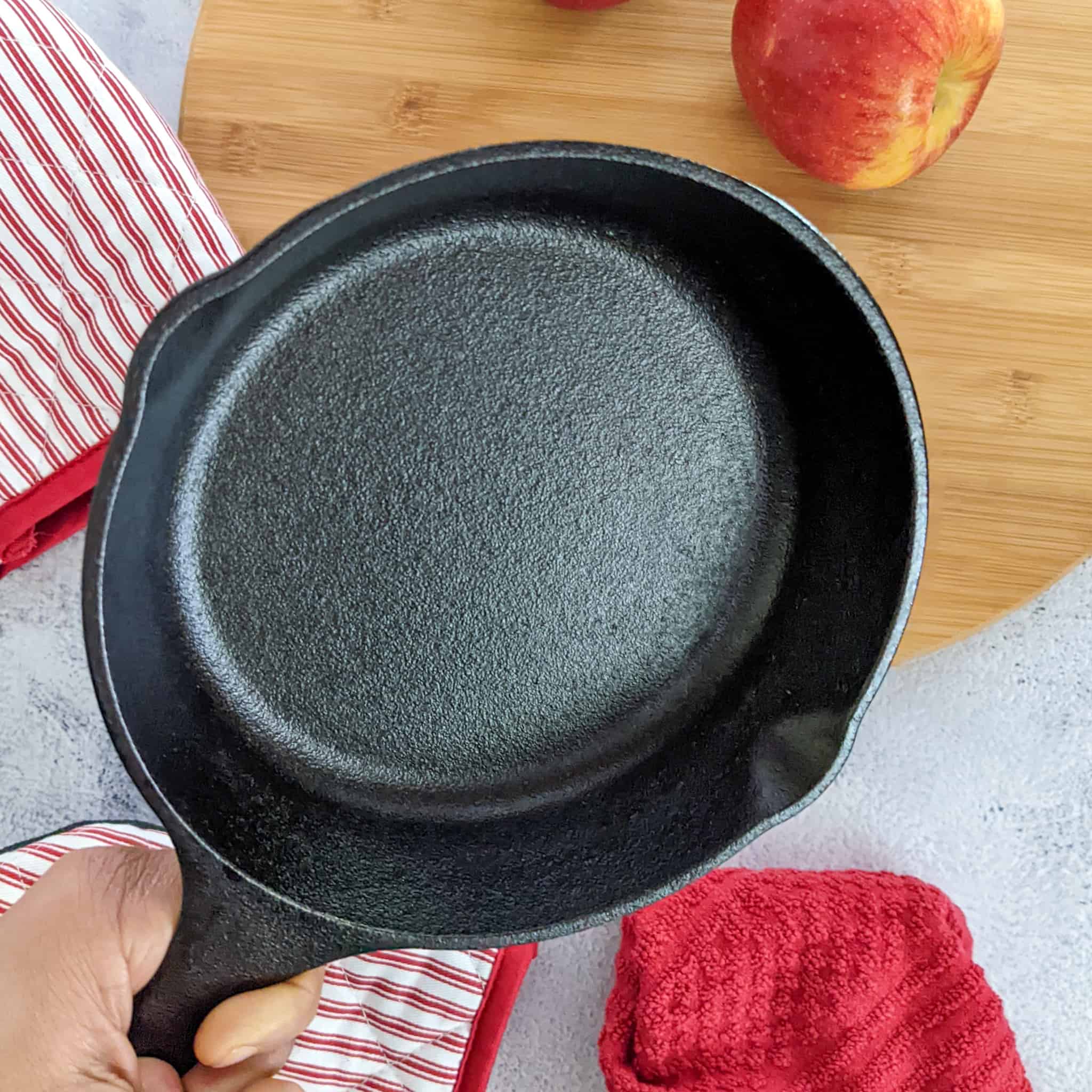
Table of Contents
Jump to:
- The Lifetime Skillet
- Different Types of Cast Iron Cookware
- Top Three Best Cast Iron Brands
- Why Cast Iron?
- Understanding Cast-Iron
- Best Utensils to Use
- Ingredients to Avoid
- Best Dishes to Cook in a Cast Iron Skillet
- Step-by-Step Guide to Cleaning (w/ Video)
- Seasoning Your Cast Iron Skillet
- Cast Iron Myths Home Cooks Should Stop Believing
- Why I'm Always Learning (And Updating My Recipes)
- How to Store Cast Iron Properly
- How to Fix Common Cast Iron Problems
- Recap - Cast Iron Skillet Care
- Frequently Asked Questions
- Why I Still Reach for Cast Iron
- Cast Iron Recipes
- Questions and Comments
The Lifetime Skillet
As a professional chef, I can't emphasize enough how important it is to take good care of your cast-iron skillet. If you treat it right, this kitchen workhorse can last a lifetime, heck, even multiple lifetimes. From searing a perfect steak to whipping up a cozy one-pan dinner or making rustic cornbread, your cast-iron skillet is your trusty sidekick thanks to its incredible nonstick surface.
But like any good partnership, it requires a bit of TLC to keep it performing at its best. Proper care ensures that your skillet lasts and delivers consistently excellent results every time you use it.
My Review: I used this small must-have cast-iron pan to make my Harissa Egg Toast with Feta Cheese and Olive Oil breakfast dish. It’s a straight-to-the-point, well-made cast-iron skillet. Honestly, how can you go wrong with Lodge?! Add cast-iron pans to your kitchen collection. Take care of it, and it'll take care of you.
Different Types of Cast Iron Cookware
If there's one thing I can't get enough of in my kitchen, it's cast-iron cookware. My collection just keeps growing, and for good reason: these pans are the ultimate tools for creating that perfect golden-brown crust. They're the best non-stick pans around (once you've got them seasoned right), and they're built to last a lifetime.

Unlike trendy kitchen gadgets that come and go, cast iron is here to stay, proving its worth time and time again.
The Usual
When it comes to cast iron, there's a variety to choose from, each serving its own unique purpose:
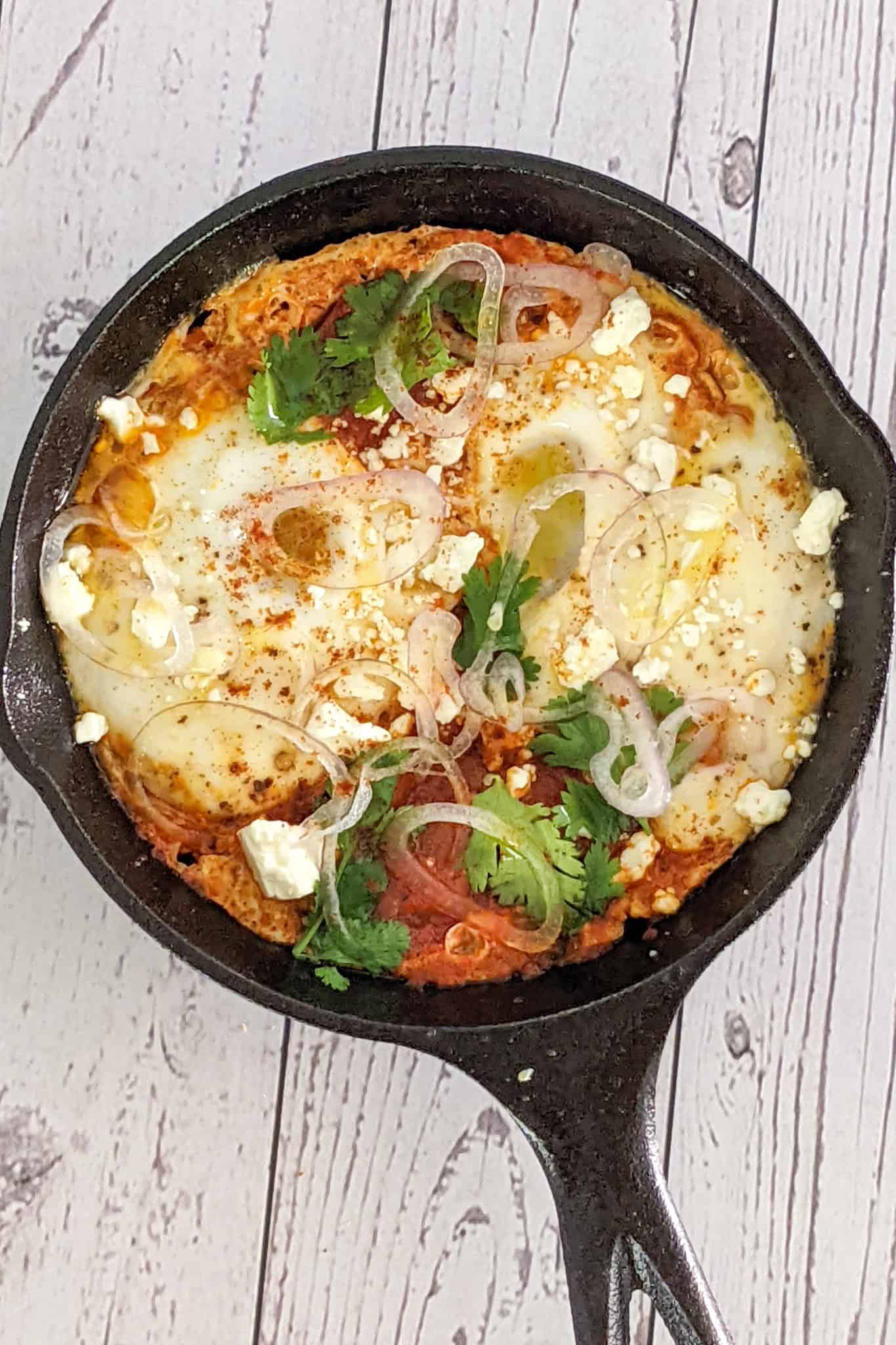
1. Skillets (with and without handles): Whether it's a classic skillet with a long handle or a more compact version without one, these are the workhorses of the cast iron world. They're perfect for everything from frying eggs to searing steaks.
2. Griddles: These are typically flat, handleless pans ideal for making pancakes, grilled cheese sandwiches, or anything that needs a large, even cooking surface. But you can also get griddles with handles, which offer more control and fit right on the stovetop.
3. Grill Pans: With raised ridges that mimic the grates of an outdoor grill, grill pans are perfect for getting those beautiful char marks on meats and veggies, all while cooking indoors.
Visit my Indoor Grilling Essentials post to learn more about grill pans.
Other Options
Woks - Cast-iron woks are fantastic for stir-frying. They retain heat incredibly well, allowing you to achieve that high-heat sear essential for Asian cuisine. While cast iron woks are fantastic for retaining heat, their heavy weight can make them challenging to maneuver during stir-frying, which is why I prefer the lighter carbon steel woks; both types require regular maintenance and seasoning, but the results are well worth the effort.
Looking for cooking tips for woks? Learn more about using woks.
Dutch Ovens (Regular and Enameled) - These heavy-duty pots are perfect for slow-cooking stews, braising meats, or baking bread. The enameled version adds a splash of color and makes cleaning a bit easier, but both are equally durable and versatile.
Accessories
Pressers for Smash Burgers - A cast-iron presser is your best friend when it comes to making smash burgers. It presses the meat into the hot skillet, creating a deliciously crispy exterior.
Bonus! Why I Love My Cast Iron Griddle
One of my favorite pieces of cookware is my cast-iron griddle because it gives me so much flexibility. I can use it on the stovetop for breakfast favorites like pancakes, eggs, and bacon, or move it outdoors to my grill when I want a larger cooking surface for burgers, vegetables, fajitas, or seared steaks.
One of the things I love most about cast iron is how well it holds onto heat. Once it's properly preheated, it browns beautifully and maintains a steady cooking temperature, making it perfect for everything from pancakes to steaks.
Versatility
Each piece in my collection has a special place in my kitchen, and I love how they let me explore different cooking techniques while consistently delivering delicious results. Whether you're just starting your collection or looking to expand, there's a cast iron piece out there that's perfect for your needs, and trust me, once you start, it's hard to stop!

Top Three Best Cast Iron Brands
Choosing the right brand can make all the difference when buying and investing in cast-iron cookware. Trust me, not all cast iron is created equal. After years of cooking with various pieces, I've narrowed down my top three favorite brands that consistently deliver on quality, durability, and performance.
Lodge Cast Iron
If you're looking for a cast-iron brand that's affordable, reliable, and practically indestructible, Lodge is where it's at. This American brand has been making cast iron since 1896, and its pieces are built to last.
Lodge skillets come pre-seasoned, so they're ready to use right out of the box, which is a huge plus. I've used my Lodge skillet for everything from searing steaks to baking cornbread, and it never lets me down. Plus, it's available in a wide range of sizes and styles, making it easy to build your collection.
Le Creuset
For those who want a little more style and versatility in their cast-iron collection, Le Creuset is a top pick. This French brand is famous for its enameled cast iron, which combines the durability of cast iron with a smooth, colorful enamel coating that doesn't require seasoning.
Le Creuset pieces are absolutely stunning and perform beautifully, making them perfect for going from stovetop to oven to table. While they're on the pricier side, I see them as an investment that will last a lifetime. Their Dutch ovens are a game-changer for slow-cooked dishes and stews.
Staub
Staub is another premium French brand that I absolutely love. Like Le Creuset, Staub specializes in enameled cast iron, but their pieces have a slightly darker, more rustic finish that I find really appealing. What sets Staub apart is their self-basting lid design, which helps retain moisture and flavor during cooking, especially useful for roasts and braises.
The interior of Staub cookware has a matte black enamel that's super durable and requires less maintenance than traditional cast iron. If you're serious about your cast-iron game, Staub is worth every penny.
The Pros and Cons of These Brands
Lodge
Affordale
Pre-Seasoned
Durable
Wide Variety of Sizes
Heavier
Requires Regular Seasoning
Less Smooth Finish
Le Creuset
Beautiful Design
Enameled (No-Seasoning Required)
Excellent Heat Retention
Expensive
Enameled Coating Can Chiop
Heavy
Staub
Self-Basting Lid
Matt Black Enamle Interior
Superior Moisture Retention
Expensive
Heavier
Matt Interior Requires Careful Cleaning
Why Cast Iron?
So, why do I rave about cast iron? Let me break it down for you:
Excellent Heat Retention
Cast iron is known for its exceptional heat retention. Once it's hot, it stays hot, making it perfect for searing, roasting, and browning foods while maintaining a consistent cooking temperature.
Chef's Tip: Unlike stainless steel or aluminum cookware, cast iron benefits from a slower preheat over medium or medium-low heat. Giving the pan a few extra minutes to warm up helps create a more consistent cooking surface and better results.
Durability
A well-maintained cast-iron skillet is virtually indestructible. Unlike non-stick pans that wear out over time, cast iron only gets better with age. With proper care, it can be handed down through generations. Imagine cooking with a skillet that's seen decades of family meals!
Natural Non-Stick Properties
When properly seasoned, cast iron develops a natural, chemical-free non-stick surface that's just as effective as any store-bought non-stick pan. Plus, the more you use it, the better it gets. It's like a fine wine, only, you know, for cooking.
Taking care of your cast-iron skillet isn't just about maintaining a piece of kitchen equipment; it's about preserving a culinary tradition. And trust me, the rewards are well worth the effort. For more tips on maintaining your favorite kitchen tools, check out more resources in the Learn Culinary section.
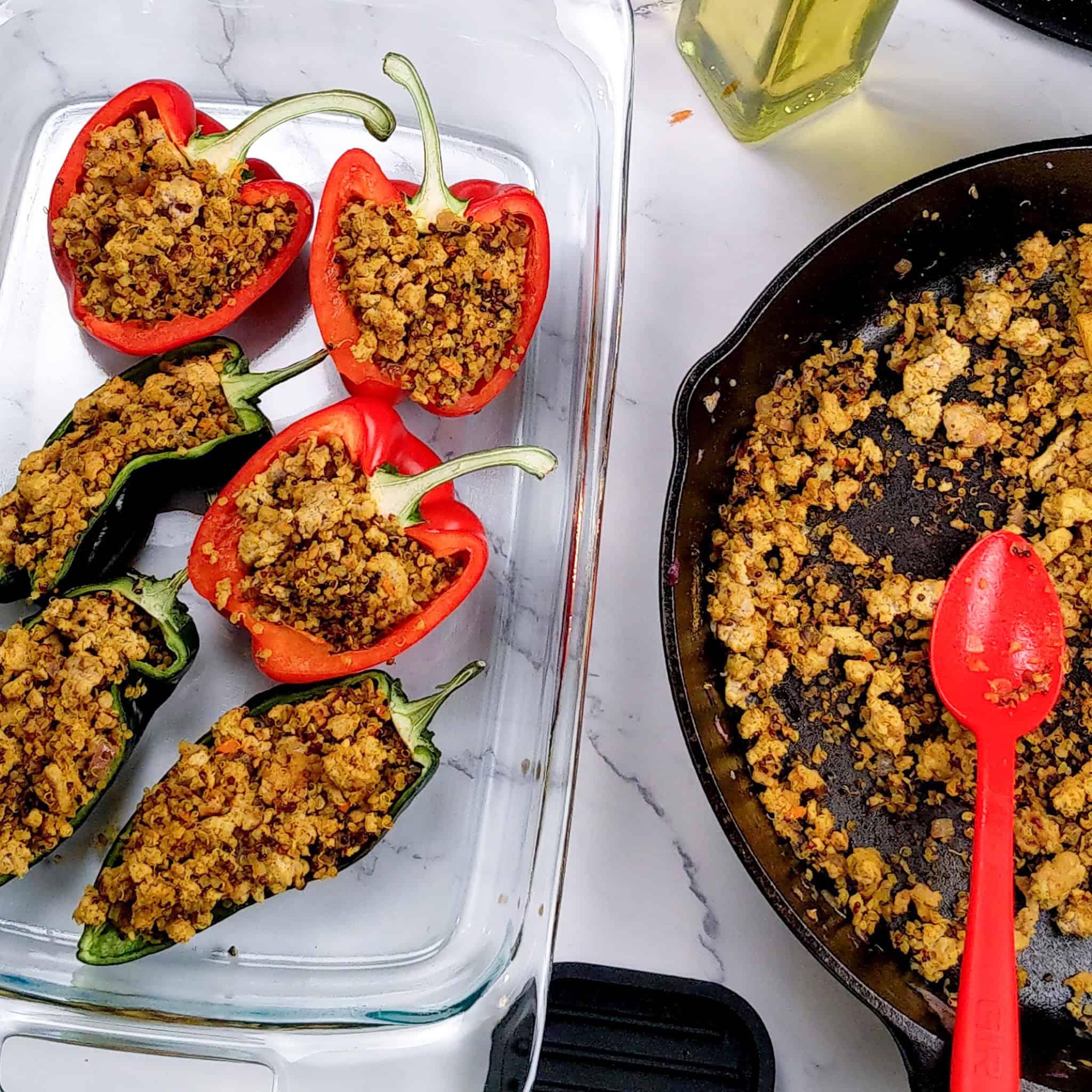
My Review: The Lodge 15-Inch Cast Iron Skillet with the signature teardrop handle is the perfect skillet to take you from stovetop to grill to campfire without skipping a beat. Its large size makes it ideal for everything from cooking a whole pizza with a crispy crust to whipping up a bunch of tacos or pancakes for a crowd at breakfast. The pre-seasoned surface gives it that unbeatable nonstick performance and rich flavor you can only get from cast iron. Whether you’re cooking indoors or outside, this skillet is built to last a lifetime. Just make sure you know how to care for it. Check out my cast-iron care guide to keep yours in top shape!

Understanding Cast-Iron
This unique ability to absorb and hold onto oils is what sets cast iron apart from everyday non-stick pans. Let's get into what makes cast iron so unique and why understanding its care is essential for getting the best performance from your skillet.
Porous Nature of Cast-Iron
One of the things that makes cast iron so special-and a bit of a mystery to some-is its porous nature. Here's how it works:
- Tiny Pores - Your cast iron skillet is full of tiny pores that act like a sponge, soaking up oils and fats every time you cook.
- Oil Absorption - These pores absorb oils, creating a natural, non-stick surface over time.
- Protective Layer - The absorbed oils form a protective layer that enhances the skillet's non-stick properties and helps prevent rust.
Seasoning
Seasoning in the context of cast iron isn't about adding flavors; it's all about creating a durable, non-stick surface. Here's what you need to know:
- What is Seasoning? Seasoning is the process of coating the surface of your skillet with oil.
- Purpose - This baked-on layer forms a protective coating that prevents rust and makes your skillet naturally non-stick.
- Building Layers - Seasoning is cumulative; the more you use your skillet, the more layers of seasoning you add, improving its performance over time.
Understanding and maintaining this seasoning is key to getting the most out of your cast-iron skillet. For more detailed tips and techniques, visit my website, Learn Culinary. Seasoning is also a process used in caring for a wok; learn more about wok cooking.
Best Utensils to Use
To keep your cast-iron cookware in top condition, choosing the right utensils is important. Here's what works best:
- Wooden Utensils: - Using a wooden spatula or spoon is gentle on your cast iron's seasoning. They won't scratch the surface, making them ideal for stirring, flipping, and scraping.
- Silicone Utensils - Heat-resistant silicone spatulas and tongs are another great option. They're flexible, durable, and won't damage the seasoning layer, even during high-heat cooking.
- Metal Utensils (with Care) - While metal utensils can be used on cast iron, they should be used with care. Avoid heavy scraping to prevent removing the seasoning. A metal spatula with a flat edge can help flip or lift food, but use a gentle hand to avoid damage.
Ingredients to Avoid
Cast-iron cookware is super versatile, but there are a few ingredients you'll want to be careful with to keep your skillet's seasoning and overall condition in tip-top shape. These are what not to cook in a cast iron:
Highly Acidic Foods
Ingredients like tomatoes, vinegar, citrus juices, and wine can be tough on your cast iron. Their high acidity can break down the seasoning, leading to a dull finish and potential rusting. If you do cook with acidic ingredients, be sure to re-season your skillet afterward to restore its protective layer.
Strongly Flavored Ingredients
Foods like garlic, onions, and certain spices can leave behind strong flavors that might linger in your skillet, potentially affecting the taste of your next dish. While this isn't harmful, it's something to be mindful of, especially if you use your cast iron for both savory and sweet dishes.
Sticky or Sugary Foods
Dishes with a lot of sugar, like caramel or certain sauces, can stick to the surface of your cast iron and be difficult to clean without damaging the seasoning. It's best to use a well-seasoned skillet for these dishes or consider using another type of cookware.
Overly Watery Ingredients
Cooking with large amounts of water or broth for extended periods can strip the seasoning from your cast iron. If you're making a stew or braise, it's fine to use your cast iron, but be prepared to re-season it afterward to keep it in good condition.
Best Dishes to Cook in a Cast Iron Skillet
One of the reasons I'm so obsessed with cast iron cookware is its versatility; you can whip up so many incredible dishes in it, from breakfast to dessert. Here are some of the best dishes to cook in a cast-iron skillet that will make the most of its heat retention qualities:
Skillet Cookie or Brownie
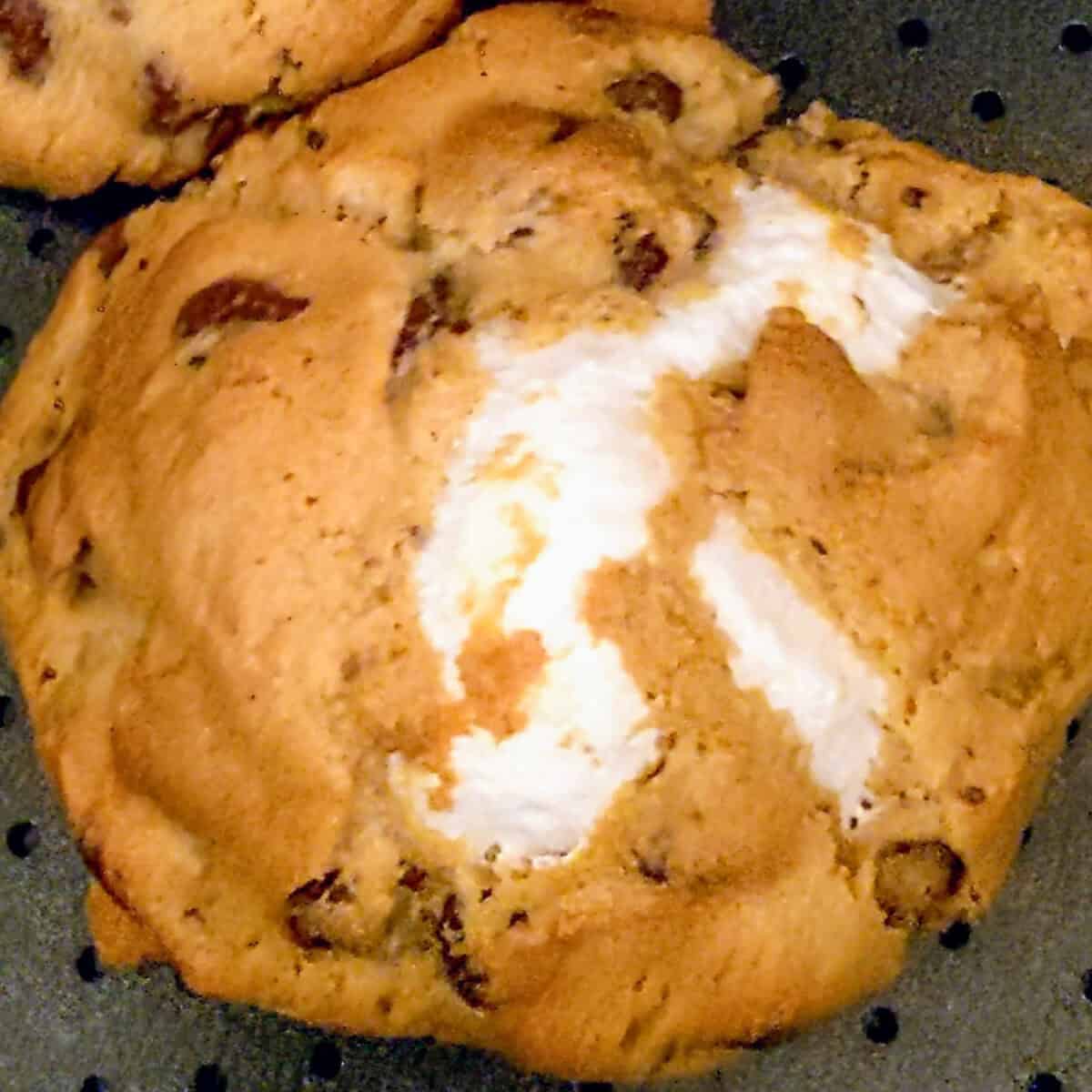
There's something extra indulgent about a warm, gooey cookie or brownie baked in a cast-iron skillet. The skillet gives the edges a deliciously crispy texture while keeping the center soft and melty. Top it with a scoop of ice cream, and you've got the ultimate dessert to share (or not!). Psst...If you love chocolate chip cookies, then you must try my Air Fryer S'mores Cookies.
Pan Pizza
If you're a fan of thick, crispy crust, then pan pizza in a cast-iron skillet is a must-try. The heavy skillet mimics the effect of a pizza stone, giving the dough a beautiful, golden-brown crust while the toppings cook evenly. Whether you're going classic with pepperoni and cheese or getting creative with your toppings, cast iron is your ticket to perfect pan pizza.

Searing Steaks
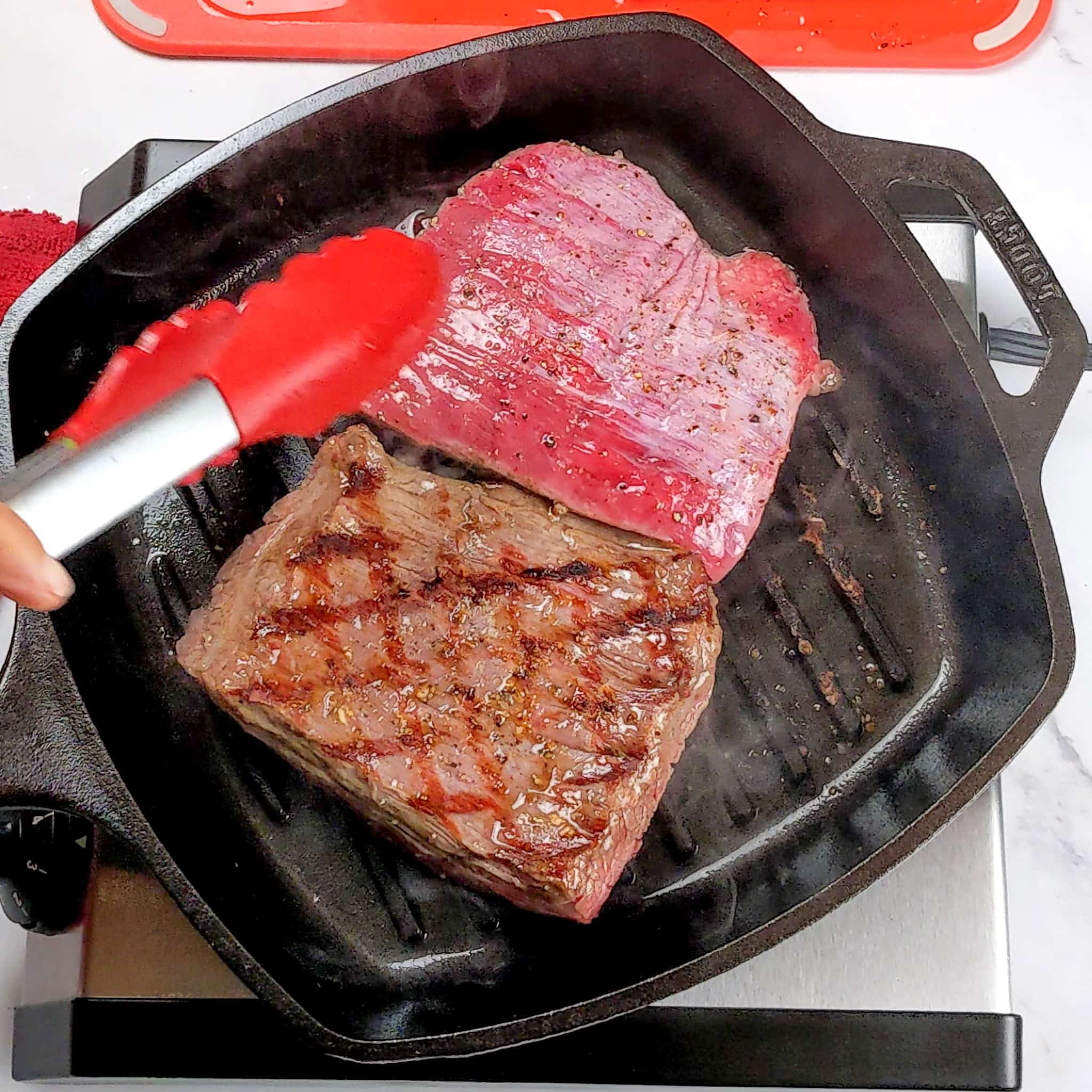
A cast-iron skillet is your best friend for searing steaks. The intense heat helps you achieve a deep, caramelized crust (Maillard Reaction) while keeping the inside juicy and tender. Plus, after searing, you can easily transfer the skillet to the oven to finish cooking your steak to the perfect doneness.
Grilling Times Chart: This chart provides a quick reference for grilling times and characteristics of popular steak cuts. Here, it is organized by grilling times, minutes per side, with internal temperatures (for the extended version):
| Steak Cuts | Size and Texture | Medium-Rare 130°F |
Medium 135°F |
Well-Done 160°F |
|---|---|---|---|---|
| Churrasco (Skirt Steak) |
Larger, thicker, and fibrous | 2-3 min | 3-4 min | 5-6 min |
| Flank Steak | Thin and flavorful | 5-6 min | 6-7 min | 8-9 min |
| Top Sirloin Steak | Larger, thicker, and fibrous | 4-5 min | 5-6 min | 7-8 min |
| NY Strip Steak | Well-marbled and tender | 4-5 min | 5-6 min | 7-8 min |
Try my Grilled Steak Spicy Chimichurri Baby Potatoes and Broccoli or Pan-Seared Sirloin Steak with Spicy Baharat Sauce recipe cooked in a cast-iron grill pan.
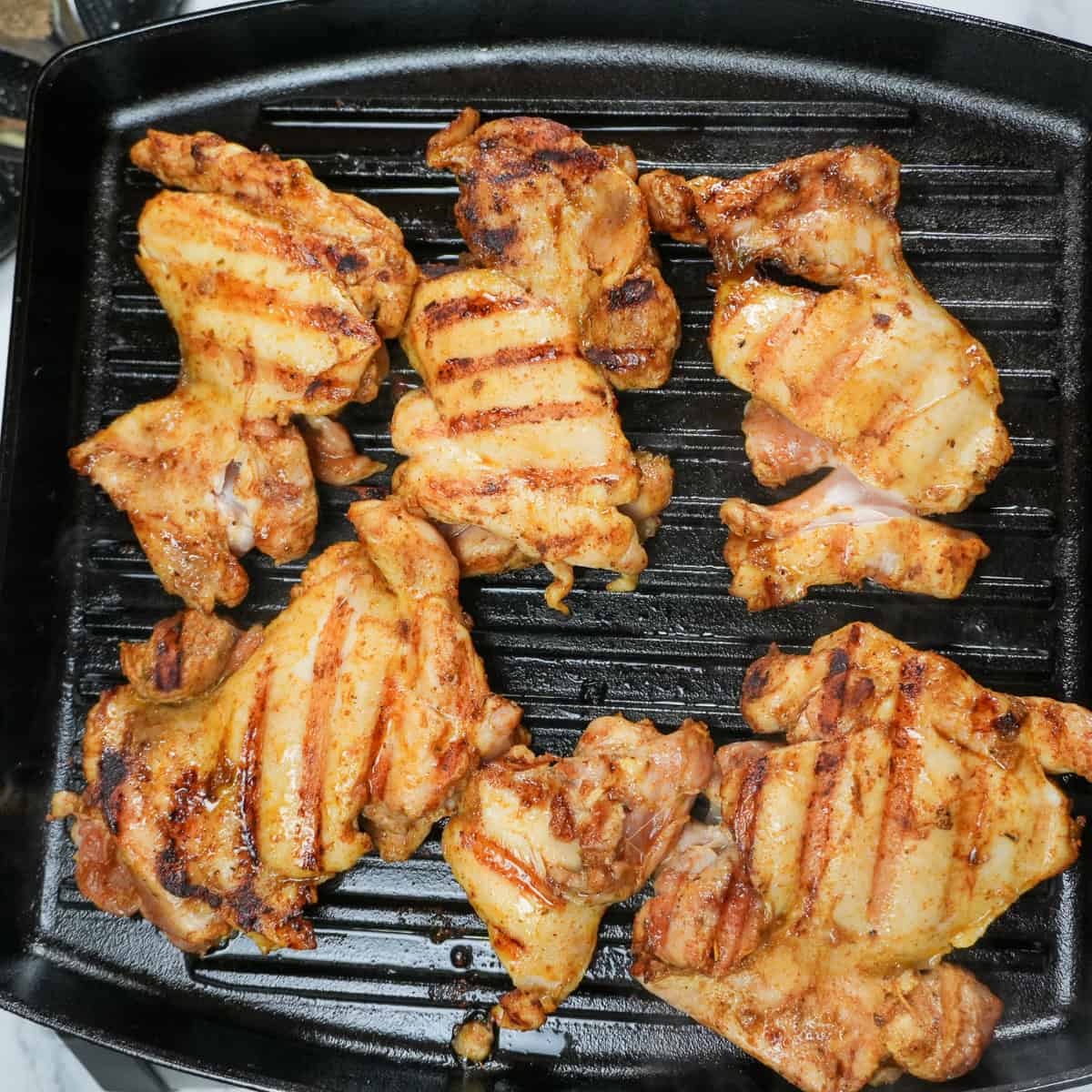
My Review: I was thrilled when Lodge introduced their Blacklock 12 Inch Triple Seasoned Cast Iron Grill Pan it combines the durability I’ve always trusted from the brand with a much lighter design that makes handling a breeze. The larger square surface was a welcome upgrade, easily fitting about 1 ¾ pounds of boneless, skinless chicken thighs with room to spare, and the triple seasoning provided a naturally nonstick finish right from the start. I’ve been cooking with Lodge cast iron for years, and once again, they didn’t disappoint. This pan is built to last a lifetime while still making everyday cooking feel effortless. Check out my cast-iron care guide to keep yours in top shape!
Cornbread
Cornbread baked in a cast-iron skillet is a Southern classic for good reason. Once the skillet is properly preheated, it holds onto heat beautifully, creating that crispy, golden crust everyone loves while keeping the inside soft and tender. Pair it with a bowl of chili, your favorite barbecue, or enjoy it on its own with a little butter; it never disappoints.
Frittatas
A cast-iron skillet is perfect for making frittatas, thanks to its even heating and ability to go from stovetop to oven. Whether you're filling it with veggies, cheese, or meats, the skillet ensures everything cooks evenly, and it makes for a beautiful presentation when served straight from the pan.
Shakshuka
Shakshuka, a North African and Middle Eastern dish of poached eggs in a spicy tomato sauce, is a match made in heaven for a cast-iron skillet. The skillet's ability to retain heat ensures that the sauce simmers evenly while the eggs cook to perfection with just the right amount of runny yolk. Plus, you can serve it straight from the pan, one less dish to wash!
IMPORTANT Cast Iron Skillet Care Tip: After making shakshuka, be sure to re-season your cast iron pan since the tomatoes' acidity can wear down the seasoning. I love using a smaller cast-iron skillet for this dish to create perfectly portioned servings that cook up quickly and evenly. Check out my shakshuka-inspired Harissa Egg Toast with Feta Cheese and Olive Oil recipe.
Step-by-Step Guide to Cleaning (w/ Video)
Properly cleaning your cast-iron skillet after each use is crucial for preserving its seasoning and preventing rust, ensuring it stays in great condition for years to come.
After Cooking
Once you've finished cooking, it's important to give your cast iron skillet some immediate attention:
- Cool Down - Let the skillet cool slightly, but don't wait too long. Cleaning is easiest when the pan is still warm but not hot.
- Remove Food Debris - Use a spatula or a stiff brush to gently scrape off any stuck-on food. The goal is to remove debris without damaging the seasoning.
The Right Tools
To keep your cast-iron skillet in top shape, you'll need a few essential cleaning tools:
- Stiff Brush - Great for scrubbing away food particles without scratching the surface.
- Chainmail Scrubber - Ideal for tackling tougher spots without stripping the seasoning.
- Non-Abrasive Sponge - Use for lighter cleaning tasks that require a gentler touch.
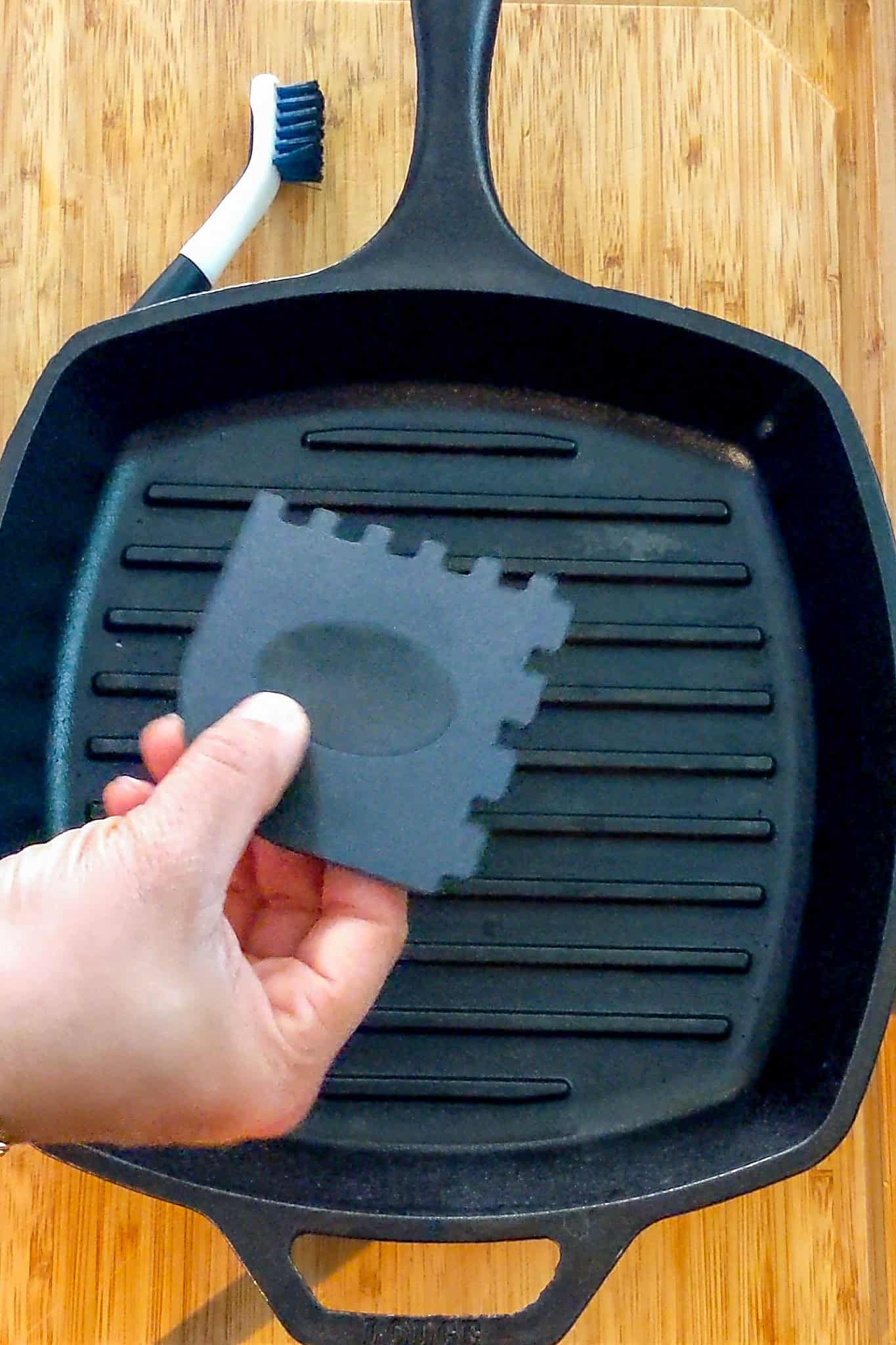
This is the Lodge Scraper. Also used the OXO Good Grips Deep Clean Brush.
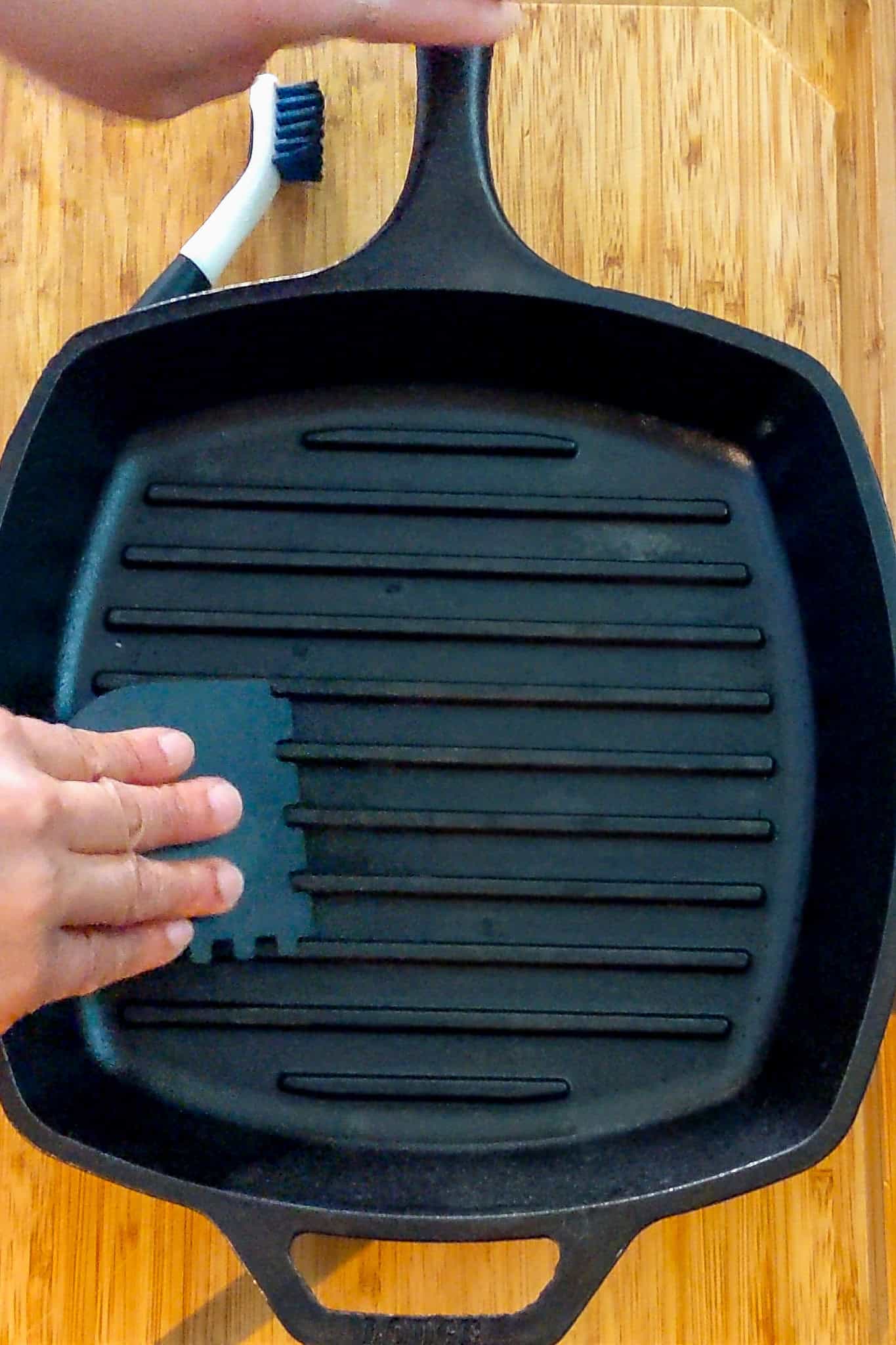
Easily scrapes between the grill grates.
Cleaning Process
Properly cleaning your cast-iron skillet is key to maintaining its seasoning and preventing rust. Follow these steps:
- Rinsing: Rinse the skillet under warm water while it's still slightly warm. A small amount of mild dish soap is perfectly fine for routine cleaning and won't strip a well-seasoned cast-iron pan. The old "never use soap" advice came from a time when many soaps contained lye. Today, the bigger concern is leaving moisture behind, so avoid soaking the pan, rinse it, dry it thoroughly, and lightly oil it before storing.
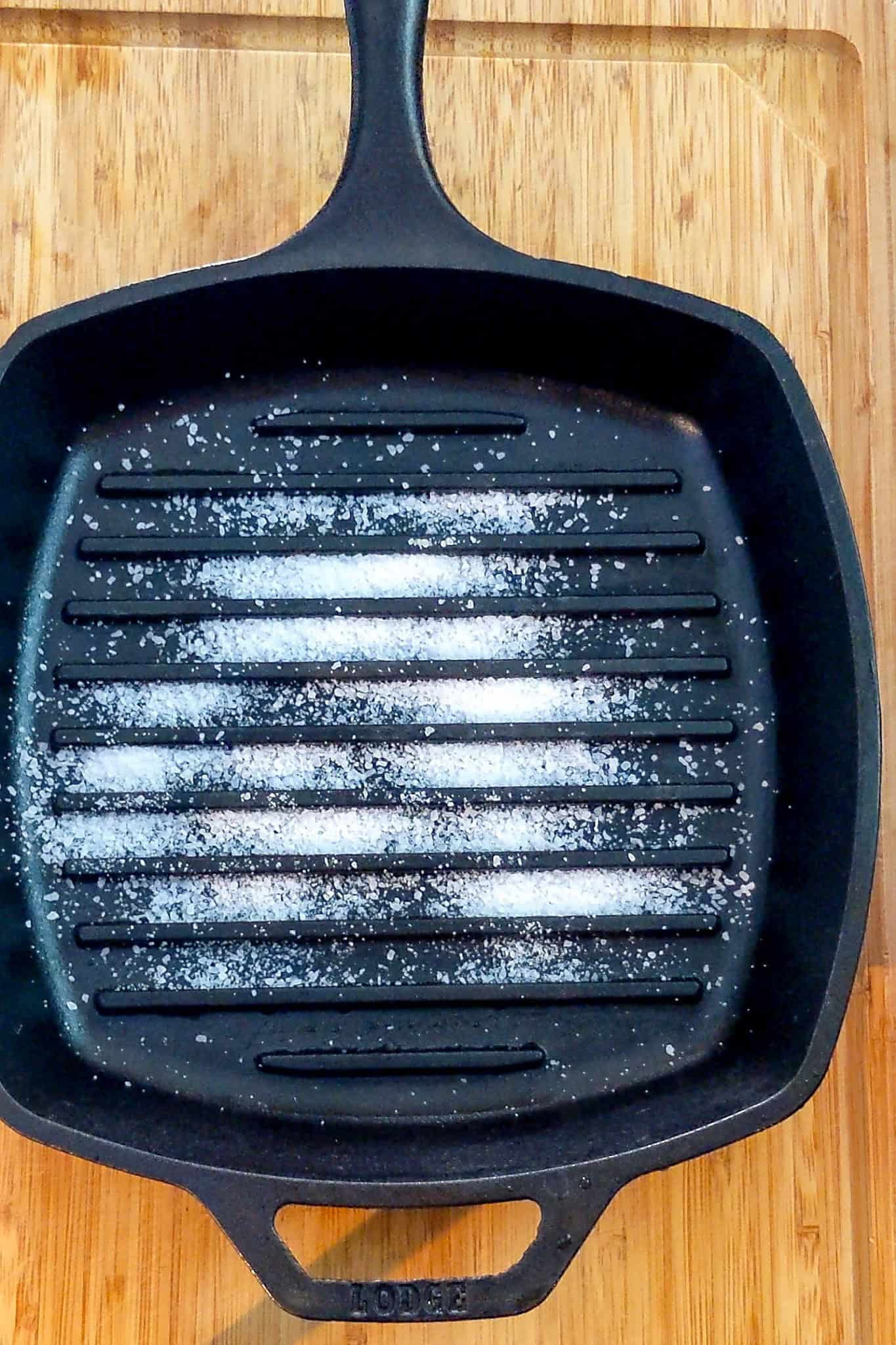
- Scrubbing: Gently scrub the skillet with your stiff brush, scraper, or chainmail scrubber. For stubborn residue, sprinkle coarse salt into the skillet and scrub it in a circular motion. The salt acts as a natural abrasive, helping lift off stuck-on food without damaging the seasoning.
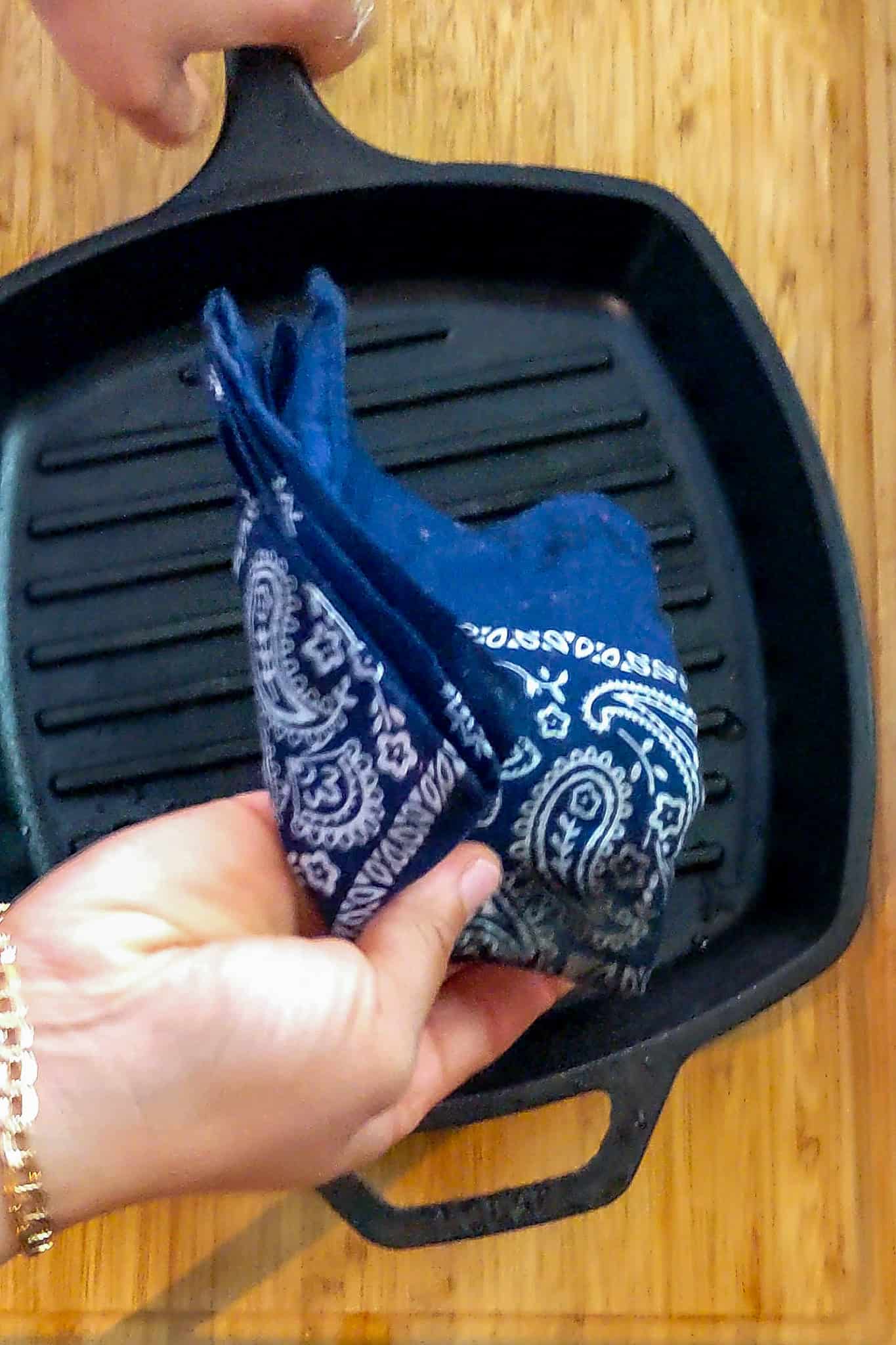
- Drying: Don't let your cast iron air dry. Instead, dry it immediately with a clean kitchen towel or paper towel, then place it over low heat for 1 to 2 minutes to evaporate any remaining moisture. This extra step helps prevent rust, especially around the handle, pour spouts, and cooking surface, where water can hide.
- Lightly Oil the Skillet - Once the pan is completely dry, add a few drops of a high-smoke-point oil, such as grapeseed, avocado, or canola oil. Wipe the oil over the entire skillet, including the handle and exterior, then buff away any excess with a clean paper towel. The pan should look lightly polished, not greasy. A very thin coat of oil helps protect the skillet between uses and gradually maintains the seasoning over time.
Why do cast-iron pans rust?
For my fellow nerds like me! Rust is what forms when iron (Fe) reacts with oxygen (O) in the presence of water or moisture. Basically, the reddish-brown color appears when cast iron, which is made of iron, is exposed to moisture and oxygen, leading to the metal's oxidation.
How to get rid of the rust in cast-iron pans?
To remove rust from your cast-iron pan, scrub the affected area with steel wool or a stiff brush until the rust is gone, then re-season the pan to restore its protective coating.
Why a bandana?
Drying your cast-iron pan with a bandana is beneficial because it's absorbent, lint-free, and gentle on the surface, helping to thoroughly remove moisture without leaving behind fibers that could damage the seasoning.
Alternative Cleaning Methods
If your skillet has tough stains or residue that won't budge, try these alternative cleaning methods:
- Baking Soda Paste - Make a paste with baking soda and water, apply it to the stubborn spots, and let it sit for a few minutes before scrubbing.
- Boiling Water - For particularly tough residue, boil a small amount of water in the skillet for a few minutes. This can help loosen food particles, making them easier to scrub away.
IMPORTANT Cast Iron Skillet Care Tip: Boiling water in a cast iron skillet should be a last resort because it can dissolve the protective seasoning layer, which is why it's crucial to clean your cast iron the same day you use it and never let it soak in water
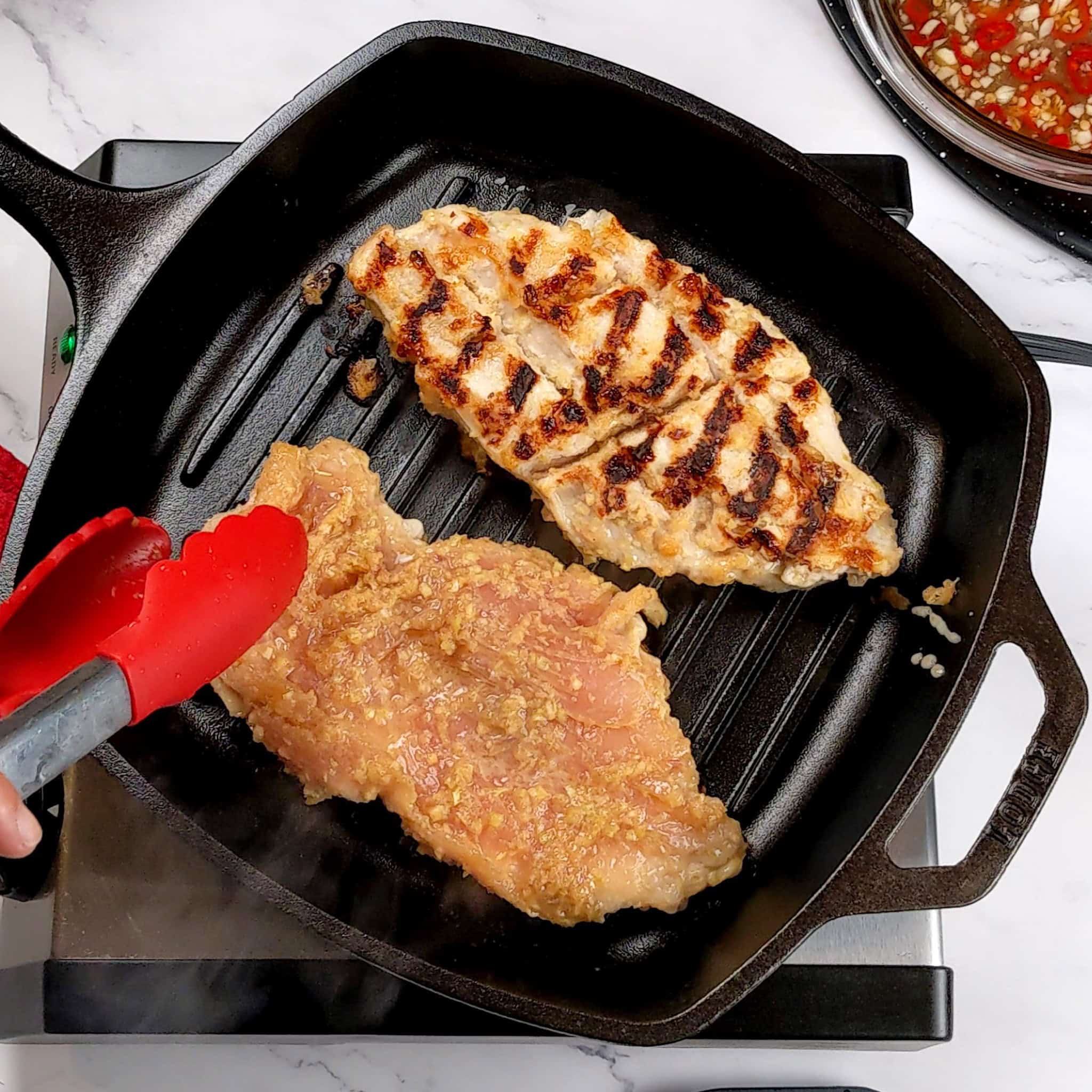
My Review: The Lodge 10.5-inch Cast Iron Square Grill Pan with the red silicone handle has become my go-to for indoor grilling. I love how it gives my proteins, seafood, and vegetables those beautiful grill marks and a delicious charred flavor without having to fire up the outdoor grill. The compact size is super convenient, especially when cooking for one or two, and it heats evenly, as you’d expect from good cast iron. If you're grilling kebabs, I recommend using smaller skewers; 7 inches works best, since the 10.5-inch skewers are measured from the wide top rim, not the actual grill base. This pan brings the outdoor grilling vibe right into your kitchen! Check out my cast-iron care guide to keep yours in top shape!
Seasoning Your Cast Iron Skillet
Seasoning isn't just coating your skillet with oil; it's the process of baking a very thin layer of oil onto the cast iron until it bonds with the surface. This creates a durable, naturally nonstick coating that protects the pan from rust and improves with regular cooking and proper care. The more you maintain your skillet, the better it will perform.
When to Re-season
Knowing when to re-season your cast iron skillet is key to keeping it in top cooking shape. Here are some signs that your skillet needs a fresh coat of seasoning:
- Dull Appearance - If your skillet looks dry or lacks that characteristic dark sheen, it's time to re-season.
- Food Sticking - When food starts to stick more than usual, it's a sign that the seasoning has worn down and needs a boost.
- Rust Spots - Any sign of rust indicates that the seasoning has been compromised and requires re-seasoning.
Best Oils for Seasoning
Not all cooking oils perform the same when seasoning cast iron. Choose an oil with a high smoke point that forms a strong, polymerized coating.
Some great options include:
- Grapeseed oil
- Avocado oil
- Canola oil
- Vegetable oil
- Sunflower oil
While many home cooks love flaxseed oil, it's more likely to form a flaky seasoning layer over time, so I don't typically recommend it for beginners. And, one of the biggest mistakes I see is using too much oil. It feels like you're protecting the pan, but it actually leaves behind sticky spots instead of creating a smooth seasoning. Think of it this way: after wiping on the oil, wipe it off again until it looks like you accidentally removed almost all of it. That paper-thin layer is exactly what you want.
Application
Follow these steps to apply the oil:
- Clean the Skillet: Start with a clean, dry skillet.
- Apply a Thin Layer: Using a paper towel or cloth, apply a very thin, even layer of a high-smoke-point oil over the entire surface, including the handle and outer edges.
- Wipe Off Excess: Wipe off any excess oil to avoid a sticky residue or uneven coating.
Baking Process
To set the seasoning, follow these steps:
- Preheat the Oven: Preheat your oven to 400°F (200°C).
- Bake Upside Down: Place the skillet upside down on the middle oven rack. Place a sheet of aluminum foil on the lower rack to catch any drips.
- Bake for One Hour: Let the skillet bake for an hour. This process bonds the oil to the iron, creating a strong, protective layer.
- Cool Gradually: Turn off the oven and let the skillet cool inside before removing it.
Stove-Top Process
But how do you season a cast-iron pan without the oven? This way is actually what I do out of convenience.
- Heat the Pan on the Stovetop: Place your cast-iron pan on the stovetop and heat it over medium-high heat until it's hot. This opens up the pores of the iron.
- Apply Oil: Once the pan is hot, remove it from the heat and carefully apply a thin layer of high-smoke-point oil using a paper towel or cloth. Be sure to coat the entire surface, including the sides and handle.
- Wipe Off Excess Oil: Wipe off excess oil with a clean paper towel or a clean cloth. You want just enough to coat the pan but not so much that it feels greasy.
- Heat Again: Return the pan to the stovetop and heat it over medium-high heat for about 10-15 minutes. You'll notice the oil starting to smoke. This is normal and part of the seasoning process.
- Cool Down: Let the pan cool completely before storing it. Repeat this process 2-3 times for a good initial seasoning.
Maintenance Seasoning
To keep your skillet in tip-top condition, regular maintenance and seasoning are essential. Follow these simple steps:
- After Each Use: Lightly coat the skillet with a thin layer of oil after each use, especially if you've scrubbed it hard or used water.
- Heat the Skillet: After applying the oil, heat the skillet on the stovetop over low heat for a few minutes to help the oil bond to the surface.
- Store Properly: Always store your skillet in a dry place, and consider lightly oiling it before storing to maintain the seasoning.
Cast Iron Myths Home Cooks Should Stop Believing
One of my favorite things about cooking is discovering that some of the "rules" we grew up hearing aren't always true. Cast iron is surrounded by advice that's been passed down for generations, but much of it is outdated or lacks important context. Here are a few of the biggest myths I think every home cook should know.
Myth #1: Never wash cast iron with soap.
Modern dish soap is perfectly safe to use on a well-seasoned cast-iron skillet. The old advice came from when soaps commonly contained lye, which could damage the seasoning. Today, the real concern is leaving moisture on the pan, so dry it thoroughly and apply a thin layer of oil after washing.
Myth #2: Cast iron is naturally nonstick.
A brand-new cast-iron skillet isn't magically nonstick. That smooth cooking surface develops through proper seasoning, cooking with fats, and regular maintenance. The better you care for your skillet, the better it performs.
Myth #3: You can't cook acidic foods in cast iron.
You can cook acidic ingredients like tomatoes, citrus, or vinegar in a well-seasoned skillet. The only exception is long-simmering acidic dishes, which may wear down the seasoning over time and can sometimes give food a metallic flavor.
Myth #4: A rusty cast-iron skillet is ruined.
Not at all! Surface rust is one of the easiest problems to fix. With a little scrubbing, re-seasoning, and patience, most rusty cast-iron skillets can be brought back to life.
Always Learning: Myth #2 Got Me!
When I first started cooking, I followed every cast-iron rule I heard because I didn't want to ruin my skillet. Over the years, I learned that understanding why those rules exist is much more valuable than simply memorizing them. That's why I love sharing updated cooking knowledge with you so you can cook with confidence instead of worrying about making a mistake.
We never stop learning in the kitchen! After sharing this tip, I learned that modern dish soap is safe to use on a well-seasoned cast-iron skillet. I pinned a comment with the updated information, so you have the most accurate advice. Thanks for learning and growing with me. I'm always happy to update my knowledge when I discover better information!
Why I'm Always Learning (And Updating My Recipes)
One of the books that has had the biggest impact on the way I cook is The Food Lab by Chef J. Kenji López-Alt. It completely changed the way I think about cooking by explaining the science behind techniques instead of simply telling me what to do. It challenged some of the kitchen "rules" I had heard for years, including a few I had even repeated to myself.
That's one of the reasons I'm always revisiting and updating my recipes and cooking guides. As I continue learning from trusted chefs, food scientists, and reliable culinary resources, I want the information on Just Maika Cooking to reflect the most accurate and up-to-date cooking knowledge available. If I discover there's a better way to do something or that a long-held kitchen myth has been debunked, I'll happily update my content so you can cook with confidence.
If you love understanding the why behind cooking, I can't recommend The Food Lab enough. Whether you prefer reading a physical copy or listening while you're on the go, it's also available on Audible. It's one of those resources, I think, that every curious home cook should experience at least once.
My Review: Written and narrated by chef and food science expert J. Kenji López-Alt, The Food Lab is an easy and enjoyable listen that breaks down everyday cooking through science and technique. I follow Kenji on YouTube and social media. He’s one of my favorite chefs to learn from, and this book reflects his clear, approachable teaching style. While the audiobook is excellent, I still recommend owning the physical copy as well for the step-by-step photos, charts, and visual recipes that make it a true kitchen reference.

How to Store Cast Iron Properly
Proper storage is just as important as cleaning and seasoning. Even a well-seasoned skillet can develop rust if moisture gets trapped during storage. Taking a few extra seconds before putting your pan away will help preserve the seasoning and keep it ready for your next meal.
Storage Tips
- Make sure the skillet is completely cool and dry before storing.
- Store it in a dry, well-ventilated place.
- If stacking cast iron cookware, place a paper towel, coffee filter, or pan protector between each piece to absorb moisture and prevent scratches.
- If your skillet has a lid, store it slightly ajar or separately to prevent moisture from becoming trapped inside.
- If you live in a humid climate, as I do in South Florida, wiping the skillet with a very thin coat of oil before storing adds an extra layer of protection against rust.
Living in Florida means humidity is always something I have to think about in the kitchen. If you live in a humid area, too, don't skip that final light coat of oil before storing your cast iron. It's a simple habit that goes a long way toward preventing rust.
How to Fix Common Cast Iron Problems
Even with proper care, every cast-iron skillet runs into a few issues. The good news is that most issues are easy to fix, and very few skillets are beyond saving.
Food Keeps Sticking
If food sticks to your skillet, the seasoning may still be developing, or the pan may not have been fully preheated. Give your skillet a few minutes to heat, then add oil and let it warm before adding your food. Cooking with enough fat and using the pan regularly will continue to build the seasoning.
My Skillet Is Rusty
Don't panic! Light surface rust can usually be removed with a scrub brush or steel wool. Wash the skillet, dry it completely, then apply a thin coat of oil and season it in the oven to rebuild the protective layer.
My Seasoning Is Sticky
A sticky skillet usually means too much oil was used during seasoning. Wipe away as much oil as possible before baking, or simply cook with the skillet a few more times until the excess oil evaporates.
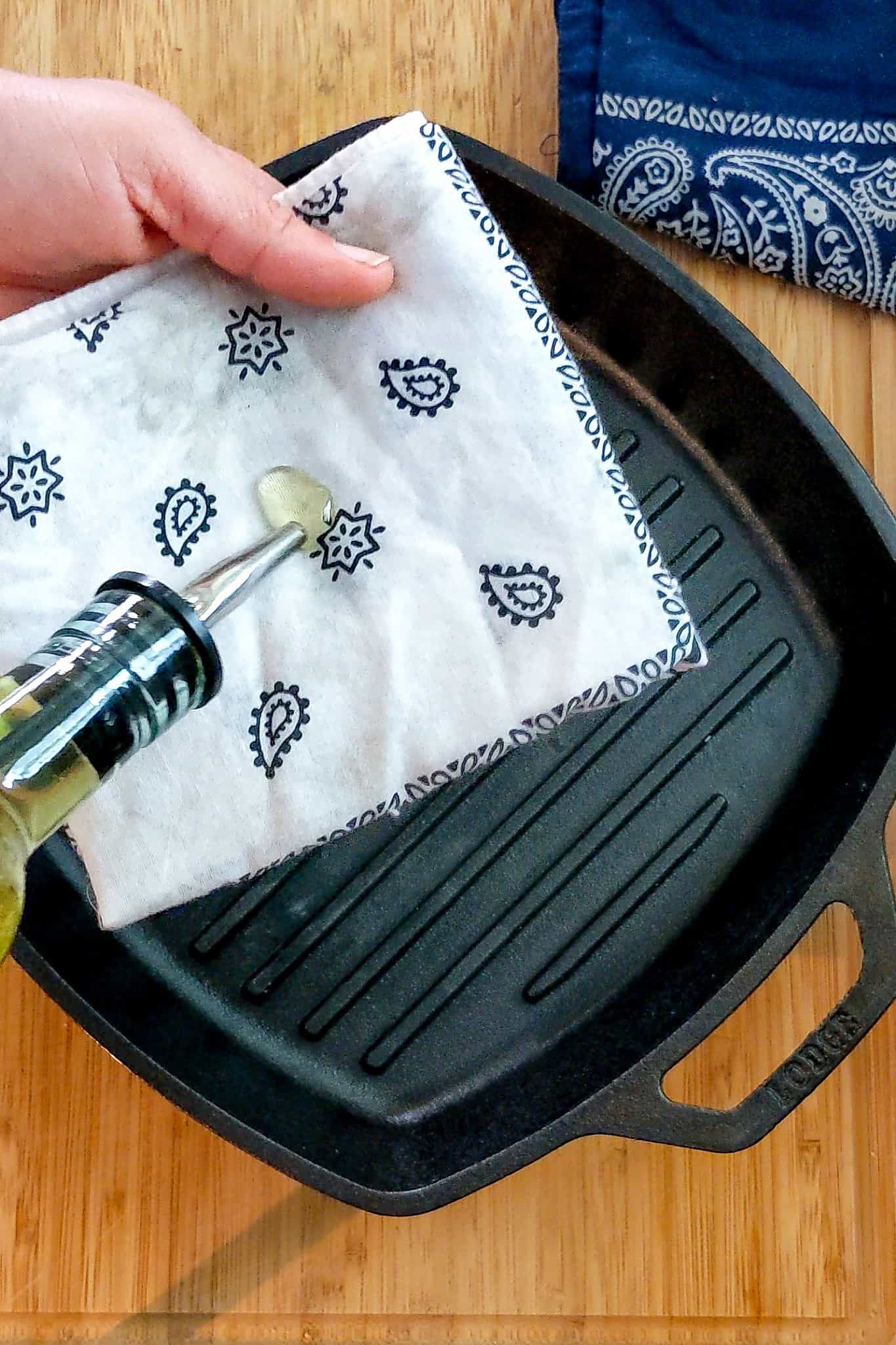
A little goes a long way.
The Seasoning Is Flaking
If the seasoning begins to flake, it's often because the oil was applied too heavily or the previous seasoning wasn't bonded well to the iron. Scrub away any loose flakes, clean the skillet, and rebuild the seasoning with several very thin coats of oil rather than one thick layer.
One of the reasons I love cast iron is that it's incredibly forgiving. Unlike nonstick cookware, most cast iron problems can be fixed with a little time and patience. Don't be afraid to cook with it. The more you use it, the better it gets.
Recap - Cast Iron Skillet Care
Caring for a cast-iron skillet might seem like a bit of work, but trust me, it's worth every minute. We've covered the essentials, from properly cleaning and drying to seasoning and avoiding common mistakes.
By taking the time to care for your skillet, you're not just maintaining a piece of cookware; you're preserving a kitchen tradition that can be passed down for generations. So, keep up with those regular maintenance habits, and your skillet will reward you with perfectly cooked meals for years to come.
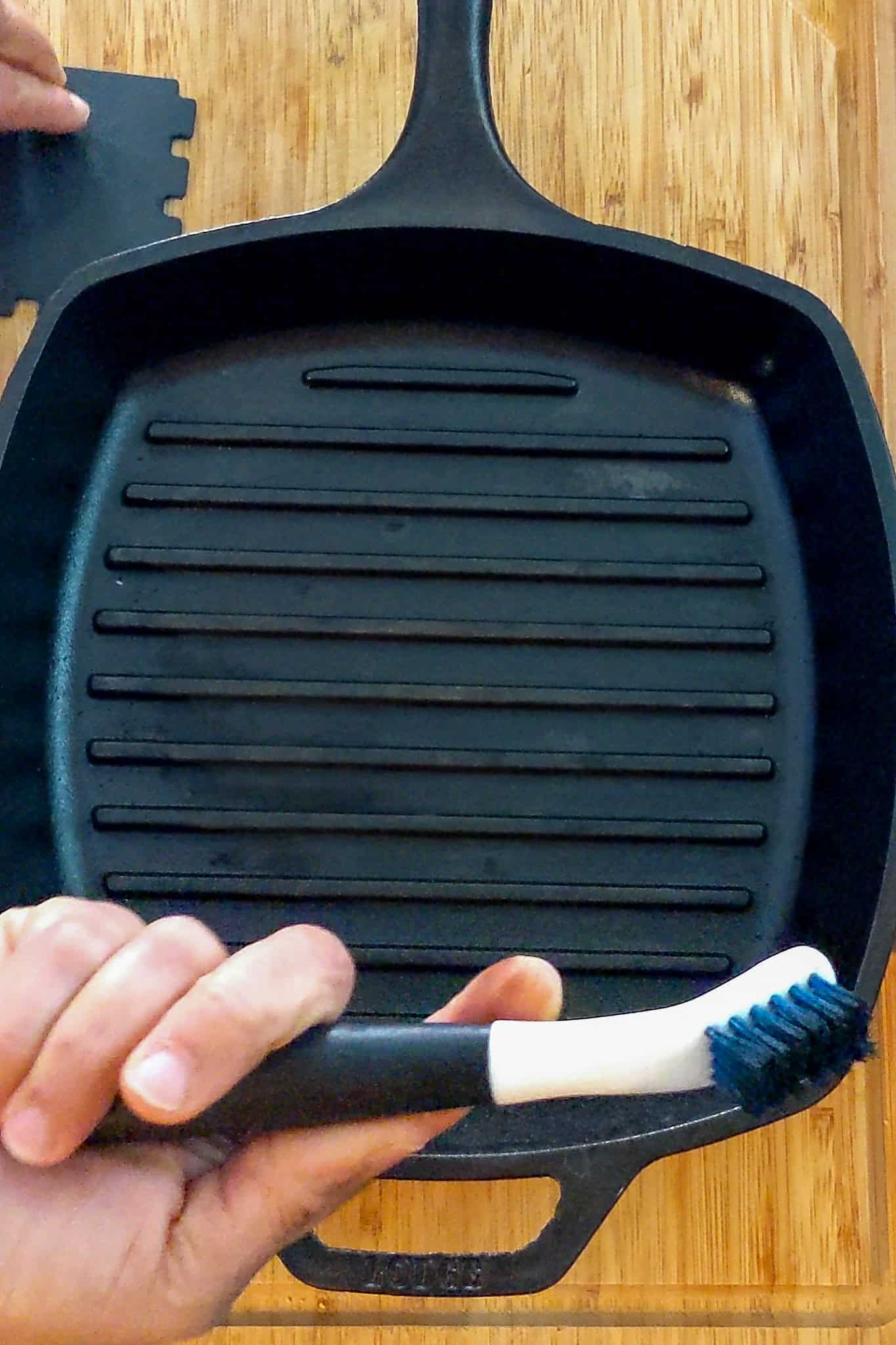
Use a sturdy brush to remove tough debris. This is the OXO Good Grips Deep Clean Brush.
Frequently Asked Questions
Here is a list of common questions I have answered. If you have any questions, please write them in the comments below.
Yes. A small amount of mild dish soap is safe to use on a well-seasoned cast-iron skillet. The old advice against soap dates back to when many household soaps contained lye. Today, the most important steps are drying the skillet thoroughly and applying a very thin coat of oil before storing.
It depends on how often you cook. If you use your skillet regularly, cooking with oil naturally helps maintain the seasoning. If the surface looks dull, food starts sticking, or rust begins to appear, it's a good time to re-season it.
Food usually sticks because the skillet wasn't fully preheated, there wasn't enough cooking fat, or the seasoning hasn't fully developed. With regular use and proper care, your skillet will become more naturally nonstick.
Yes, especially in a well-seasoned skillet. Short cooking times with ingredients like tomatoes, lemon juice, or vinegar are generally fine. However, long-simmering acidic dishes may gradually wear down the seasoning and can sometimes add a metallic taste to the food.
Absolutely! Most rusty skillets can be restored with a little scrubbing, proper drying, and a fresh round of seasoning. Surface rust is common and usually isn't a reason to throw the pan away.
Choose an oil with a high smoke point, such as grapeseed, avocado, canola, or vegetable oil. Apply only a very thin layer before seasoning to create a smooth, durable finish.
Why I Still Reach for Cast Iron
If you've made it this far, you've probably guessed that I'm a big fan of cast iron. Yes, it takes a little more care than some modern cookware, but I think it's worth it. A well-maintained skillet can last for generations, develop incredible flavor over time, and move effortlessly from the stovetop to the oven.
Once you build the habit of cleaning, drying, and lightly oiling it after each use, cast iron care becomes second nature. My hope is that this guide gives you the confidence to cook with your skillet more often, because the best way to build a beautiful seasoning is simply to keep cooking.
Cast Iron Recipes
Here are some delicious recipe ideas for your cast-iron cooking.
- Grilled Lemon Oregano Dressing & Vinaigrette Recipe
- Pan-Roasted Chicken and Andouille Sausage Gumbo
- Protein-Packed Loaded Vegetarian Nachos Recipe
- Ultimate Loaded Nachos Recipe | Cheese Sauce & Pepper Crema




Chef Maika Frederic-Liebman
Chef and Educator
Professionally trained Haitian-American chef Maika Frederic is the creator of Just Maika Cooking, where she shares globally inspired recipes, cooking techniques, ingredient guides, and food safety tips designed to help home cooks become more creative and confident in the kitchen. Combining years of professional culinary experience with a passion for teaching, she makes global flavors approachable through practical, accessible instruction for cooks of every skill level.
SUBSCRIBE: 👈To my YouTube Channel to Get Notifications of New Videos.
Questions and Comments
I'd love to hear about your own cast-iron skillet care tips or answer any questions you might have. Drop them in the comments, and let's keep the conversation going!
Leave a Reply