How to Chop Onions Without Crying (Quick Method)

Chopping onions can be a tearful experience, literally! But don't worry, with these quick and simple tips on how to chop onions without crying, you can chop onions like a pro without the waterworks. Perfect for busy home cooks who want to get dinner on the table fast and hassle-free.

Table of Contents
Jump to:
- How to Chop Onions Without Crying
- 5 Chef Tips for Cutting Onions Without Tears
- 7 Different Types of Onions
- The Anatomy of an Onion
- Quick Tips to Chop Onions Without Crying
- Culinary Glossary
- Step-by-Step Guide: How to Chop an Onion Quickly
- Instructions with Pictures
- Storing Cut Onions
- Frequently Asked Questions
- Cooking Tips and Tutorials
- Latest Recipes
- Have a Comment or Question?
How to Chop Onions Without Crying
The best way to reduce tears when chopping onions is to use a sharp chef's knife, chill the onion before cutting, and work in a well-ventilated kitchen. Cutting onions damages their cells, releasing compounds that form an irritating gas called syn-propanethial-S-oxide. When that gas reaches your eyes, it causes the familiar burning sensation and tears.
As a chef, I recommend focusing on three simple habits: keep your knife sharp, refrigerate onions for about 30 minutes before chopping, and use ventilation to move the irritating gas away from your face. These techniques won't guarantee completely tear-free chopping, but they can make preparing onions much more comfortable.
5 Chef Tips for Cutting Onions Without Tears
- Use a sharp chef's knife. A sharp blade cuts through onion layers cleanly instead of crushing them, reducing unnecessary cell damage and the release of irritating compounds.
- Chill onions before cutting. Refrigerate whole onions for approximately 30 minutes before preparing them. Cooler temperatures can slow the release of irritating compounds. Avoid freezing onions if you want to preserve their crisp texture.
- Improve kitchen ventilation. Turn on your range hood or position a small fan to move onion fumes away from your face. Avoid directing the airflow toward your eyes.
- Leave the root end intact until the end. Keeping the root attached helps hold the onion together while slicing and dicing, making it easier to control. This is mainly a cutting technique, not a proven way to prevent tears.
- Work efficiently with proper knife skills. Prepare your cutting board, knife, and storage container before starting. Confident, controlled cuts reduce the time you spend exposed to onion fumes.
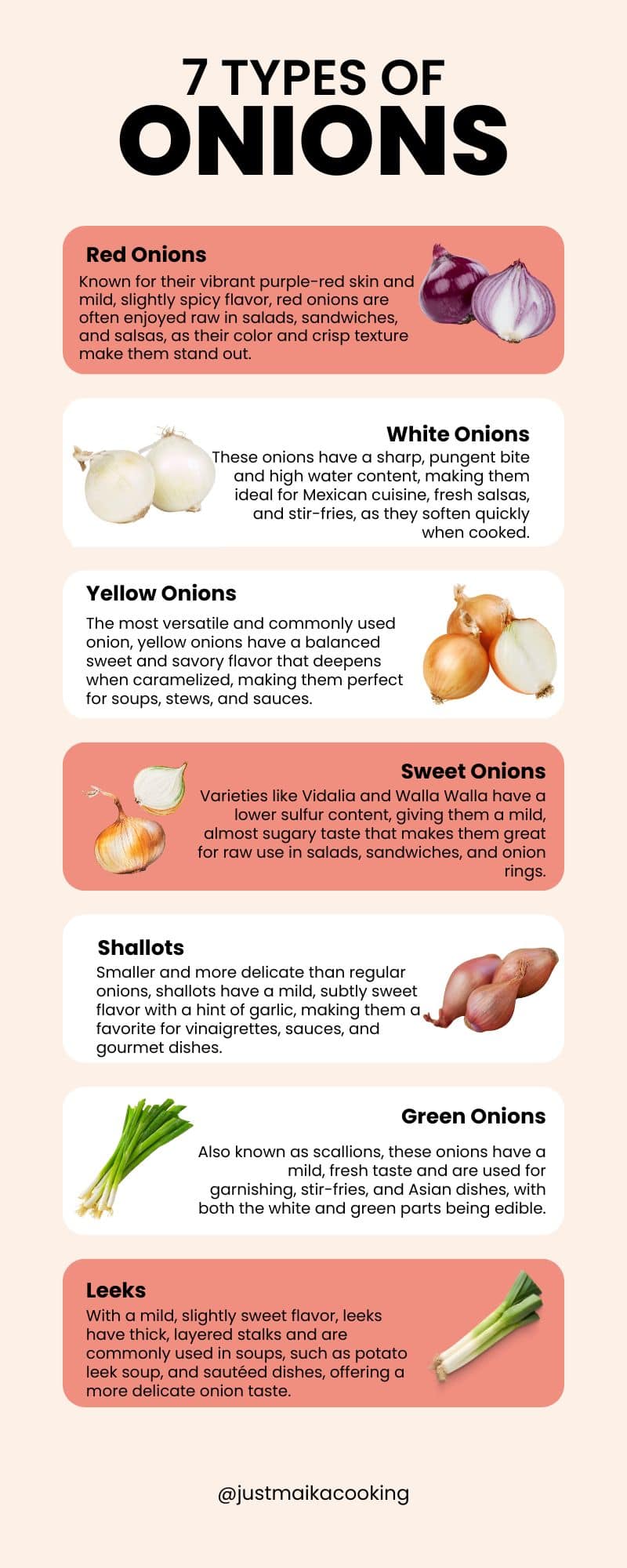
7 Different Types of Onions
Different types of onions, like red onions, white onions, and the milder-flavored Vidalia onion (sweet onion), have varying levels of these tear-inducing compounds. A small onion might not hit you as hard as a large onion, but after chopping a few pounds of onions, even the bravest home cook might need onion goggles!
Recommended Reads
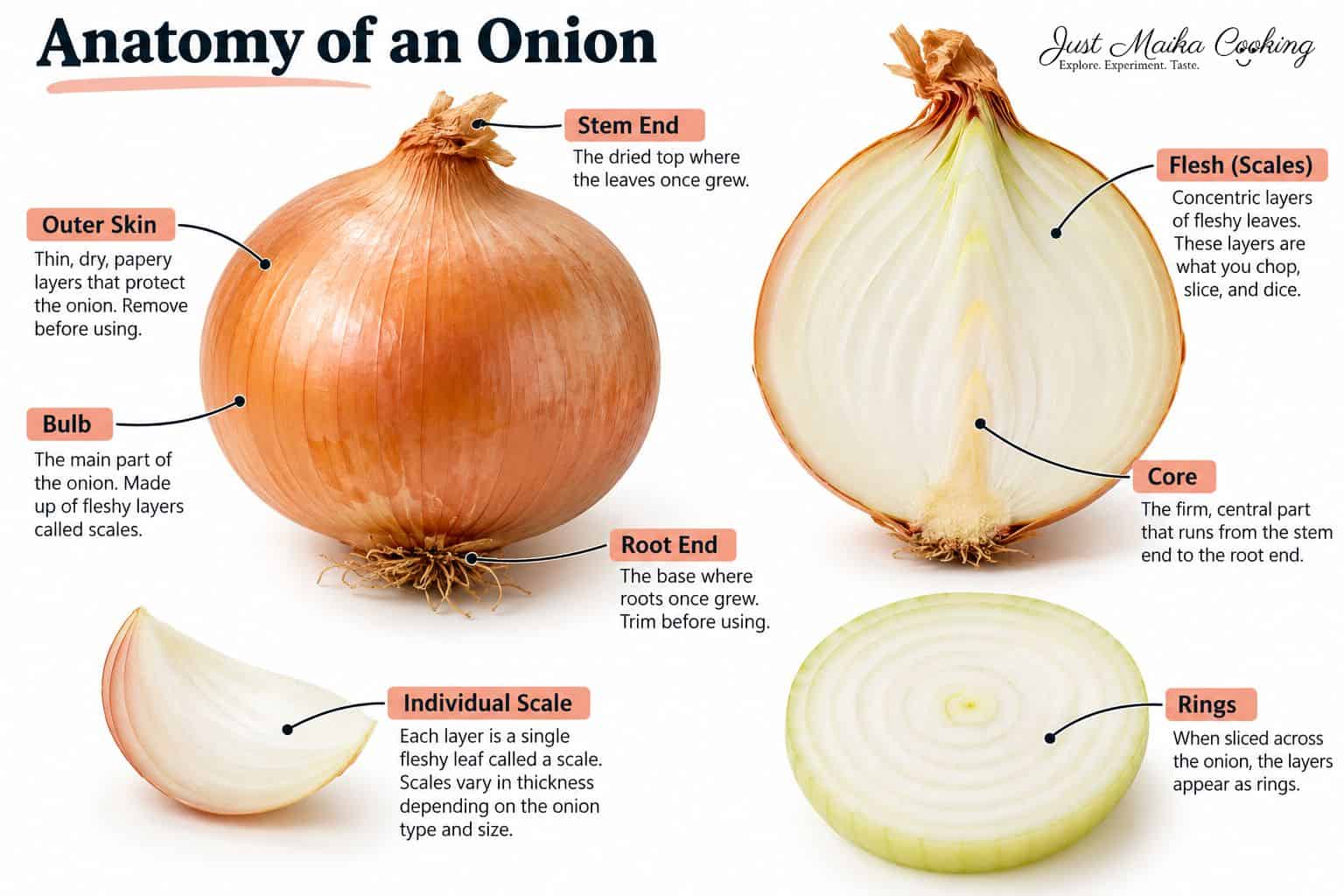
The Anatomy of an Onion
Quick Tips to Chop Onions Without Crying
Chopping onions doesn't have to be tearful! With a few simple tricks, you can cut down on those eye-stinging fumes and make prep time easier. Try these quick and effective methods to keep the tears at bay.
1. Chill the Onion First
Why it works: Cooling the onion slows down the release of tear-inducing gases by firming up the onion's cell walls. When the cells are firmer, they're less likely to break apart and release those nasty sulfur compounds. Plus, the cold slows down the chemical reactions, giving you more time before the tears start flowing.
How to do it: Place the whole onion in the fridge for 20-30 minutes before chopping, or pop it in the freezer for 10 minutes if you're short on time. This works for any type of onion.
For more on why cutting an onion makes you cry, check out The Wonder of Science for a more detailed answer.
2. Use a Very Sharp Knife
Why it works: A dull knife crushes the onion cells more, releasing more gas. A very sharp knife makes cleaner cuts, so fewer cells break, and less tear-inducing gas floats up to your eyes. Plus, it makes chopping faster and safer- a win-win!
Quick Tip: Sharpening your knife before you start also makes chopping faster and safer! Use the knife tip for precise cuts, and hold the onion firmly with your fingertips tucked in to avoid accidents.

Watch this quick tutorial on my YouTube Channel ↗ to learn how to chop scallions and pay attention to how I tuck my fingers in to avoid cutting my hands with a sharp knife.

My Must-Have Favorite Chef Knife
Important: How do you chop onions without crying?! Use a sharp knife!
My Review: The PAUDIN 8-inch Chef's Knife is a standout for both sharpness and craftsmanship. It stays incredibly sharp through regular use, making prep work effortless. The high-carbon stainless steel blade showcases PAUDIN’s attention to detail, while the ergonomic handle provides a comfortable grip for extended use. Despite its premium feel, this knife is impressively affordable, offering exceptional quality without the high price tag! That’s why I’ve recently switched all my knives to PAUDIN; they truly deliver on durability, beauty, and performance. If you want a reliable, well-crafted knife at a great value, this is the one to get!

3. Use Proper Ventilation to Move Onion Fumes Away
Why it works: When you cut an onion, it releases an irritating gas that can reach your eyes and make you tear up. Good ventilation helps move these airborne compounds away from your face before they reach your eyes.
How to do it: Chop onions near a running kitchen exhaust fan or position a small fan to blow the fumes away from your face. Keep your cutting board on a stable, dry surface and avoid directing airflow toward your eyes.
4. Cut the Root End Last
Why it works: The root end of the onion contains the highest concentration of sulfur compounds, which means it's the main culprit for those tears. By leaving it intact until the end, you minimize the release of the tear-inducing gas.
Quick Tip: Slice off the top end first, peel the papery skin, then chop while keeping the root end intact until the end.
Culinary Glossary
This section provides concise definitions to enhance understanding and improve cooking skills related to this post. Find More Terms: Culinary Glossary.
Scientific Reasoning
- Sulfur Compounds - Natural chemicals released when you cut an onion that cause eye irritation and make you cry.
- Volatile Oils - Aromatic compounds in onions that become airborne when sliced, contributing to the strong smell and tear-inducing effect.
- Enzymatic Reaction - The process that occurs when onion cells are broken, releasing sulfur compounds that turn into gas and irritate your eyes.
Methods / Techniques
- Ventilation - Using air circulation (such as a fan or an open window) to disperse onion fumes away from your eyes.
- Chilling Method - A technique in which onions are refrigerated or briefly frozen before cutting, slowing the enzymatic reaction to reduce tears.
- Cutting Technique - A method of chopping or slicing onions to reduce exposure to sulfur compounds, such as cutting near a fan or slicing with the root end intact.
- Water Method - A technique where onions are chopped under running water or submerged in a bowl to prevent fumes from reaching the eyes.
- Freezing Method - A quick way to chill an onion in the freezer for about 10 minutes before cutting, slowing the release of sulfur compounds.
- Acidic Solution - A remedy in which you apply vinegar or lemon juice to the cutting board to neutralize onion fumes.
Onion Parts
- Root End - The part of the onion where the papery roots were attached, which contains the highest concentration of tear-inducing compounds and should be cut last.
Equipment
- Sharp Knife - A well-honed knife that slices through onions cleanly, reducing cell damage and minimizing tear-inducing fumes.
- Dull Knife - A knife that isn't sharp enough, crushing the onion instead of slicing it cleanly, which releases more sulfur and causes more tears.
- Onion Goggles - Specialized eyewear designed to create a seal around your eyes to block onion fumes and prevent irritation.
- Mandoline Slicer - A kitchen tool with an adjustable blade that allows for quick, uniform onion slices with minimal effort.
- Onion Peeler - A kitchen tool designed to quickly remove onion skins without releasing as many fumes.
Hey, Science Nerd! If you are like me, you always want to know why. Check this peer-reviewed article on the Characterization of the Volatile Compounds of Onion with Different Fresh-Cut Styles and Storage Temperatures ↗.

Step-by-Step Guide: How to Chop an Onion Quickly
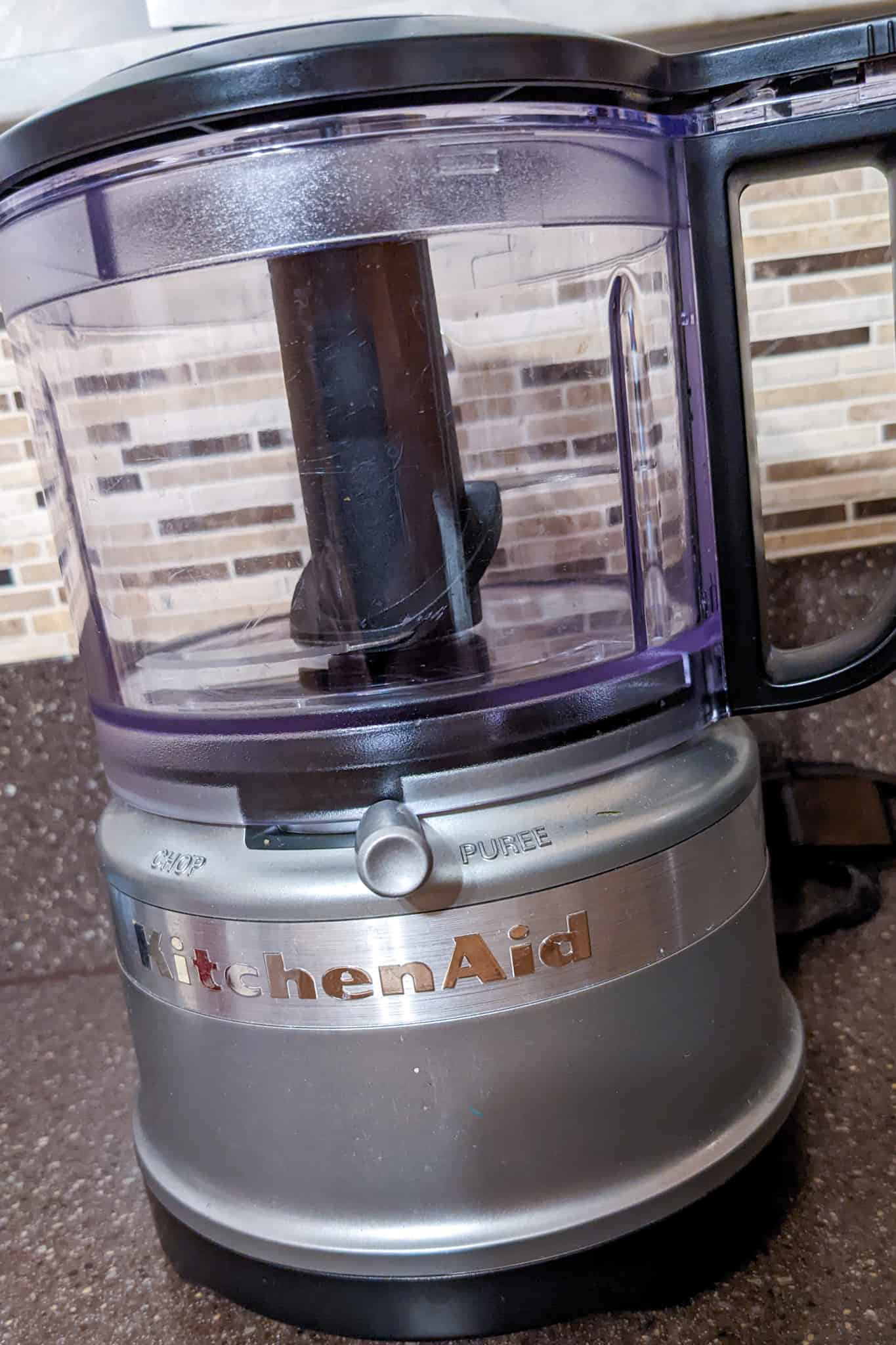
If you want to skip the manual labor, a food processor is an easy way to get evenly chopped onions without the tears. Just peel the onion, cut it into large chunks, and let the machine do the work.
- Chill the onion for 10-15 minutes (optional but helpful).
- Slice off the top end (non-root end) and peel off the papery skin.
- Cut the onion in half lengthwise (through the root end).
- Place one half flat-side down on the cutting board. Make vertical cuts from the top toward the root, stopping before you cut through the root.
- Make horizontal cuts for a finer dice, or go for half-moon shapes if your recipe calls for onion rings.
- Chop across the vertical cuts to create diced onion pieces, whether you're aiming for large chunks for hearty stews or smaller pieces for savory recipes.
- Finish by cutting the root end last.
My Review: The KitchenAid 3.5 Cup Food Chopper is a must-have in the kitchen at a great price. It’s compact, powerful, and lightweight, making meal prep easier without taking up much space. I love its one-touch operation, perfect for quickly chopping, mixing, and puréeing. Plus, it's easy to clean. Watch me use it in my Spicy Tomato Farro Risotto and Chili Herb-Crusted Rainbow Trout recipes. This chopper is essential, especially if you love cooking with lots of gadgets like me!
Instructions with Pictures
Follow the instructions and tips below using the step-by-step picture guide to chop onions quickly.
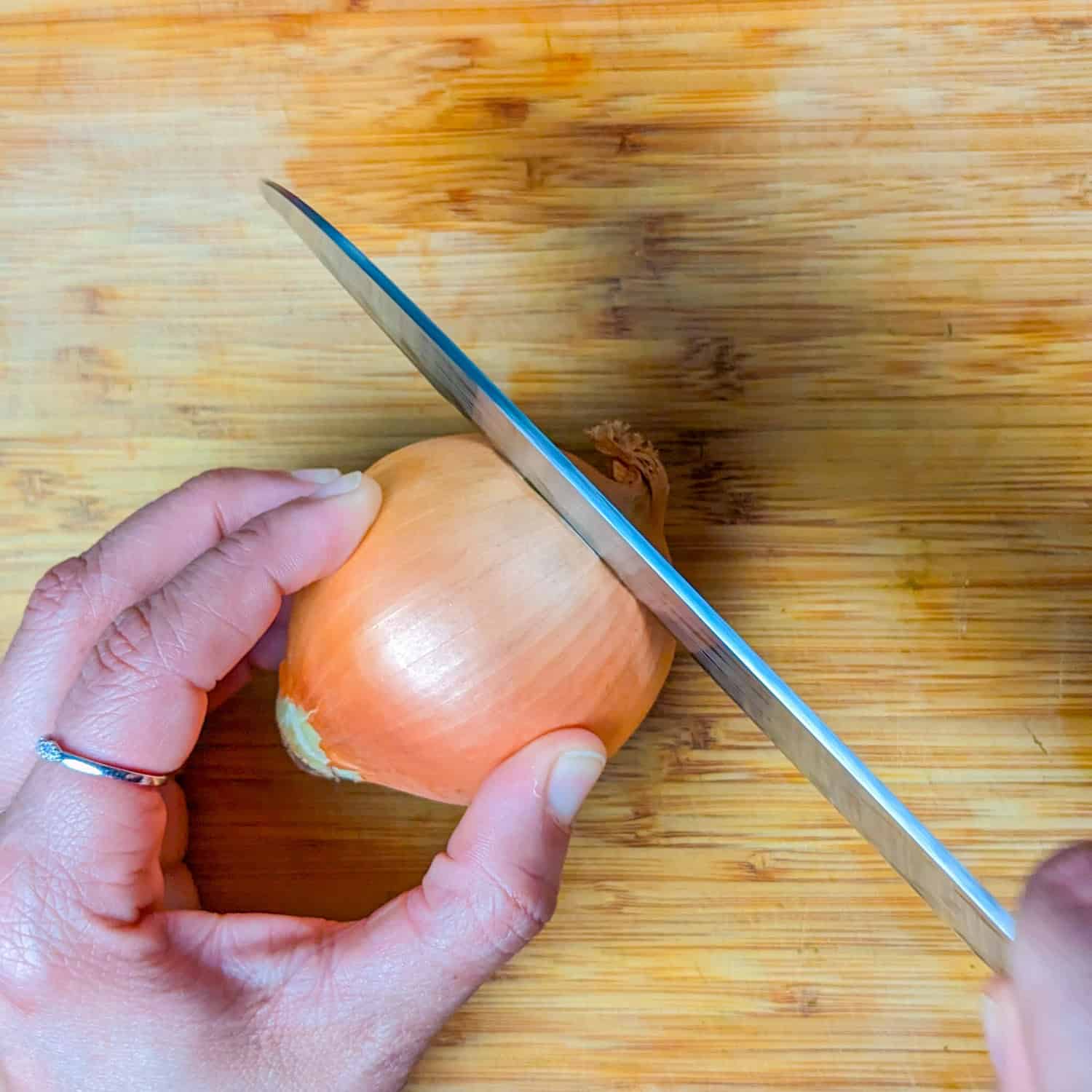
Cut off the onion ends. You can leave the root end on to prevent tearing.

Halve the onion with a sharp knife on a sturdy cutting board.

Peel the papery outer layer since this is not edible.

Lay the onion flat to slice into each piece safely, vertically.

Turn the sliced onion so that the slices face you horizontally.

With the same width slices as before, slice this time to create diced onions.

Continue until you can't slice any longer.

Lay the small piece flat and continue slicing.

Voila, diced/chopped onions.

Small Diced (left) and Medium Diced (right).
Kitchen Must-Haves - Find other tools I use here.
Storing Cut Onions
Once you've got your chopped onions, store any leftovers in an airtight container in the fridge. This helps prevent the strong smell from taking over your entire fridge and keeps the onion pieces fresh for up to a week. Cover the cut surfaces with plastic wrap, or place the entire half onion in the container.
Airtight Food Containers - I swap glass food storage containers for plastic clip lids or wooden push-ins. I always suggest glass storage containers because they can be microwaved, hold food without staining, and keep food at a more stable temperature, so it stays fresher longer.
Try the OXO Good Grips Smart Seal Glass Rectangle Food Storage Containers or the Pyrex Freshlock Glass Food Storage Containers.
Frequently Asked Questions
Here, you will find a list of common questions that I have answered. If you have questions, please write them in the comment section below.
Combine a sharp chef's knife, chilled onions, and good ventilation. If you're particularly sensitive, well-fitting protective kitchen goggles can provide an additional physical barrier against irritating fumes.
Cutting an onion breaks open its cells and triggers a chemical reaction that produces an irritating gas called syn-propanethial-S-oxide. When this gas reaches your eyes, it irritates the surface and stimulates tear production.
Yes! Onion goggles create a protective barrier that prevents the sulfur gases from reaching your eyes, making chopping much more comfortable.
Store chopped onions in an airtight container in the fridge for up to a week or freeze them in a freezer-safe bag for longer storage.
Absolutely! A food processor is a quick and efficient way to chop onions evenly while reducing exposure to tear-inducing fumes.
Refrigerating onions for approximately 30 minutes before chopping may help reduce irritation by slowing the release of volatile compounds. It doesn't eliminate them completely, but it can make chopping more comfortable.
Yes, a sharp knife can reduce cell damage compared with a dull blade. Less crushing means fewer irritating compounds may be released during cutting.
Water can help capture some irritating compounds, but chopping onions under running water is impractical and can make knife handling less safe. A stable cutting board, sharp knife, and good ventilation are better everyday choices.
Not reliably. Leaving the root attached helps keep the onion stable while cutting, but the irritating compounds are not confined to the root. Cutting any part of the onion can release them.
Cooking Tips and Tutorials
If you found this tutorial helpful, you'll love my Cook's Notebook collection. From knife skills and flavor bases to time-saving tricks and essential equipment guides, this section is packed with chef-tested lessons to help you cook with confidence.
- Why You Should Let Meat Rest After Cooking
- Seasonal Produce Guide: What Fruits and Vegetables Are in Season?
- How to Roast Food: The Fundamental Principles of Roasting
- 2026 Fall Seasonal Produce Guide: Fruits and Vegetables to Enjoy This Season




Latest Recipes
Time to Explore. Experiment. Taste. Try one of my latest recipes.
- Lemon Pepper Roasted Brussels Sprouts with Red Onion and Parmesan
- Cranberry Jalapeño Chicken Salad on Wasa Crispbread
- Easy Borscht Recipe with Pre-Cooked Beets
- Spicy Basa Fish Stew with Potatoes and Watercress






Chef Maika Frederic-Liebman
Chef and Educator
Professionally trained Haitian-American chef Maika Frederic created Just Maika Cooking, where she shares globally inspired recipes, cooking techniques, ingredient guides, and food safety tips to help home cooks become more creative and confident in the kitchen. Combining years of professional culinary experience with a passion for teaching, she makes global flavors approachable through practical, accessible instruction for cooks of every skill level.
SUBSCRIBE: 👈To my YouTube Channel to Get Notifications of New Videos.
Have a Comment or Question?
If you have a question or comment about this post on how to chop onions without crying, please post it below. You will definitely get a quick response. It also helps our other readers to stay informed. Thanks!