


This easy borscht recipe combines pre-cooked beets, tender cabbage, russet potatoes, carrots, and creamy cannellini beans in a flavorful chicken broth with fire-roasted tomatoes. Inspired by my husband's love of Eastern European cuisine, this hearty, nourishing soup is simple enough to make regularly and satisfying enough for the whole family.
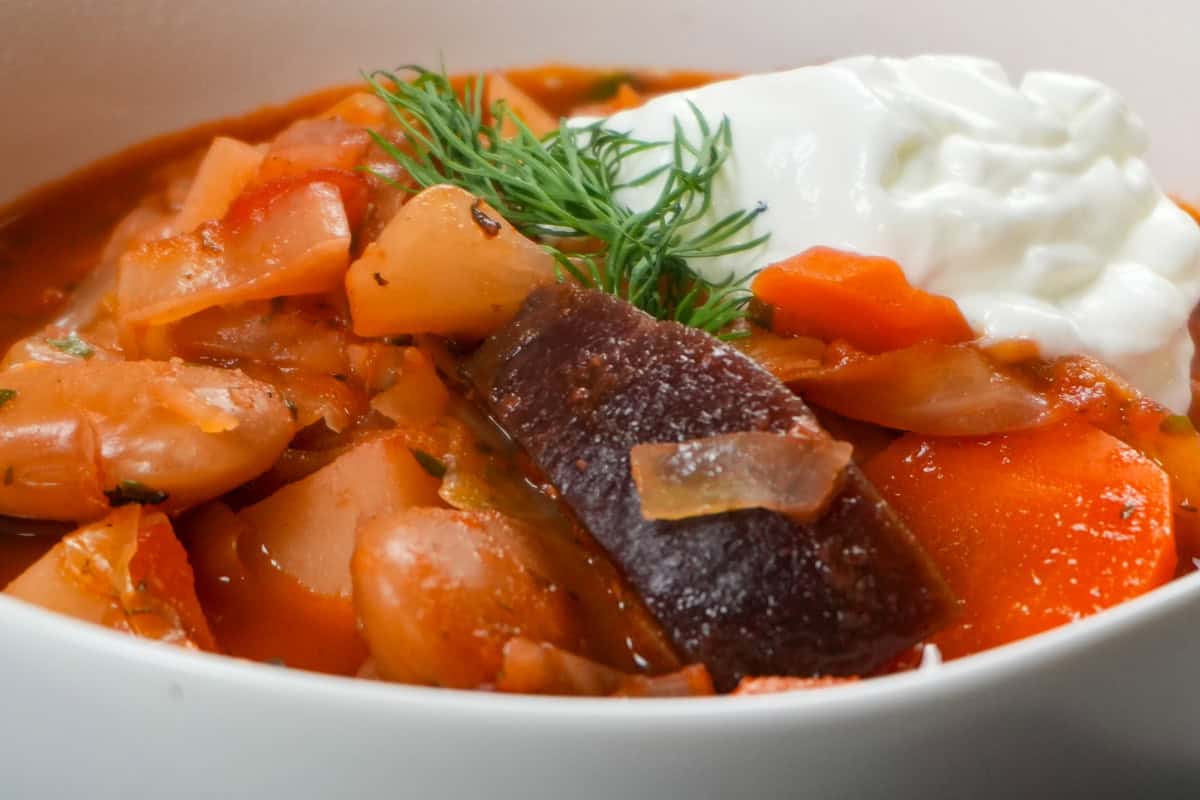
Table of Contents
Jump to:
- What Is Borscht? A Comforting Soup with Many Traditions
- Why You'll Love This Recipe
- Ingredients with Steps
- Culinary Glossary
- Instructions with Pictures
- Equipment You'll Need (With Alternatives)
- Kitchen Tools I Use and Recommend
- Storage and Reheating
- Substitutions
- Variations
- 5 Quick Cooking Tips
- Frequently Asked Questions
- More Hearty and Comforting Soup Recipes
- Cooking Tips and Tutorials
- 📖 Recipe
- Have a Comment or Question?
What Is Borscht? A Comforting Soup with Many Traditions
When people think of borscht, they often picture a bowl of red beet soup. However, after researching borscht's long history and its many regional variations, I learned that this beloved dish is much more diverse than any one preparation. From hearty meat-based soups to lighter vegetable versions, borscht reflects the ingredients, seasons, and cooking traditions of the communities that prepare it.
Borscht is particularly important to Ukrainian cuisine, where it has deep cultural and historical significance. Different versions are also enjoyed throughout Eastern and Central European cuisines, with recipes varying from one region and household to another.
Some versions feature beef broth, pork ribs, or stew meat, while others use vegetable broth and a variety of vegetables. For example, some recipes include lots of beets, cabbage, potatoes, beans, and fresh herbs. Some are served hot, while certain varieties are enjoyed cold.
This diversity is what inspired my approach to creating an easy borscht recipe. Rather than trying to reproduce one particular authentic recipe, I wanted to understand the dish's foundations and create something that would work in my own kitchen.
Different Varieties of Borscht
These are just a few examples. Even within the same region, a family's borscht recipe can reflect generations of personal preferences and cooking traditions. My version uses pre-cooked beets, small-chopped vegetables, seasoned cannellini beans, and chicken broth to create a hearty soup without complicated preparation. Check out more varieties.
Red Borscht: One of the most familiar varieties, often prepared with red beets, cabbage, carrots, potatoes, and a flavorful broth. Depending on the recipe, it may include beef, pork, beans, or additional vegetables.
Green Borscht: A variation commonly associated with sorrel and other leafy greens. Its pleasantly tangy flavor comes from the greens, and some preparations include potatoes, eggs, and fresh herbs.
White Borscht: A Polish soup traditionally associated with fermented flour, giving it a distinct tangy flavor. It may contain sausage, potatoes, or eggs and differs considerably from beet-based versions.
Why You'll Love This Recipe
- Simple Preparation: Pre-cooked beets eliminate the need to peel and cook raw beets, while small-chopped vegetables keep preparation straightforward.
- Nourishing Ingredients: Cabbage, carrots, potatoes, beets, and cannellini beans provide a satisfying variety of vegetables, fiber, and nutrients.
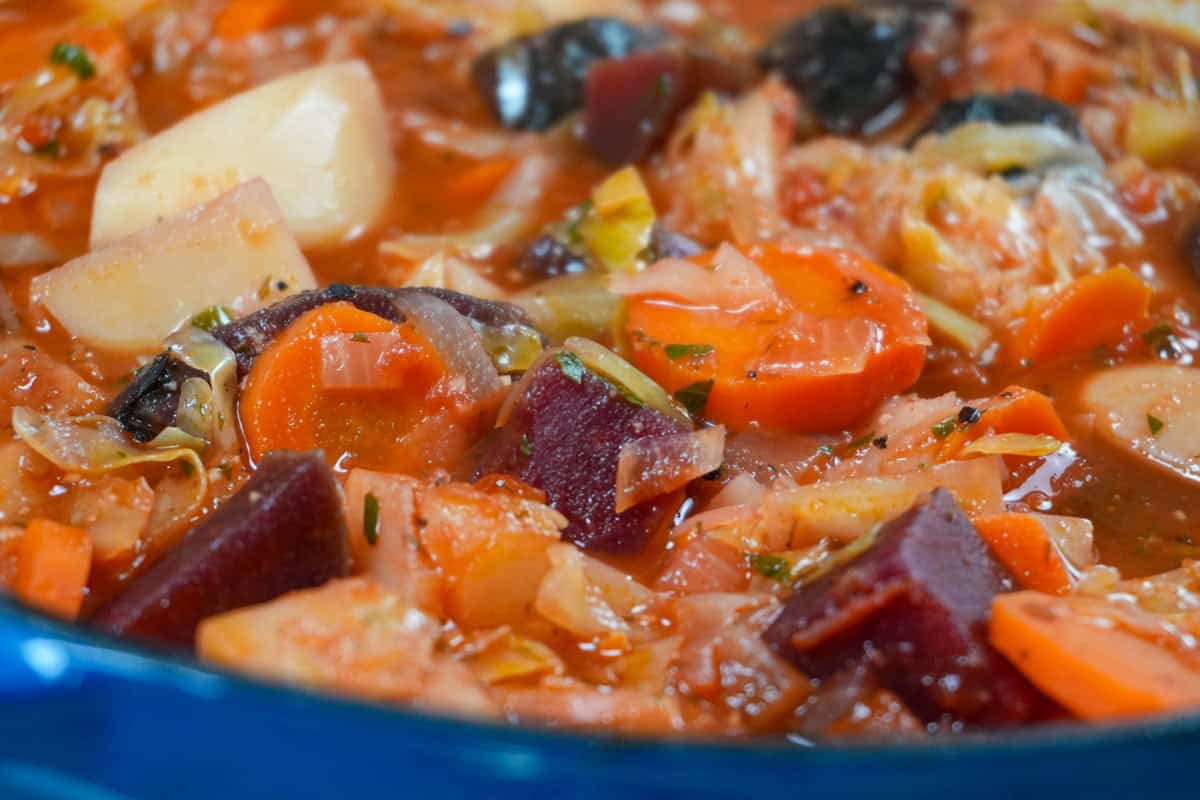
- Hearty and Comforting: Chicken broth, fire-roasted tomatoes, and tender vegetables create a flavorful soup you can enjoy as a full meal.
- Family-Approved: Inspired by my husband's love of borscht, this recipe became such a favorite that he asked me to make it every week.
- Easy to Customize: Use vegetable broth for a meatless version, adjust the vegetables to your personal preference, or serve with sour cream and fresh dill.
Note From Chef Maika
My husband comes from an Eastern European background, and borscht is one of the soups he absolutely loves. I wanted to make something that would remind him of the comforting dishes he enjoys while creating a version that was easy enough for our whole family to enjoy regularly.
Before developing this recipe, I researched borscht and learned about its history and the many ways it's prepared. One thing that stood out to me was just how wide a variety of borscht exists. While many people immediately picture a deep-red beet soup, borscht isn't always red, and its ingredients and preparation can vary by region, season, and family tradition.
That really shaped how I approached my own recipe. Rather than recreating one particular traditional version, I wanted to honor the spirit of this comforting soup by keeping it simple, using a variety of nourishing vegetables, and focusing on building a flavorful broth.
I chose pre-cooked beets to save time, small-chopped cabbage and carrots for easy preparation, russet potatoes for heartiness, and seasoned white beans to make the soup even more satisfying. The fire-roasted tomatoes and chicken broth bring it all together into a comforting meal that doesn't take hours in the kitchen.
And after making it, I finally got it right! My husband enjoyed it so much that he told me I needed to make it at least once a week. That was exactly what I had hoped for: a nourishing, flavorful soup that we could all enjoy together and look forward to making again.
For me, that's what cooking is about. Learning from different culinary traditions, understanding what makes them special, and finding approachable ways to bring those flavors into our everyday kitchens.
Recommended Reads
Ingredients with Steps
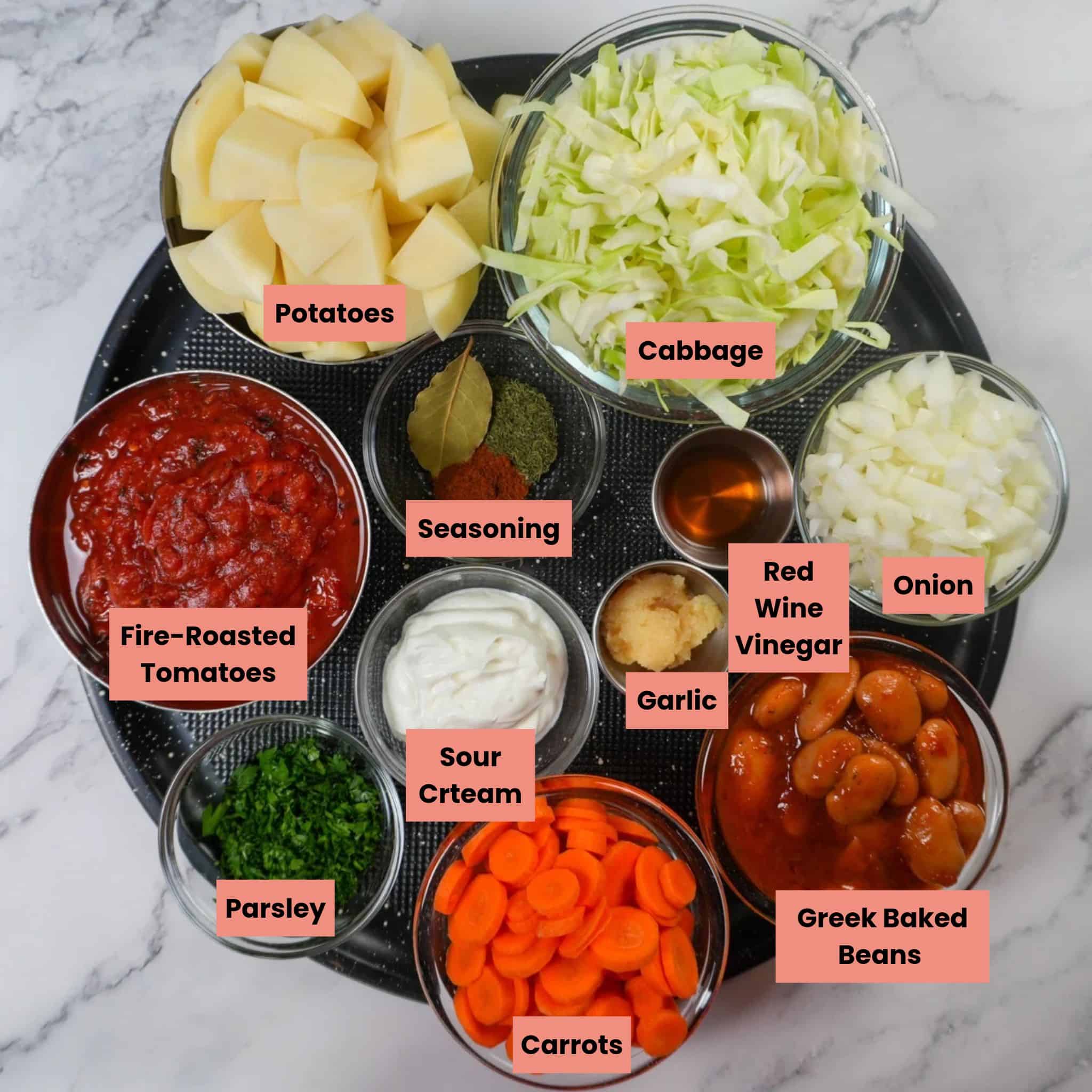
To prepare this easy borscht recipe, heat olive oil in a large Dutch oven over medium heat and sauté the small-diced yellow onion and sliced carrots until softened. Add the minced garlic and sweet paprika, then add the fire-roasted crushed tomatoes and cook briefly to develop flavor. Add the peeled and small-diced russet potatoes, thinly sliced green cabbage, bay leaf, dried dill, and black pepper, then pour in the low-sodium chicken broth. Simmer until the vegetables are tender, then gently stir in the Trader Joe's Giant Baked Beans with their seasoned tomato sauce. Near the end of cooking, fold in the large-diced pre-cooked red beets and fresh chopped parsley, warming everything through. Finish with red wine vinegar or lemon juice, adjust with kosher salt, and serve with an optional dollop of sour cream and fresh dill.


Culinary Glossary
This section provides concise definitions of key ingredients and techniques to help you understand and improve cooking skills related to this post. Find More Terms: Culinary Glossary.
Ingredients
- Borscht: A family of soups associated with Eastern European cuisine, especially Ukrainian culinary traditions. Recipes vary widely in their vegetables, broths, seasonings, and preparation methods.
- Beetroot: Also called beet root or simply beets, this root vegetable has a naturally sweet, earthy flavor and is a common ingredient in red borscht.
- Cannellini Beans: Large white beans with a creamy texture and mild flavor. They add heartiness to soups and stews.
- Fire-Roasted Tomatoes: Tomatoes roasted before canning, adding a subtle smoky flavor and extra depth to the broth.
- Dill: An aromatic herb with a distinctive grassy flavor, frequently used in Eastern European cooking.
- Bay Leaf: An aromatic leaf used to infuse soups, stews, and sauces with a subtle herbal flavor. Remove whole bay leaves before serving.
Techniques
- Slice: Cutting vegetables into thin, relatively even pieces. Slicing the carrots and cabbage allows them to cook evenly while maintaining their shape in the soup.
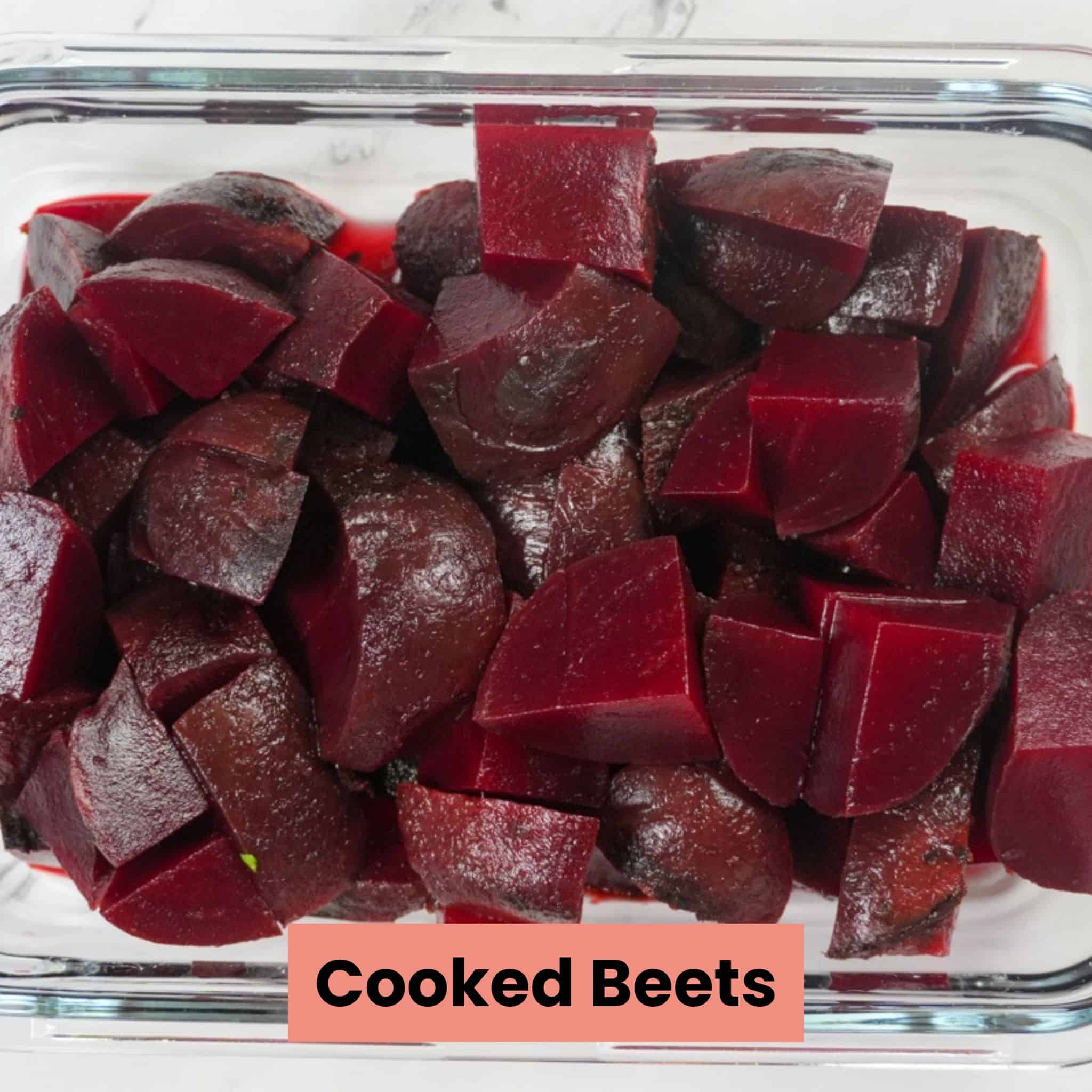
- Large Dice: Cutting ingredients into larger, roughly uniform cubes. Large-dicing the pre-cooked beets gives them a substantial texture without requiring additional cooking.
- Small Dice: Cutting vegetables into small, relatively uniform cubes so they cook evenly.
- Sauté: Cooking ingredients in a small amount of fat over moderate heat to soften them and develop flavor.
- Simmer: Cooking liquid gently below a full boil, allowing ingredients to tenderize while their flavors meld.
- Flavor Balancing: Adjusting salt, acidity, sweetness, and savory flavors to create a well-rounded dish.
Instructions with Pictures
Follow the instructions and cooking tips below using the step-by-step picture guide.
Step 1: Prepare the Vegetables.
Begin by preparing all the vegetables. Small dice the onion and peeled russet potatoes. Thinly slice the green cabbage and slice the carrots into bite-sized rounds.
Mince the garlic, finely chop the fresh parsley, and large-dice the pre-cooked beets. Keep the beets and parsley separate, as you'll add them toward the end of cooking.
Cooking Tip: Keeping the vegetables relatively uniform in size helps them cook evenly. There's no need to grate the carrots or finely shred the cabbage. Simple slicing keeps preparation straightforward and gives the finished soup a hearty, rustic texture.
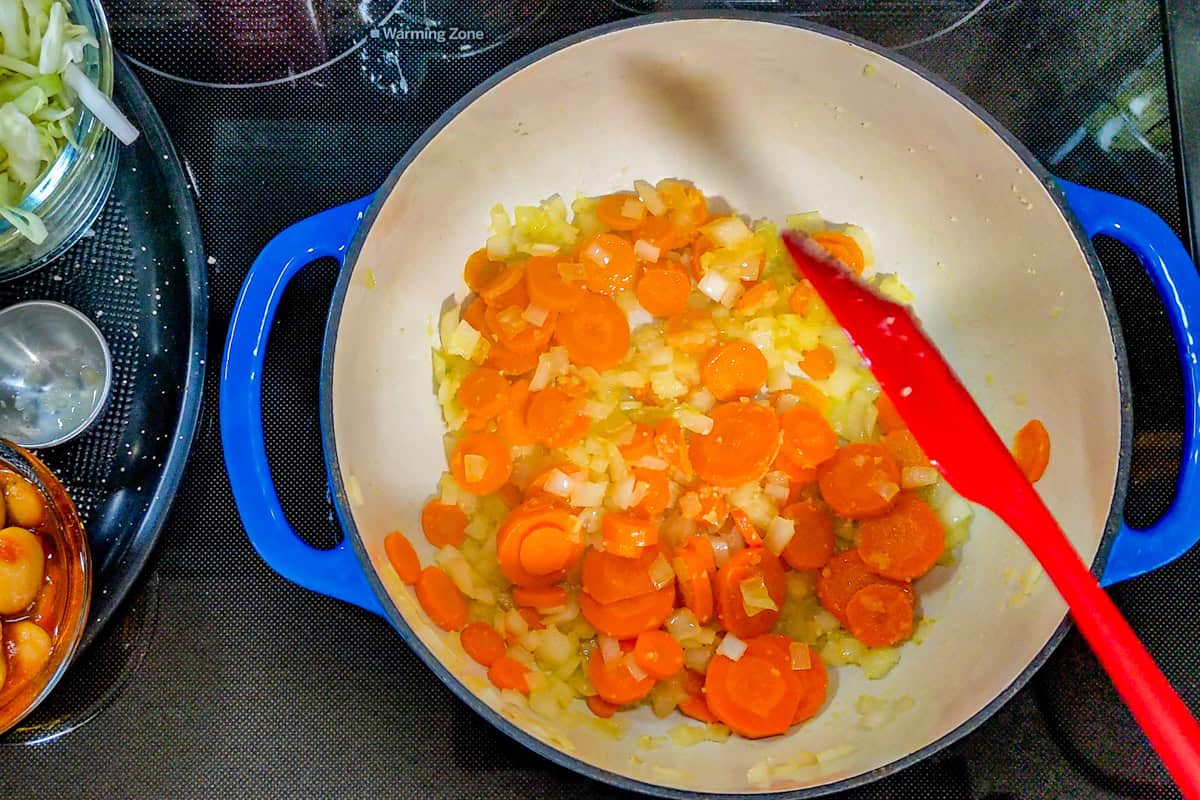
Step 2: Sauté the Aromatics. Heat the olive oil in a large Dutch oven over medium heat. Add the diced onions and carrots, stirring occasionally until the onions begin to soften.
Add the minced garlic and sweet paprika, stirring briefly until fragrant.
This step helps develop a flavorful foundation before adding the broth and remaining vegetables.
Add the garlic after the onions and carrots have softened slightly. Garlic cooks quickly and can become bitter if left over direct heat for too long.
Step 3: Build the Tomato Base.
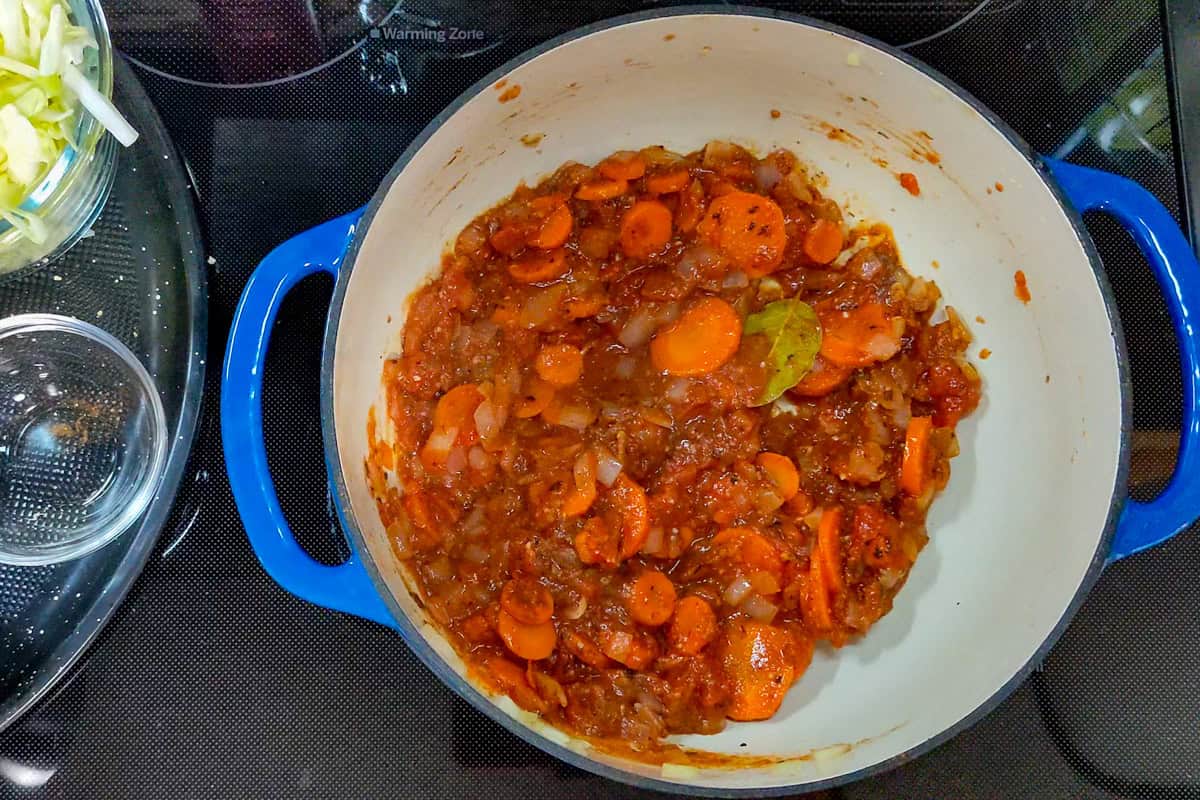
Stir in the fire-roasted crushed tomatoes and cook briefly with the aromatics.
The tomatoes add savory depth and a gentle roasted flavor that complements the earthy beets and sweet carrots.
Get the Lodge Cast Iron Dutch Oven and Walfos Silicone Spatula Set.
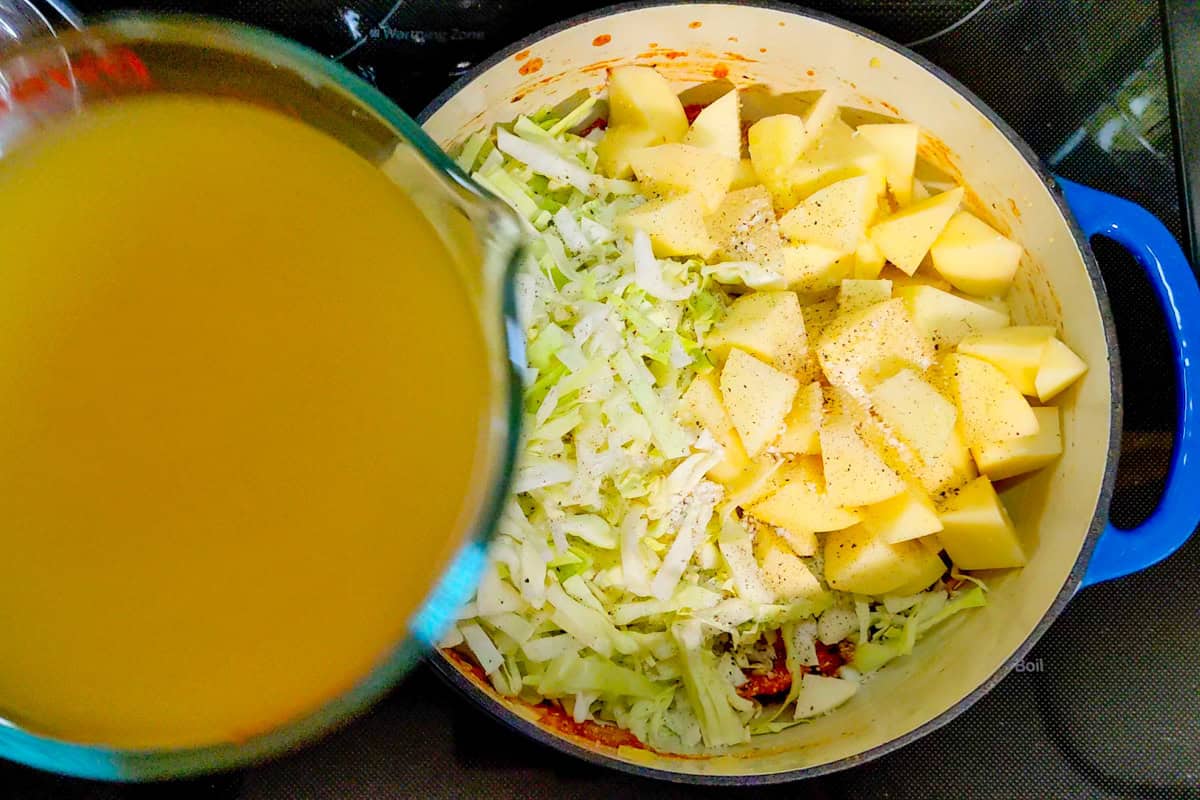
Step 4: Add the Vegetables and Broth. Add the diced russet potatoes, thinly sliced cabbage, bay leaf, dried dill, and black pepper to the tomato base.
Pour in the low-sodium chicken broth and stir to combine.
Bring the soup to a boil, then reduce the heat to maintain a gentle simmer. Cook until the potatoes, carrots, and cabbage are fork-tender.
Russet potatoes release some starch as they cook, giving the broth a slightly fuller texture. Keep the simmer gentle so the potatoes maintain their shape.

Step 5: Add the Beans. Gently stir in the Trader Joe's Giant Baked Beans, including their seasoned tomato sauce.
Continue simmering until the beans are warmed through and their flavors combine with the broth.
These beans are already cooked, so they only need a short time in the pot.
The prepared beans contain additional herbs and seasoning. Taste the soup before adding more salt to avoid over-seasoning.
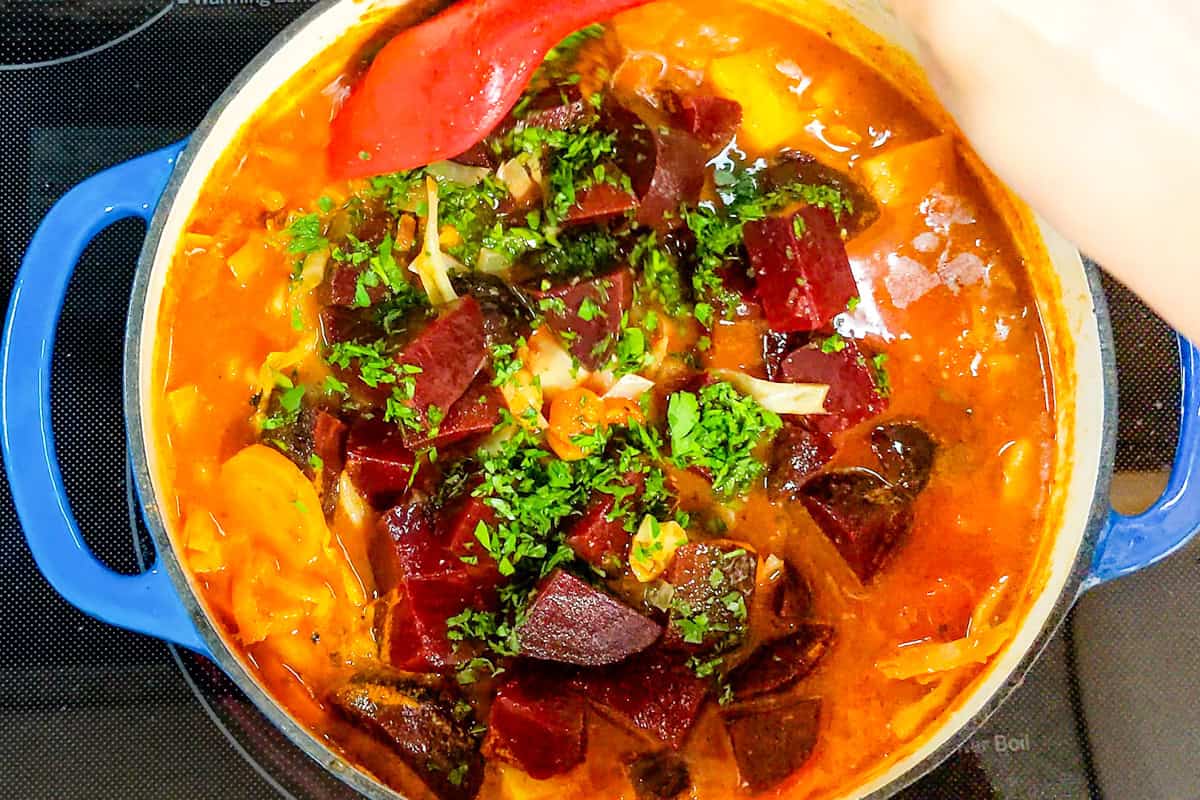
Step 6: Finish with the Beets and Fresh Parsley. Reduce the heat to low and gently fold in the large-diced pre-cooked beets and freshly chopped parsley.
Allow everything to warm through without prolonged cooking.
Since the beets are already tender, they don't need to simmer as long as the raw vegetables. Adding the parsley near the end also gives the soup a fresh, herbaceous finish that complements the earthy beets and savory tomato broth.
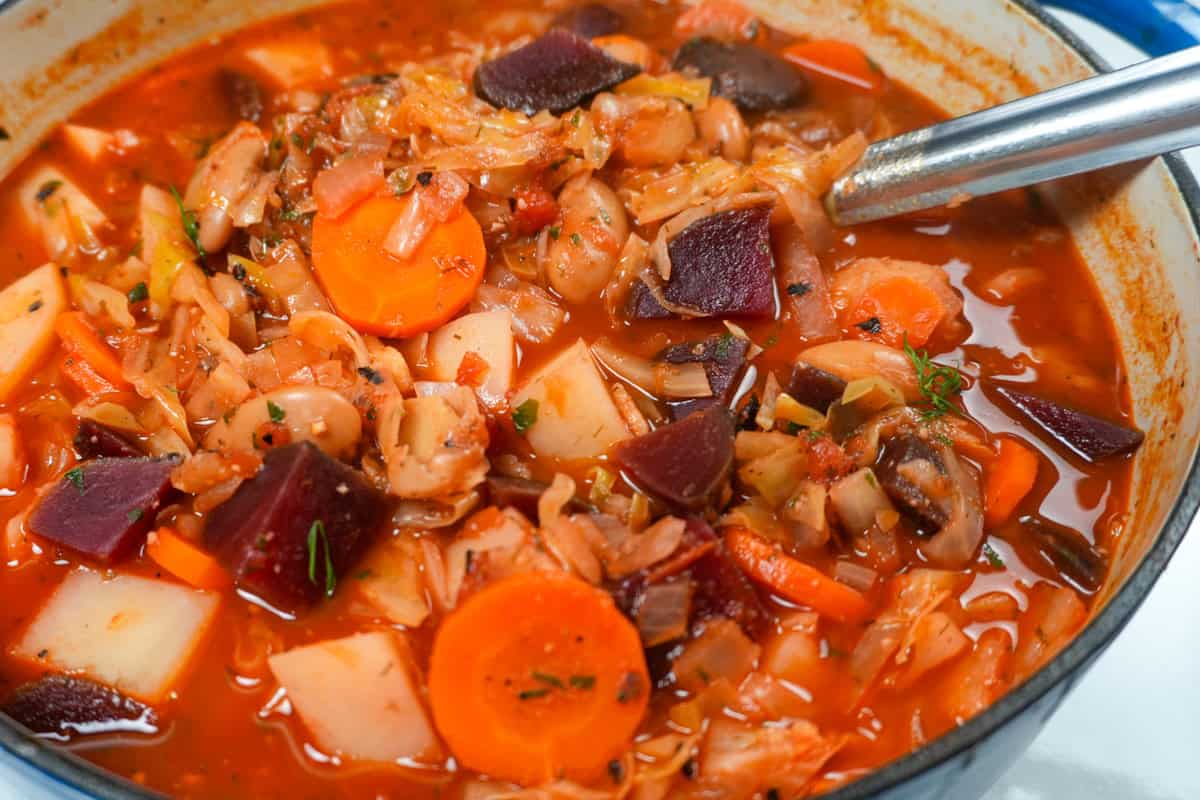
Step 7: Balance the Flavors and Serve. Remove the bay leaf and stir in red wine vinegar or lemon juice. Taste the soup and adjust the kosher salt and black pepper as needed.

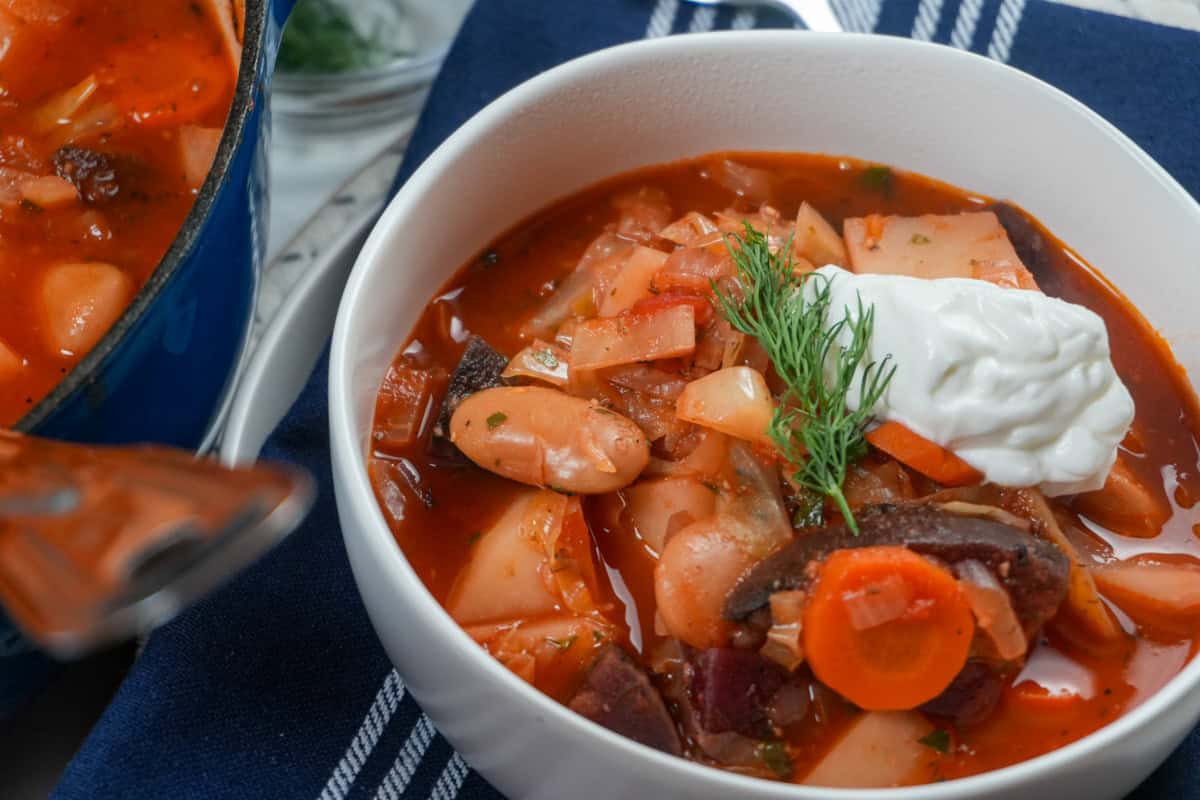
Ladle the borscht into bowls and garnish with a dollop of sour cream or plain Greek yogurt and fresh dill, if desired.
Serve with crusty bread or rye bread for a satisfying meal.
Equipment You'll Need (With Alternatives)
Here's what you'll need to be efficient, plus easy swaps if you don't have everything on hand.
- Large Dutch Oven: Provides even heat for sautéing the aromatics and simmering the soup (alternative: a large heavy-bottomed soup pot).
- Chef's Knife: Used to dice the potatoes, carrots, onions, and beets and chop the cabbage (alternative: a sharp santoku knife).
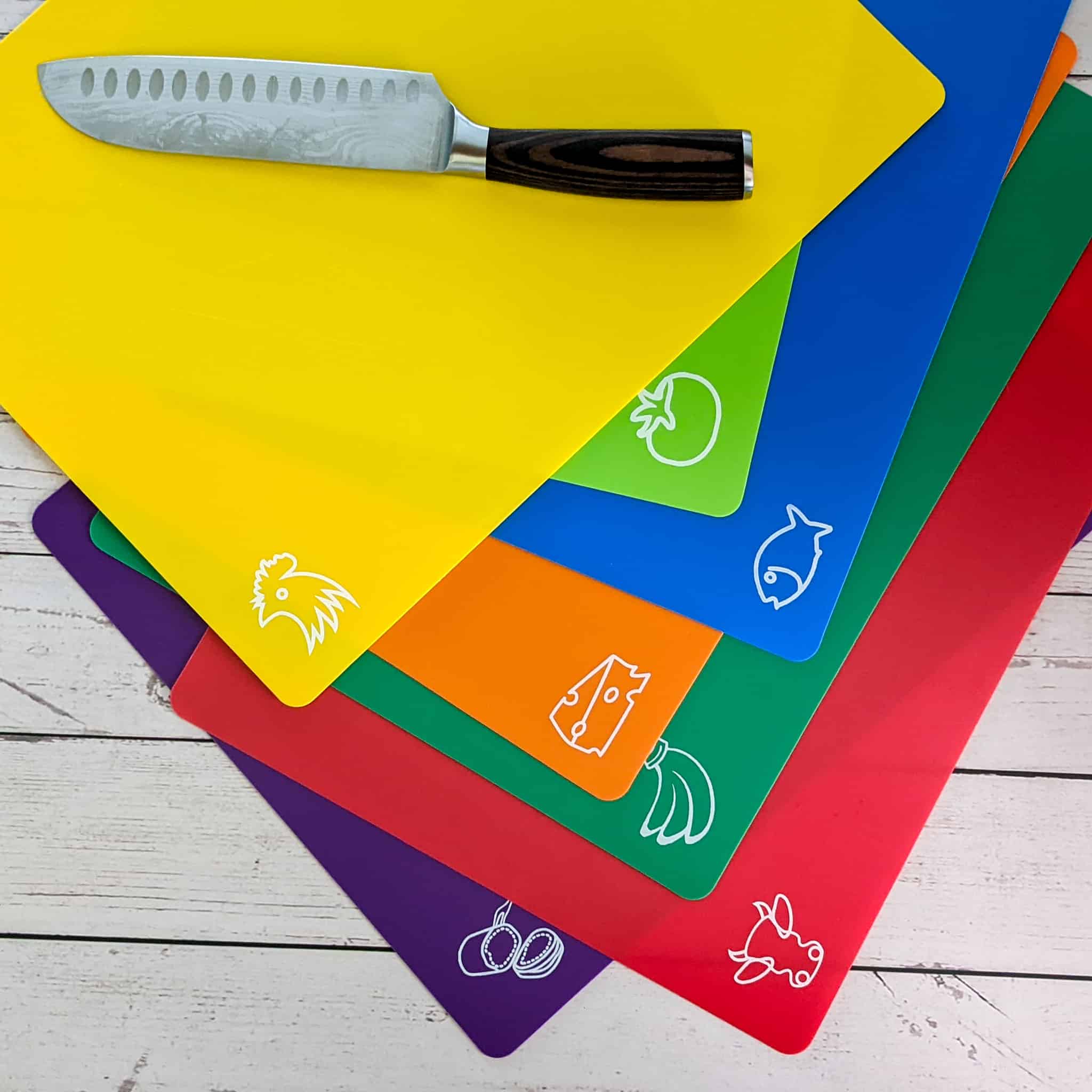
- Cutting Board: Provides a stable surface for preparing the vegetables (alternative: a large food-safe cutting mat).
- Wooden Spoon: Helps stir the soup and gently combine the tender beans and vegetables (alternative: a heat-resistant silicone spatula).
- Measuring Cups and Spoons: Measure the broth, tomatoes, oil, and seasonings.
- Ladle: Makes portioning and serving the soup easier (alternative: a large heat-resistant serving spoon).
Kitchen Tools I Use and Recommend
These are some of the kitchen tools I personally use that make cooking faster and easier. If you're building your kitchen setup or upgrading your tools, these are great places to start. More Kitchen Must-Haves - Find other tools I use here.
My Review: Lodge Cast Iron has been a family-owned company in South Pittsburg, Tennessee, for 125 years. Their cookware, known for its dependability, is made of rugged, seasoned cast iron for excellent heat retention and durability. This is still my go-to Dutch oven. You'll find it in a lot of my recent videos. It's heavy, durable, non-stick, and it holds heat well. Also, a big lesson: never preheat an enameled Dutch oven without oil. This will crack the enamel. I learned this the hard way.
My Review: Pyrex is a household staple in America, and you can't go wrong with it. The Pyrex Prepware 2-Cup Glass Measuring Cup features easy-to-read double-sided measurements in both metric and customary units, and it's made of tempered glass, making it microwave-safe and perfect for melting butter. The sturdy, molded handle won’t break, and the spout allows for easy pouring. Simple, reliable, and built to last. Additionally, I recently purchased the Pyrex 4-Cup Glass Measuring Cup, which is ideal for measuring broth for soups and for making batter right in it. I had to give it a 4.5 because recently, the red labeling was disappearing. Never had this happen before on any other I owned.

Review: I love this Walfos Silicone Spatula Set! The spatulas are sturdy, with a strong steel core, easy to clean, and come in different sizes, making them perfect for all my cooking, baking, and mixing needs. The seamless design is high quality, and getting five spatulas in one pack is an amazing value for the price. I've always had great experiences with Walfos products, and this set is another reason I love shopping from this brand.

My Review: The PAUDIN 8-inch Chef's Knife is an absolute standout in both sharpness and craftsmanship. It stays incredibly sharp through regular use, making prep work effortless. The high-carbon stainless steel blade showcases PAUDIN’s attention to detail, while the ergonomic handle provides a comfortable grip for extended use. Despite its premium feel, this knife is impressively affordable, offering exceptional quality without the high price tag. That’s why I’ve recently switched all my knives to PAUDIN—they truly deliver on durability, beauty, and performance. If you want a reliable, well-crafted knife at a great value, this is the one to get!

My Review: I’ve used these Fotouzy Cutting Board Mats for a long time, and while they’re flexible, dishwasher-safe, and great for preventing cross-contamination with their color coding, I now prefer solid plastic cutting boards. They’re BPA-free, non-porous, and wide enough to protect my wooden board, especially handy when zesting or transferring ingredients. That said, they don’t stay perfectly steady, even with a damp towel underneath, so I give them a 4 out of 5. But I still use it a lot for quick meat and veggie preps and place them right in the dishwasher.
Storage and Reheating
Learn how to properly store leftovers and reheat them to keep them fresh and flavorful. Learn more about Understanding Food Temperature Safety Zones: Cook, Store & Serve Safely.
Refrigeration
Let the soup cool promptly, transferring larger amounts into shallow containers to help it cool faster. Refrigerate within two hours of cooking and store in an airtight container for 3-4 days. Like many hearty soups, borscht can be especially enjoyable the next day as the vegetables, herbs, and flavorful broth continue to blend.
Freezing
Freeze the soup in freezer-safe containers for approximately 2-3 months for best quality. Keep in mind that russet potatoes can soften or become slightly grainy after freezing and thawing. The cabbage may also soften further. For convenience, freeze individual portions so you can reheat only what you need.
Reheating
Reheat refrigerated or thawed soup gently in a saucepan over medium-low heat, stirring occasionally until it reaches 165°F throughout. If the soup has thickened during storage, add a little chicken broth to adjust the consistency. Keep the sour cream and fresh dill separate until serving.
My Review: These Pyrex Freshlock containers are the closest match to my favorite IKEA version, shallow, stackable, and built for everyday use. The shallow design is especially helpful for food safety, letting hot meals cool faster before refrigerating. They don’t stain, the airtight locking lids seal in freshness, and they work beautifully for both hot and cold storage. Plus, they’re freezer-, microwave-, and dishwasher-safe for easy cleanup.

Substitutions
Swap ingredients to fit dietary needs or what you already have in your pantry.
Dairy Free
The soup itself contains no added dairy when prepared with the listed ingredients. Omit the optional sour cream or use a dairy-free sour cream alternative when serving.
Gluten-Free
The main vegetables, potatoes, and beets are naturally gluten-free. Check the prepared chicken broth and seasoned baked beans if cooking for someone who must avoid gluten, since packaged seasonings and sauces can vary.
Vegetarian
Replace the low-sodium chicken broth with an equal amount of low-sodium vegetable broth or vegetable stock. The vegetables and cannellini beans make this a hearty meatless version without needing additional protein.
Convenience
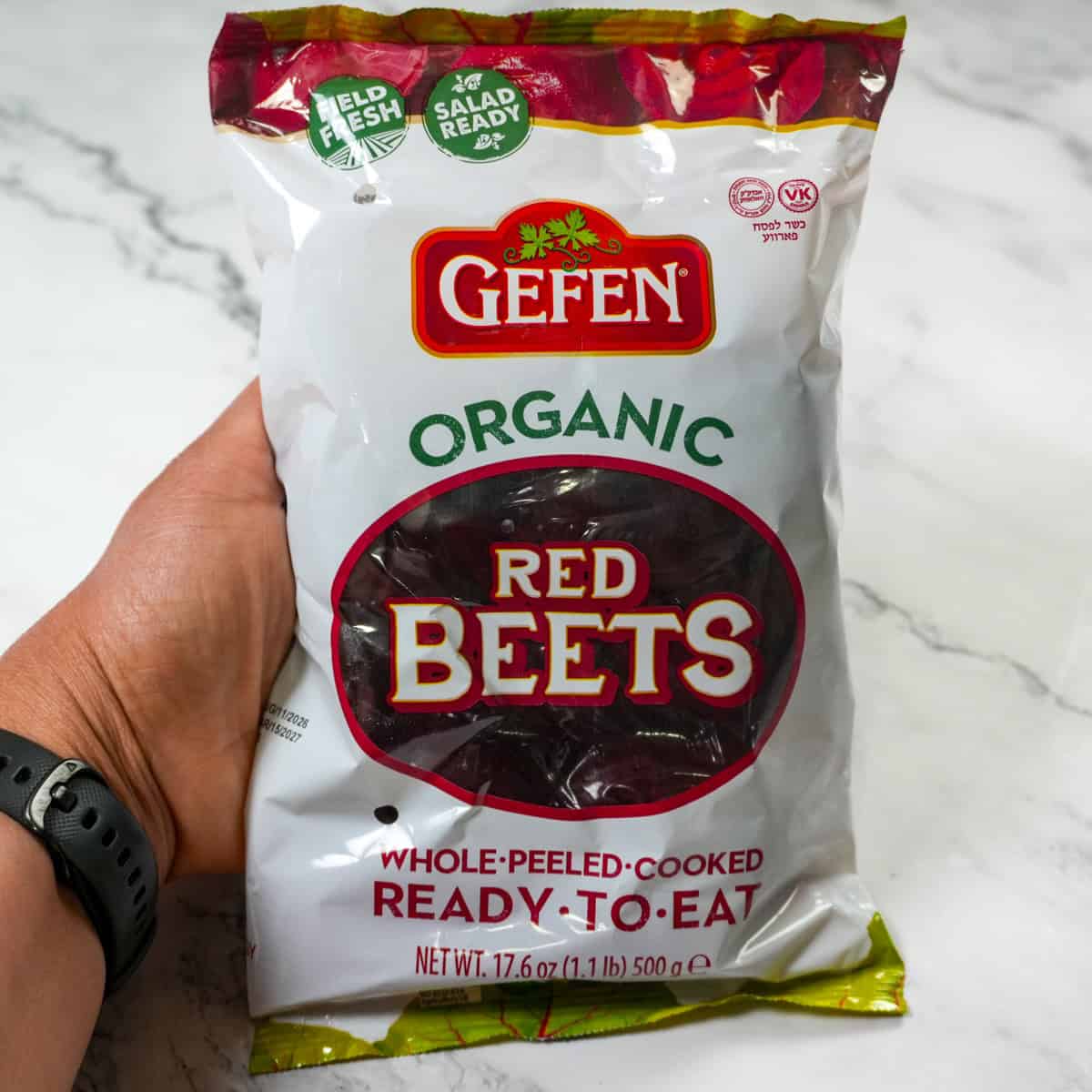
- Pre-Cooked Beets: Vacuum-packed cooked beets are the easiest shortcut. Plain canned beets can also work, but avoid pickled beets unless you want their added acidity and seasoning.
- Cannellini Beans: If Trader Joe's Giant Baked Beans are unavailable, substitute drained canned cannellini beans and add a little extra tomato sauce and seasoning.
- Fire-Roasted Tomatoes: Regular crushed tomatoes work well when fire-roasted tomatoes aren't available.
- Fresh Parsley: You can use dried parsley in a smaller quantity, although fresh parsley adds a brighter herbal flavor.
- Red Wine Vinegar: Apple cider vinegar or lemon juice can provide the acidity needed to balance the broth.
- Russet Potatoes: Yukon Gold or other all-purpose potatoes can be used if preferred. They tend to hold their shape a little better during simmering.
Change Heat Level - Modify the recipe's heat level to your liking and learn more about the Scoville Scale and Chili Pairings.
Variations
Explore fun twists and creative ways to make this recipe your own. Explore. Experiment. Taste.
Beef Borscht
For a meatier version of borscht, substitute beef broth for chicken broth and add cooked, tender beef stew meat. This creates a heartier soup inspired by beef borscht without simmering raw meat for several hours.
Vegetarian Borscht with White Beans
Replace the chicken broth with vegetable broth and keep the cannellini beans for a satisfying meatless version. The beans add creaminess and body, making the soup filling without meat.
Borscht with Extra Vegetables
Add small-diced bell peppers with the onions and carrots for extra sweetness and texture. You can also include parsnips, which contribute a naturally sweet, earthy flavor that complements the other root vegetables.
Borscht with Red Cabbage
Substitute small-chopped red cabbage for green cabbage. Red cabbage adds a slightly different flavor and texture while keeping the soup hearty and vegetable-forward.
A Brothier Borscht
If you prefer a lighter borscht, add more chicken broth and reduce the potatoes slightly. This creates a soup with more broth while retaining the flavor of the vegetables and herbs.
5 Quick Cooking Tips
Cook's Notebook is your Cooking Tips Resource Guide. Become a better home cook with tips to help you cook more efficiently.
- Keep the Vegetables Uniform: Thinly slice the cabbage, cut the carrots into rounds, and dice the potatoes so everything cooks evenly and creates a hearty texture.
- Develop the Aromatics First: Sauté the onions, carrots, garlic, and paprika before adding broth to build a more flavorful base.
- Simmer Gently: Avoid vigorous boiling once the potatoes are cooking. A gentle simmer helps them become tender without falling apart.
- Add the Prepared Ingredients Last: The cannellini beans and pre-cooked beets are already tender, so they only need enough time to warm through. Add the fresh parsley with the beets for a fragrant finish.
- Taste Before Serving: Finish with a little vinegar or lemon juice, then adjust the salt and black pepper to balance the earthy vegetables, tomatoes, and seasoned beans.
Support Global Food Bloggers
Learning from cooks who share their own culinary traditions is a wonderful way to better understand the history, ingredients, and techniques behind dishes such as traditional Ukrainian borscht.
Looking for authentic Ukrainian cuisine? Check out Tatyana's Everyday Food and Innichka Chef.
Frequently Asked Questions
Here are common questions I have answered. If you have any questions, please write them in the comments below.
No. Although red beet borscht is one of the most recognizable versions, other varieties use different ingredients. Green borscht, for example, is commonly made with sorrel or other leafy greens, while Polish white borscht uses a fermented flour base. Borscht has a long history, and recipes vary by region and household.
Absolutely! Pre-cooked beets are a great way to cut down on prep time.
Because they're already tender, add them toward the end of cooking instead of simmering them with the raw potatoes, cabbage, and carrots.
This makes homemade borscht more convenient for busy weeknights.
Yes. Replace the low-sodium chicken broth with vegetable broth or vegetable stock. The potatoes, cabbage, carrots, beets, and cannellini beans make the soup hearty enough to enjoy without meat.
No. A dollop of sour cream is a popular accompaniment for many varieties of borscht, but it's optional. Sour cream adds richness and a creamy contrast to the savory broth. Fresh dill and crusty rye bread are also wonderful serving options.
Many people enjoy borscht the next day because the flavors have more time to blend. As the soup rests, the vegetables, herbs, and broth continue to develop a well-rounded flavor. Store leftovers in an airtight container in the refrigerator and reheat gently before serving.
More Hearty and Comforting Soup Recipes
If you enjoy this easy borscht recipe, explore more hearty soups, comforting stews, and vegetable-forward meals from my kitchen. These recipes are a great way to discover new flavors while learning practical cooking techniques.
- Spicy Basa Fish Stew with Potatoes and Watercress
- Pasta and Lentil Soup Recipe (Italian Style)
- Creamy Chicken Corn Chowder with Dumplings | Dairy-Free
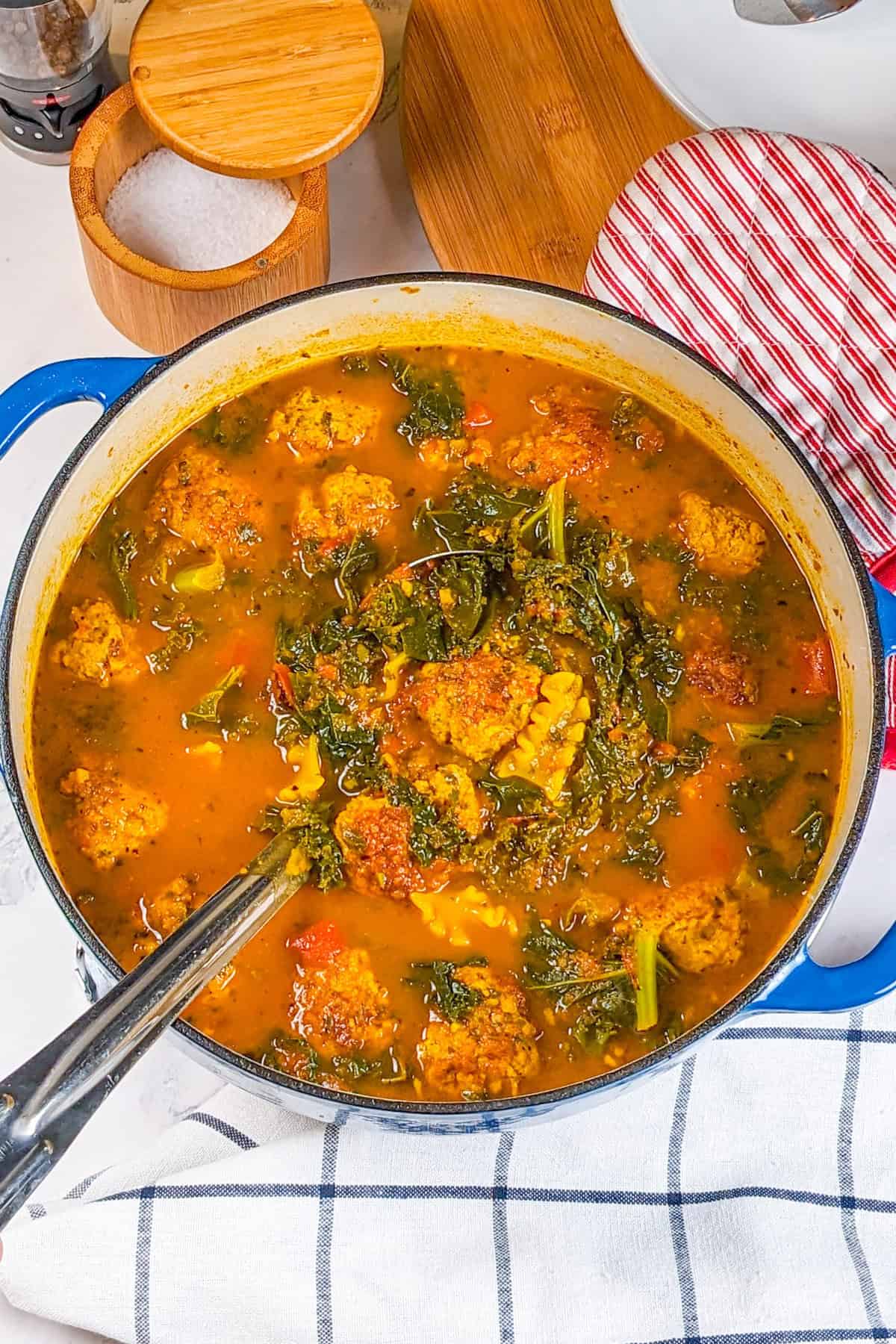
- One-Pot Curry Meatball Soup with Ground Turkey and Kale



Cooking Tips and Tutorials
If you found this tutorial helpful, you'll love my Cook's Notebook collection. From knife skills and flavor bases to time-saving tricks and essential equipment guides, this section is packed with chef-tested lessons to help you cook with confidence.
- Seasonal Produce Guide: What Fruits and Vegetables Are in Season?
- How to Roast Food: The Fundamental Principles of Roasting
- 2026 Fall Seasonal Produce Guide: Fruits and Vegetables to Enjoy This Season
- Indian Cooking Techniques That Changed How I Think About Food



📖 Recipe

Easy Borscht Recipe with Pre-Cooked Beets
Ingredients
- 17.6 ounces pre-cooked red beets large dice (1 package)
- 9.6 ounces Trader Joe's Giant Baked Beans in Tomato Sauce 1 can
- 2 medium russet potatoes peeled and small diced
- ½ small green cabbage thinly sliced
- 2 medium carrots sliced
- 1 medium yellow onion small diced
- 3 garlic cloves minced
- 1¾ cups fire-roasted crushed tomatoes
- 5 cups low-sodium chicken broth or vegetable broth
- 2 tablespoons olive oil
- 2 tablespoons fresh parsley chopped
- 1 bay leaf
- 1 teaspoon dried dill
- ½ teaspoon sweet paprika
- ¼ teaspoon ground black pepper
- 1-2 teaspoons red wine vinegar or fresh lemon juice
- Kosher salt to taste
Optional Garnishes
- Sour cream or plain Greek yogurt
- Fresh dill chopped
- Fresh parsley chopped
Equipment
- Silicone Spatula or Wooden Spoon
Instructions
- Prepare the Ingredients: Gather and prepare all the ingredients before cooking. Dice the onions, peeled potatoes, and pre-cooked beets. Slice the cabbage and carrots. Finely chop the parsley, and mince the garlic. Keep the beets separate until the end of cooking.
- Sauté the Aromatics: Heat the olive oil in a large Dutch oven over medium heat. Add the onions and carrots and sauté for 3-4 minutes, stirring occasionally, until the onions begin to soften. Stir in the garlic and paprika and cook for another 30 seconds, until fragrant.
- Build the Tomato Base: Add the fire-roasted crushed tomatoes and cook for approximately 2 minutes, stirring occasionally to combine with the aromatics.
- Add the Vegetables and Broth: Add the russet potatoes, cabbage, bay leaf, dried dill, and black pepper. Then pour in the low-sodium chicken broth. Stir to combine.
- Simmer Until Tender: Bring the soup to a boil, then reduce the heat to maintain a gentle simmer. Cook for approximately 15-20 minutes, stirring occasionally, until the potatoes, carrots, and cabbage are fork-tender.
- Add the White Beans: Gently stir in the Trader Joe's Giant Baked Beans along with their seasoned tomato sauce. Continue simmering for 3-5 minutes until heated through.
- Finish with the Beets: Reduce the heat to low and gently fold in the pre-cooked beets and chopped parsley. Warm for approximately 2 minutes, just until heated through. Avoid prolonged cooking since the beets are already tender.
- Balance the Flavor: Remove the bay leaf. Stir in the red wine vinegar or lemon juice, starting with a small amount. Taste and adjust the kosher salt, black pepper, and acidity as needed.
- Serve: Ladle the warm borscht into bowls. Garnish with sour cream or Greek yogurt and fresh dill or parsley, if desired. Serve with crusty bread or rye bread.
Notes
Nutrition

Subscribe to my YouTube Channel
SUBSCRIBE↗: 👈To my YouTube Channel to Get Notifications of New Videos.


Chef Maika Frederic-Liebman
Chef and Educator
Professionally trained Haitian-American chef Maika Frederic created Just Maika Cooking, where she shares globally inspired recipes, cooking techniques, ingredient guides, and food safety tips to help home cooks become more creative and confident in the kitchen. Combining years of professional culinary experience with a passion for teaching, she makes global flavors approachable through practical, accessible instruction for cooks of every skill level.
Have a Comment or Question?
If you have a question or comment about this post, please post it below. You will receive a prompt response. It also helps our other readers to stay informed. Thanks!



Leave a Reply