


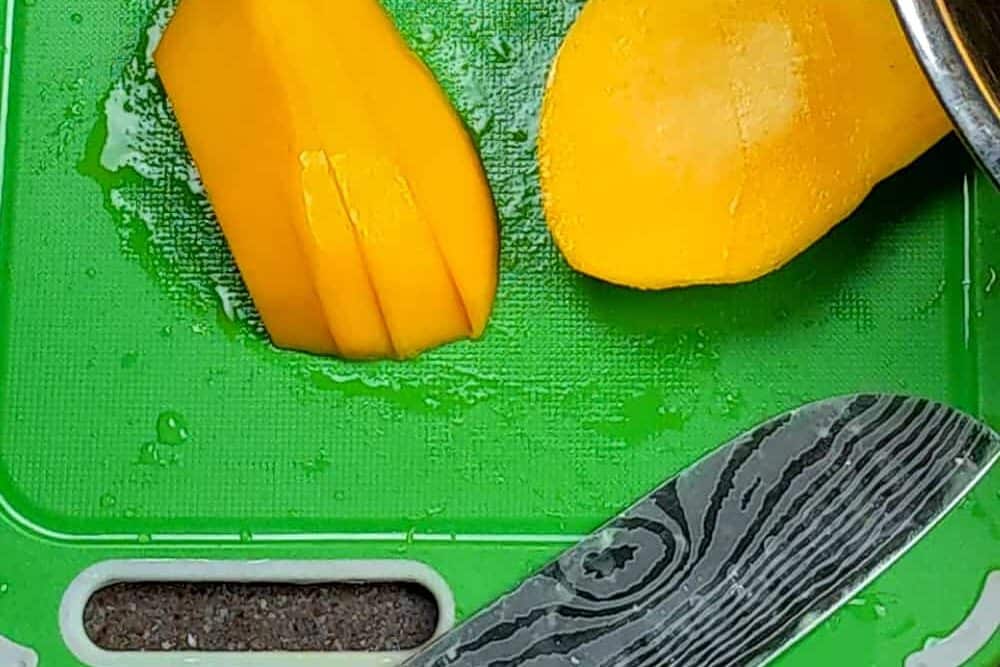
Learn how to cut a mango the easy way with this step-by-step guide to peeling, slicing, dicing, and cutting around the flat pit using a sharp knife and cutting board. Whether you're making fresh mango salsa, smoothies, fruit salads, or desserts, these simple techniques will help you prep perfectly ripe mangoes with less waste and more confidence.
Jump to:
- How to Cut a Mango
- Quick Answer
- Note From Chef Maika
- How to Cut a Mango
- Equipment You'll Need (With Alternatives)
- Kitchen Tools I Use and Recommend
- How to Choose a Ripe Mango
- Understand the Anatomy of a Mango
- Various Ways to Cut a Mango
- How to Store Cut Mango
- 5 Quick Cooking Tips
- Frequently Asked Questions
- More Cooking Tips and Tutorials
- Leave a Comment or Ask a Question
How to Cut a Mango
Mangoes are one of my favorite tropical fruits to work with because they're naturally sweet, incredibly versatile, and just as delicious in savory dishes as they are in desserts. Use it to make fresh mango salsa, blend smoothies, freeze fruit for later, or prepare one of my mango recipes. Importantly, learning the best way to cut a mango helps you get the most fruit with the least waste.
The first time you cut one, though, the large flat pit can make it seem confusing, but once you understand how the pit is positioned inside the fruit, prepping a mango becomes one of the easiest knife skills to master.
Quick Answer
| Question | Answer |
|---|---|
| What's the easiest way to cut a mango? | Stand the mango upright on a cutting board and slice down both flat sides of the pit with a sharp chef's knife to remove the two mango cheeks. Score the flesh into a grid pattern, then scoop or slice away the cubes from the skin. |
| Should you peel the mango first? | Either method works. Peeling first is great for slices, while leaving the skin on makes it easier to create neat mango cubes. |
| How do I avoid cutting into the pit? | The pit is wide, flat, and runs from the stem end to the bottom of the fruit. Slice just to either side of the flat pit to remove the mango cheeks. |
| Can I freeze-cut mango? | Yes. Freeze mango pieces in a single layer before transferring them to an airtight container or freezer bag to prevent them from sticking together. |
| How do I know if a mango is ripe? | A ripe mango should have a slight give when gently squeezed and often has a sweet aroma near the stem end. Color alone isn't the best indicator of ripeness. |
Note From Chef Maika
When I first learned to cut a mango, I remember thinking there had to be an easier way. The large flat pit isn't visible from the outside, so it's easy to wonder where your knife should go. Like many knife skills, though, it becomes much simpler once you understand how the fruit is built.
Over the years, I've also learned that the "best" technique is the one that works for you. After developing double tendinitis, I became much more aware that not everyone has the same strength, mobility, or comfort level when using a knife. That's one reason I included alternative methods and tools in this guide. Whether you use a chef's knife, a vegetable peeler, a mango slicer, or another kitchen gadget, the goal is the same: to help you prepare fresh ingredients safely and confidently.
I hope this guide gives you the confidence to cut mangoes with less waste and more enjoyment, so you can spend less time wondering where the pit is and more time creating delicious recipes.
Recommended Reads
- Mango Cookies and Cream No‑Churn Ice Cream | Easy Homemade Recipe
- Mango Coconut Felato | Ninja Creami Gelato-Style Treat
- Irresistible Frozen Treat Recipes for Any Time of Year
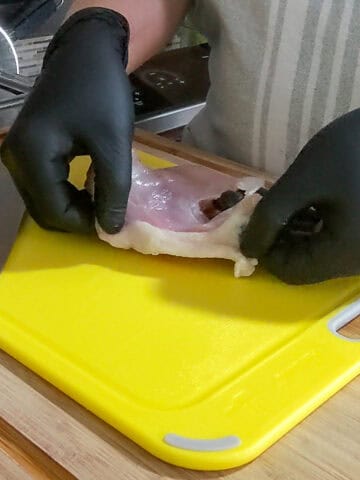
- How to Cut Chicken: Several Methods for Prepping Tutorials
- How to Cut Chicken: Large Chunks vs Small Dice
How to Cut a Mango
Follow these simple steps to safely cut a mango into slices or cubes while getting as much fruit as possible from around the flat pit. SUBSCRIBE: 👈To my YouTube Channel to Get Notifications of New Videos.
Video Overview: How to Avoid the Mango Pit
Video Overview: How to Peel and 3 Ways to Cut a Mango
Learn how to cut a mango with three easy methods: peeling with a knife, the classic hedgehog technique, and a restaurant-style fan cut for beautiful slices.
Instructions with Pictures
Follow the instructions and tips below using the step-by-step picture guide

Step 1: Wash and Dry the Mango: Rinse the mango under cool running water to remove any dirt or residue from the skin. Pat it dry with a paper towel so it doesn't slip while cutting.
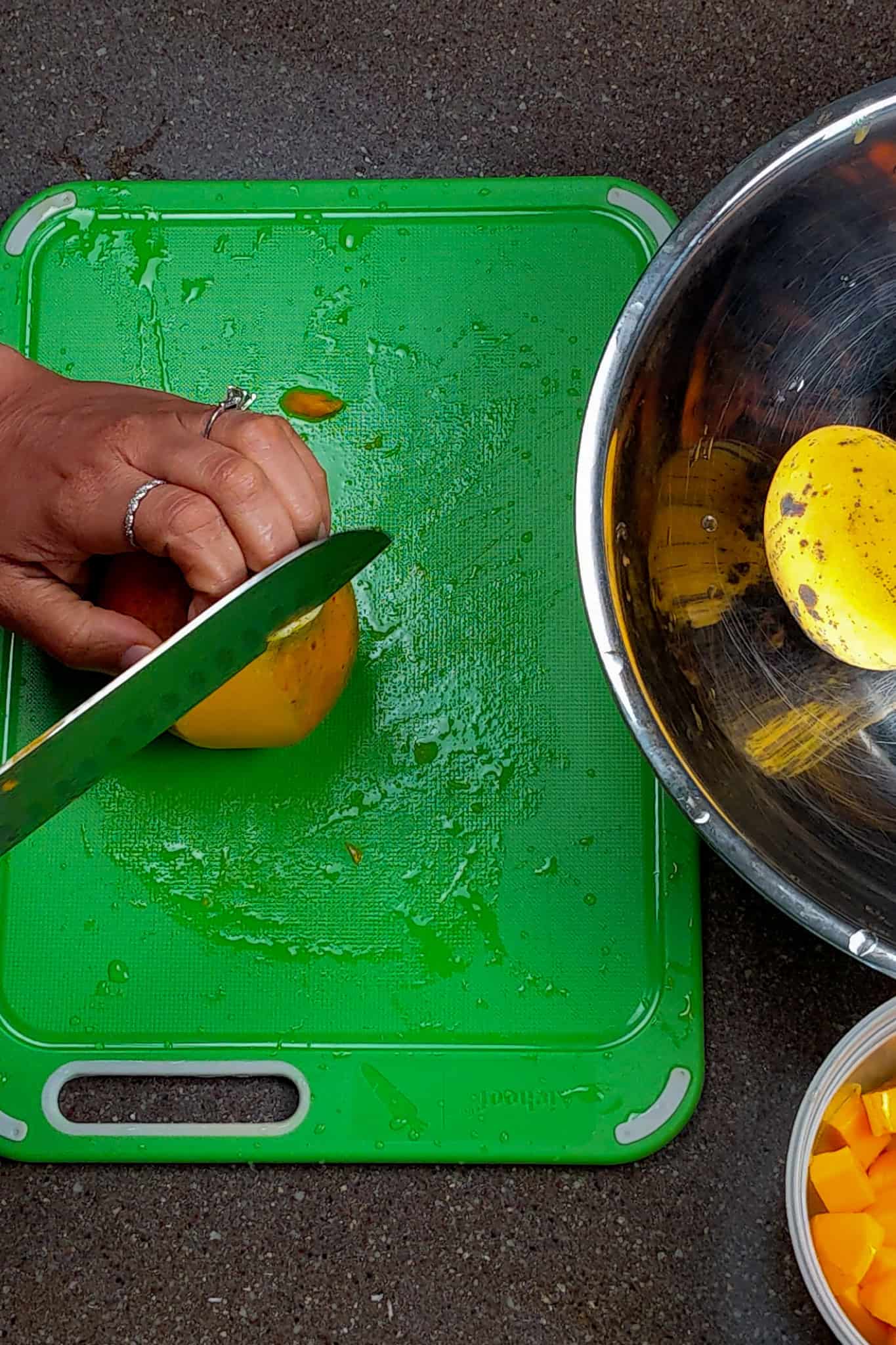
Step 2: Stand the Mango Upright:
Place the mango upright on your cutting board, stem end up. Since the flat pit runs from the stem to the bottom of the fruit, this position makes it easier to visualize where to cut.
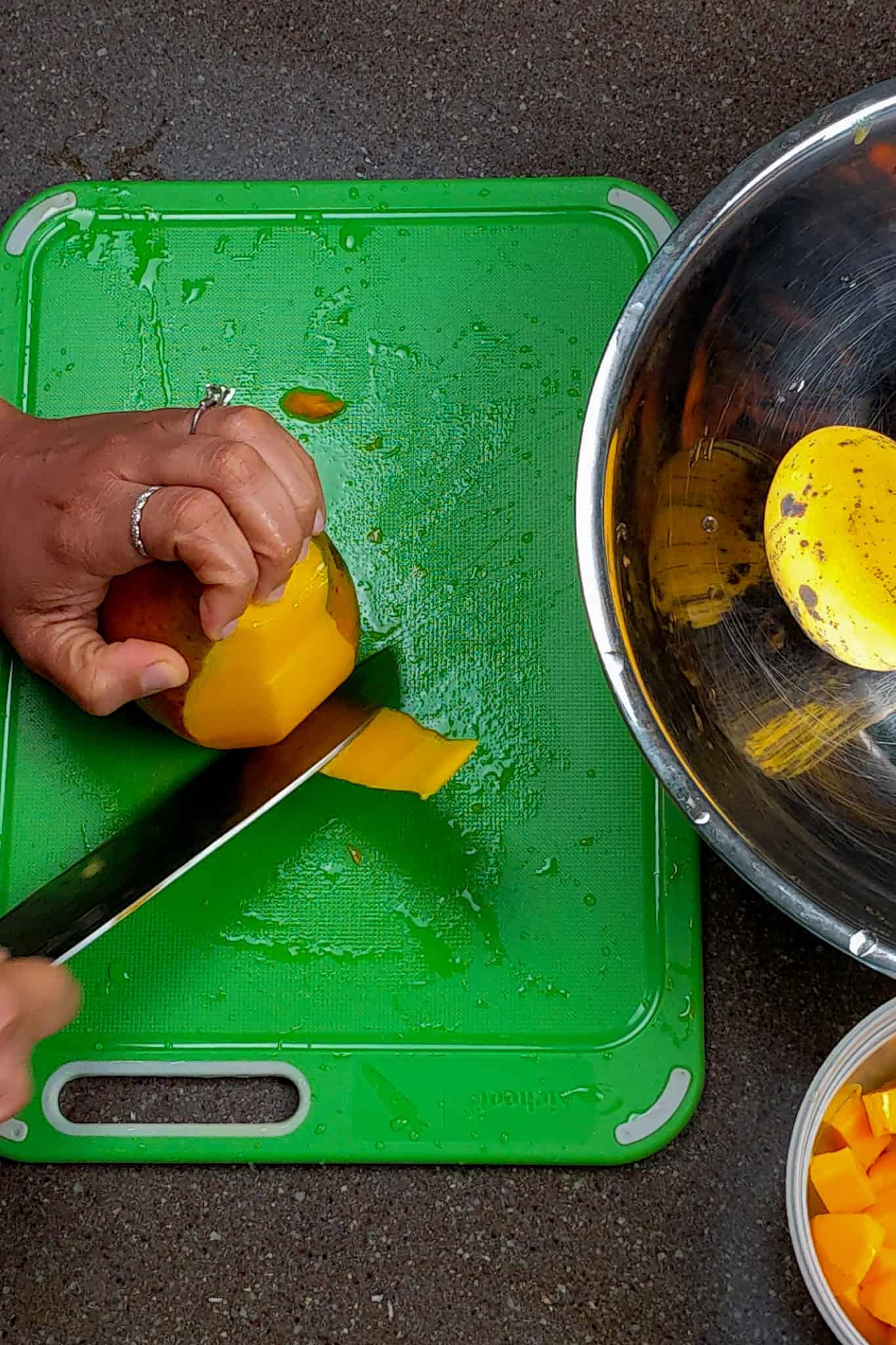
Step 3: Peel the Mango: Using your sharp chef's knife, carefully remove the mango skin in long, shallow strips, working from the stem end toward the bottom.
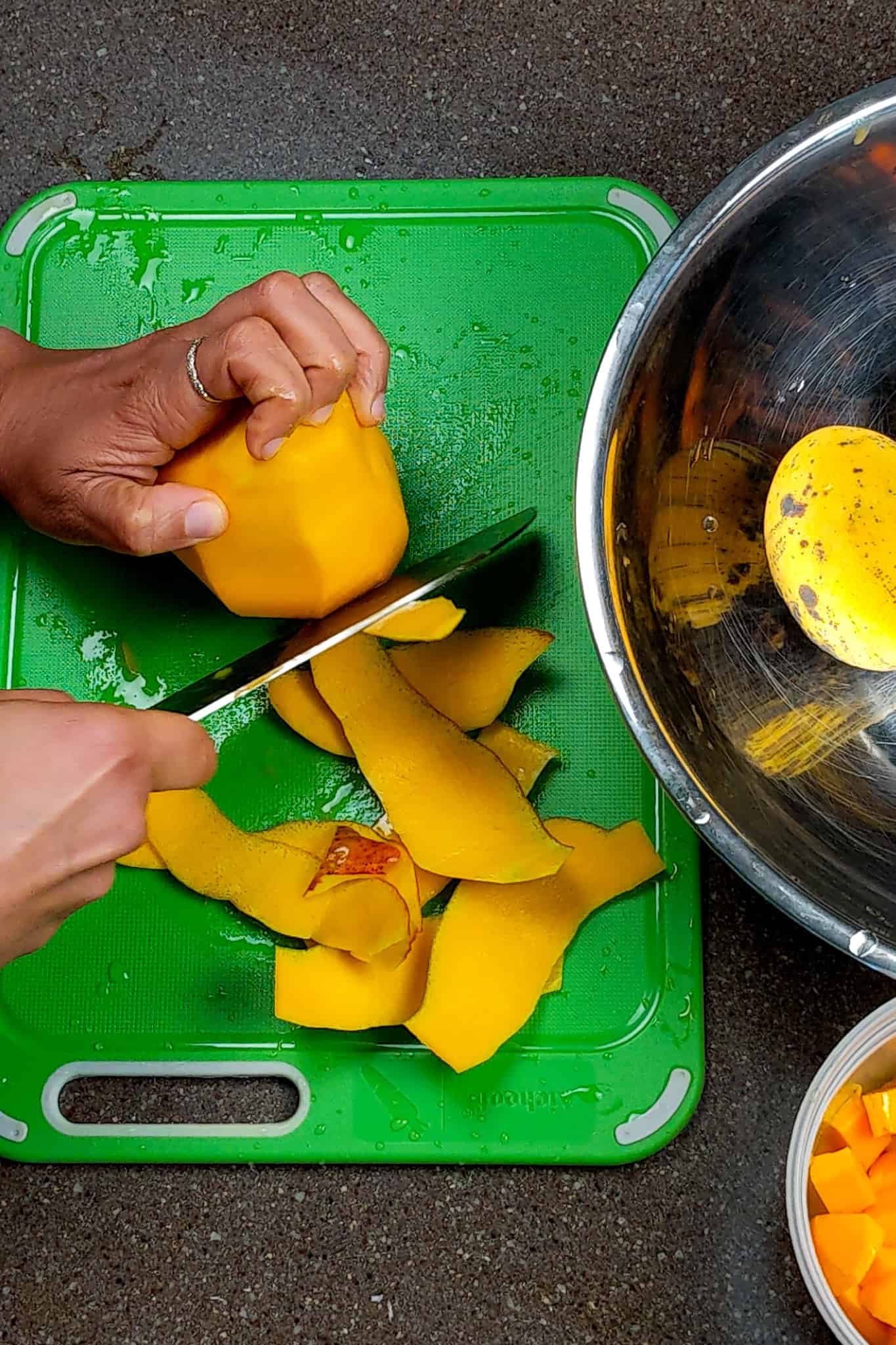
Rotate the mango as you peel it until all the skin is removed.
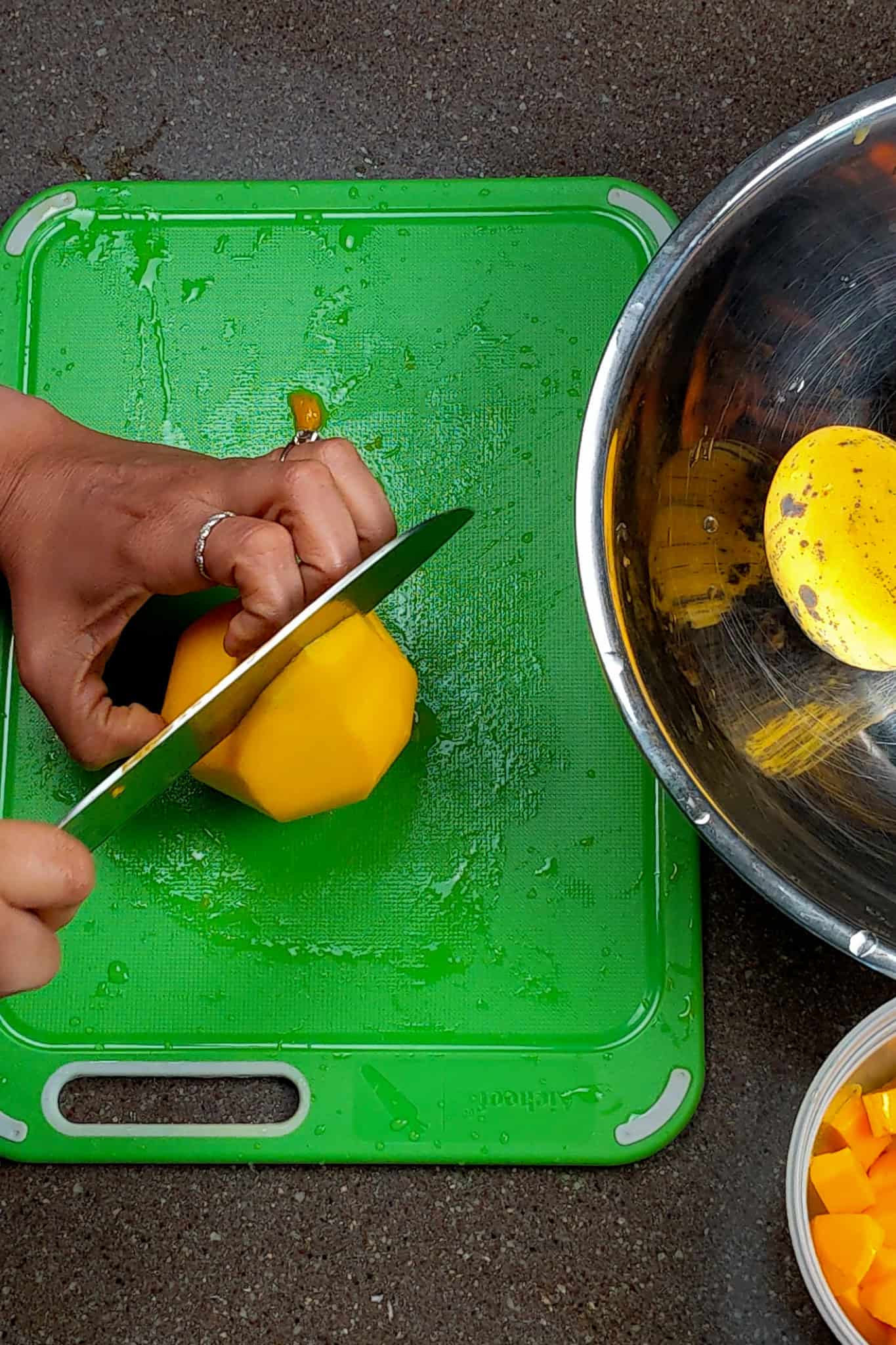
Step 4: Cut Off Both Mango Cheeks:
Make a vertical cut about ¼ inch from the mango's center. Slice straight down to remove the first mango cheek while avoiding the flat pit. Rotate the mango and repeat the cut on the opposite side of the pit to remove the second mango cheek.
Step 5: Trim the Remaining Fruit: Slice the remaining fruit from the narrow sides of the pit. These smaller pieces are perfect for smoothies, fruit salads, or snacking.
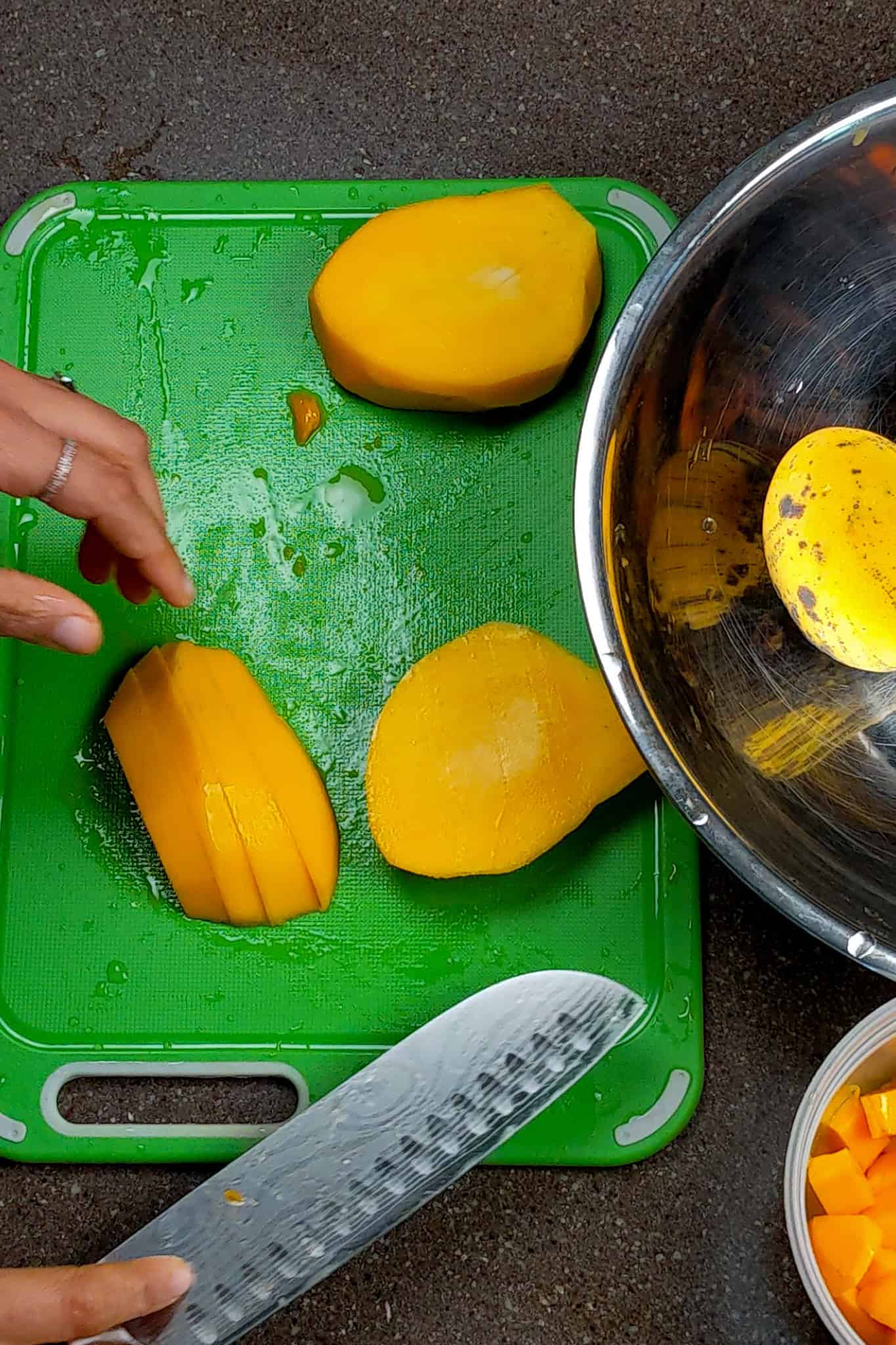
Step 7: Slice or Dice: Cut the mango into slices, strips, or cubes, depending on how you plan to use it.
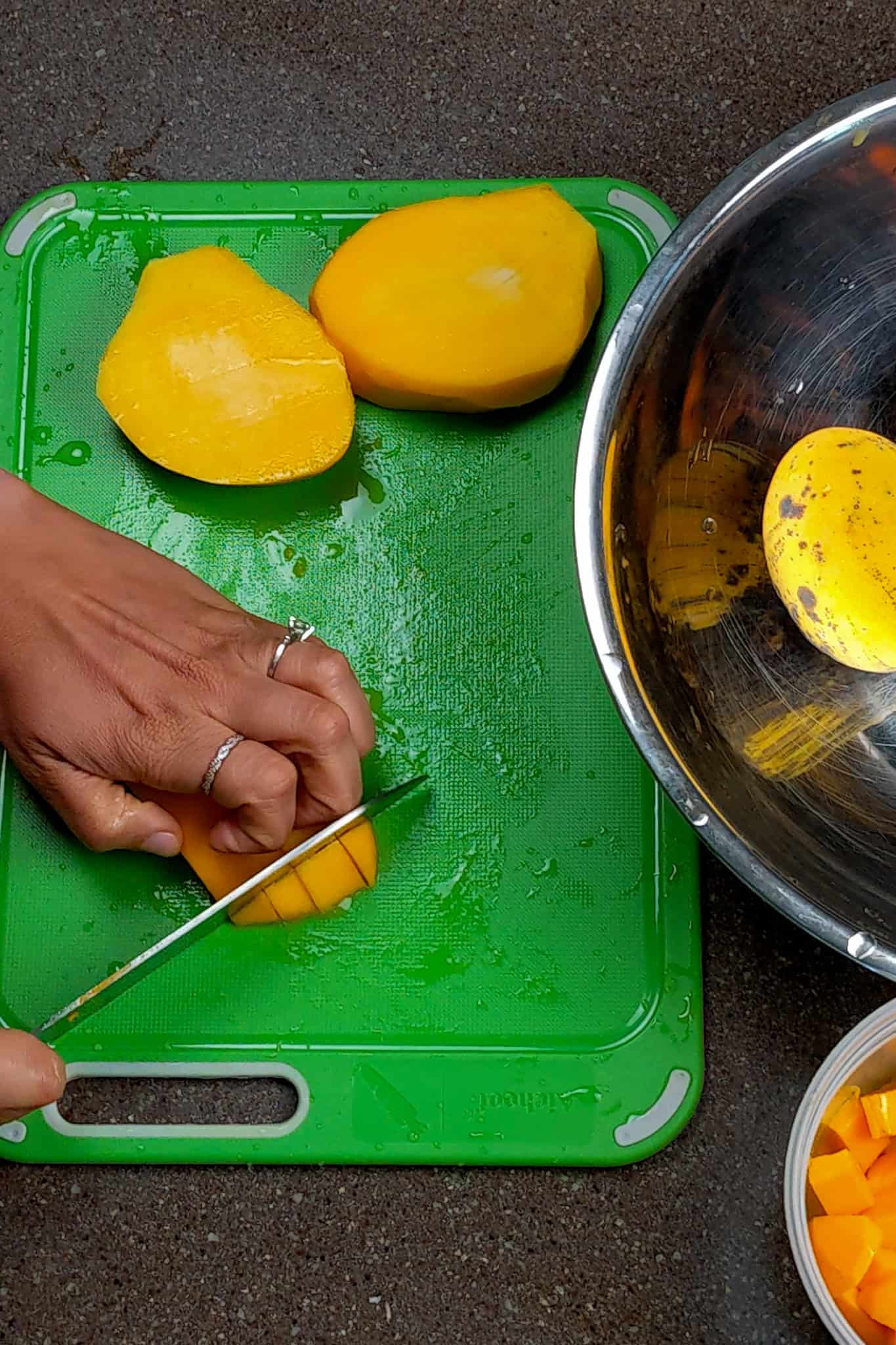
For even cooking and presentation, try to keep the pieces a similar size.
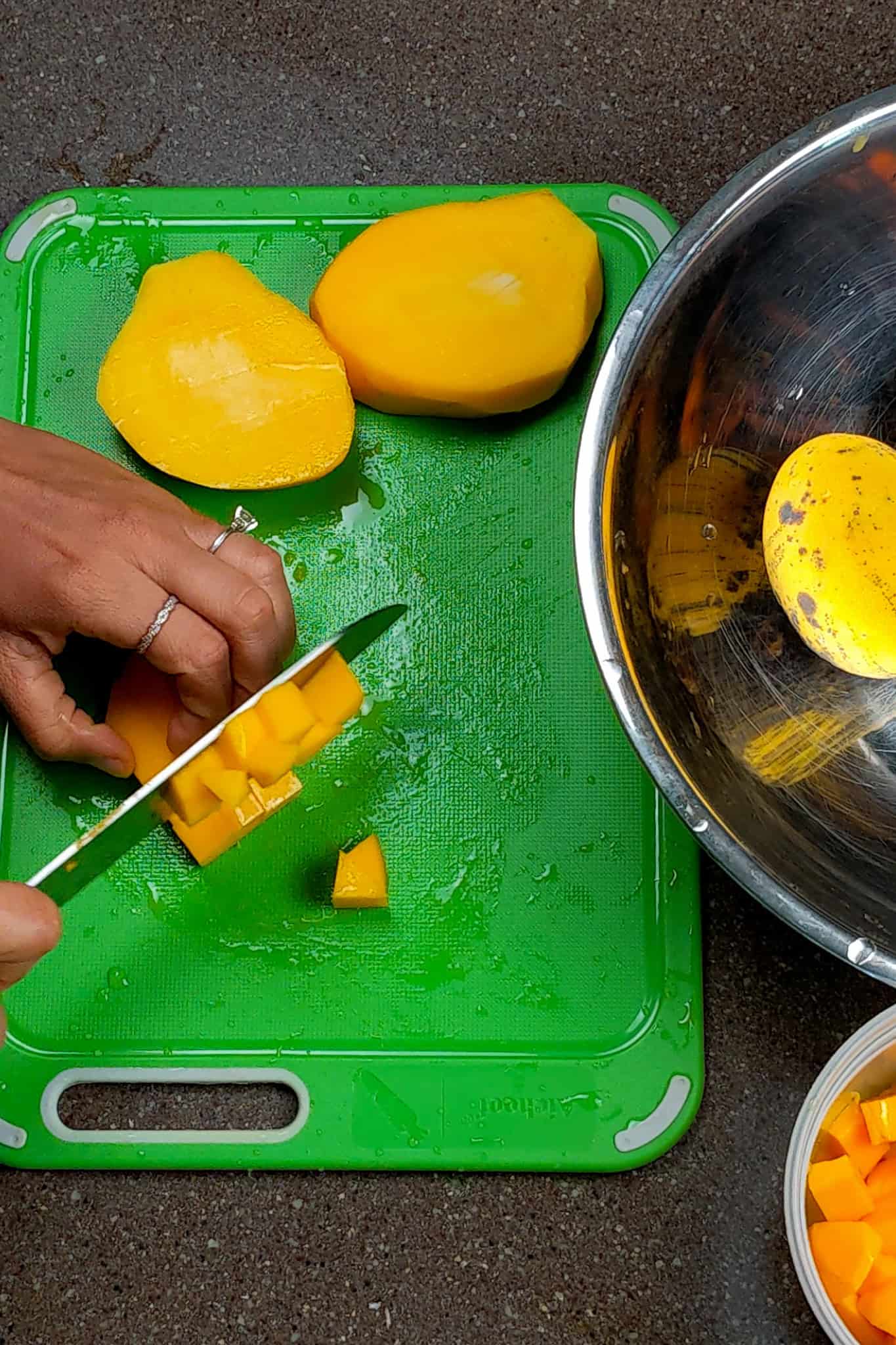
For evenly sized cubes, rotate the mango slices 90 degrees and cut across them at the same width as your original slices.
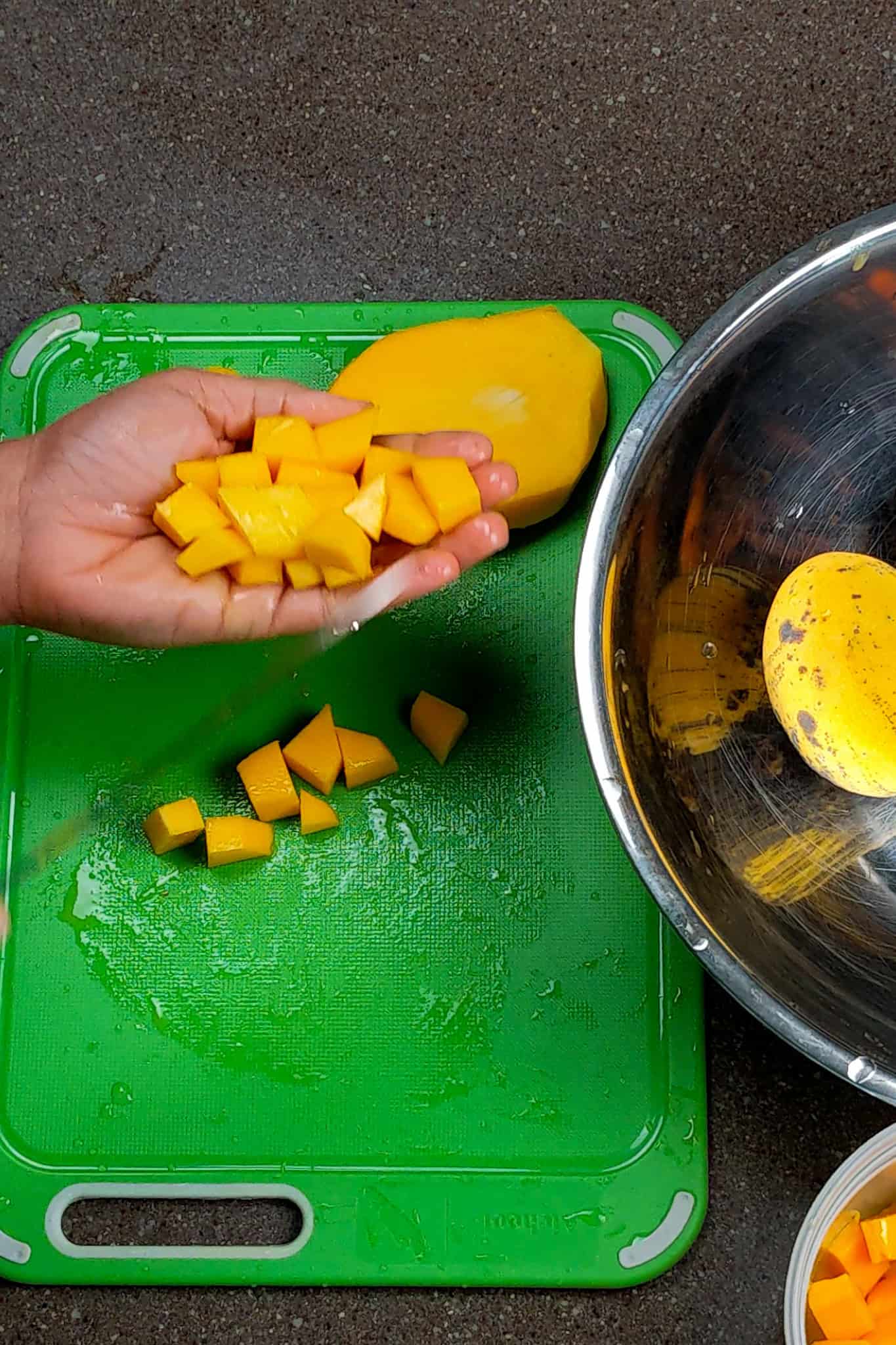
Step 8: Use Immediately or Store: Enjoy the fresh mango right away, or transfer the pieces to an airtight container and refrigerate for up to 4 days.
If you're meal prepping, freeze the mango cubes in a single layer before transferring them to a freezer-safe container.
Cutting a Mango: Key Points
- Keep your knife clean by wiping away sticky juice with a paper towel as you work.
- Cut just beside the flat pit instead of trying to cut through the center.
- Score only the flesh, not the skin, when making mango cubes.
- Trim the fruit from the narrow sides of the pit to reduce waste.
- If the mango is very ripe, use a spoon to scoop the flesh instead of peeling it first.
Equipment You'll Need (With Alternatives)
You only need a few basic kitchen tools to cut a mango safely and efficiently. These everyday essentials will help you make clean cuts, remove the pit with less waste, and prep mangoes for any recipe. Don't have every tool? There are a few easy substitutions provided:
- Sharp Chef's Knife: The best tool for slicing through the mango flesh and cutting around the flat pit with precision.
- Small Paring Knife (Optional): Great for trimming the narrow sides of the pit or removing any remaining fruit close to the seed. No paring knife? Use the tip of your chef's knife for trimming around the pit.
- Vegetable Peeler (Optional): Makes it easy to peel the mango before slicing or dicing if you prefer to peel first. No vegetable peeler? Carefully peel the mango with your paring knife after removing the cheeks.
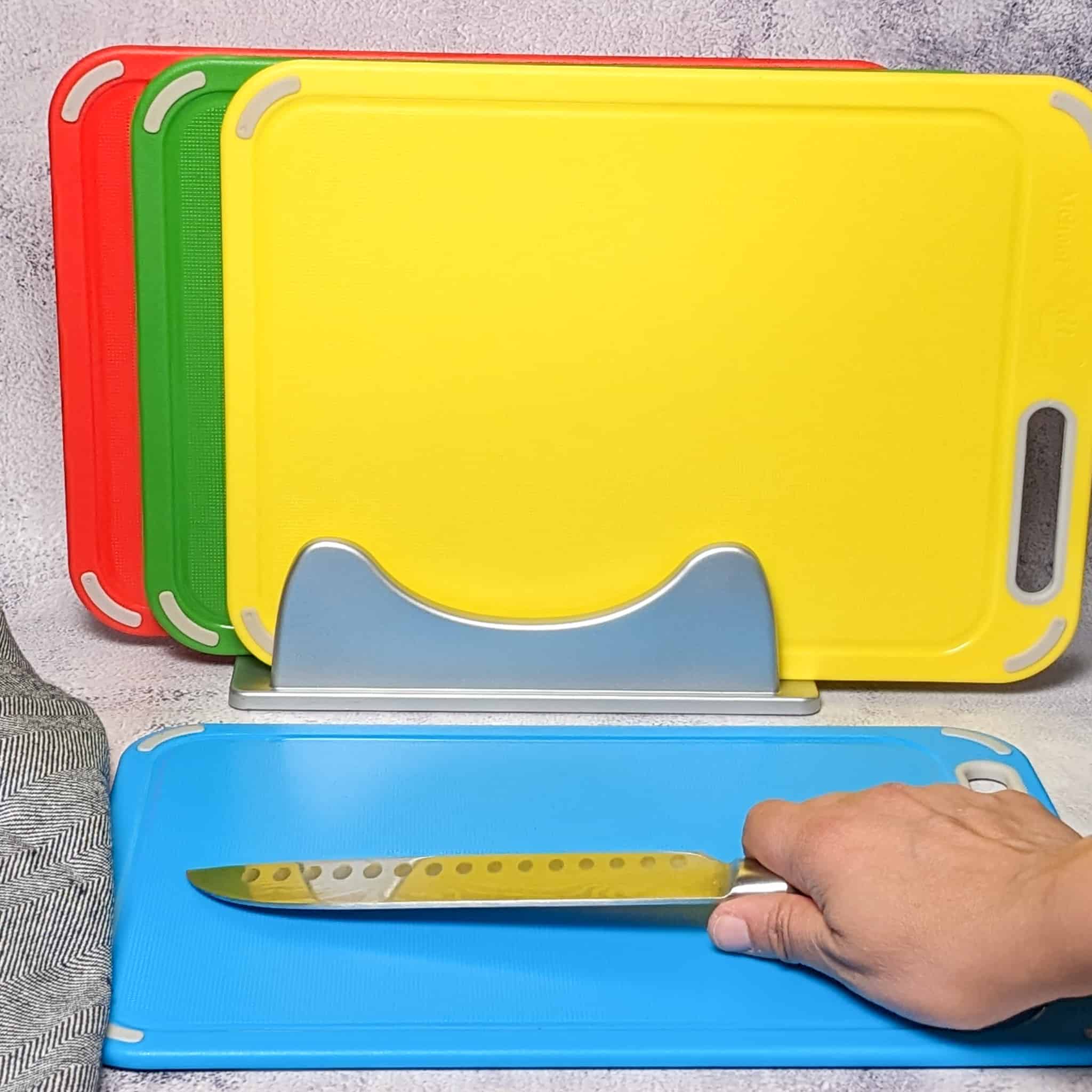
- Cutting Board: Provides a stable work surface for safe cutting. Place a damp paper towel underneath if your cutting board slides on the countertop.
- Spoon or Drinking Glass (Optional): Use a spoon to scoop diced mango ↗ from the skin, or slide the edge of a drinking glass between the flesh and skin to remove a mango cheek in one piece. No drinking glass? A large spoon works just as well for separating the mango flesh from the skin.
Kitchen Tools I Use and Recommend
These are some of the kitchen tools I use that make recipes like this faster and easier to prepare. If you're building your kitchen setup or upgrading your tools, these are great places to start. More Kitchen Must-Haves - Find other tools I use here.
My Review: As a professional chef, I rely on quality knives. After loving the PAUDIN Santoku Knife, I invested in the 7-Piece Chef Knife Set, and I'm thrilled! These lightweight, sharp knives make prep work effortless when I'm dicing or chopping. The high-carbon stainless steel blades maintain their edge, and the Pakkawood handles provide a comfortable grip. I've used this set in my classes and home kitchen, and it consistently delivers precision. If you want a reliable, professional-quality knife set without overspending, PAUDIN is a fantastic choice! Highly recommended for both home cooks and professionals!

The Kuhn Rikon Original Swiss Peeler is a lightweight, ultra-sharp kitchen tool designed for effortless peeling of fruits and vegetables. Known for its ergonomic handle and precision blade, this peeler makes prep work quick and efficient, perfect for peeling potatoes, carrots, and even delicate produce like tomatoes and peaches.

My Review: I absolutely love this Plastic Cutting Board Set of 4 with a Storage Stand! The color-coded boards are a lifesaver for preventing cross-contamination, especially when I’m switching between meats and veggies. The plastic is super sturdy, so I don’t have to worry about it flexing while I’m chopping. What really stands out for me is how easy they are to use after chopping. I slide everything straight into the pot, which keeps my kitchen clean and saves time. Cleanup is such a breeze, too; they go right into the dishwasher without any warping. Plus, the storage stand keeps everything neat and organized. These boards have made cooking so much easier and more enjoyable!
How to Choose a Ripe Mango
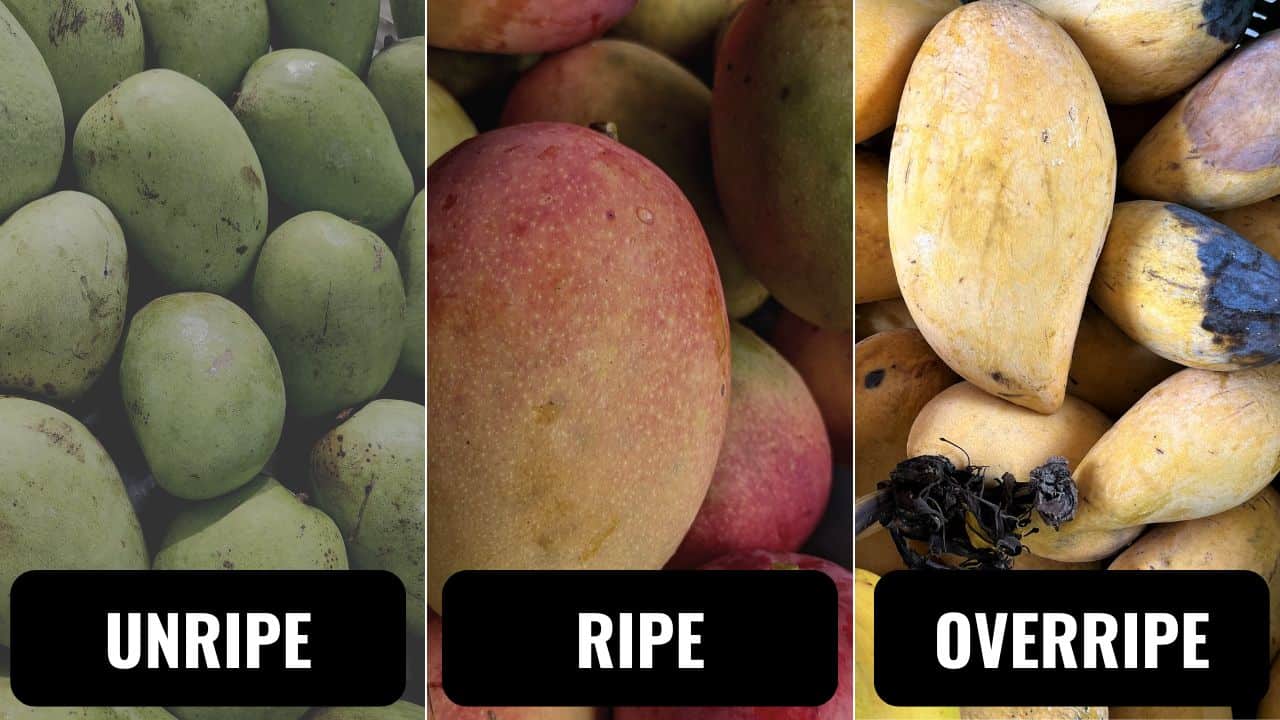
Choosing a ripe mango makes cutting easier and gives you the best flavor and texture. A perfectly ripe mango is sweet, juicy, and firm enough to hold its shape when sliced into cubes. If it's too firm, it can be difficult to cut around the pit. If it's overripe, the flesh becomes soft and messy, making neat slices nearly impossible.
What to Look For
| Ripeness | What to Look For | Best For |
|---|---|---|
| Unripe | Firm with no slight give when gently squeezed. | Let it ripen at room temperature before cutting. |
| Ripe | Gives slightly under gentle pressure and smells sweet near the stem end. | Slicing, dicing, salads, salsa, smoothies, and snacking. |
| Overripe | Very soft with wrinkled skin, bruises, or leaking juice. | Purees, smoothies, sauces, or baking. |
Picking and Ripening Mango Tips
- Don't judge a mango by its color alone. Depending on the variety, a ripe mango may be green, yellow, red, or a combination of colors.
- Gently squeeze the fruit instead of pressing with your fingertips, which can bruise the flesh.
- If your mango is still firm, leave it at room temperature for a few days until it softens slightly.
- To speed up ripening, place the mango in a paper bag with a banana or an apple. These fruits release ethylene gas, which helps ripen mangoes more quickly.
- Once ripe, refrigerate the mango if you won't be using it within a day or two to slow further ripening.
Common Mango Varieties
While all mangoes are cut using the same basic technique, their size, shape, and texture can vary.
| Variety | Characteristics |
|---|---|
| Ataulfo (Honey) Mango ↗ | Small, yellow, buttery texture, thin pit, and very sweet flesh. |
| Tommy Atkins ↗ | One of the most common grocery store varieties, with firm flesh that's great for slicing and dicing. |
| Kent ↗ | Sweet, juicy, and less fibrous, making it excellent for smoothies and desserts. |
| Keitt ↗ | Large mango with firm flesh that stays green even when ripe. Excellent for recipes requiring clean slices. |
Understand the Anatomy of a Mango
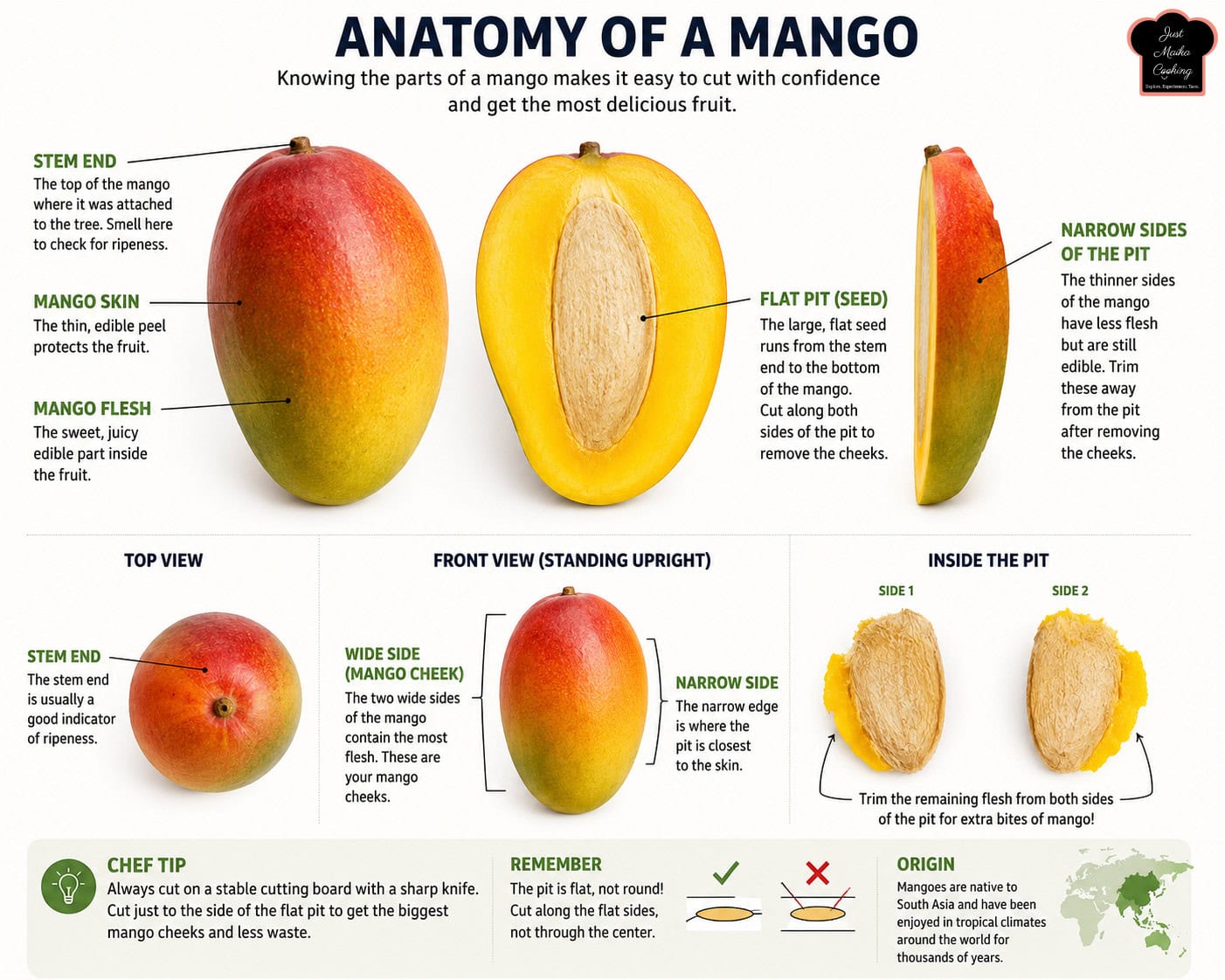
Before you start cutting, it helps to know what's inside a mango. Unlike peaches or avocados, mangoes have a large, flat seed (also called a flat pit) that runs through the center of the fruit from the stem end to the bottom. Once you know where that pit is, you'll be able to cut around it with confidence and get the most mango flesh from every fruit.
Most of the edible flesh is found on the two wide sides of the mango, commonly called the mango cheeks. There is also fruit on the narrow sides of the pit, which can be trimmed rather than discarded.
Parts of a Mango
| Part | Description |
|---|---|
| Stem End | The top of the mango where it was attached to the tree. This is a good place to smell for ripeness. |
| Mango Skin | The smooth outer peel that protects the fruit. It can vary in color depending on the variety and ripeness. |
| Mango Flesh | The sweet, juicy edible portion inside the fruit. |
| Mango Cheeks | The two large sections of flesh on either side of the flat pit. These provide the biggest pieces for slicing or dicing. |
| Flat Pit (Seed) | The large, oblong seed in the center of the mango. It is thin but wide, so you cut along its flat sides rather than through the middle. |
| Narrow Sides of the Pit | Smaller sections of flesh that can be trimmed off after removing the cheeks to reduce waste. |
Mango Cutting Tips
- Stand the mango upright with the stem end facing up to better visualize the flat pit's position.
- If you're unsure where the pit is, look at the shape of the fruit. The wide sides are where you'll remove the cheeks, while the thinner edges indicate the narrow sides of the pit.
- After removing the mango cheeks, don't throw away the pit right away. Trim the remaining fruit from both sides. You'll often get several extra bites or enough mango for a smoothie.
Various Ways to Cut a Mango
There isn't just one way to cut a mango. Depending on your recipe and the fruit's ripeness, one technique may work better than another.
Peel First
Use a vegetable peeler↗ to remove the mango skin before slicing around the flat pit. This method works well when you want long slices for fruit platters, desserts, or garnishes.
Hedgehog Method
After removing the mango cheeks, score the flesh in a grid pattern (I call it the hashtag for larger chunks) without cutting through the skin. Push the skin outward to expose the cubes, then slice or scoop them away. This is one of the easiest ways to make perfect mango cubes for fruit salads, salsa, and meal prep.
Spoon or Drinking Glass Method
If your mango is very ripe, slide the rim of a drinking glass between the skin and flesh to separate the mango cheek in one motion. You can also use a large spoon to scoop the flesh from the skin. Both methods help reduce waste while keeping the fruit intact.
Slice Around the Pit
Instead of making cubes, cut the mango cheeks into long slices. This is a great option for snacking, smoothie bowls, yogurt parfaits, or serving alongside grilled meats.
Use a Mango Slice and Peel Tool
I recently watched an Instagram Reel of someone using a mango tool similar to the Zyliss Slice & Peel Mango Tool, and I thought it was a clever idea. While I haven't personally tried one or found that I've needed it in my own kitchen, I wanted to include it here because it's another option that may work well for some home cooks.
One thing I've learned after developing double tendinitis is that our bodies and abilities aren't all the same. Before my injury, I probably would have reached for a chef's knife without thinking twice. Now, I have a much greater appreciation for kitchen tools that reduce strain, improve comfort, or make food preparation more accessible. If a tool helps you cook more confidently, safely, or with less discomfort, there's absolutely nothing wrong with using it!
The Zyliss tool is designed to split the mango around the pit, remove the seed, and peel the fruit using stainless steel microblades. While I still prefer using a chef's knife because it gives me more control and works with mangoes of different sizes and shapes, a dedicated mango tool could be a helpful option if you have limited hand strength, joint pain, arthritis, repetitive strain injuries, or simply want a quicker way to prep mangoes. Learn more about prepping mangoes here.

How to Store Cut Mango
If you've cut more than you need or are meal prepping for the week, storing mango correctly will help preserve its flavor and texture. Proper storage helps keep mangoes fresh, juicy, and ready to use in your favorite recipes.
Whole Mangoes
- Unripe Mangoes: Store at room temperature until they soften slightly when gently squeezed. To speed up ripening, place them in a paper bag with a banana or an apple.
- Ripe Mangoes: Refrigerate whole for up to 5 days to slow further ripening.
Cut Mango
Transfer sliced or diced mango to an airtight container and refrigerate for 3 to 4 days. If the mango is especially juicy, place a paper towel in the container to absorb excess moisture and help keep the fruit fresh.
Freeze for Longer Storage
To prevent mango pieces from freezing into one large clump:
- Arrange the mango pieces in a single layer on a parchment paper-lined baking sheet or plate.
- Freeze until solid, about 2 to 3 hours.
- Transfer the frozen mango to a freezer-safe airtight container or freezer bag.
- Label your freezer container with the date so you know when to use it.
- Frozen mango keeps its best quality for about 6 months and is perfect for smoothies (without thawing), frozen desserts, sauces, and purees.
- Or thaw it overnight in the refrigerator if using it in fruit salads or as a garnish!
Remember: If your mango becomes overly soft after thawing, blend it into a smoothie, sauce, or dessert instead of serving it fresh.
5 Quick Cooking Tips
Your Cooking Tips Resource Guide - Become a better home cook with tips to help you cook more efficiently on the Cook's Notebook tab.
1. Let the Mango Ripen Before Cutting
A perfectly ripe mango should have a slight give when gently squeezed. If it's too firm, let it ripen at room temperature for a few days. A ripe mango is easier to cut around the flat pit and has the best flavor.
2. Slice Around the Flat Pit, Not Through It
The pit is wide and flat, running from the stem end to the bottom of the fruit. Instead of cutting through the center, make your first cuts just to either side of the pit to remove the two mango cheeks with minimal waste.
3. Match the Cut to Your Recipe
There's no single "right" way to cut a mango. Dice it into cubes for salsa and fruit salads, slice it for yogurt bowls or desserts, or cut larger chunks for smoothies and frozen treats.
4. Save the Fruit Around the Pit
After removing the mango cheeks, trim the remaining flesh from the narrow sides of the pit with a paring knife or carefully enjoy it as a chef's snack. There's often more usable fruit than people realize.
5. Don't Be Afraid to Use Kitchen Tools
A sharp chef's knife is my preferred way to prep mangoes because it gives me the most control, but it's not the only option. If a vegetable peeler, mango slicer, or another kitchen tool makes prep easier on your hands or more comfortable to use, choose the method that helps you cook with confidence. The best tool is the one that works for you.
Frequently Asked Questions
Here is a list of common questions I have answered. If you have any questions, please write them in the comments below.
I was a little confused about this myself, but yes, you can write them either way lol. Had the same issue with avocado.
The best indicator of ripeness is how the mango feels, not its color. A ripe mango should have a slight give when gently squeezed and often has a sweet, fruity aroma near the stem end. Some varieties stay green even when they're fully ripe.
You can, but you don't have to. Many people leave the skin on while cutting the mango cheeks because it makes scoring cubes easier. If you prefer slices or want to eat the mango right away, peeling it first with a vegetable peeler or paring knife works well too.
Yes, mango skin is edible, but many people choose to remove it because of its thick texture and slightly bitter taste. (lips perking...memory flashback!). Keep in mind that mangoes belong to the same plant family as poison ivy and poison oak, so some people may experience skin irritation when handling or eating the peel. If you know you're sensitive, it's best to wear gloves while preparing mangoes or remove the skin before eating.
The easiest method is to stand the mango upright, slice off the two mango cheeks by cutting along each side of the flat pit, then score the flesh into cubes before scooping or slicing them away from the skin.
Yes. Arrange diced mango in a single layer on a baking sheet until frozen, then transfer the pieces to an airtight freezer container or freezer bag. This prevents the cubes from sticking together and makes it easy to use only what you need.
The flat pit has edible flesh along its narrow sides. After removing the mango cheeks, trim the remaining fruit with a small paring knife or enjoy it as a quick snack to reduce waste.
Fresh mango is delicious in smoothies, fruit salads, homemade salsa, yogurt bowls, desserts, chutneys, and frozen treats. It's also a great addition to savory dishes like tacos, grilled chicken, seafood, and rice bowls for a sweet tropical flavor.
More Cooking Tips and Tutorials
If you found this tutorial helpful, you'll love my Cook's Notebook collection. From knife skills and flavor bases to time-saving tricks and essential equipment guides, this section is packed with chef-tested lessons to help you cook with confidence.
- The Best Cooking Shows on Prime Video for Curious Home Cooks
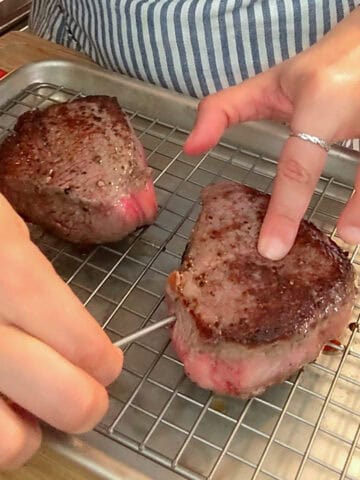
- How to Trim Chicken: The Best Way to Prep Chicken Before Cooking
- How the Maillard Reaction Makes Food Taste Better
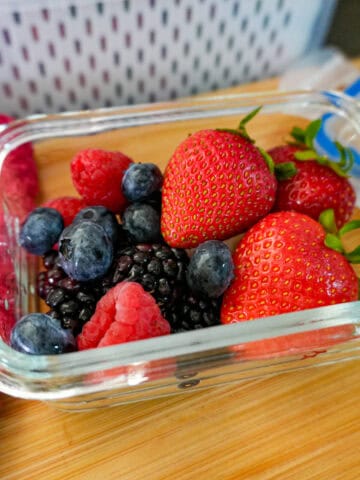
- How to Store Fresh Berries So They Last Longer (Without Getting Mushy)



Chef Maika Frederic-Liebman
Chef and Educator
Professionally trained Haitian-American chef Maika Frederic is the creator of Just Maika Cooking, where she shares globally inspired recipes, cooking techniques, ingredient guides, and food safety tips designed to help home cooks become more creative and confident in the kitchen. Combining years of professional culinary experience with a passion for teaching, she makes global flavors approachable through practical, accessible instruction for cooks of every skill level.
Leave a Comment or Ask a Question
I'd love to hear your thoughts, questions, or experiences with the Prepping Mangos. Leave a comment or question, and a professionally trained chef will respond!

Leave a Reply