

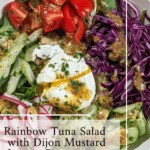
Simple Ingredients to create a rainbow tuna salad with avocado and poached egg, surrounded by sweet tomatoes, red cabbage, cucumbers, red radishes, and celery, on a bed of mixed greens, topped with a homemade dressing of whole-grain Dijon mustard with a kick from chilies.

Table of Contents
Jump to:
- Deconstructed Tuna Salad
- Why You'll Love This Recipe
- Ingredients with Steps
- Culinary Glossary
- Instructions with Pictures
- How to Poach an Egg
- Chef Troubleshooting Tips for Poaching Eggs
- Equipment List
- Kitchen Must-Haves Reviews
- Storage Instructions
- Substitutions
- Variations
- 5 Quick Cooking Tips
- Frequently Asked Questions
- Bowl-Idea Recipes
- Cooking Tips and Tutorials
- 📖 Recipe
- Have a Question or Comment?
Deconstructed Tuna Salad
When I have overripe avocados in my kitchen, I usually turn them into guacamole, a creamy dressing, or a quick tuna salad. This time, I decided to take that familiar combination and turn it into something brighter and more satisfying by deconstructing a classic tuna egg salad into a colorful composed lunch bowl.
Fresh and Crisp
Instead of mixing everything together with mayonnaise, this version uses poached eggs, avocado, and olive oil to create a naturally creamy texture while keeping the ingredients fresh and vibrant. Sweet tomatoes, crunchy celery, crisp cucumbers, peppery radishes, and shredded red cabbage surround the tuna on a bed of leafy greens, all finished with a tangy Dijon mustard lemon dressing. The result is a hearty rainbow tuna salad that feels both nourishing and visually exciting.

This style of plating is known as a deconstructed salad, in which each ingredient is arranged separately so that every flavor and texture stands out. It also reflects the idea behind rainbow salads: the more color on your plate, the more variety of nutrients you are likely adding to your meal.
Why You'll Love This Recipe
- A healthier twist on classic tuna salad - Uses avocado and poached egg instead of mayonnaise for natural creaminess and balanced fats.
- Packed with colorful vegetables - A rainbow of fresh ingredients adds crunch, flavor, and visual appeal.
- High-protein and satisfying - Tuna and eggs make this salad filling enough for lunch or a light dinner.
- Perfect for overripe avocados - A great way to use avocados before they go to waste.
- Elegant but easy to assemble - Looks impressive while staying simple enough for everyday meals.
- Great for meal prep components - Prep the vegetables ahead and assemble fresh when ready to eat.
Note From Chef Maika
Poached eggs sometimes feel intimidating, but they are one of those small techniques that quickly become second nature once you try them a few times. I especially love using them in composed salads like this because the yolk turns into a rich, natural dressing that ties everything together without needing extra mayonnaise.
If you are new to poaching eggs, this recipe is a great place to start since the rest of the salad is simple, fresh, and flexible enough to make your own.

Want to learn how to poach eggs? Check out my video Don't Be Afraid of the Egg!
Recommended Reads
- Spicy Chicken Pitas with Arugula Feta Salad with Pomegranate Dressing
- Caesar Salad with Egg, Tomatoes, and Chili-Infused Croutons
- Spicy Tuna Rice Bowl with a Citrus Sesame Creamy Sauce
- Zhug Feta Hummus Chicken Wrap with a Quick Lemon Yogurt Sauce
- Sesame Seed-Crusted Ahi Tuna with Spicy Sesame-Soy Sauce
- Fresh Hoisin Mushrooms Noodle Bowl with Spicy Peanut Sauce
- Spicy Chicken Pita with Arugula Feta Pomegranate Salad

Ingredients with Steps
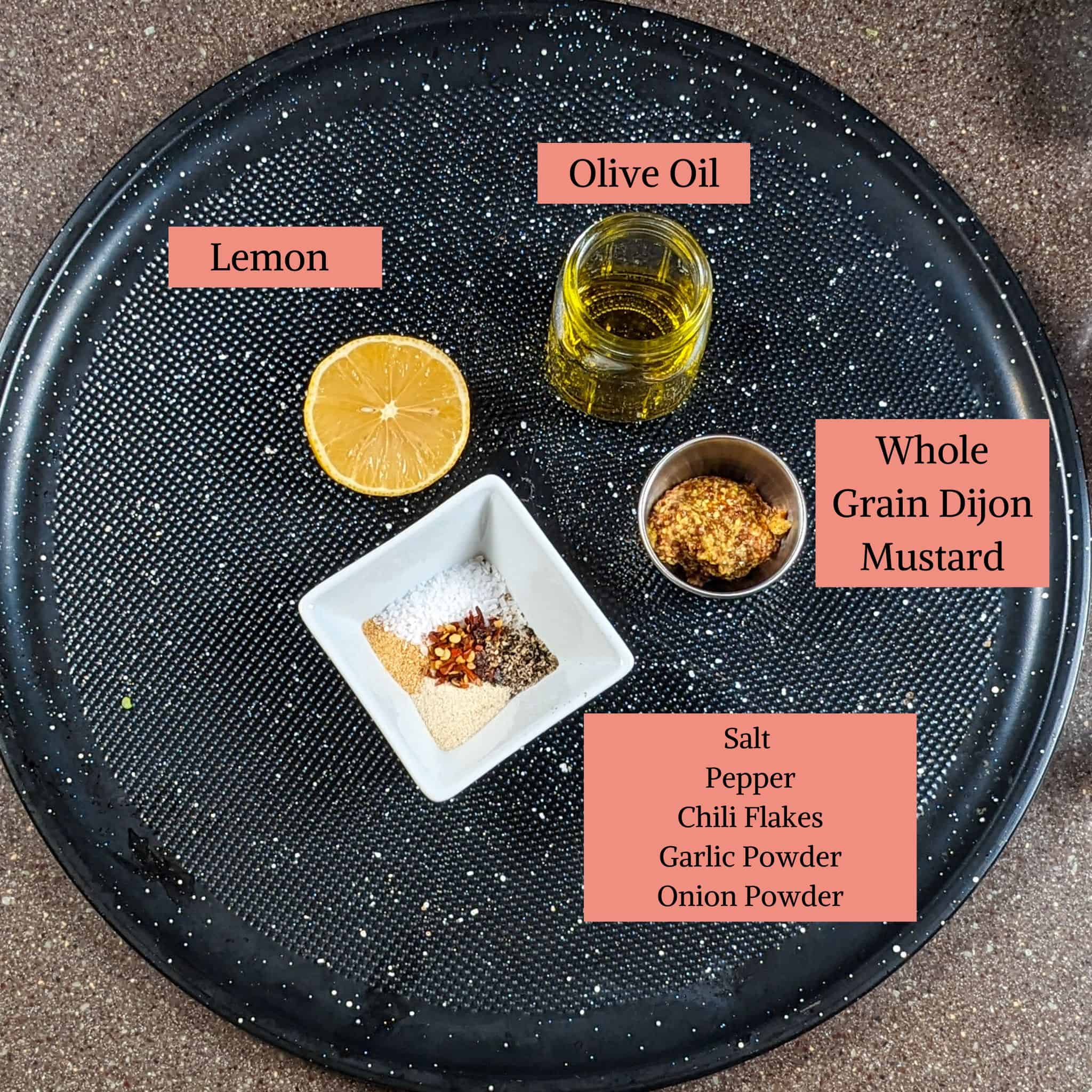
Prepare the Dijon lemon dressing by combining the olive oil, lemon juice, Dijon mustard, red pepper flakes, garlic powder, onion powder, salt, and black pepper in a small jar, then shaking until emulsified.
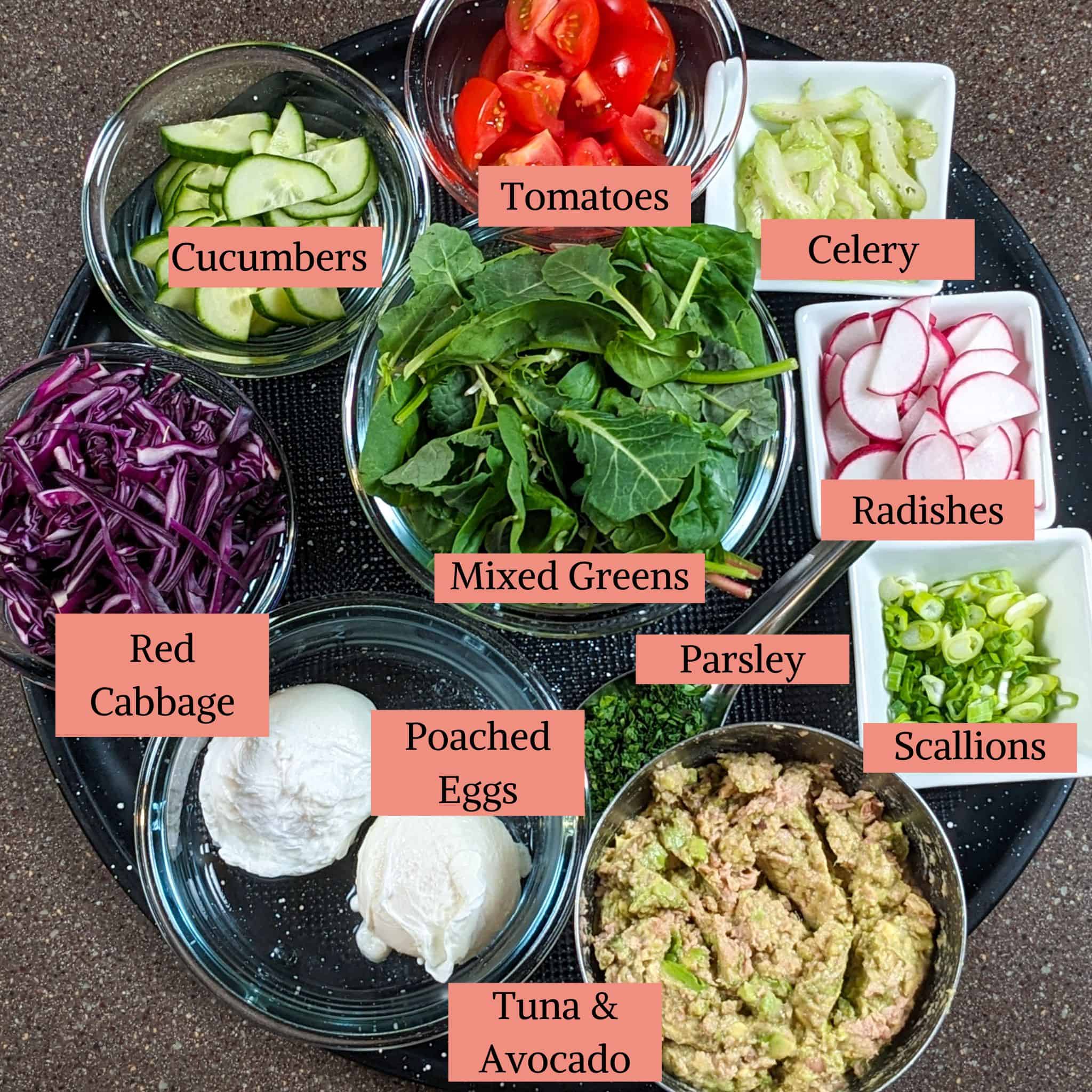
Prep the salad ingredients by chopping the mixed greens, thinly slicing the red cabbage, cucumbers, radishes, celery, and scallions, quartering the Campari tomatoes, slicing the avocado if using, draining the tuna, and preparing the poached eggs. If the avocado is very soft, gently mix it with the tuna; otherwise, keep it sliced for topping.
Divide the greens between two bowls, place the tuna in the center, and arrange the vegetables around it. Finish each bowl with a poached egg, drizzle with dressing, and sprinkle with parsley before serving.
Culinary Glossary
This section provides concise definitions of key ingredients and techniques to enhance understanding and improve cooking skills related to this recipe.
- Vinaigrette - A type of salad dressing made by mixing oil with an acid, such as vinegar or lemon juice, often seasoned with herbs, spices, and other ingredients. In this recipe, the vinaigrette is made with olive oil, lemon juice, Dijon mustard, red pepper chili flakes, garlic powder, onion powder, salt, and black pepper.
- Mason Jar - A glass jar with a screw-top lid, often used for canning, preserving, and mixing dressings due to its airtight seal.
- Mixed Greens - A combination of various leafy greens, such as lettuce, spinach, arugula, and kale, used as a base for salads.
- Scallions - Also known as green onions or spring onions, these vegetables have a mild onion flavor and are used both raw and cooked.
- Purple Cabbage - Also known as red cabbage, it adds a vibrant color and a slightly peppery flavor to salads.
- Red Radishes - A root vegetable with a crisp texture and a slightly spicy, peppery flavor, often used in salads for added crunch.
- Celery - A crunchy, low-calorie vegetable that adds texture and a mild, refreshing flavor to salads.
- Parsley - A fresh herb used as a garnish for its bright, slightly peppery flavor and vibrant green color.
- Poached Eggs - Eggs gently cooked in simmering water until the whites are set but the yolks remain runny. They add a creamy texture and a rich flavor to dishes.
Instructions with Pictures
Follow the instructions and cooking tips below using the step-by-step picture guide.

Cut the cabbage into wedges, then lay it flat on the cutting board to make slicing easier. Get this Paudin Santoku Knife.

Slice the cucumber in half lengthwise, then thinly slice into half-moons. Get these Color Coded Plastic Cutting Boards.

Slice the red radishes in the same way, with the tips removed. Check out my YouTube video on using a Japanese Mandoline to quickly slice radishes.

Then, for a beautiful cut, slice the celery on a diagonal.

Cut each Campari tomato into 8 pieces: cut it in half, slice the halves, then halve each.

Finally, line up the scallions and thinly slice them.

For over-ripe avocados, mix them into the tuna. But for ripe tomatoes, just dice and place on top of the tuna in the salad bowl.

When poaching the egg, the egg white should cover the egg yolk after placing it in the water that has been swirled to form a funnel.
Shaking Not Stirring

If the dressing ingredients are placed in a jar and shaken, this eliminates the need for a blender or whisk.
How to Poach an Egg
Follow the instructions below to practice making the perfect poached egg. Also, check out my YouTube video "Don't Be Afraid of the Egg!" for a short step-by-step tutorial.
- Add 1 tablespoon of white vinegar to 3 cups of water in a small pot.
- Heat the water to a gentle simmer, not a boil.
- Look only for tiny bubbles at the bottom of the pot. If bubbles reach the surface, lower the heat.
- Use a spoon or skimmer to swirl the water in one direction to create a gentle vortex.
- Crack the egg on a flat surface, then carefully drop it into the center of the swirling water.
- Let the egg cook undisturbed for about 4 minutes, until the white is set but the yolk stays soft.
- Lift the egg gently with a spoon and check for firmness by lightly tapping the white.
- Remove the egg once the egg white is firm, and the yolk is still runny.
- If cooking another egg, swirl the water again and repeat the process one egg at a time.
Chef Troubleshooting Tips for Poaching Eggs
Use these simple troubleshooting tips below to help you poach eggs with confidence and get tender whites with perfectly runny yolks every time.
The egg may not be fresh enough. Fresher eggs hold their shape better when poached.
The heat is too high. Lower it to keep the water at a gentle simmer.
This is normal. Use a spoon to gently nudge the whites back toward the yolk as you cook.
Give the water a gentle swirl before adding the egg, and avoid dropping it directly onto the pot surface.
Reduce cooking time slightly. Start checking doneness around the 3-minute mark.
Let the egg cook for an additional 30 to 60 seconds.
Poach them one at a time for the best shape and easiest handling.
Transfer finished poached eggs to a bowl of cool water and refrigerate. Reheat later in warm (not boiling) water for about 30 seconds before serving.
Equipment List
Here's what you'll need to make this recipe with ease. By the way, the links in this section may take you to an external site to shop for that item.
- Mason Jar - A small 4-ounce mason jar is used for the salad dressing. I also used the Ball Mini 4 Oz Mason Jars to develop this recipe. Evidently, it's the right size to personalize dressings and prevent waste.
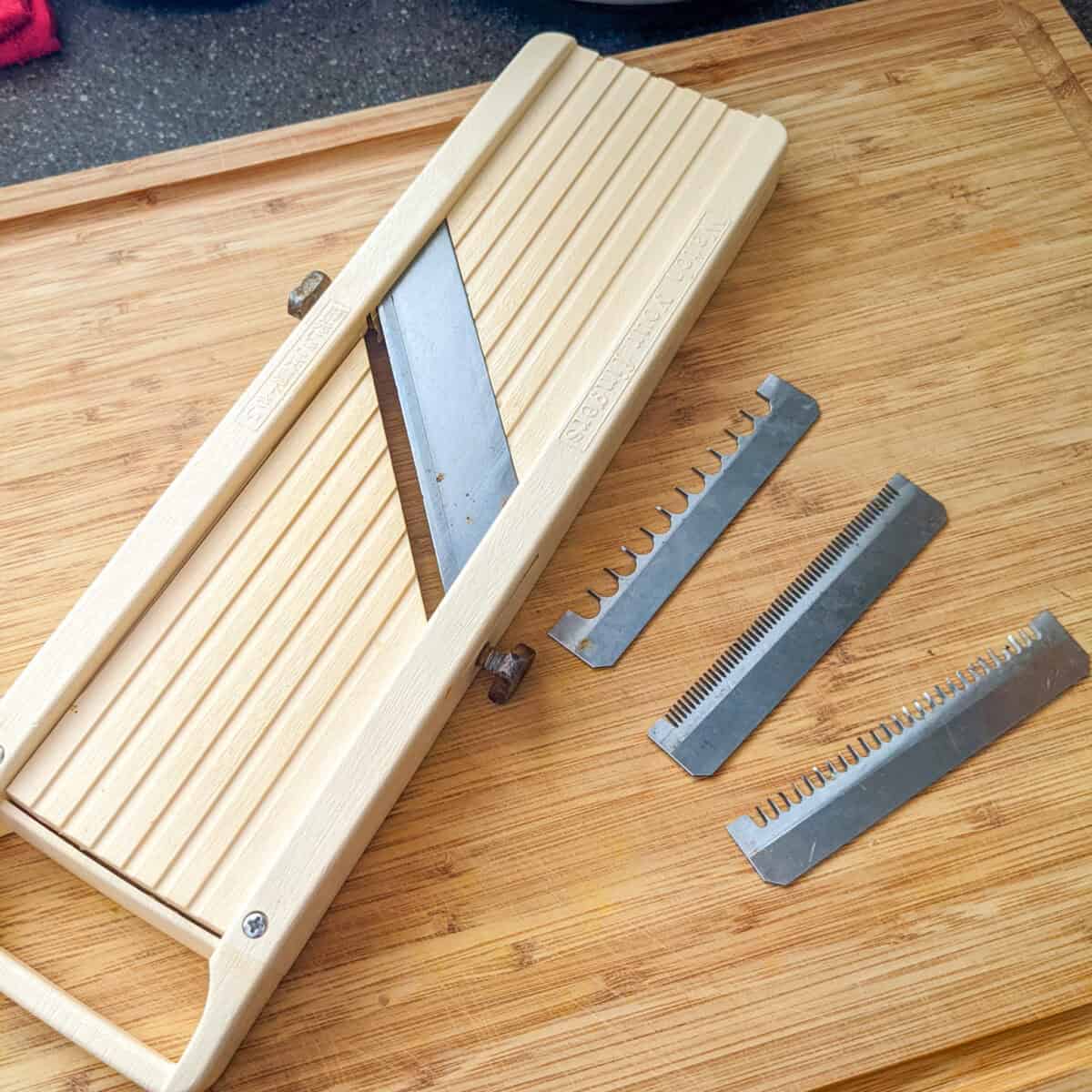
- Mandoline - Even though I did not use my Benriner Japanese Classic Slicer for this recipe, if you want to shorten prep time, use a mandoline for the cabbage, cucumber, radish, and celery.
- Salad Spinner - This can be used to rinse your greens and herbs. For this recipe, I used the Cuisinart Salad Spinner. To learn more tips on this useful tool, check out Cook's Notebook: Salad Spinner post.
Kitchen Must-Haves Reviews
Find a collection of my reviews of kitchen equipment that I have purchased or recommend. Kitchen Must-Haves - Find other tools I use here.

My Review: I recently purchased the Benriner Mandoline Slicer with Collection Tray and 4 Blades and have been impressed with how sharp and precise the Japanese stainless-steel blades are for everything from paper-thin slices to uniform julienne cuts. The "real deal" for me is the built-in collection tray, which keeps all my prep neatly contained, making it especially convenient when I’m throwing together effortless chop salads. With four interchangeable blades, a stable base, and BPA-free construction, it’s a versatile, durable tool that makes slicing faster, cleaner, and more enjoyable. Just like my Classic Benriner Mandoline that I had for over 2 decades, I hope this one lasts as long.

My Review: I’ve had my Benriner Mandoline Slicer for over 20 years, and it’s still one of the most reliable tools in my kitchen. While I own the older model, the new version is nearly identical, featuring the same chef-trusted quality, sharp Japanese stainless steel blades, and simple, effective design. It’s been a huge help with meal prep, especially when I need consistent, thin slices fast. Benriner has always been the original go-to mandoline in professional kitchens, and for good reason—it just works. If you want to learn more about how to safely and efficiently use a Japanese mandoline, check out my full guide on the Japanese Mandoline here.
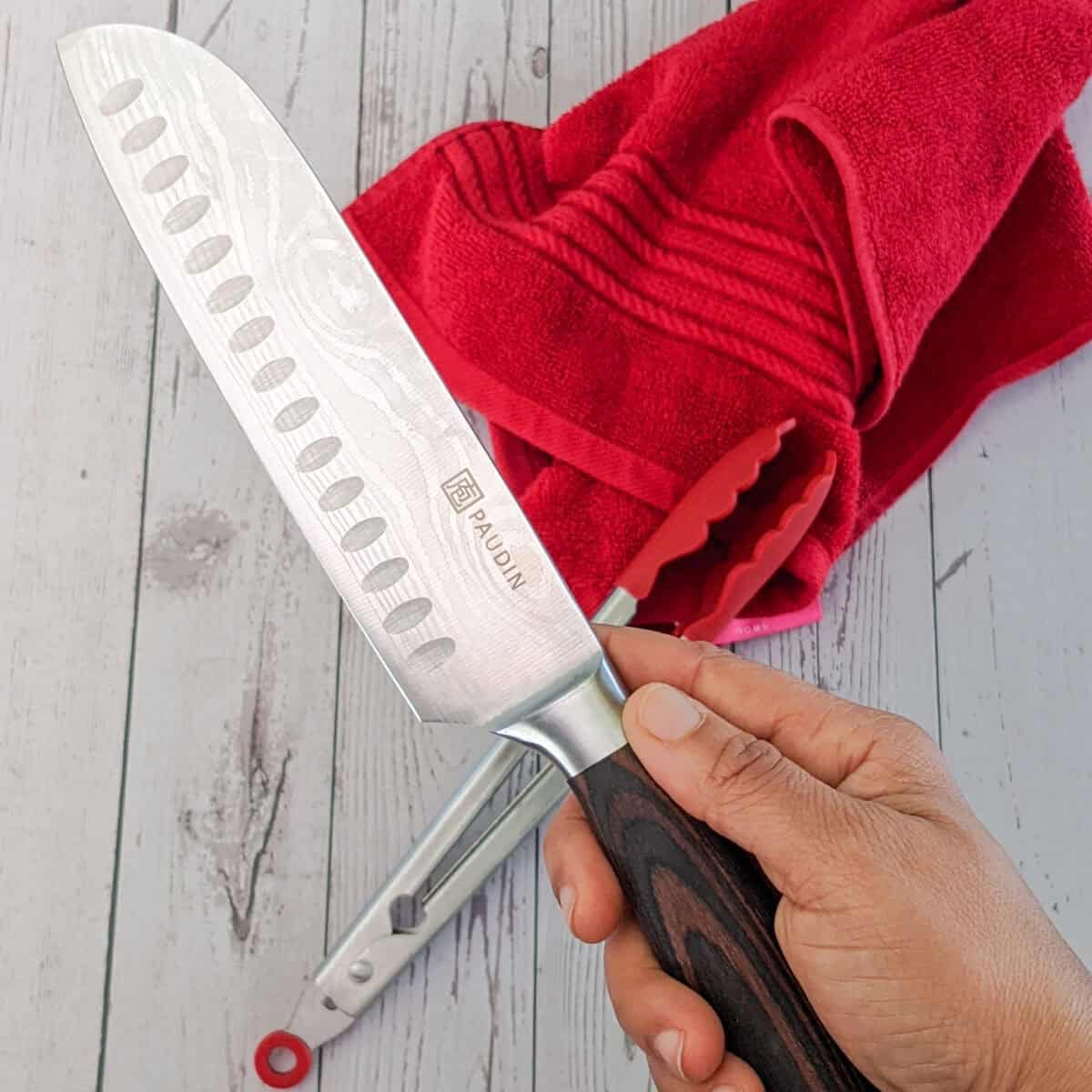
My Review: This knife is well-made. Super solid and multi-functional. It is made with high-carbon steel, so it will not rust. Slicing meat like fish is easier with the grooves. It doesn’t stick to the knife. The handle has an excellent grip, and it's not heavy. For some background, a Santoku is a versatile Japanese kitchen knife characterized by its straight edge and "sheepsfoot" blade, designed for precise slicing, dicing, and chopping. Its name means "three virtues," referring to its ability to handle meat, fish, and vegetables efficiently, making it a staple in both professional and home kitchens.
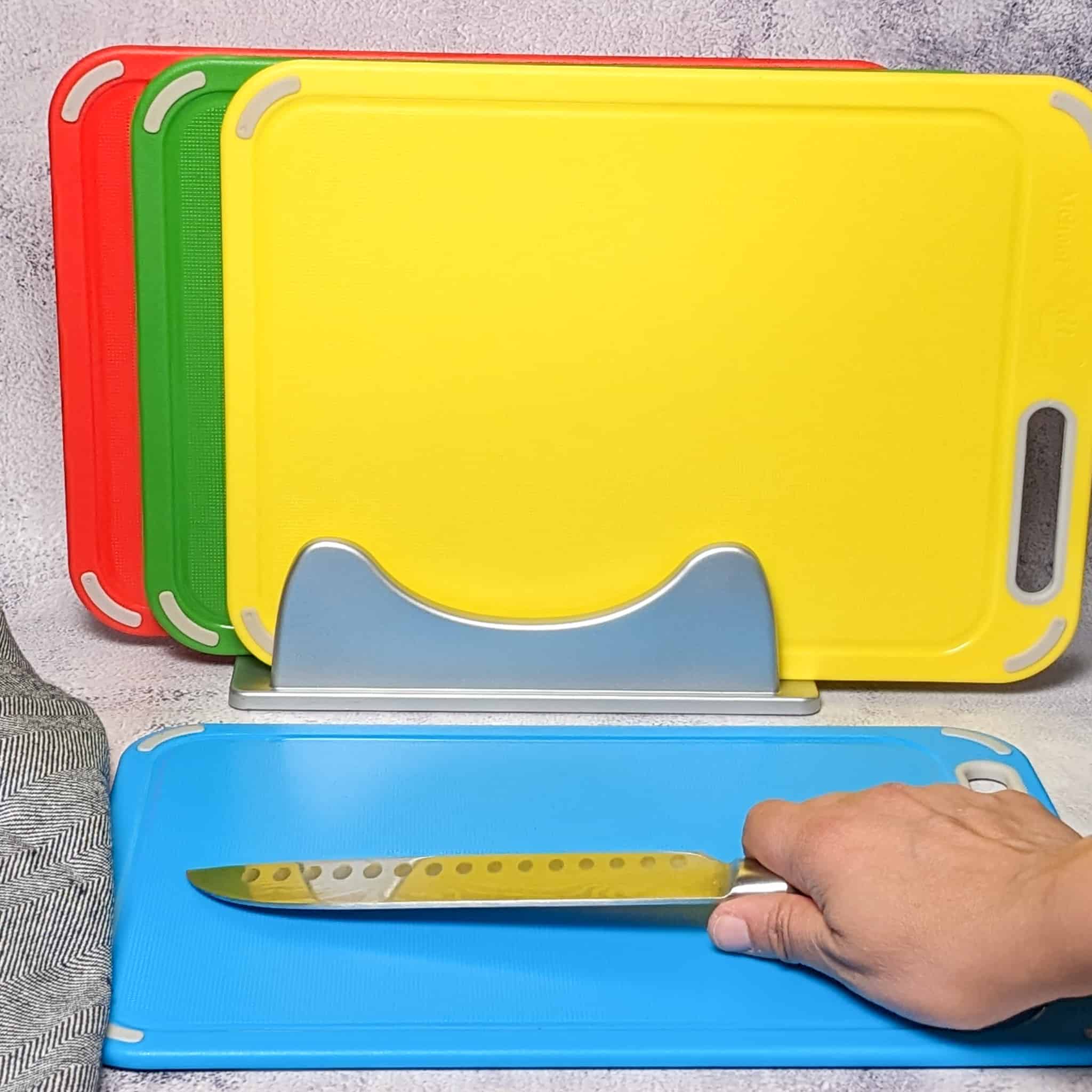
My Review: I absolutely love this Plastic Cutting Board Set of 4 with a Storage Stand! The color-coded boards are a lifesaver for preventing cross-contamination, especially when I’m switching between meats and veggies. The plastic is super sturdy, so I don’t have to worry about it flexing while I’m chopping. What really stands out for me is how easy they are to use after chopping. I slide everything straight into the pot, which keeps my kitchen clean and saves time. Cleanup is such a breeze, too; they go right into the dishwasher without any warping. Plus, the storage stand keeps everything neat and organized. These boards have made cooking so much easier and more enjoyable!
Storage Instructions
Learn how to properly store leftovers to keep them fresh and flavorful. Learn more about Understanding Food Temperature Safety Zones: Cook, Store & Serve Safely.
- Refrigerator - To store in the fridge, place everything except the dressing in portioned, airtight containers. Or in a large, airtight container with a paper towel on the bottom to soak up any moisture that may ruin the vegetables over time. Store the dressing in its container. The rainbow tuna salad lasts up to three days; the vinaigrette, for instance, lasts two weeks.
- Freezer - I do not recommend freezing this salad.
Airtight Food Containers: I interchange glass food storage containers with plastic clip-on lids. I always suggest glass storage containers because they can be microwaved, hold food without staining, and keep food at a more stable temperature, keeping it fresher and longer. I recommend checking out these airtight food containers on Amazon.
Substitutions
Dairy Free
- Yay! This recipe is already dairy-free.
Gluten-Free
- Yay! This recipe is also gluten-free.
Vegetarian
- Tuna - Use more vegetables instead of air-fried crispy tofu. Try my Air-Fried Turmeric Herbed Tofu recipe.
- Or try making your own vegan tuna. Check out Loving it Vegan and Rainbow Plant Life for recipes.
Convenience
- Olive Oil - Any vegetable oil with no prominent, distinct flavors.
- Dijon Mustard - Mustard powder or brown mustard may work.
- Campari Tomatoes - These tomatoes were chosen for their perfect balance of sweetness and acidity. However, if you are not able to find these, use grape or cherry tomatoes or your favorite. Diced globe tomatoes will also work.
- Garlic and Onion Powder - Substitute with fresh minced garlic and onion.
- Scallions - Use small diced white or red onion.
- Poached Egg - You can use a boiled or fried egg instead or omit it entirely.
- Red Pepper Chili Flakes - Use diced or sliced fresh red chili peppers.
Change Heat Level - Modify the recipe's heat level to your liking and learn more about the Scoville Scale and Chili Pairings.
Variations
Add Other Colorful Vegetables to the Rainbow Salad:
- Bell Pepper
- Broccoli
- Carrots
- Green Apple
- Parsnips
Replace with Other Proteins:
- Fresh Sushi Grade Tuna (seared or blackened and thinly sliced)
- Grilled, Seared, or Blackened Chicken Breast
- Steamed Shredded Chicken Breast
- Seared Thinly Sliced Steak
- Garlic-sauteed or Blackened Shrimp
- Seared, Blackened, or Steamed Salmon
5 Quick Cooking Tips
Your Cooking Tips Resource Guide - Become a better home cook with tips to help you cook more efficiently on the Cook's Notebook tab.
- Use high-quality canned tuna - Solid albacore tuna in water gives the salad a cleaner flavor and firmer texture that holds up well when plated.
- Slice vegetables evenly - Thin, consistent slices help create a balanced bite and make the rainbow presentation more visually appealing.
- Add the avocado just before serving - This keeps it fresh, vibrant, and prevents browning.
- Poach eggs last - Preparing them right before serving ensures the yolk stays warm and silky enough to act like a natural dressing.
- Shake the dressing again before serving - Lemon juice and olive oil naturally separate, so a quick shake keeps the vinaigrette smooth and well blended.
Frequently Asked Questions
To achieve perfect poached eggs, use fresh eggs and add a splash of vinegar to the simmering water. Create a gentle whirlpool in the water with a spoon before adding the eggs, which helps the whites wrap around the yolk. Cook for about 3-4 minutes for a runny yolk, then remove with a slotted spoon and drain on paper towels.
Yes, you can use fresh tuna for this salad. To do so, sear the tuna in a hot skillet for about 1-2 minutes per side until it is cooked to your preferred doneness. Let it cool slightly before flaking or slicing it and adding it to the salad.
Yes, you can prepare the dressing ahead of time. Store it in the refrigerator in a sealed mason jar for up to a week. Shake well before using to recombine the ingredients.
Bowl-Idea Recipes
Looking for other bowl-idea recipes like this? Try these:
- Creamy Lemon Tahini Dressing with Fresh Lemon Zest
- Spicy Cajun Shrimp Rice Bowl with Lemon Remoulade
- Easy Sheet Pan Spicy Miso Salmon Rice Bowl
- Spicy Greek Chicken Meatball Rice Bowl

Cooking Tips and Tutorials
If you found this tutorial helpful, you'll love my Cook's Notebook collection. From knife skills and flavor bases to time-saving tricks and essential equipment guides, this section is packed with chef-tested lessons to help you cook with confidence.
- How to Trim Chicken: The Best Way to Prep Chicken Before Cooking
- How the Maillard Reaction Makes Food Taste Better
- How to Store Fresh Berries So They Last Longer (Without Getting Mushy)
- Internal Meat Temperature Chart (Printable Guide)
📖 Recipe
Rainbow Tuna Salad with Dijon Mustard Lemon Dressing
Ingredients
Dijon Lemon Dressing
- 3 tablespoons olive oil
- 1 tablespoon lemon juice
- 1 tablespoon Dijon mustard
- ¼ teaspoon red pepper chili flakes
- ¼ teaspoon garlic powder
- ¼ teaspoon onion powder
- ½ teaspoon kosher salt
- ¼ teaspoon ground black pepper
Tuna, Egg, Vegetable Salad
- 2 cups mixed greens chopped
- 1 cup red cabbage thinly sliced
- ½ cup cucumbers thinly sliced moons
- 2 red radishes thinly sliced moons
- 1 celery stalk thinly sliced diagonally
- 3 large Campari tomatoes quartered
- 1 scallion thinly sliced
- 1 small avocado sliced (optional)
- 8 ounces of canned albacore tuna in water drained
- 2 large eggs
- Chopped parsley
Equipment
Instructions
- Save time in the kitchen: Read the instructions thoroughly, then gather and prep all your ingredients before cooking! Learn Prepping Tips.
- Prepare the Dressing: Add the olive oil, lemon juice, Dijon mustard, red pepper chili flakes, garlic powder, onion powder, salt, and black pepper to a small jar with a lid. Shake well until combined. To mix by hand, add everything except the oil to a small bowl, whisk together, then slowly drizzle in the oil while whisking until the dressing is emulsified.
- Prepare the Salad Ingredients: Chop the mixed greens, thinly slice the red cabbage, cucumbers, radishes, celery, and scallion, quarter the tomatoes, slice the avocado if using, drain the tuna, and poach the eggs.
- Prepare the Tuna and Avocado: If the avocado is very soft, gently mix it with the tuna in a small bowl. If it is firm enough to slice, keep it separate and layer it over or beside the tuna when assembling.
- Assemble the Salad: Divide the mixed greens between two wide bowls or plates. Place the tuna in the center of each. Arrange the tomatoes, scallions, red cabbage, cucumbers, radishes, celery, and avocado around the tuna.
- Finish and Serve: Top each salad with a poached egg. Gently cut into the egg so the yolk can run over the salad. Drizzle with the Dijon lemon dressing and finish with chopped parsley.
Video
Nutrition
Subscribe to My YouTube Channel
SUBSCRIBE: 👈To my YouTube Channel to Get Notifications of New Videos.
Have a Question or Comment?
If you have a question or comment about this rainbow tuna salad recipe, please post it below. You will definitely get a quick response. It also helps our other readers to stay informed. Thanks!

M Jorgen says
I just had to write about this after seeing the video on my feed! I was lucky to try this salad when you first made it, and I’ll never forget how insanely good it was. The fresh tuna, creamy avocado, poached egg, and that tangy, spicy homemade dressing were just perfect together. Plus, the colors and crunch of the veggies made it so fun to eat. Huge shoutout for nailing this one. Amazing salad!
Maika says
Awww! Thank you, that means a lot.