Welcome to my collection of Nigerian-inspired recipes, where I'm exploring the bold flavors, ingredients, and cooking techniques of one of West Africa's most diverse food cultures. Peppers, tomatoes, onions, aromatic seasoning bases, grains, groundnuts, and deeply seasoned sauces are among the elements that have inspired my approach to these dishes.

Some recipes draw more directly from Nigerian cooking, while others combine what I've learned with my own experiences as a chef and my love of global cuisine.
Discover the Bold Flavors of Nigerian Cuisine!
If you're learning about Nigerian cuisine for the first time, this collection is a great place to start exploring how its ingredients and cooking techniques can inspire new dishes.
Start with my Ata Gige Paste, inspired by the blended pepper and aromatic bases used in Nigerian cooking. Made with peppers and aromatics, it demonstrates how building flavor can begin long before the main ingredients enter the pot.
I use that idea in my Spicy Shrimp Farro Risotto with Mushrooms and Peas, where West African jollof inspiration meets Italian risotto. Instead of traditional rice, I use farro and cook it with a spicy tomato base and an ata gige-inspired mixture of peppers and aromatics.
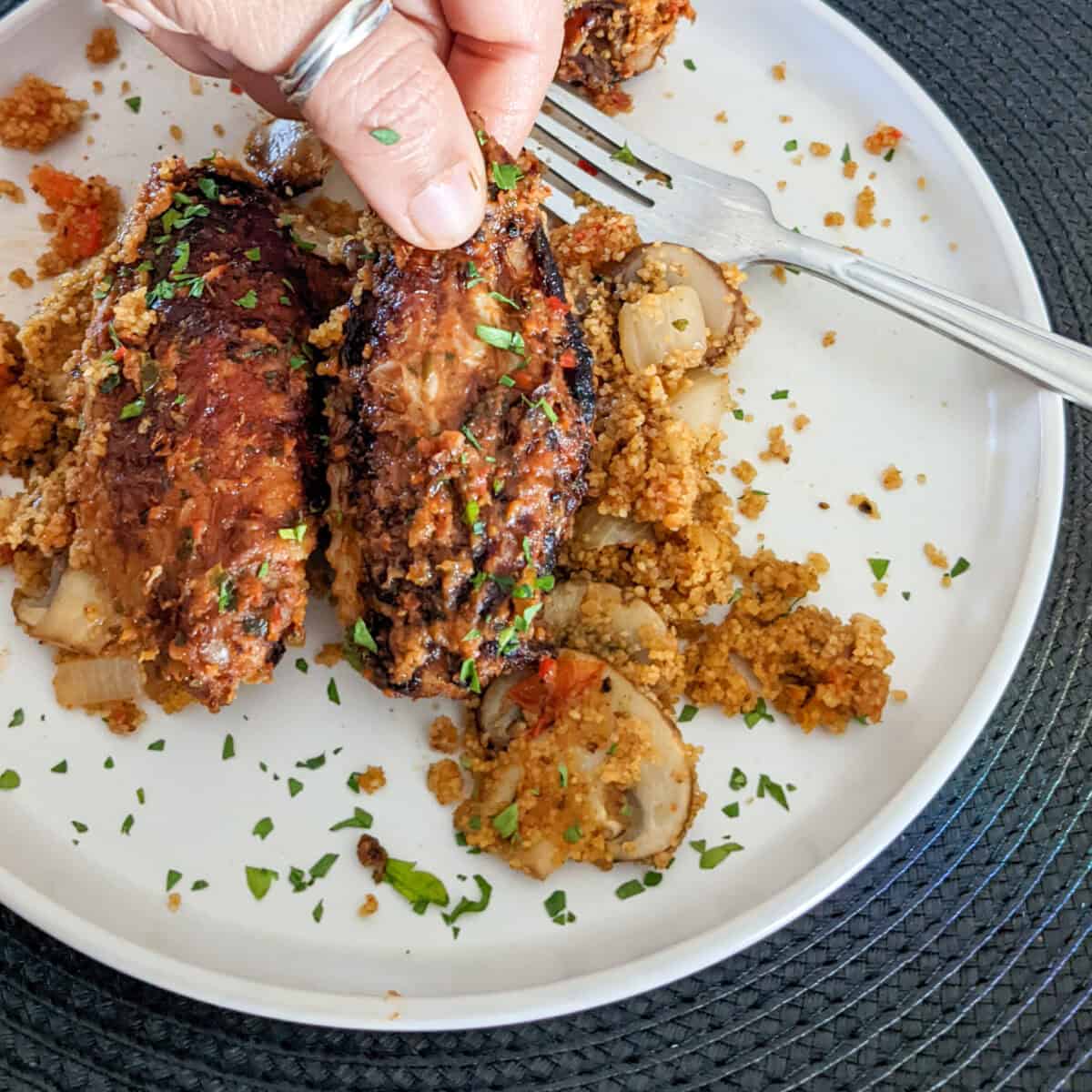
My Spicy Peanut Chicken Wings with Mushroom Jollof Fonio Pilaf takes the experimentation even further. The pilaf draws inspiration from jollof's tomato-and-pepper flavor base while using fonio, an ancient West African grain ↗, and the wings highlight groundnuts, another ingredient with deep importance across West African cooking.
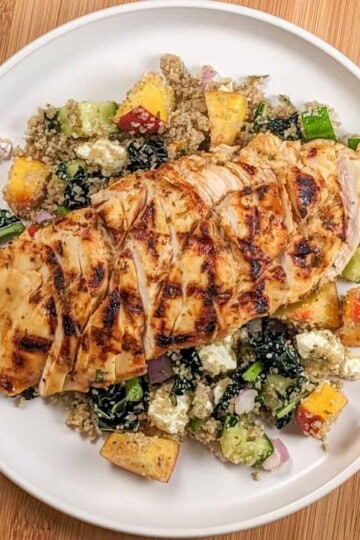
You'll also find recipes such as my Peach Piri Piri Chicken with Fonio Kale Salad, which represents broader African influences rather than Nigerian cuisine alone. Fonio connects the dish to West Africa, while piri piri reflects a different African culinary history. Including dishes like this gives me an opportunity to explore how African cuisines can influence one another and global cooking without treating the continent's many food cultures as interchangeable.
These recipes aren't meant to define Nigerian cuisine. They're a reflection of what I'm learning from Nigerian and West African cooking and how those ingredients, techniques, and traditions inspire me to experiment in my own kitchen.
The History and Influences Behind Nigerian Cuisine
Nigerian cuisine reflects the enormous cultural and geographic diversity of Nigeria itself. The country is home to hundreds of ethnic groups, including Yoruba, Igbo, Hausa, Fulani, Edo, Efik, Ibibio, and many others, each contributing distinct dishes, ingredients, and culinary traditions.
Long before Nigeria existed within its modern borders, communities throughout the region developed food traditions around locally available crops, livestock, rivers, forests, and coastal resources.
These became important parts of local foodways:
Yams, cowpeas, millet, sorghum, oil palm products, leafy vegetables, seafood, and regional herbs and spices.
Trade and global exchange later brought ingredients from other parts of the world. Foods originating in the Americas, including cassava, maize, tomatoes, peanuts, and chile peppers, were gradually incorporated into existing West African cooking traditions. Today, some of these ingredients are so closely associated with Nigerian dishes that it's difficult to imagine the cuisine without them.
Nigeria's many food traditions also reflect centuries of regional trade, migration, religion, colonialism, and exchanges with neighboring West African cultures. This history can be seen in everything from grain-based dishes and grilled meats in the north to yam, cassava, palm products, vegetables, seafood, soups, stews, and pepper-based sauces found throughout other parts of the country.
Support Authentic Nigerian Food Bloggers
When I explore another culture's cuisine, I also want to point you toward cooks and food writers who can take you deeper into their own food traditions.
My Review: One of my favorite Nigerian chefs and cookbooks has been an incredible guide on my journey to connect with my roots, especially since finding out I’m about 17% Nigerian. I’ve always been curious to learn more about my ancestors, and this book was the perfect entry point. It’s written in a way that’s super approachable and easy to understand from an American perspective, which made diving into Nigerian cooking feel natural and exciting. To this day, I still use many of the recipes, especially the Ata Gige. It’s bold and flavorful, and it reminds me so much of Haitian Epis, which I truly believe has its roots in this blend. This book has become a meaningful staple in both my kitchen and my cultural journey.
![My Everyday Lagos: Nigerian Cooking at Home and in the Diaspora [A Cookbook]](https://m.media-amazon.com/images/I/51CGRrW+dcL._SL500_.jpg)
I'll continue adding Nigerian recipe creators here so you can explore traditional dishes, family recipes, regional variations, and Nigerian cooking from the people who know these food traditions firsthand.
Nigerian Food Across the Diaspora
Nigerian cuisine is also part of a much larger global food story. Nigerian communities around the world have carried their food traditions with them, helping dishes such as jollof rice, suya, egusi soup, moi moi, akara, pepper soup, and pounded yam reach new audiences.
The connections become even more obvious when looking across the African diaspora. During the transatlantic slave trade, people from areas that are now Nigeria and other parts of West and Central Africa were forcibly transported throughout the Americas. Along with them traveled agricultural knowledge, cooking techniques, understandings of ingredients, and ways of building flavor.
Over generations, those traditions encountered Indigenous American foods, European colonial influences, and ingredients from other parts of the world. The results became new cuisines with identities of their own.
That doesn't mean a Haitian, Caribbean, Southern U.S., or Latin American dish can automatically be traced back to a particular Nigerian recipe. The history is much more complex. But similarities in the use of ingredients such as rice, beans, okra, leafy greens, plantains, peppers, and aromatic seasoning bases offer opportunities to explore the broader West African food traditions that influenced cooking throughout the Americas.
Note From Chef Maika
Learning about Nigerian cuisine has made me even more curious about the connections between the foods I grew up with and the larger African diaspora. I especially love learning why a cooking technique exists, how an ingredient became part of a cuisine, and what happens to food traditions when people move from one place to another!
That's also why you'll see me distinguish between Nigerian recipes, Nigerian-inspired recipes, and recipes with broader West African or African influences. My goal isn't to place every African-inspired dish under one label. It's to keep learning about what makes these cuisines different while also exploring the fascinating ways food connects us.
Recipes
[Feast category recipe archive displays here]