

Learn how to clean collard greens step-by-step using the best soak-and-swish method to remove dirt, sand, and grit from the leaves. This beginner-friendly guide covers how to wash, dry, store, and prep fresh collard greens properly before cooking.

Whether you're making Southern-style collard greens, soups, or a healthy weeknight side dish, properly cleaned greens make all the difference. This "How to Clean Collard Greens | Step-by-Step" is part of the Collard Greens Prep Ultimate Guide series.
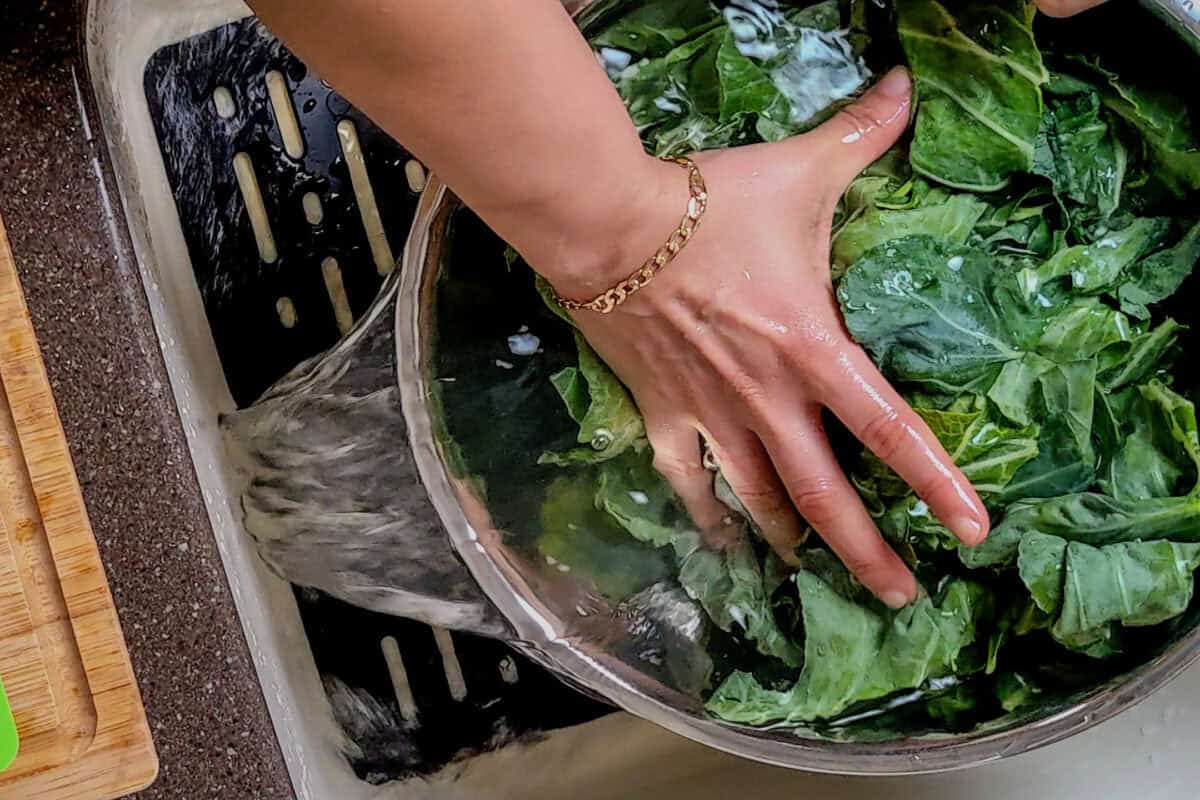
Table of Contents
Jump to:
- Why Cleaning Collard Greens Is a Must
- How to Clean Collard Greens Quickly
- Key Takeaways
- How Long Should You Soak Collard Greens?
- Step-by-Step Instructions with Pictures
- 6 Common Mistakes When Cleaning Collard Greens
- How Do You Know Collard Greens Are Clean?
- The Best Way to Dry Collard Greens
- Should You Use Vinegar to Clean Collard Greens?
- My Journey Learning How to Clean Collard Greens
- Choosing the Best Collard Greens
- Why Washing Collard Greens Properly Matters
- Quick Culinary Glossary
- Equipment List
- Kitchen Must-Haves Reviews
- Storing After Prep
- Prepping Tips Recap
- Frequently Asked Questions
- Final Thoughts on Cleaning Collard Greens
- Continue Learning About Collard Greens
- More Cooking Tips and Tutorials
- Trending Recipes
- Have a Comment or Question?
Why Cleaning Collard Greens Is a Must
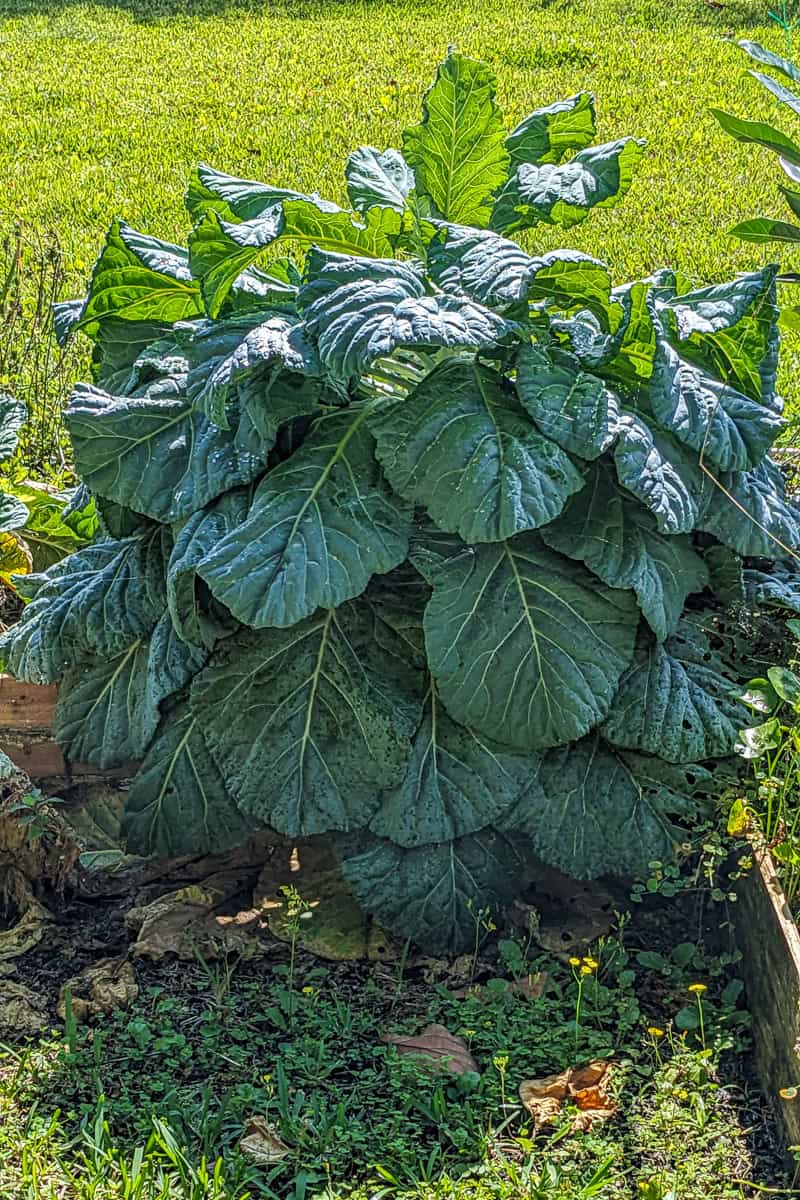
Collard greens are delicious, hearty, and loaded with nutrients, but let's be real: they grow low to the ground and often come with a little extra… texture. I'm talking about sand, grit, and sometimes even a surprise bug or two (yep, I said it). That's why learning how to clean collard greens properly is essential.
A quick rinse just won't cut it; these leafy greens need a full-on spa treatment and love to ensure your dish is all flavor and zero dirt. Whether you're simmering them down with smoked meat or going for a vegan twist, clean greens are the foundation of a good pot, and I'll show you why.
How to Clean Collard Greens Quickly
To clean collard greens, fill a large bowl or clean sink with cold water, then submerge the leaves and gently swish them with your hands to loosen dirt, sand, and grit. Lift the greens out of the water instead of pouring the water out, then repeat the soak-and-swish process 2 to 3 times until the water runs clear.
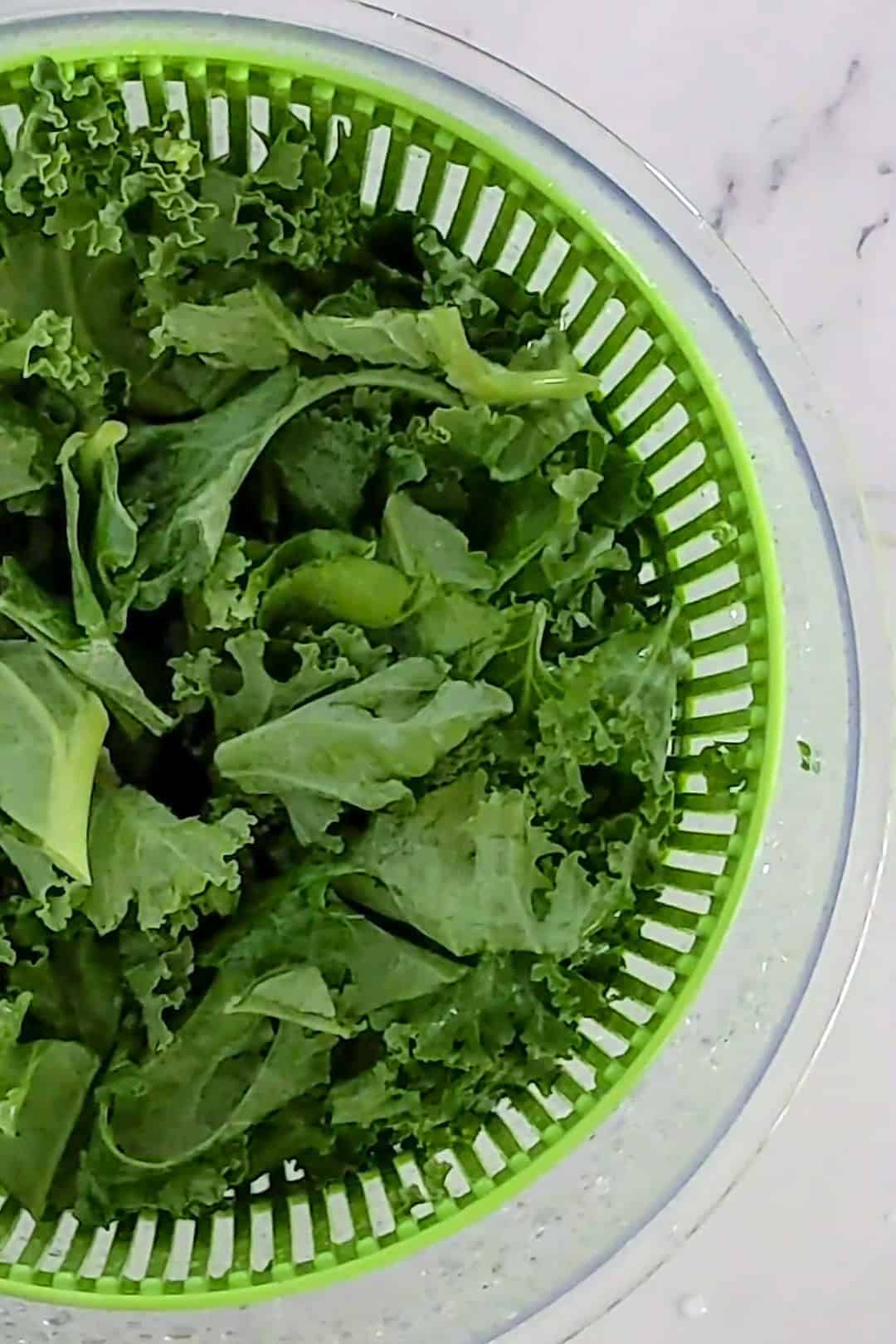
After washing, pat the leaves dry with paper towels, a clean kitchen towel, or use a salad spinner in small batches. Learn How to Use the Salad Spinner | In Many Ways. Once dry, the collard greens are ready to trim, slice, store, or cook in your favorite recipe.
Quick Steps
- Fill a large bowl or clean sink with cold water.
- Add the collard greens and fully submerge the leaves.
- Swish the greens gently to loosen dirt and grit.
- Lift the greens out so the grit stays at the bottom.
- Repeat 2 to 3 times until the water runs clear.
- Dry the leaves well before trimming or slicing.
Chef Tip: Don't cut collard greens before washing them. Full leaves are easier to swish clean, and drying them before trimming gives you better control on the cutting board.
Key Takeaways
- Vinegar is optional but can help loosen dirt and surface debris.
- Collard greens should be washed 2 to 3 times in cold water until the water runs clear.
- Always wash the leaves before trimming or slicing them.
- Lift the greens out of the water instead of pouring the water out.
- Dry the leaves thoroughly before cutting or storing.
- A salad spinner helps remove excess moisture quickly.
How Long Should You Soak Collard Greens?
Collard greens should be soaked in cold water for 2 to 5 minutes per rinse. This gives the dirt, sand, and grit enough time to loosen from the folds and thick stems without causing the leaves to wilt.
Most collard greens need to be soaked and rinsed 2 to 3 times before the water runs clear. If the greens came from a farmers' market or a home garden, you may need an additional rinse, as freshly harvested leafy greens often contain more dirt and debris.
Step-by-Step Instructions with Pictures
Follow the instructions and prepping tips below using the step-by-step picture guide.
1. Fill a Large Bowl or Sink with Cold Water
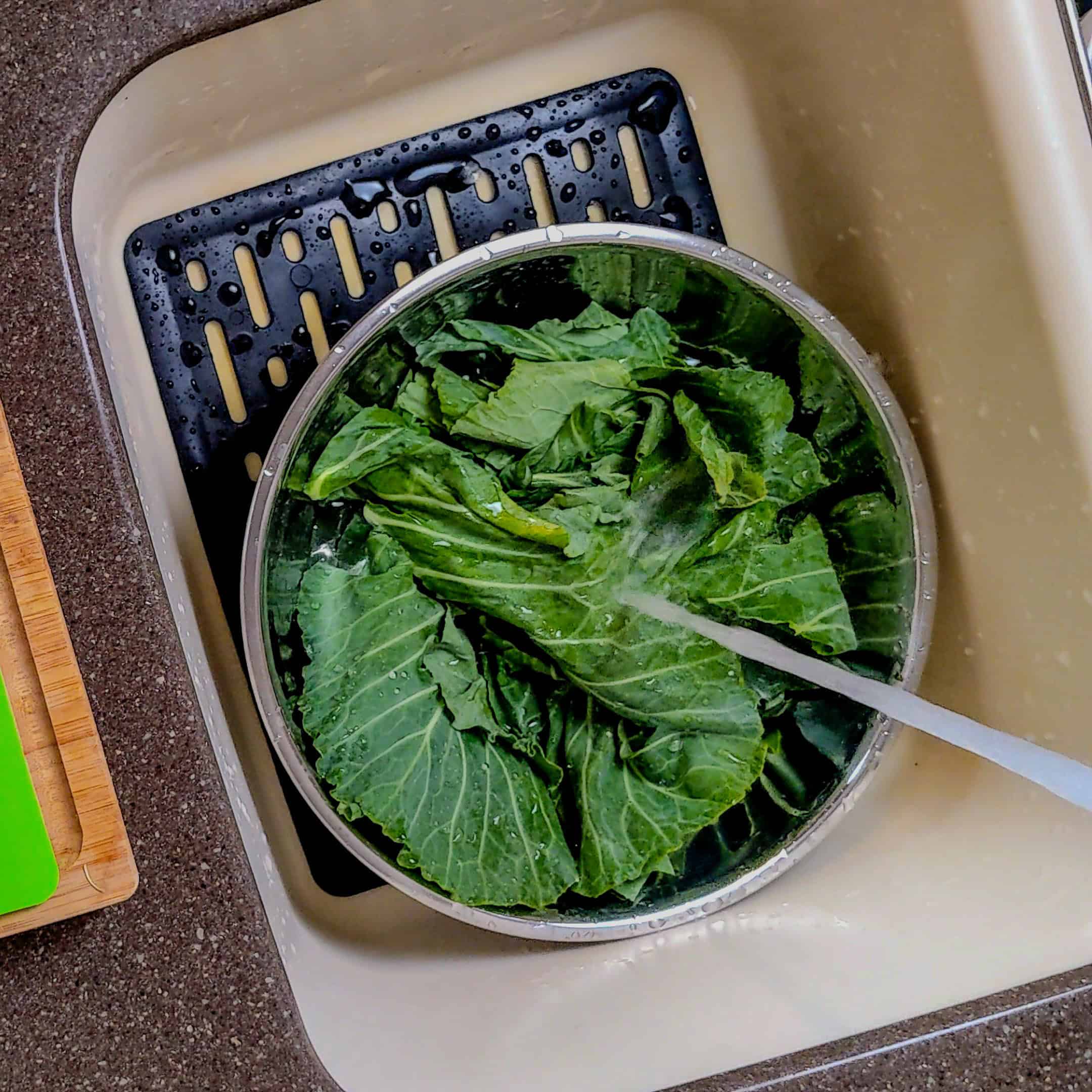
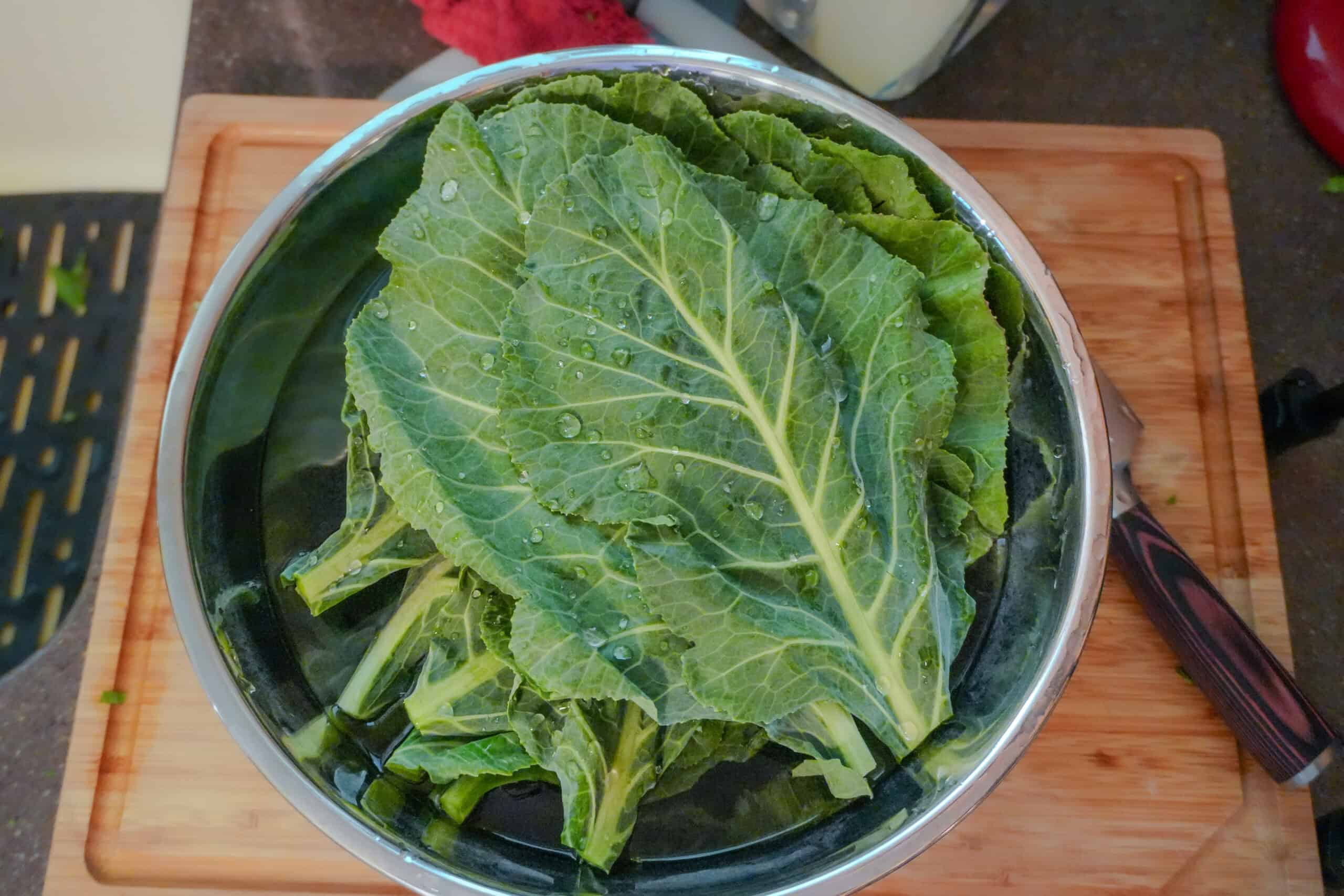
Fill a large bowl or clean sink with cold water. Soaking helps loosen grit, especially from the leaf folds.
2. Submerge and Swish the Collard Greens
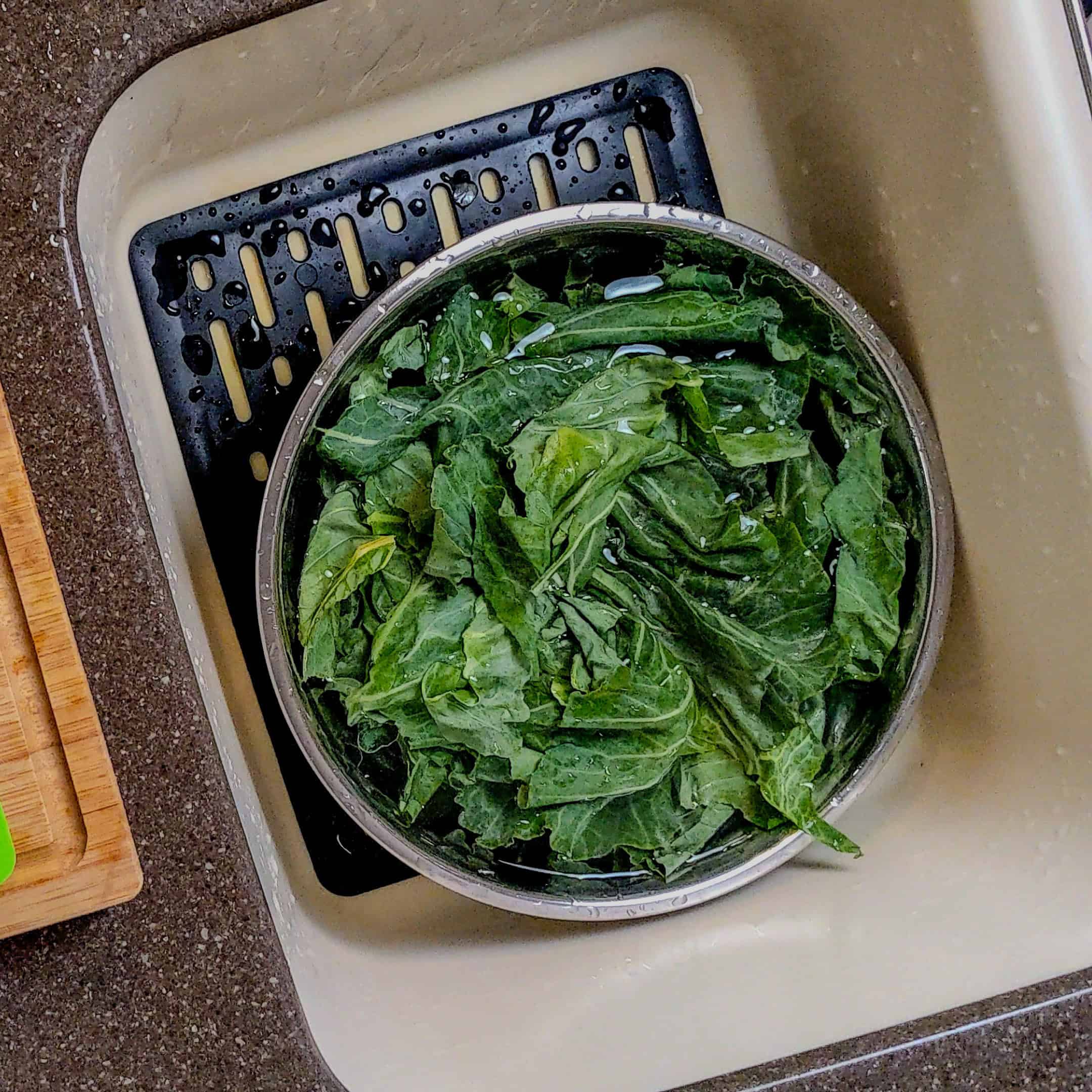
Gently swish the greens with your hands.
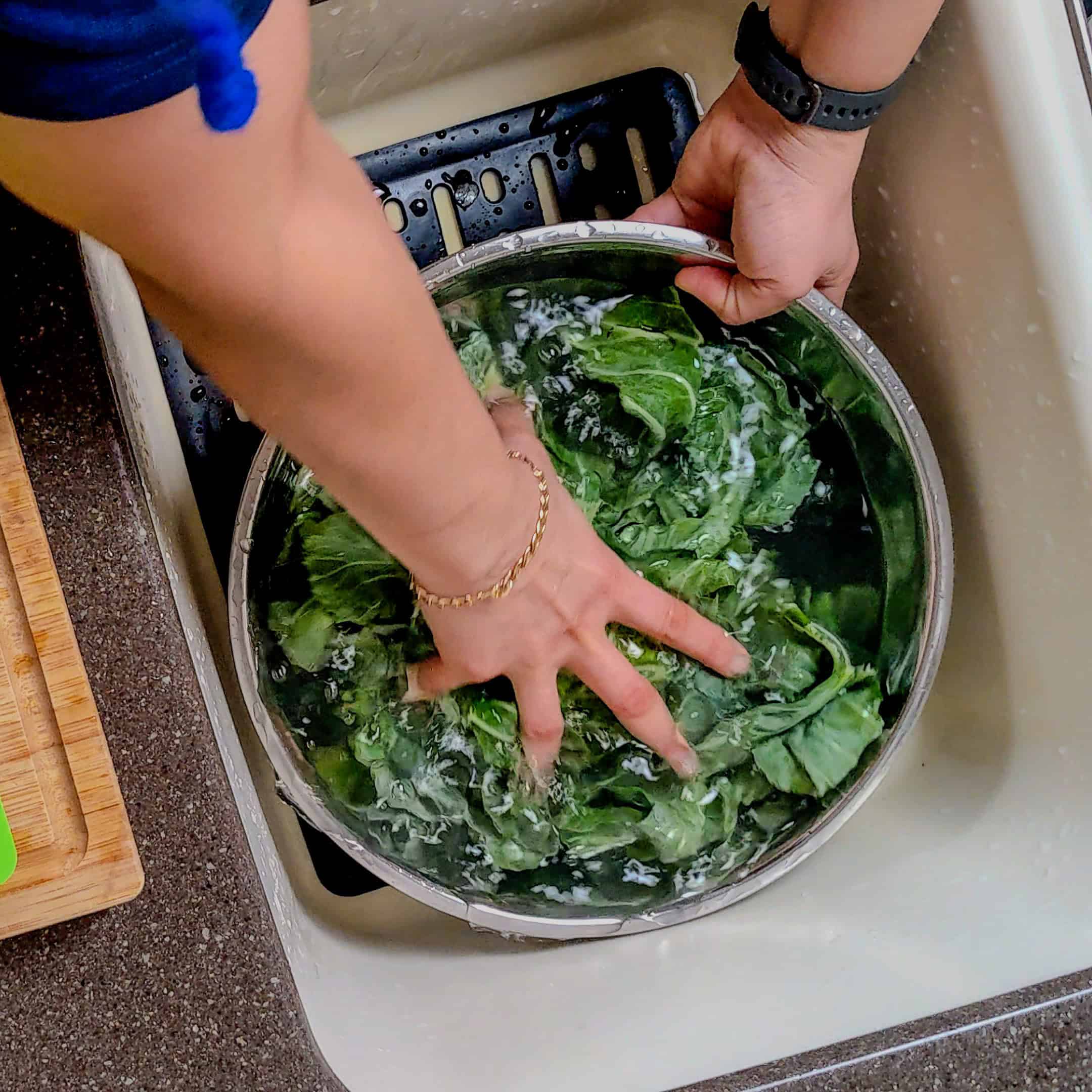
Get under those fanlike leaves, dirt loves to hide in there!
3. Lift the Greens Out of the Water
You can also lift the greens out of the water instead of pouring the water out. This keeps the grit at the bottom of the bowl instead of recoating your greens.
4. Repeat the Washing Process & Dry Thoroughly
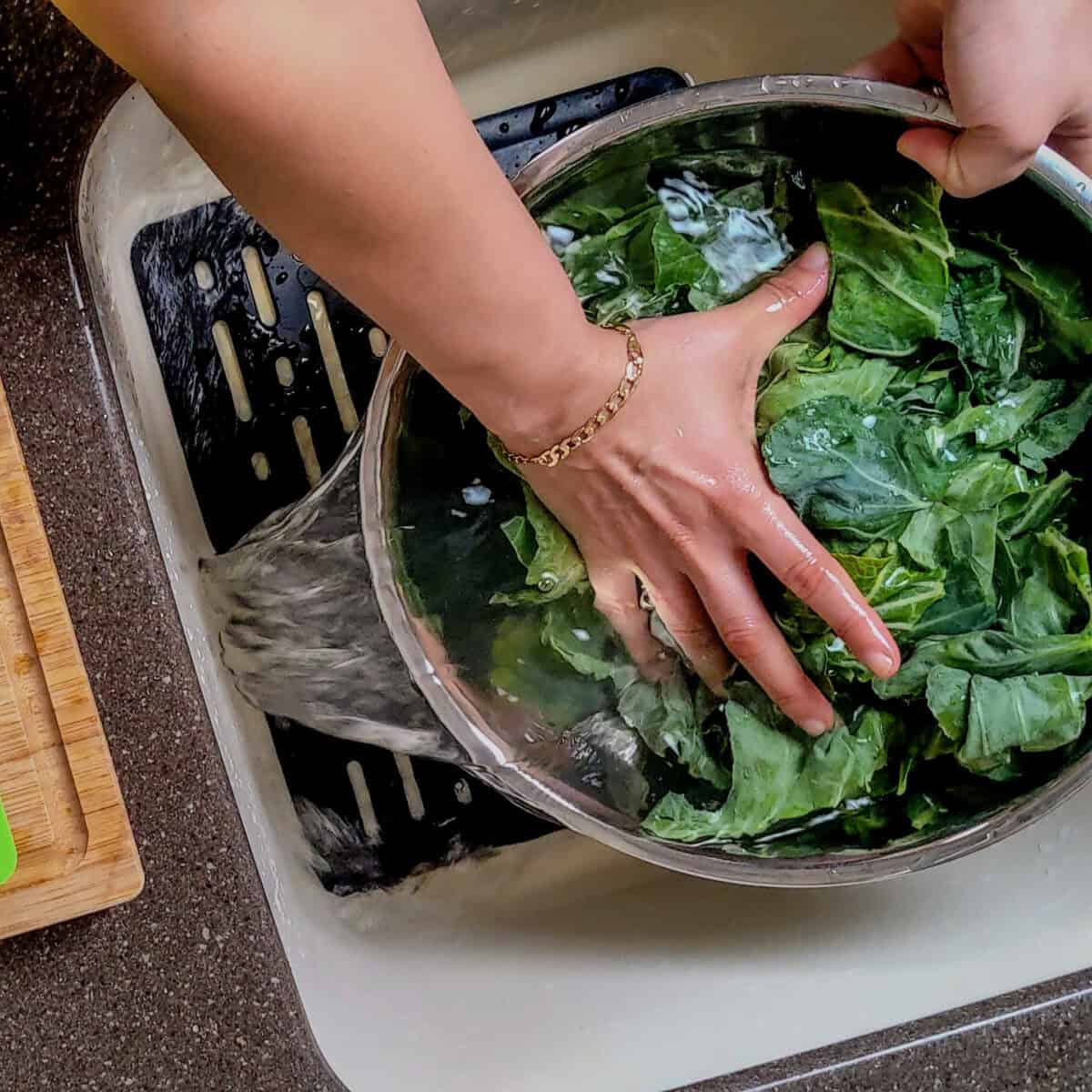
Repeat the soak-and-swish process 2-3 times until the water runs clear. If it's your first time, go for three rounds; better safe than sandy.
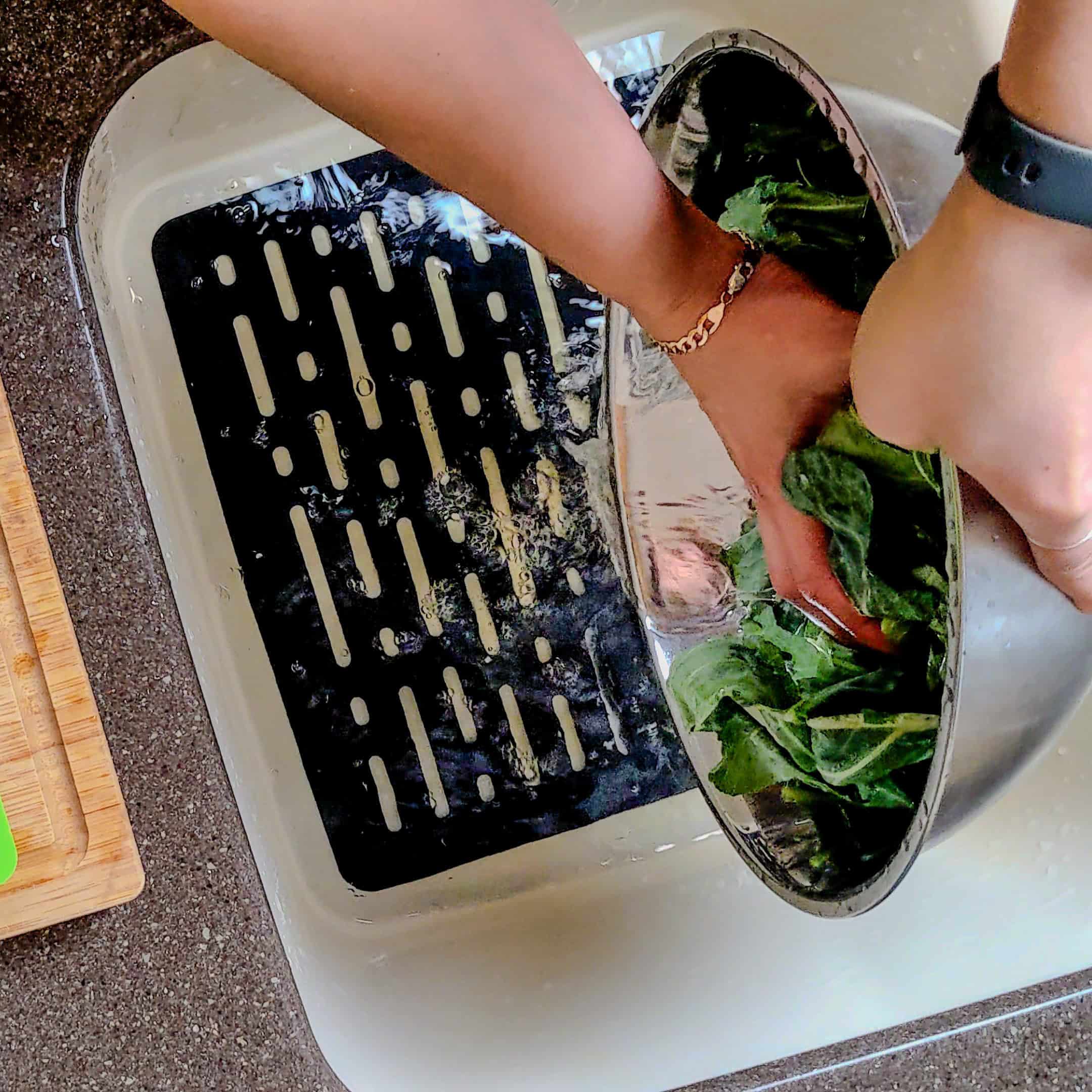
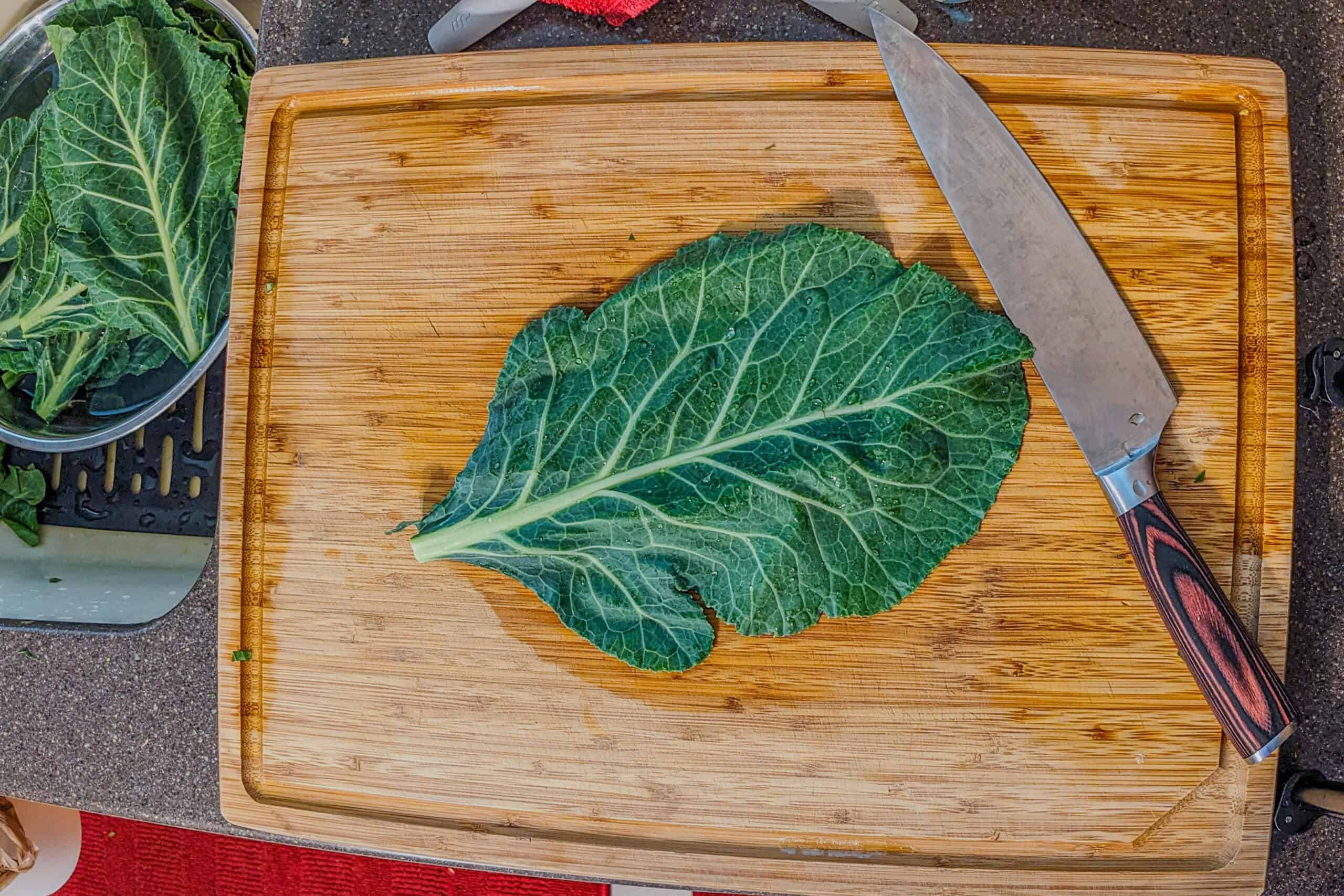
Pat the leaves dry with a paper towel or a clean kitchen towel. Dry leaves are easier to trim and safer to slice, with less slip, more control.
6 Common Mistakes When Cleaning Collard Greens
1. Only Rinsing the Leaves Once
Collard greens grow close to the ground, so dirt and sand often hide deep inside the folds of the leaves and around the thick central ribs. One rinse usually is not enough to remove all the grit.
2. Cutting the Greens Before Washing
Washing whole leaves is much easier than trying to clean chopped collards. Once sliced, the leaves can trap dirt in the cut edges and become harder to swish properly in water.
3. Pouring the Water Out with the Greens Still Inside
Instead of dumping the entire bowl into the sink, lift the collard greens out of the water with your hands or a colander. This keeps the grit settled at the bottom instead of coating the leaves again.
4. Skipping the Drying Step
Wet greens can become slippery and harder to trim safely on a cutting board. Excess moisture can also water down seasonings during cooking.
5. Using Warm or Hot Water
Cold water works best for cleaning collard greens because it helps keep the leaves crisp while loosening dirt naturally. Hot water can cause delicate parts of the leaves to wilt too early.
6. Forgetting to Check the Folds and Stems
The thick stems and curled folds are where sand and tiny bugs love to hide. Always open the leaves slightly with your hands while washing.
How Do You Know Collard Greens Are Clean?
Your collard greens are properly cleaned when the soaking water looks clear, and no visible dirt or sand settles at the bottom of the bowl after rinsing. The leaves should feel smooth, not gritty, especially around the thick stems and folds where debris tends to accumulate.
Before cooking, inspect a few leaves closely under good lighting to make sure there are no remaining bugs, damaged spots, or sandy patches. Once the greens are fully cleaned and dried, they are ready to trim, slice, and cook.
The Best Way to Dry Collard Greens
After thoroughly washing collard greens, properly drying them is just as important as cleaning them. Excess moisture can make the leaves slippery to trim, water down seasonings during cooking, and shorten their storage life in the refrigerator.
For small batches, gently pat the leaves dry with paper towels or a clean kitchen towel. If you are cleaning a large amount of collard greens, a salad spinner can help remove moisture much faster without bruising the leaves.
Before trimming or slicing, make sure the collard greens feel mostly dry to the touch. Dry leaves are easier to handle safely on a cutting board and store better for meal prep or future recipes.
Once your collard greens are fully cleaned and dried, learn how to store them properly to keep them fresh longer.
Should You Use Vinegar to Clean Collard Greens?
I noticed in some instructions that some people used vinegar to clean collard greens. And this is what I learned. Many home cooks, particularly in the Southern United States, add a splash of white vinegar or apple cider vinegar to the water when soaking the greens.
The idea is that vinegar helps loosen any remaining dirt, kill surface bacteria, and even coax out any tiny bugs that might be hiding in the thick central ribs or folds of the leaves, which totally makes sense.
Why Some Home Cooks Use Vinegar
While it's not absolutely necessary, using vinegar can offer peace of mind, especially if you bought your collard greens at a farmers' market or they weren't pre-washed. Just a tablespoon or two in a bowl of cold water is enough to help clean collards without affecting their taste.
Chef Tip: Always follow up with a few rinses in clean water to remove any vinegar residue before drying and trimming your greens.
My Journey Learning How to Clean Collard Greens
I Didn't Grow Up Eating Collard Greens

And let me be honest with you, I didn't grow up eating collard greens. My mom, who was born in the Bahamas and is of Haitian descent, cooked mostly Haitian dishes like stewed chicken, rice and beans, and boiled plantains. Collards? Not on the menu.
How Collard Greens Entered My Family's Kitchen
It wasn't until I was an adolescent that collard greens started making their way to our Thanksgiving table. My mom began working closely with more "Black Americans," as many Haitians call African Americans who don't have Caribbean ancestry, and started learning traditional Southern-style recipes. That's when collard greens officially entered our repertoire.
Learning How to Clean Collard Greens as an Adult
Fast forward to adulthood, and suddenly, it was my turn to make the collard greens for Thanksgiving. I panicked! Because I didn't grow up learning how to clean or prep them, I hit the internet hard, watching videos, reading blogs, anything to get it right. So, I couldn't help but feel like I was late to the party (like always).
As a Black woman, I wondered, "Am I the only one who didn't grow up with this?" For a hot second, I thought I lost points on my Black card for not knowing how to clean collard greens, especially considering their deep roots in African American culture.
But then I remembered people talking about cooking leafy greens on the islands, too; they called it callaloo or lalo.
The Leafy Greens I Grew Up Eating
With that said, I grew up watching my grandma and mom cook soups or simple stewed greens using ingredients like spinach and watercress, always adding a little extra just for me because they knew I actually loved my greens even if they weren't collards at the time.
Why Learning to Clean Collard Greens Meant So Much to Me
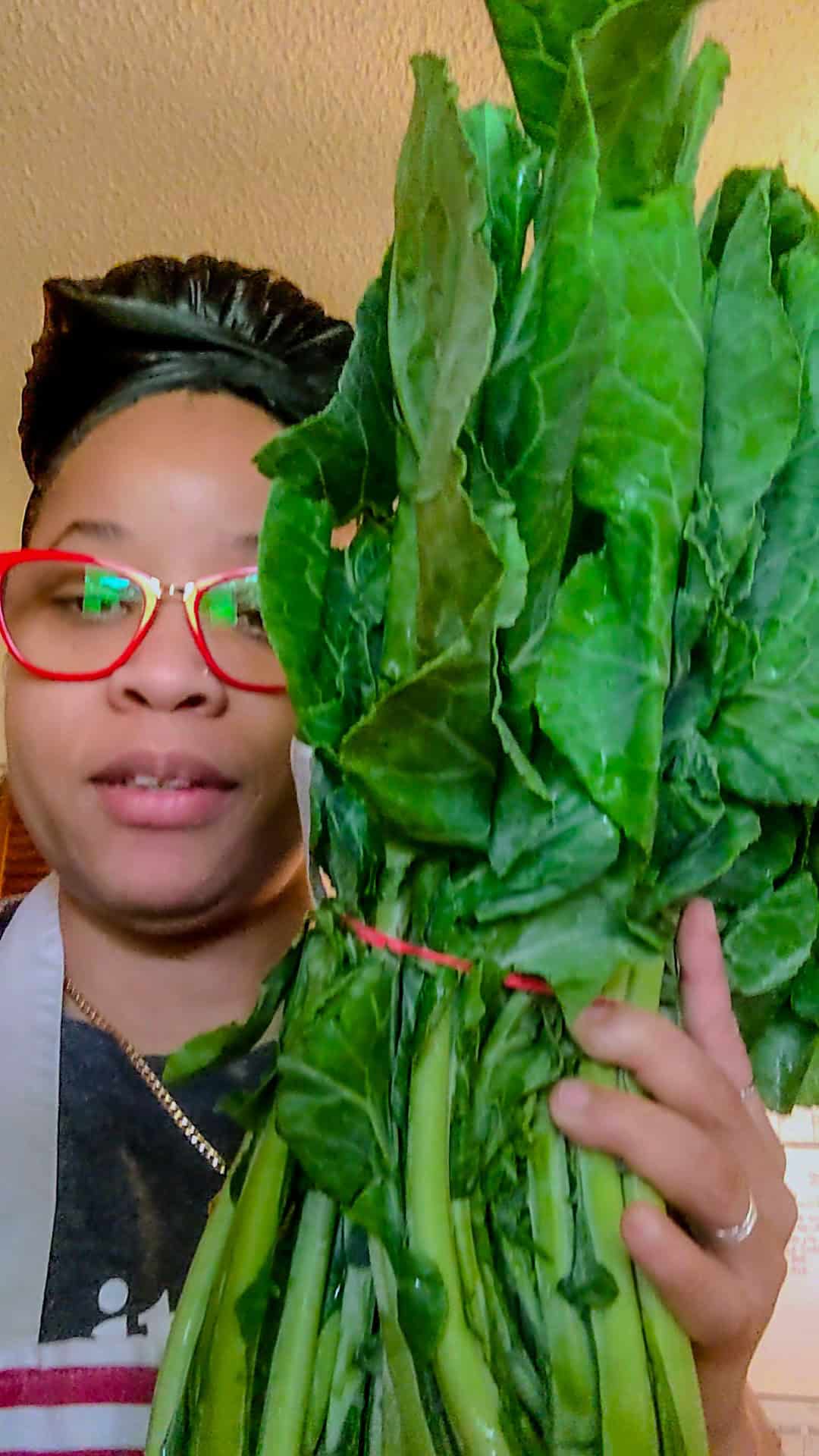
Learning how to clean collard greens felt like a rite of passage for me. An initiation into a wider cultural kitchen that I hadn't yet stepped into. And now? I'm proud to pass on what I've learned to anyone who's ever stared down a gritty bundle of collards, wondering where to start.
What Are Callaloo and Haitian Lalo?
In case you were wondering, while collard greens are deeply rooted in African American cuisine, other parts of the African diaspora have their own versions of stewed leafy greens.
Callaloo in Caribbean Cuisine
In many Caribbean islands, especially Jamaica and Trinidad, callaloo (ka-la-loo) refers to a dish made with leafy greens like amaranth leaves, taro leaves, or sometimes even spinach, cooked down with onions, peppers, garlic, thyme, and often coconut milk or salted meat. It's rich, flavorful, and varies from island to island.
Haitian Lalo and Stewed Leafy Greens
In Haitian cuisine, a similar dish called lalo (lah-lo) is traditionally made with jute leaves. Lalo is slow-cooked with epis (Haitian seasoning), blue crab, or beef and often served with white rice.

The texture is different from collards; lalo tends to be more slippery due to the nature of the jute leaves, but it holds the same cultural weight and comfort-food status in Haitian households. Check out this recipe using Lalo from Love for Haitian Food.
So, while I didn't grow up with collard greens, I did grow up with leafy green stews that served the same purpose: nourishing the body and soul, passed down through generations. Do you have a story to share? Please do! I would love to hear it. Alright, so let's get into learning how to clean collard greens.
Choosing the Best Collard Greens
Before washing collard greens, it's important to start with fresh, high-quality leaves. Fresh collard greens are easier to clean, taste better, and tend to be more tender after cooking.
If collards are unavailable, you can also explore collard greens substitutes, such as other leafy greens.
Here are a few signs to look for when buying collard greens:
Look for Crisp, Dark Green Leaves
Fresh collard greens should look vibrant, sturdy, and deeply green, with minimal yellowing or wilting. Leaves with a crisp texture usually cook better and store longer.
Choose Smaller Leaves for a Milder Flavor
Smaller collard greens tend to have a slightly sweeter taste and a more tender texture than very large, mature leaves, which can become tougher and more bitter.
Avoid Dry or Cracked Stems
Dry, woody stems often indicate older greens that may have been sitting too long. Fresh stems should look firm and hydrated.
Check for Excess Moisture or Slimy Spots
Avoid bunches that feel wet, slimy, or overly soft, as excess moisture can accelerate spoilage.
A Few Small Holes Are Normal
Minor insect holes are common in leafy greens, especially in produce from farmers' markets or organically grown produce. However, avoid leaves with major tears or heavy damage.
Once you choose the best bunch, the next step is learning how to clean collard greens properly before trimming, storing, or cooking them.
Chef's Shopping Tip
I like to pick up a few types of leafy greens when I shop. Sometimes, I'll mix in mustard greens, turnip greens, or even Swiss chard for a unique flavor blend that still falls under that comforting Southern-style collard greens category.
And if you're wondering, yes, they all taste amazing with a splash of apple cider vinegar, a pinch of black pepper, or even a tablespoon of sugar to mellow out the bitterness.
Are Collard Greens Harder to Clean Than Other Leafy Greens?
Compared to softer leafy greens like spinach, bibb lettuce, or spring mix, collard greens usually require a more thorough washing process because of their thick leaves, prominent veins, and sturdy stems. Their textured surface can trap more dirt, grit, and debris, especially in leaf folds.
However, collard greens are often easier to handle during washing because their leaves are larger and sturdier than those of delicate greens like arugula or baby spinach. Once you learn the soak-and-swish method, cleaning collard greens becomes simple and routine.
If you already know how to clean mustard greens, turnip greens, kale, or Swiss chard, the process for collard greens will feel very familiar.
Why Washing Collard Greens Properly Matters
Once you've picked out your fresh greens, be sure to give them a good rinse before anything else. No, you don't need to toss them in a washing machine (although I've seen jokes about it online). A bowl of cold water, or even warm water in your sink, will do the trick.
Some folks even add a little white vinegar to help loosen up dirt and reduce bacteria before drying them off with a moist paper towel or a quick spin in their salad spinners.

After that? It's just you, your cutting board, a sharp knife, and the start of some seriously nutritious collard greens magic.
What do you want to learn next?
- Scotch Bonnet Smoked Turkey Collard Greens Beans Soup
- Prepping Herbs
- Green Seasoning Recipe | Epis - Haitian Style
- Air Fryer Roasted Harissa Salmon with Paprika Potatoes
- Tips on How to Prepare and Cook Mushrooms
Quick Culinary Glossary
This section concisely defines key ingredients and techniques related to this tutorial to enhance understanding and improve cooking skills.
- Collard Greens - A dark leafy green vegetable with thick central ribs and fanlike leaves, part of the cruciferous vegetable family. Known for their bold flavor and prominent role in Southern cuisine.
- Cruciferous Vegetables - A category of vegetables that includes collard greens, kale, mustard greens, cabbage, and Brussels sprouts. These are cool-season crops rich in fiber, vitamins, and other health benefits.
- Tough Stem (Thick Central Rib) - The hard, fibrous middle stem of collard greens that runs down the center of each leaf. It must be removed before cooking to avoid a chewy texture.
- Good Rinse - A thorough method of cleaning leafy greens in cold or warm water-often repeated multiple times to remove grit, dirt, and sand. This is a crucial step in properly preparing collards.
- Bowl of Cold Water - A large bowl filled with cold water used for soaking collard greens. Swishing the leaves in cold water helps dislodge grit and dirt without wilting the greens.
- Moist Paper Towel - A damp paper towel is used to pat dry, cleaned collard greens. It helps reduce excess moisture before trimming and slicing, ensuring safer handling and better texture during cooking.
- Salad Spinner - A kitchen tool used to remove excess moisture from leafy greens after washing. Helpful when preparing collard greens for quicker drying without bruising the leaves.
- Prominent Veins - The noticeable lines running through collard green leaves are part of the leaf's structure. These are more visible in larger leaves and help determine how tough the green will be.
- Fresh Greens - Recently harvested, vibrant, leafy greens with crisp leaves and minimal blemishes. Starting with fresh greens ensures better flavor and texture when cooked.
Equipment List
Before you start washing your greens, make sure you have the right tools on hand. These basic kitchen items will make the process easier and more efficient, helping you avoid making a mess. Don't worry, no fancy gadgets are required, just a few reliable essentials.
1. Large Bowl or Clean Sink
A large mixing bowl or clean kitchen sink is essential for soaking your bunch of collard greens. Because these greens often come packed with grit, dirt, and debris, you'll need plenty of space to fully submerge and swish the leaves around in cold water.
The bigger the bowl, the better the soak, and that's the first step toward clean collards with no surprises in your pot. If you're using the sink, make sure it's been scrubbed clean beforehand, and consider adding a small amount of white or apple cider vinegar to your first soak.
2. Paper Towels or a Clean Kitchen Towel
After rinsing, thoroughly dry your fresh greens before trimming and slicing. A stack of paper towels works great for blotting water from the leaves, while a clean kitchen towel is a more sustainable, reusable option.
Either one helps keep the greens from slipping around on your cutting board, making it safer when using a sharp knife. Wet greens are harder to handle, and dampness can water down your seasoning later, so don't skip this drying step.
3. Colander (Optional, But Helpful)
A colander isn't strictly necessary, but it's definitely useful. After soaking, you can dump your greens into the colander to drain off the water and free up your bowl for the next rinse. It also helps with giving your greens one last good rinse under running water.
If you don't have a colander, use your hands to lift the greens out of the water between soaks to prevent the dirt from resettling on the leaves. Or use the insert of a salad spinner.
Kitchen Must-Haves Reviews
Find a collection of my reviews of kitchen equipment that I have purchased or recommend. Kitchen Must-Haves - Find other tools I use here.
My Review: As a professional chef, I rely on quality knives. After loving the PAUDIN Santoku Knife, I invested in the 7-Piece Chef Knife Set, and I'm thrilled! These lightweight, sharp knives make prep work effortless, for when I'm dicing or chopping. The high-carbon stainless steel blades maintain their edge, and the Pakkawood handles provide a comfortable grip. I've used this set in my classes and home kitchen, and it consistently delivers precision. If you want a reliable, professional-quality knife set without overspending, PAUDIN is a fantastic choice! Highly recommended for both home cooks and professionals!

My Review: The American Metalcraft 16" Stainless Steel Mixing Bowl is one of those kitchen essentials I think every cook should have, and honestly, I believe it’s smart to own at least two of these large bowls. They’re incredibly useful for big prep jobs like washing greens, marinating meats, seasoning large batches, or even breaking down whole chickens. The stainless steel construction feels sturdy and well-crafted, so it can handle heavy kitchen use and last for years. Simple, reliable, and versatile, this is the kind of bowl you’ll constantly reach for in the kitchen.
My Review: Cuisinart is a renowned brand known for its innovative, high-quality kitchen appliances and tools that make cooking and food prep effortless. Additionally, the Cuisinart Salad Spinner has been a trusty tool in my kitchen for years, and it’s proven to be so much more than just a salad spinner! Despite its compact size, it handles everything with ease, from rinsing and drying delicate herbs to cleaning mushrooms and, of course, prepping perfectly dry greens for salads. Its durable design has stood the test of time, and its efficiency has made meal prep so much quicker and easier. If you’re looking for a versatile, long-lasting kitchen tool, this little spinner is a must-have! I've made a post about it; check out my salad spinner post here.
My Review: I love the clean, classic look of this Pyrex 3-piece glass mixing bowl set. It’s a staple in my kitchen. Pyrex is known for its durability, and these bowls definitely live up to that reputation. I use them for everything from mixing batters to storing leftovers, and the fact that they’re microwave-safe makes them super multifunctional. They’re also easy to clean and stack nicely in the cabinet. The only reason this isn’t a five-star for me is because I always have that little fear of breaking them when I’m using or storing them, even though they’re made to last.
Storing After Prep
Once your collard greens have been thoroughly washed and dried, but you're not ready to cook them right away, proper storage is key to keeping them fresh. Wrap the clean collard leaves loosely in a moist paper towel to maintain just the right amount of humidity, then place them in a resealable plastic bag or an airtight container.
Store them in the crisper drawer of your refrigerator, where they'll stay fresh for up to 5 days. Avoid sealing in too much moisture, which can cause wilting or spoilage. Your goal is to keep the fresh greens cool, hydrated, and breathable until you're ready to finish cooking.
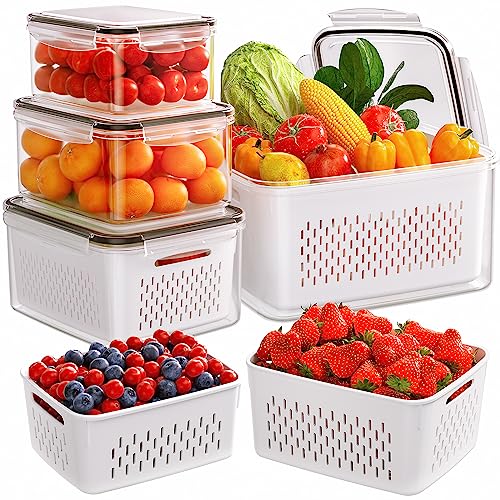
My Review: I absolutely love these 5-pack fruit storage containers. They completely exceeded my expectations! I was truly surprised at how long they kept my produce fresh, especially delicate items like berries and lettuce that usually spoil quickly. The removable colanders are super convenient for rinsing and draining right in the container, and the leakproof lids make fridge organization a breeze. I was so impressed with how well they worked, I went ahead and bought three packs! These have definitely become a go-to in my kitchen for keeping fruits, veggies, and even prepped meats fresher for longer.
Prepping Tips Recap
These tried-and-true tips will make the cleaning process smoother, safer, and more effective, especially if you're new to prepping hearty leafy greens like collards. Also, Cook's Notebook is your Cooking Tips Resource Guide. Become a better home cook with tips to help you cook more efficiently.
1. Soak, Don't Just Rinse
A quick pass under the faucet might work for a pre-washed salad mix, but it's not enough for collard greens. These thick, textured leaves grow low to the ground and are known for trapping sand, grit, and other surprises in all the folds and creases, especially along the prominent veins.
Soaking the greens in a bowl of cold water (or a clean sink) for a few minutes lets the dirt loosen naturally. Swish gently, then lift the leaves out so the grit settles to the bottom. Repeat 2-3 times for best results.
2. No Need to Add Vinegar or Salt (Unless You Want To)
You might hear folks swear by white vinegar or apple cider vinegar in their soak water, and while that can help remove surface bacteria or encourage tiny bugs to float out, it's not mandatory. In most cases, cold, clean water alone is enough to give your greens a proper rinse.
If you do add vinegar, keep it light (just a splash), and rinse thoroughly afterward to avoid any lingering acidity on your fresh greens.
3. Wash Before Trimming
Don't trim first; wash the full leaves while they're intact. Handling the full leaf makes the wash phase easier to manage. Once the greens are cut or torn, they can tangle, making it harder to swish them clean.
Washing first also prevents water from pooling inside sliced edges, which can affect both the drying process and storage later. Trim the tough stem and slice your collard leaves after they're dry and dirt-free. It's not only more effective, but it's safer for your fingers when working on a damp cutting board with a sharp knife.
Frequently Asked Questions
Here is a list of common questions I have answered. If you have any questions, please write them in the comments below.
Yes. Even if collard greens look clean or are labeled "pre-washed," they should still be washed thoroughly before cooking. Because collard greens grow close to the ground, dirt, grit, and tiny insects can become trapped inside the folds and thick stems of the leaves.
Wash collard greens at least 2 to 3 times, or until the water runs clear. Swishing the leaves in fresh cold water multiple times helps remove hidden sand and debris more effectively than a quick rinse.
Yes. Once washed and fully dried, collard greens can be stored in the refrigerator for up to 5 days. Wrap the leaves loosely in a moist paper towel, then place them in a resealable bag or an airtight container.
Adding vinegar is optional, but some home cooks use a splash of white vinegar or apple cider vinegar during the first soak to help loosen dirt and remove surface bacteria. Always rinse the greens again with clean water afterward.
Yes. A salad spinner is a great way to remove excess moisture from collard greens after washing. Dry leaves are easier to trim, safer to slice, and store better in the refrigerator.
Final Thoughts on Cleaning Collard Greens
Learning how to properly clean collard greens is one of the most important first steps to making flavorful, grit-free collard greens at home. While the process may seem intimidating at first, a few good rinses, proper drying, and a little patience can completely transform the texture and quality of your final dish.
Whether you grew up eating Southern-style collard greens or are learning to cook them for the very first time, knowing how to wash and prep leafy greens confidently is a kitchen skill that carries into so many other recipes and cuisines.
Once your greens are fully cleaned, you can move on to trimming, storing, and cooking them in soups, stews, braises, and comforting side dishes.
More Cooking Tips and Tutorials
If you found this tutorial helpful, you'll love my Cook's Notebook collection. From knife skills and flavor bases to time-saving tricks and essential equipment guides, this section is packed with chef-tested lessons to help you cook with confidence.
- How to Tell When Fish Is Done Cooking - Home Cooks Guide
- How to Store Fresh Herbs Properly to Last Longer
- Spring Seasonal Produce Guide: What to Cook Fresh This Season
- Best Food Audiobooks for Chefs & Home Cooks


Trending Recipes
Ready to cook them? Try them in soups, stews, or traditional Southern-style collard greens recipes. Stay updated on the best recipes perfect for the season and your belly!
- Pasta and Lentil Soup Recipe (Italian Style)
- West African Peanut Stew with Chicken and Collard Greens
- Creamy Curry Chicken Gnocchi Soup | Caribbean Style
- Creamy Chicken Corn Chowder with Dumplings | Dairy-Free




Subscribe to my YouTube Channel
SUBSCRIBE: 👈To my YouTube Channel to Get Notifications of New Videos.


Chef Maika Frederic-Liebman
Chef and Educator
Haitian-American chef and educator Maika Frederic blends bold flavors with approachable recipes. With a background in professional kitchens, classrooms, and children's therapy, she brings a thoughtful, inclusive touch to every dish as a trained chef, former teacher, and technician. Through her platform, Just Maika Cooking, she shares diverse meals and practical tips to empower home cooks of all ages and levels.
Have a Comment or Question?
If you have a question or comment about this post, please post it below. You will definitely get a quick response. It also helps our other readers to stay informed. Thanks!


Leave a Reply