

This Kimchi Fried Rice Recipe is a simple Korean base dish made with day-old rice, a cup of kimchi, and pantry staples, all in minutes for bold, tangy flavors. It's versatile enough to enjoy as a light meal or build into a satisfying bowl with pork belly, tofu, or a fried egg on top.
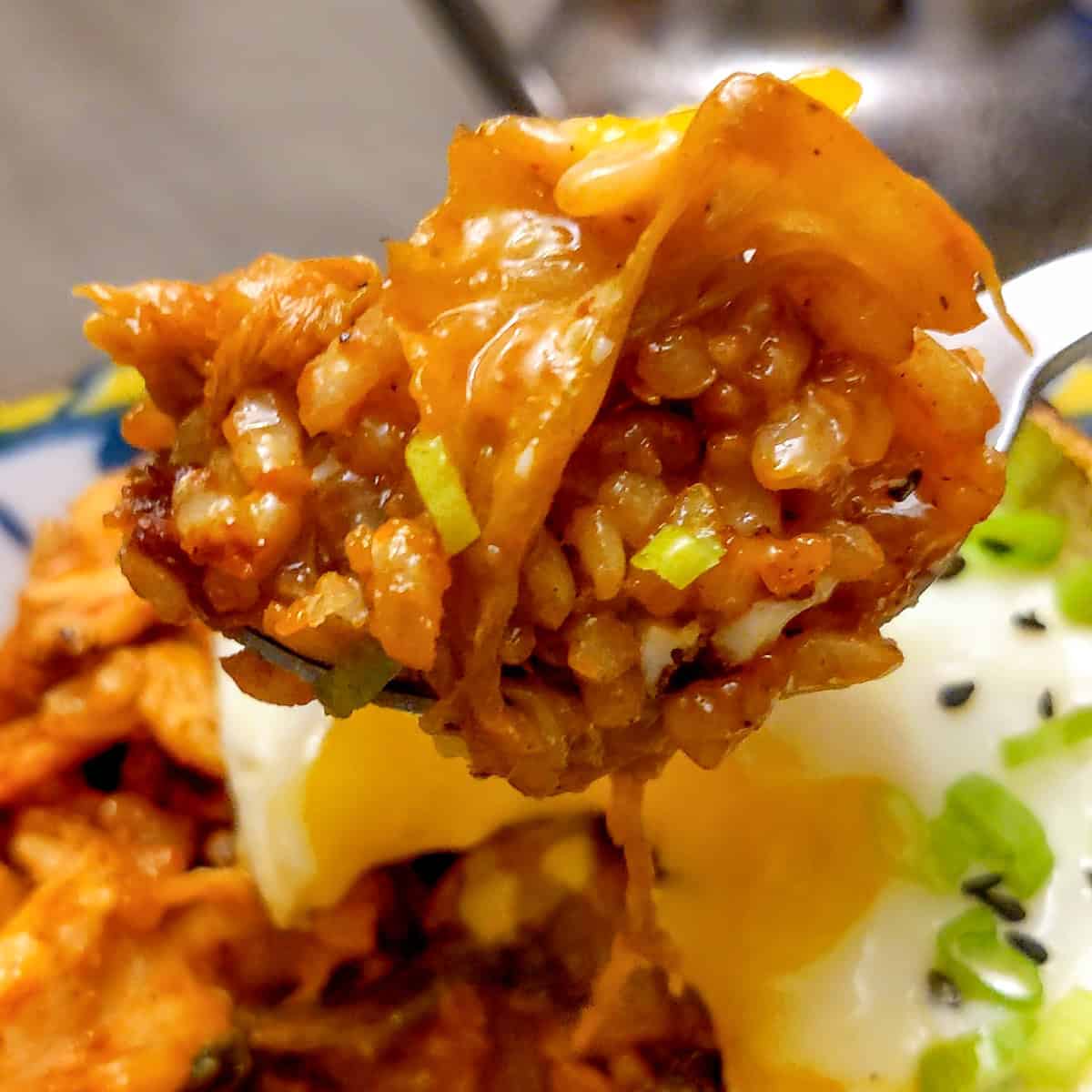
Table of Contents
Jump to:
- Homemade Kimchi Rice!
- Why You'll Love This Recipe
- Note From Chef Maika
- Ingredients with Steps
- Culinary Glossary
- Instructions with Pictures
- Equipment List
- Kitchen Must-Haves Reviews
- Storage and Reheating
- Substitutions
- Variations
- 5 Quick Cooking Tips
- Frequently Asked Questions
- More Korean Recipes
- Cooking Tips and Tutorials
- 📖 Recipe
- Have a Comment or Question?
Homemade Kimchi Rice!
If you have leftover rice and a jar of well-fermented kimchi in the fridge, you're already halfway to dinner. This Kimchi Fried Rice Recipe is a simple Korean base that comes together fast, with bold fermented flavor and just the right balance of savory, tangy, and spicy.
It's perfect as-is for a light meal, or you can build it up with protein, add a fried egg, sautéed chicken, ground turkey, tofu, or even Spam for a satisfying one-pan bowl. It's that easy weeknight cooking we love, especially when lunch needs to happen fast, and you want real Korean flavor without fuss.
Why You'll Love This Recipe
- Robust & Zesty: Balanced savory heat from gochujang or Korean chili pepper flakes, with enough kimchi juice for that signature tang.
- Convenience: A quick 10-minute meal using day-old short-grain rice and well-fermented kimchi.
- A great way to use leftover rice and reduce waste.
- Pantry-friendly if you keep soy sauce, sesame oil, sesame seeds, and green onions stocked.
- Customizable: Add chicken, pork belly, ground meat, tofu, or keep it vegetarian with vegan kimchi.
- Works as a main dish or a side dish with Korean BBQ, soup, or grilled meats.

Looking for authentic Korean cuisine? Check out Stella-n-Spice ↗ and My Korean Kitchen ↗.
Note From Chef Maika
Whenever I have leftover short-grain rice and kimchi in the fridge, I make fried kimchi rice and toss in whatever protein I have on hand, from chicken or ground turkey to tofu or pork belly.
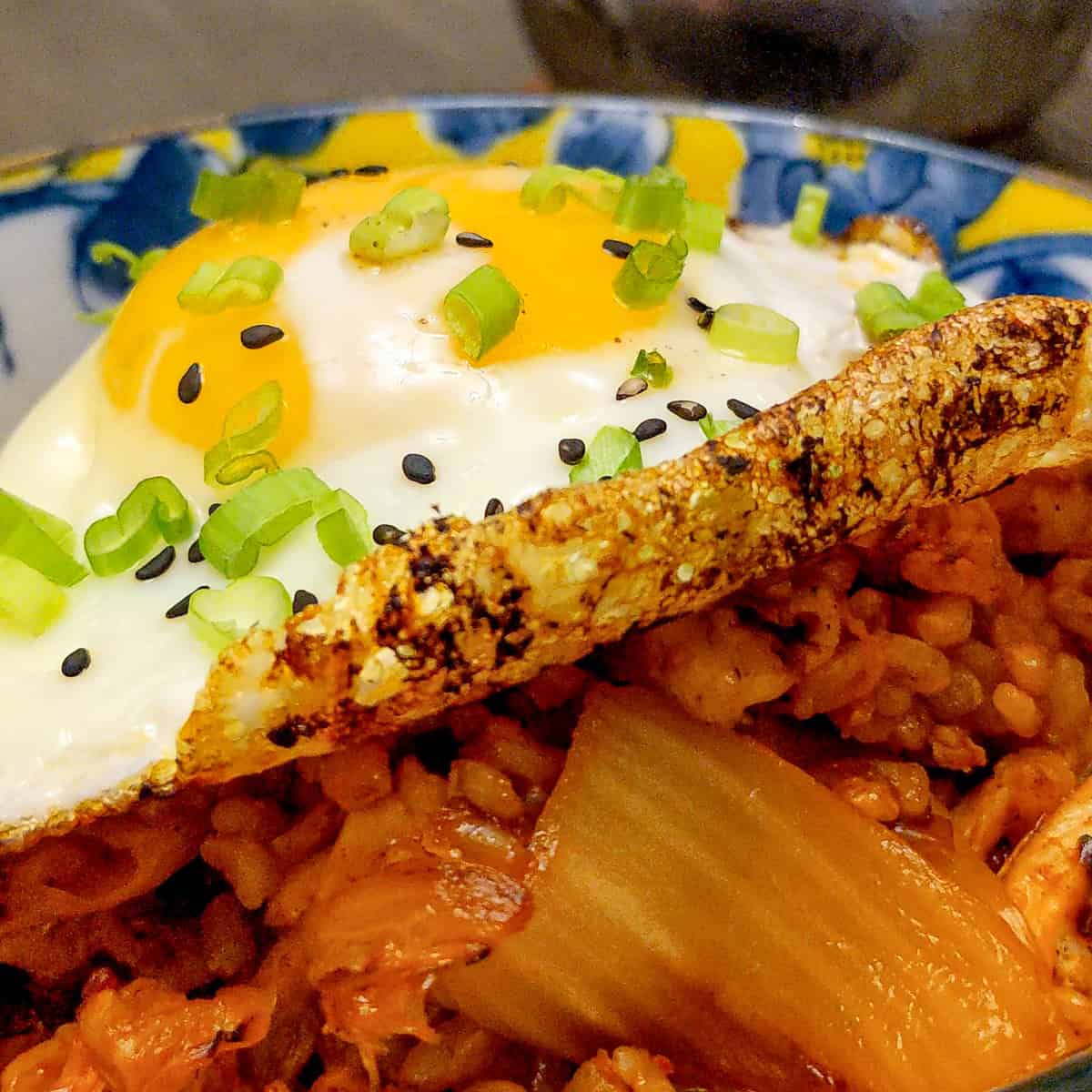
Since I often cook global cuisine, my pantry is stocked with Korean essentials like gochujang, soy sauce, sesame oil, sesame seeds, and sometimes Korean corn syrup. When eggs are at home, a crispy fried egg on top takes this dish to the next level.
Recommended Reads
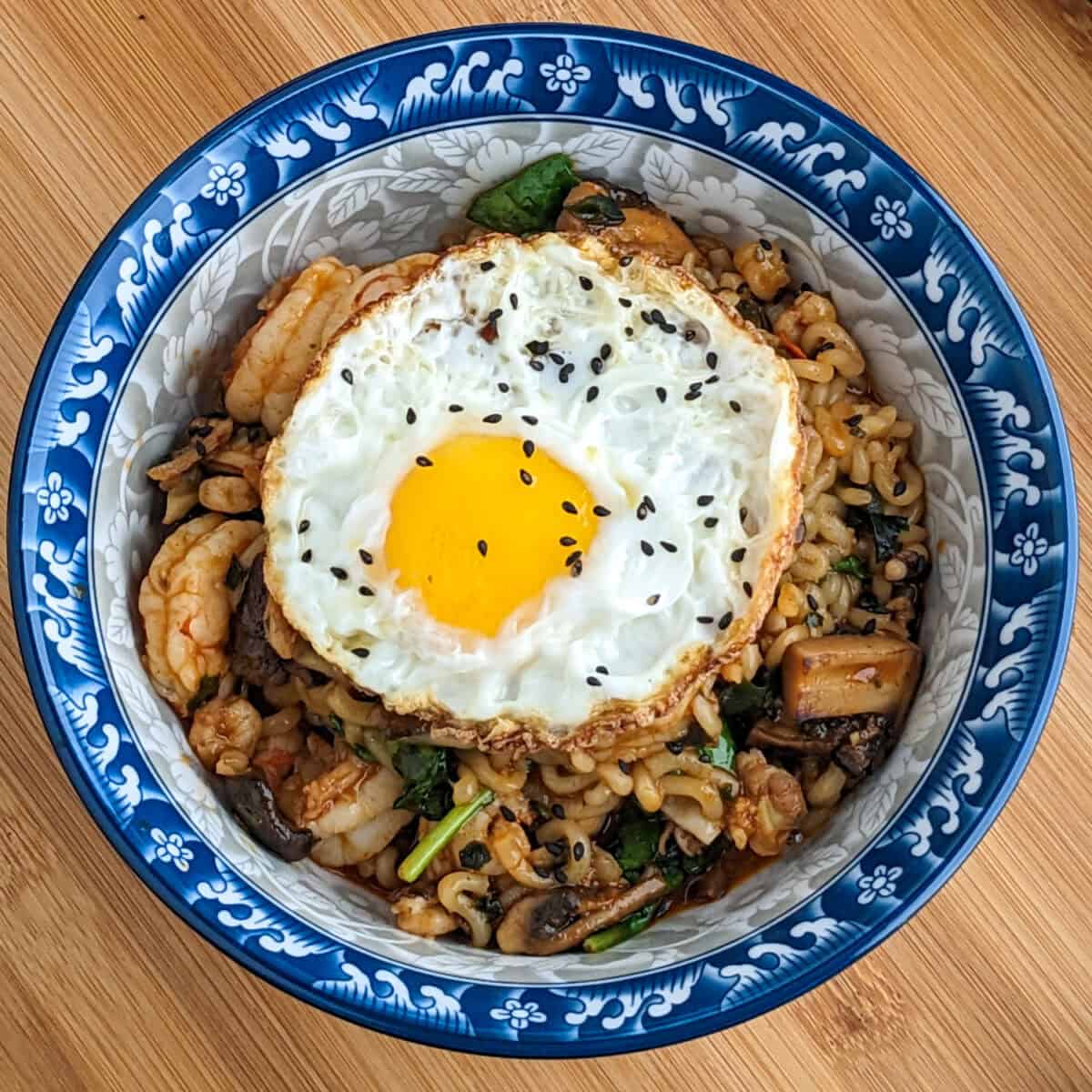
- Sweet and Spicy Seafood Neoguri with Mushrooms, Spinach, and Fried Egg
- Surprisingly High-Protein Meals Using Beans or Ground Turkey!
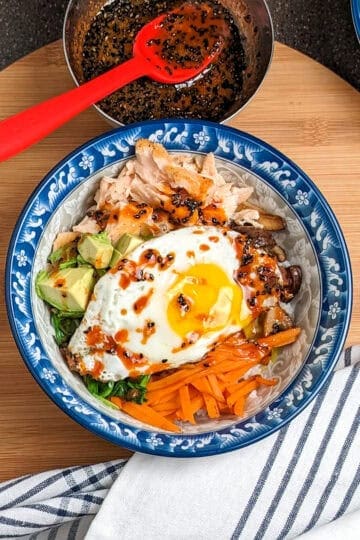
- Sesame Chili Salmon Rice Bowl
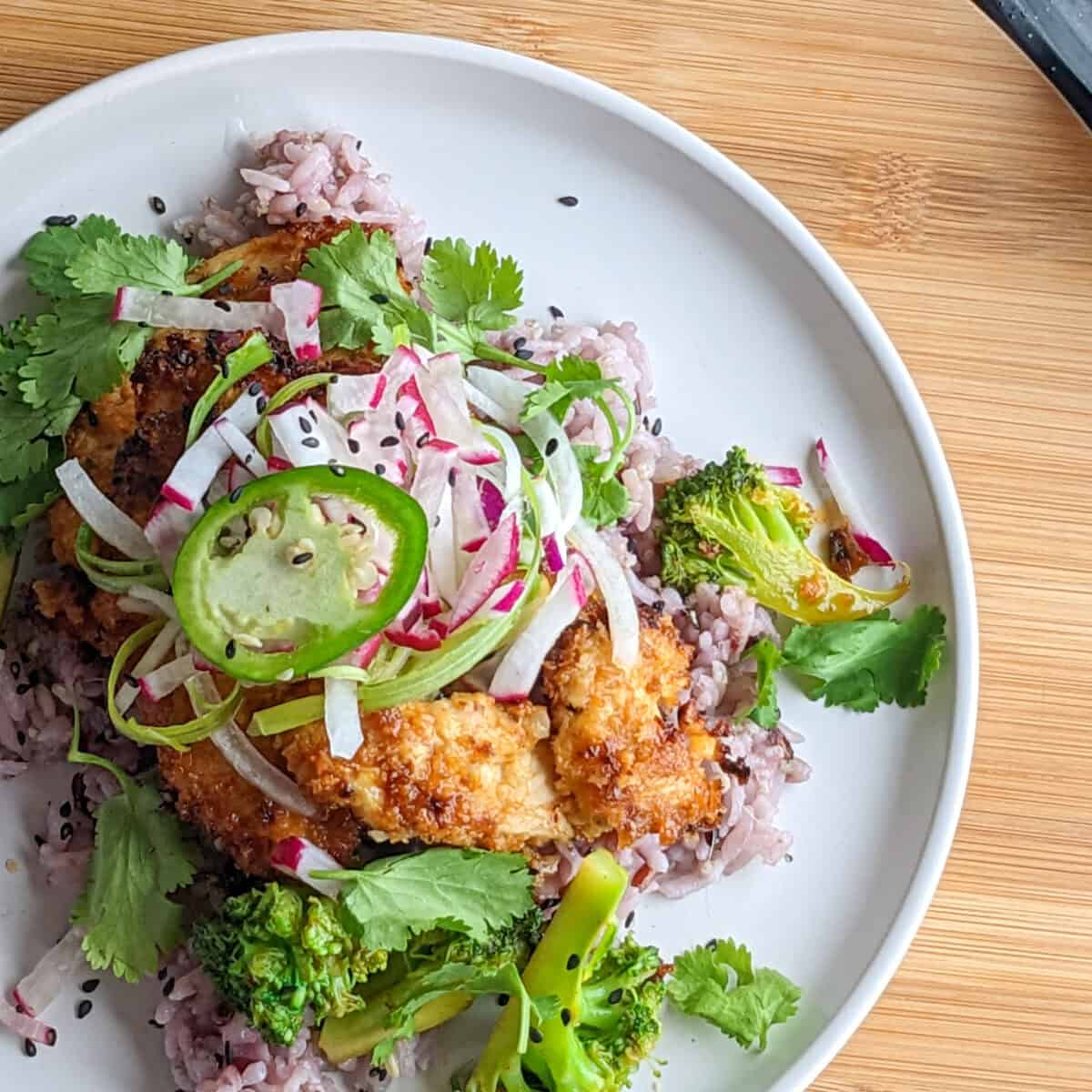
- Sweet Spicy Sticky Gochujang Chicken Stir Fry
- Korean-Style Beef Short Ribs with Smashed Sweet Potato and Hibachi-Style Vegetables
Ingredients with Steps
In a hot skillet, heat neutral oil, then sauté the onion and the white parts of the scallion until fragrant. Add the kimchi and cook until softened and slightly caramelized.
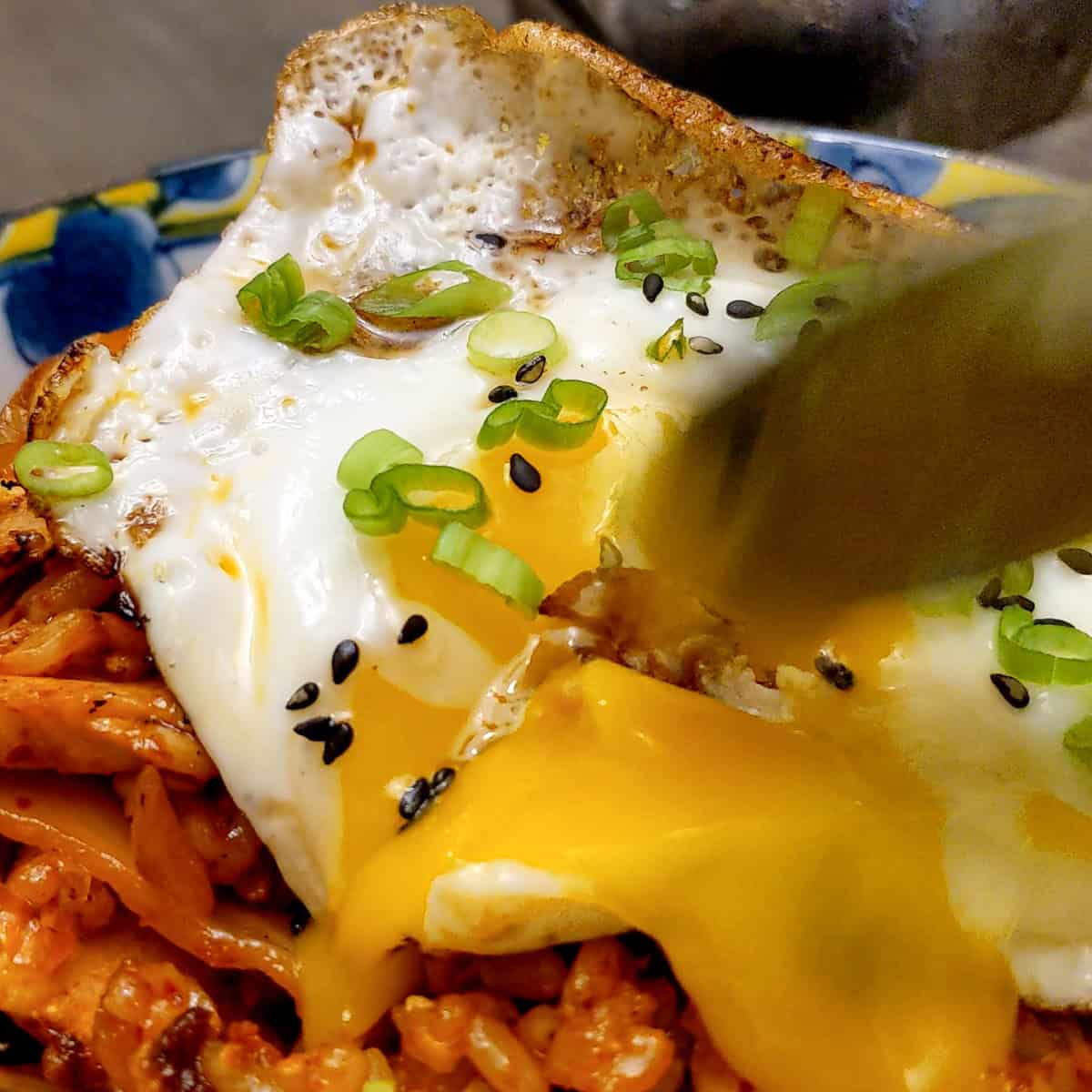
Stir in cold short-grain rice, breaking up clumps as it heats, then season with gochujang, soy sauce, a pinch of sugar, and a splash of kimchi juice. Finish with a drizzle of toasted sesame oil, top with a fried egg, and garnish with green scallions and sesame seeds for a rich, savory bowl.
Culinary Glossary
This section provides concise definitions of key ingredients and techniques to enhance understanding and improve cooking skills related to this post. Find More Terms: Culinary Glossary.
Ingredients
- Kimchi: Fermented napa cabbage or vegetables seasoned with chili, garlic, and salt that brings tangy, spicy depth.
- Gochujang: Korean fermented chili paste made from soybeans and red pepper that adds heat, sweetness, and umami.
- Gochugaru: Korean chili pepper flakes used to season dishes and adjust spice levels.
- Kimchi Juice: The brine from fermented kimchi that boosts flavor and adds tangy acidity to dishes.
- Neutral Oil: Flavorless oil, such as canola or avocado, is ideal for stir-frying without overpowering ingredients.
- Toasted Sesame Oil: Nutty, aromatic oil often added at the end of cooking to enhance flavor.
Sesame Oil vs. Toasted Sesame Oil
Sesame oil is made from raw sesame seeds and has a light, neutral flavor best suited for cooking and stir-frying. Toasted sesame oil, on the other hand, is made from roasted seeds, giving it a deeper, nutty aroma and rich flavor, and is typically added at the end of cooking or used as a finishing oil rather than for high-heat cooking. Learn more about Heart Healthy, High Smoke Point Oils for Cooking.
Techniques
- Stir-Fry: A quick-cooking method that uses high heat and constant movement to cook food evenly. Also, check out Quick and Fresh Stir-Fry Recipes for Spring and Summer.
- Caramelize: To cook ingredients until they brown slightly, intensifying sweetness and flavor.
- Aromatics: Flavor-building ingredients such as onion and scallion that become fragrant when heated.
- Day-Old Rice: Leftover cold rice with reduced moisture that fries better and doesn't clump like fresh rice.
Instructions with Pictures
Follow the instructions and cooking tips below using the step-by-step picture guide.
First! Gather all ingredients: cold rice, kimchi, kimchi juice, onion, scallion, soy sauce, sugar, gochujang, sesame oil, and eggs. If you have any protein (except for eggs), you can cook it first before making the rice.
Next! Heat neutral oil in a skillet or wok over medium-high heat. Next, add the chopped onion and white parts of the scallion; sauté until fragrant and slightly softened.

Stir in the chopped kimchi and cook until it begins to caramelize and deepen in color. Then, add the cold day-old rice, breaking up clumps with your spatula as it heats through.

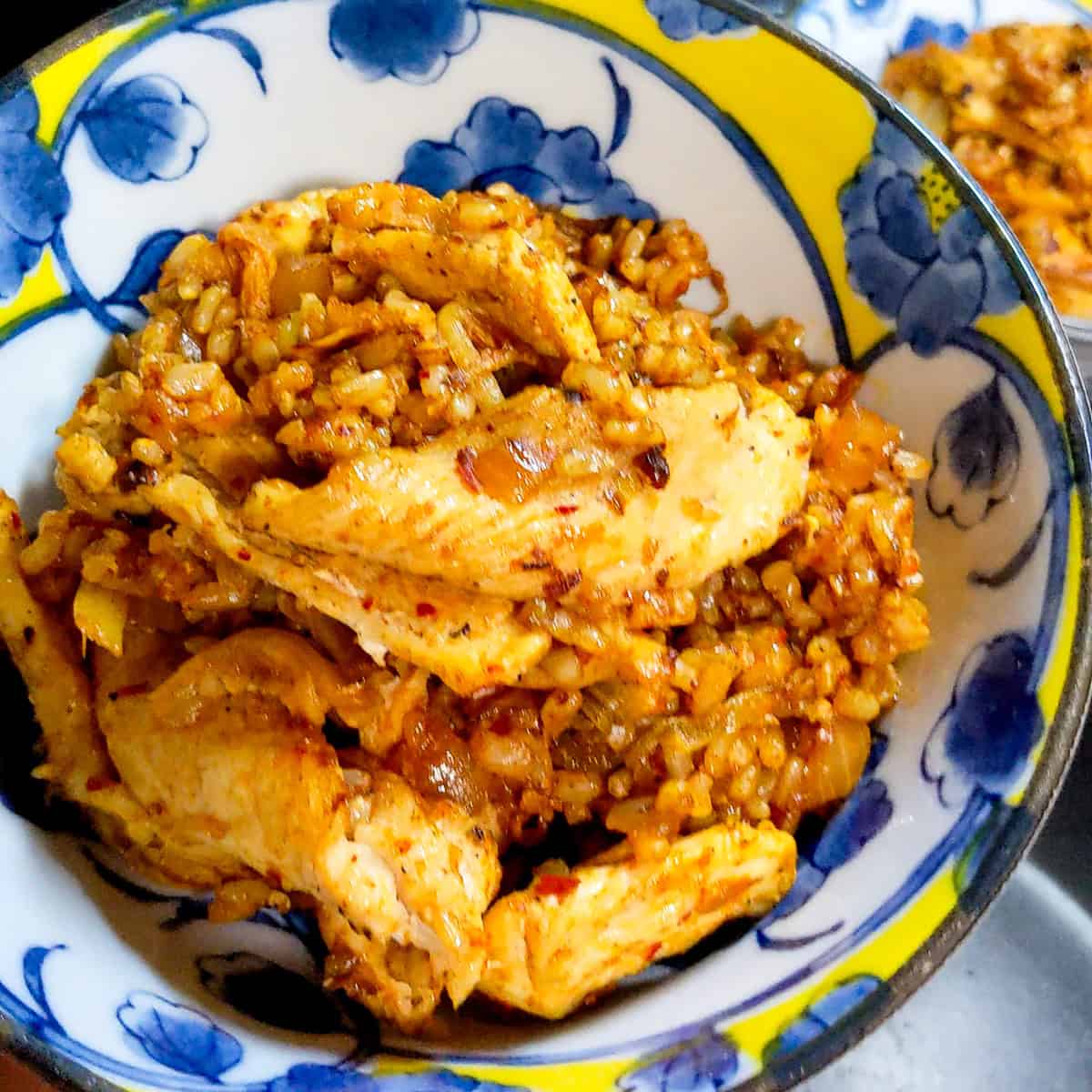
Different Version: This is a ground turkey sausage method that was added to the rice mixture.
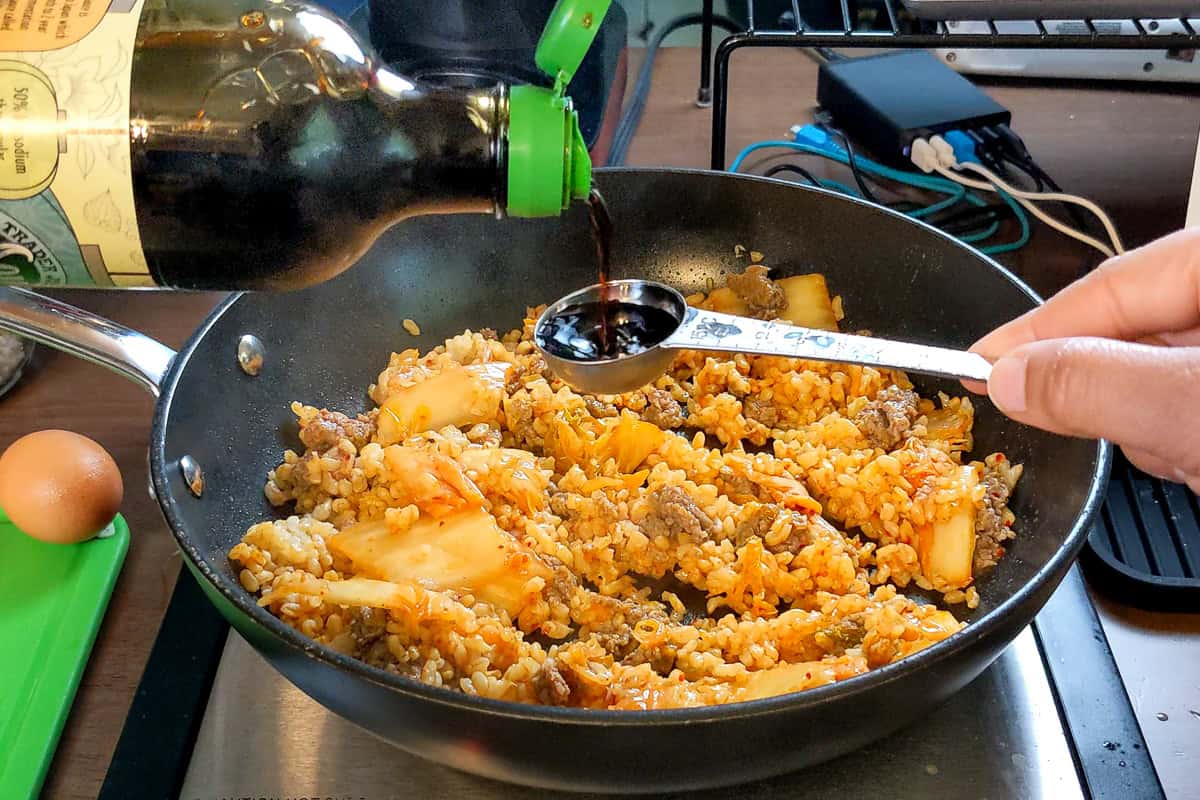
Season with soy sauce, gochujang (or gochugaru), sugar, and a splash of kimchi juice.
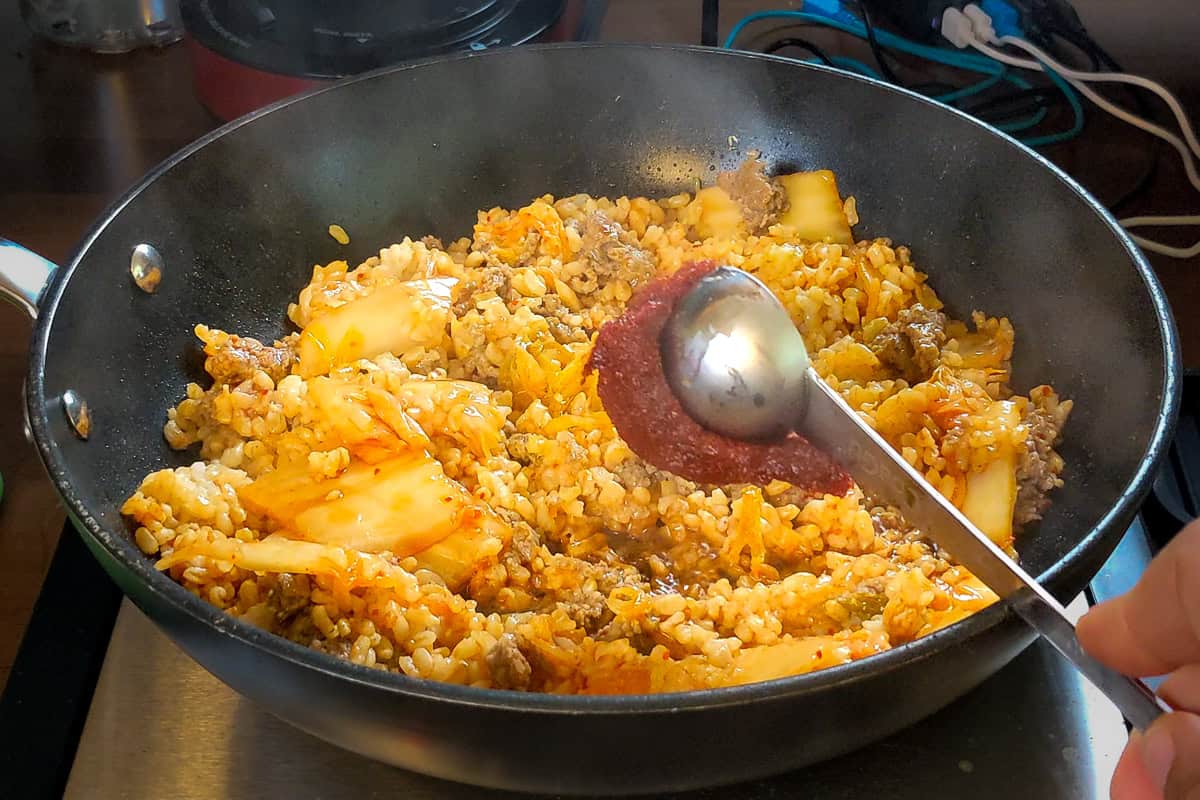
Mix well until the rice is evenly coated.

Create a hole to fry the eggs.
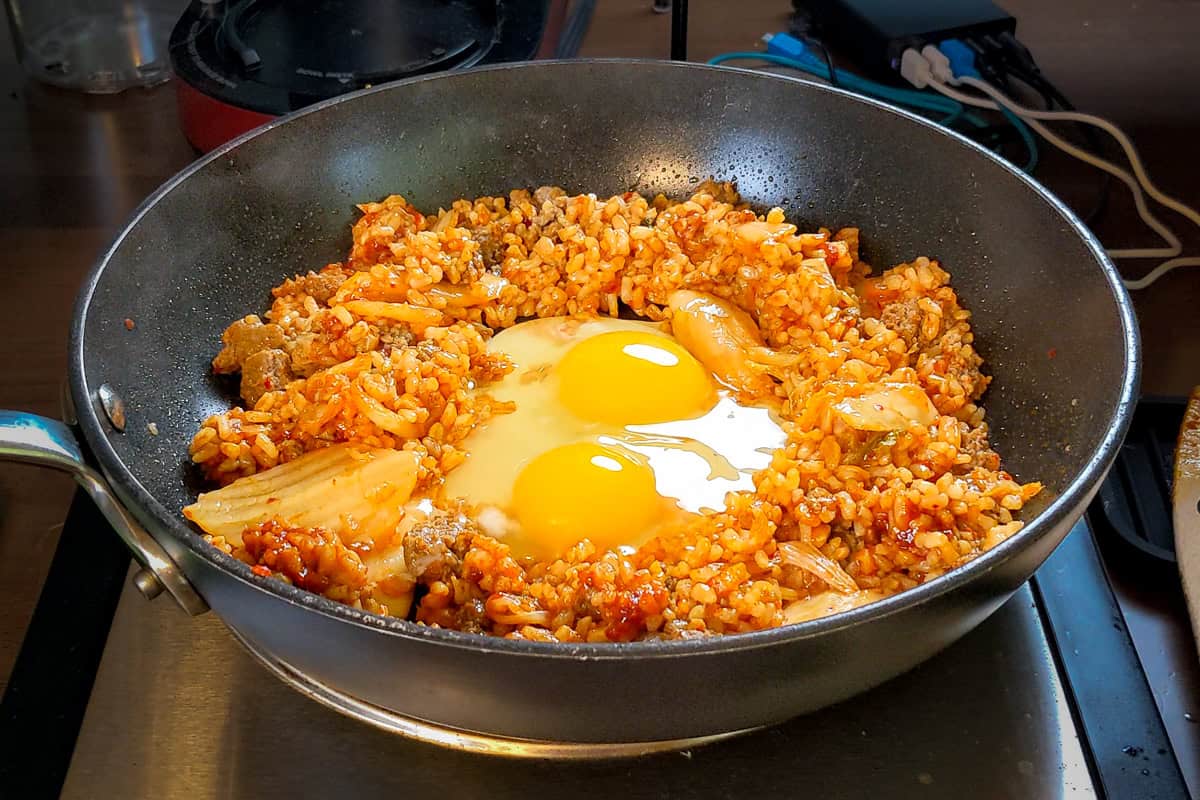
Crack and add the eggs.
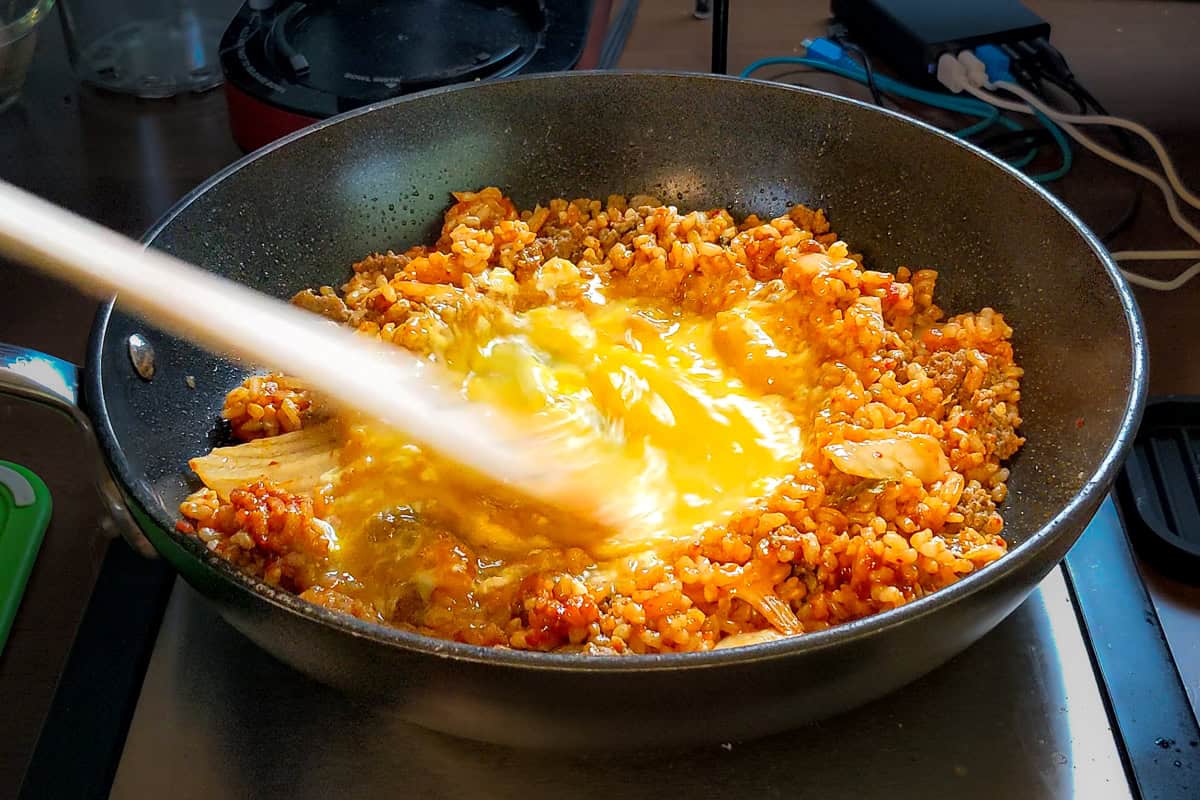
Scramble the eggs.
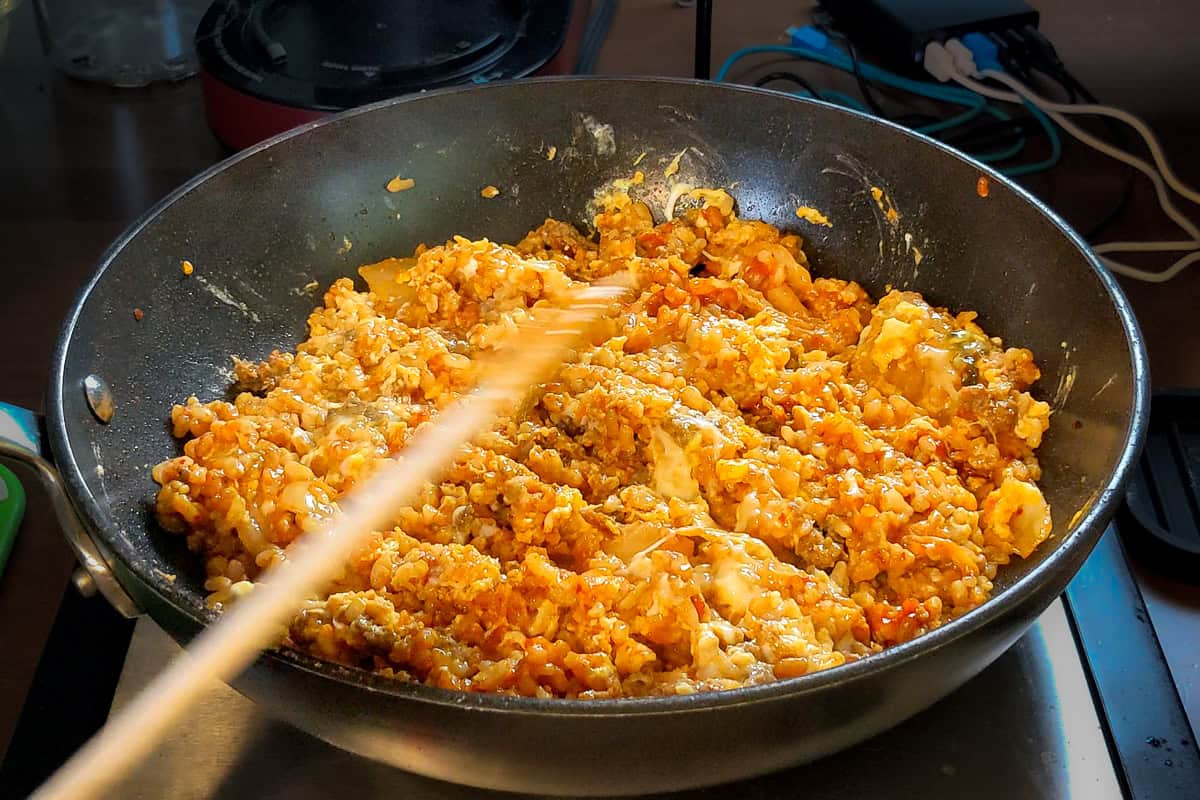
Combine with the rice.
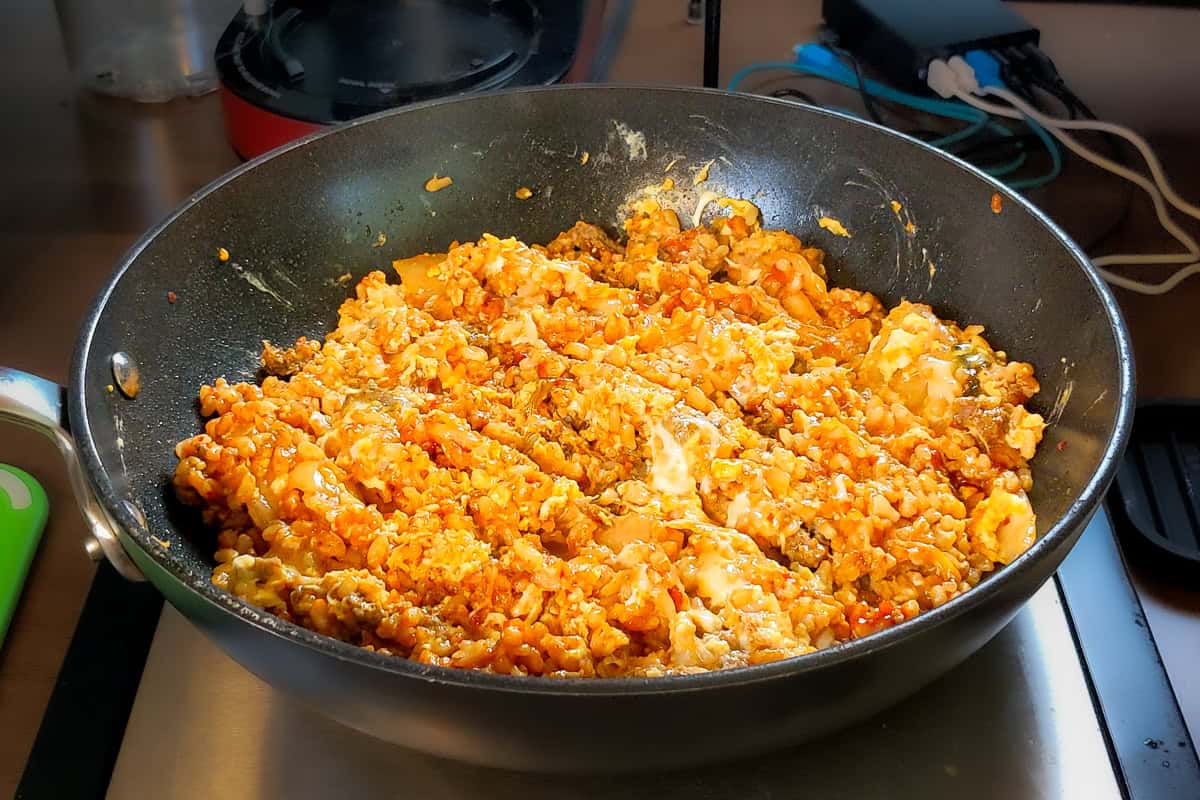
Let it sit to create a crisp layer of rice.
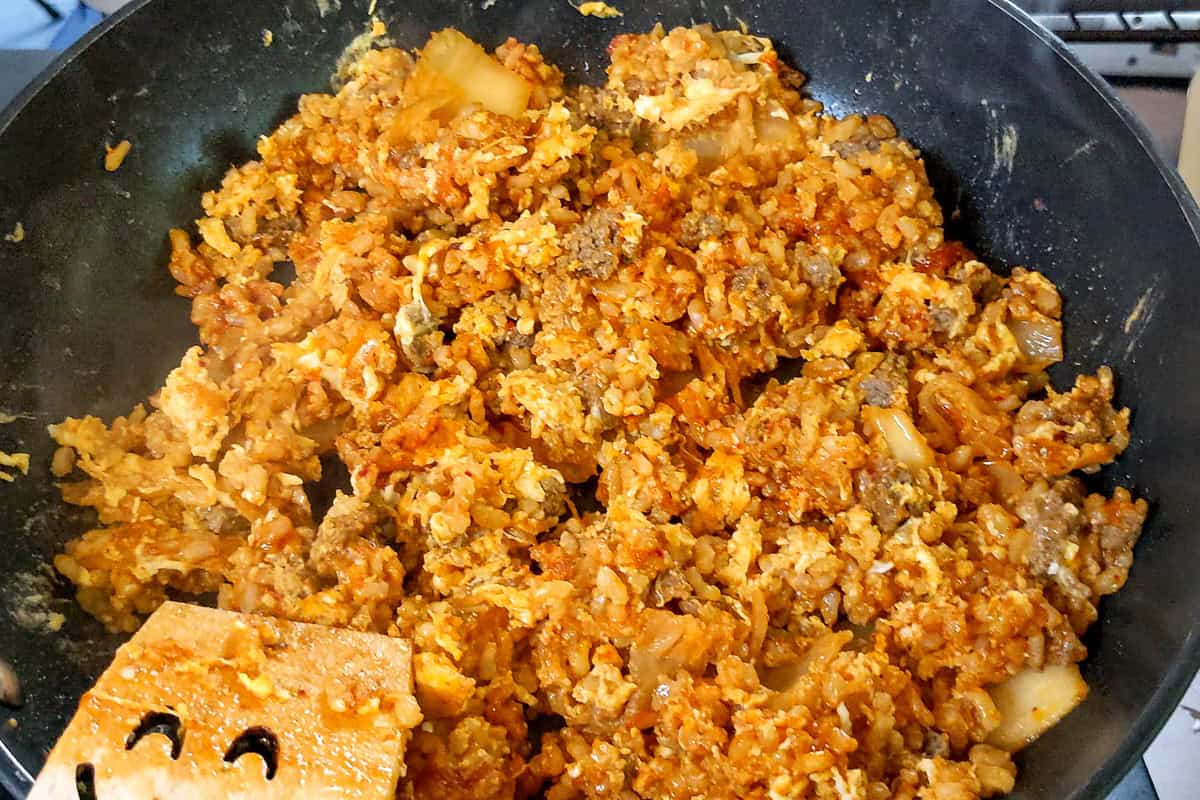
Stir-fry until hot and well combined
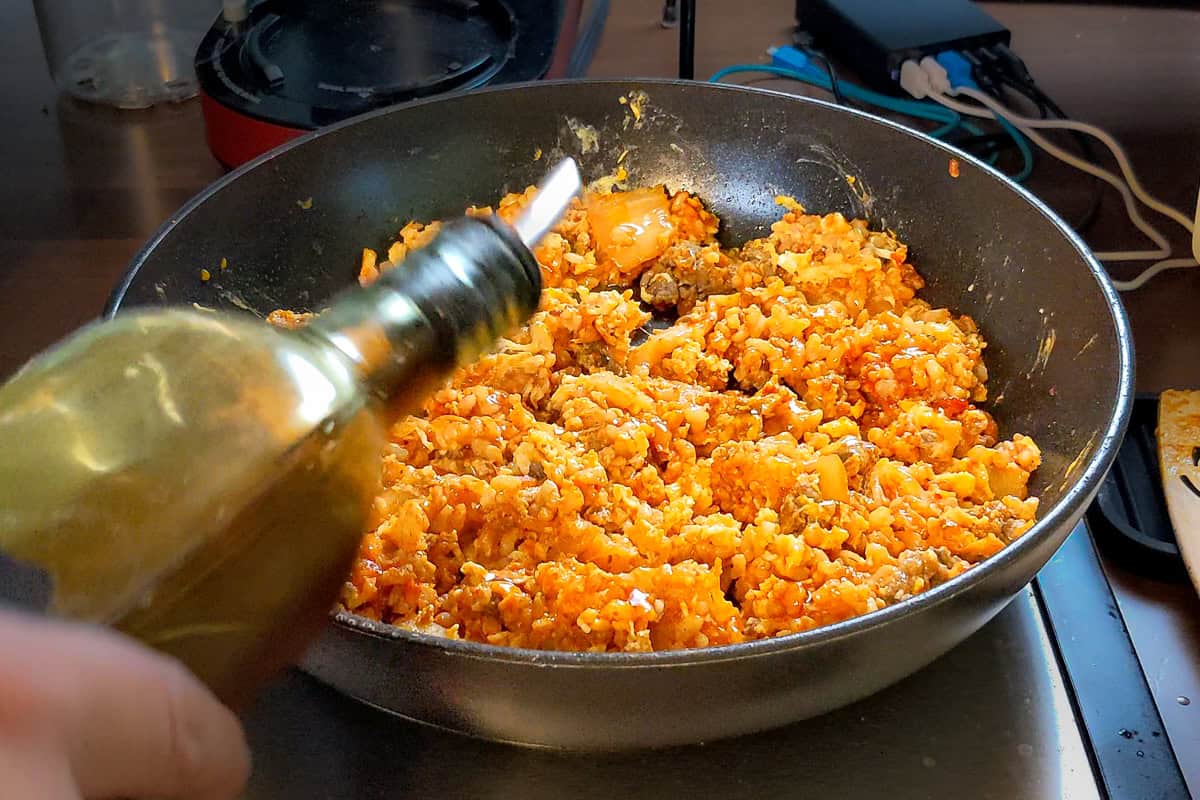
Then drizzle with sesame oil to finish.
For Texture and Garnish
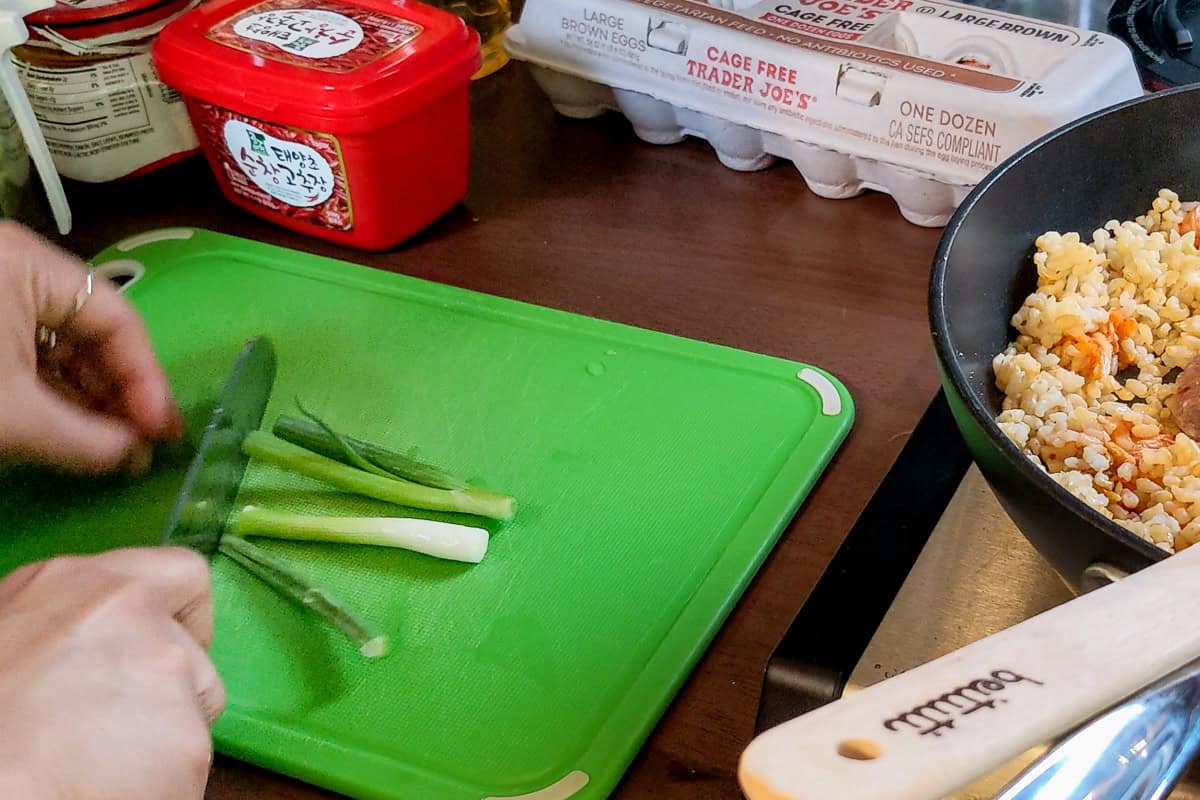
For texture, add some scallions.
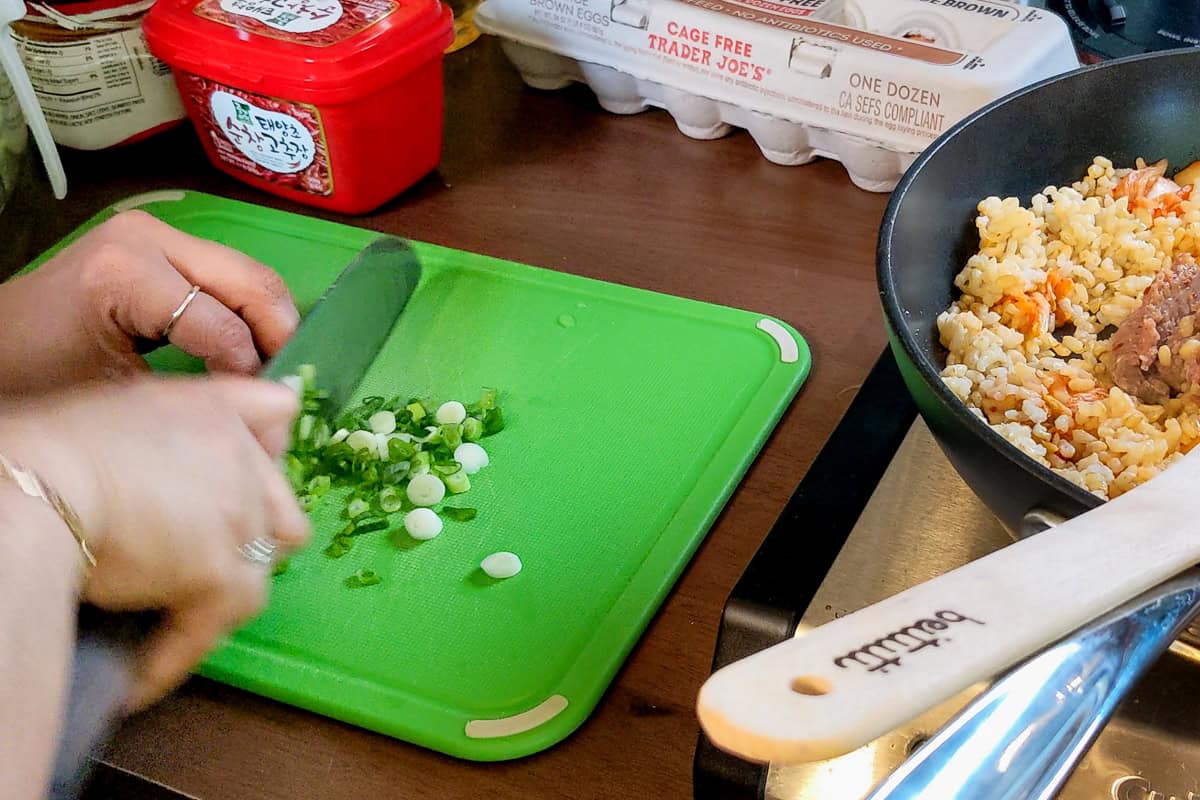
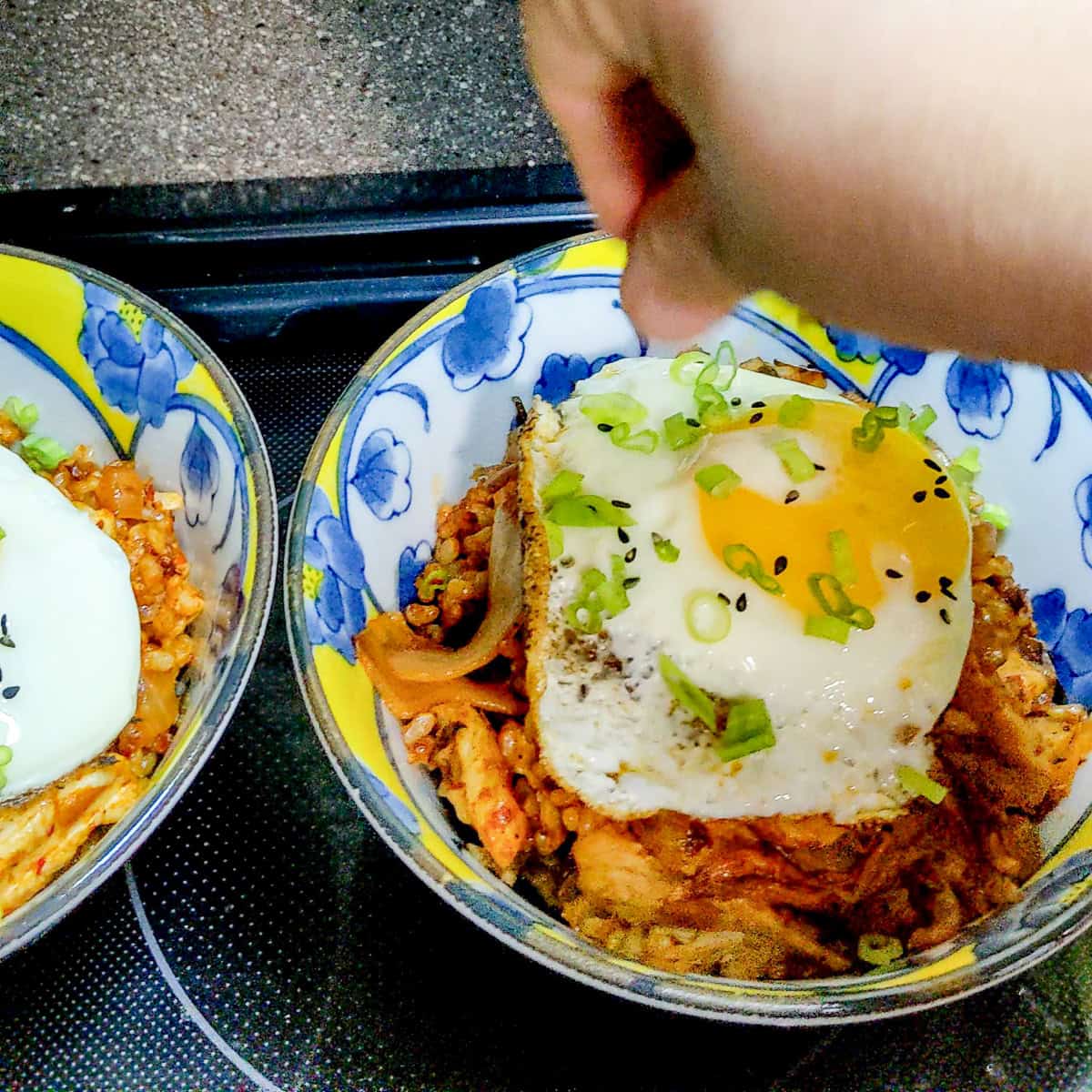
Garnish with the chopped green scallions and sesame seeds before serving.
Equipment List
Here's what you'll need to make this recipe with ease:
- Large skillet or Wok: for evenly stir-frying the kimchi and rice.
- Cutting Board: to chop onions, scallions, and kimchi.
- Chef's Knife: for cutting aromatics and kimchi into bite-sized pieces.
- Heatproof Spatula or wooden spoon: to stir-fry and break up clumps of rice.
- Small Bowl (optional): to crack and whisk eggs before adding, if preferred.
- Measuring Spoons: for soy sauce, gochujang, sesame oil, and sugar.
Kitchen Must-Haves Reviews
Find a collection of my reviews of kitchen equipment that I have purchased or recommend. Kitchen Must-Haves - Find other tools I use here.
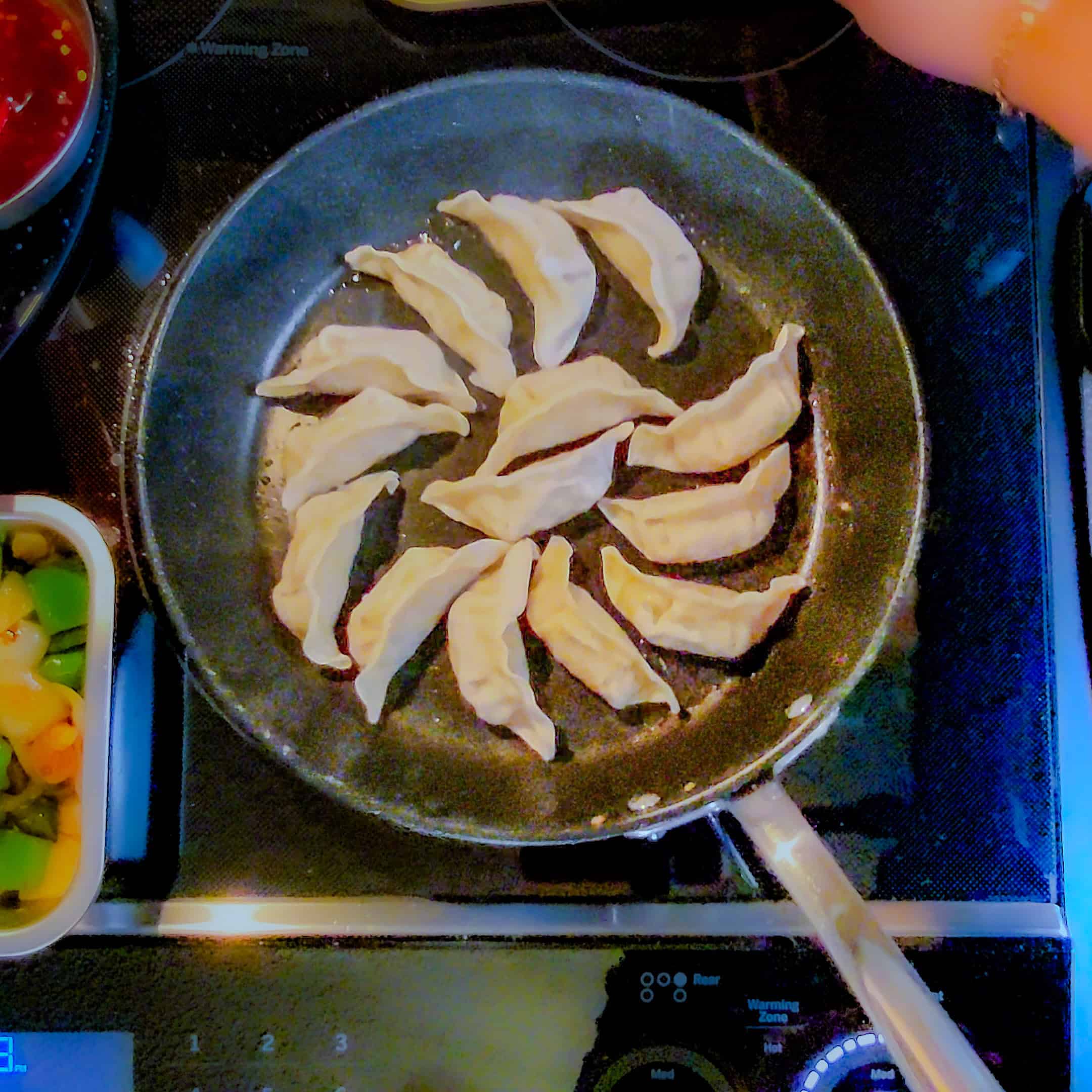
My Review: I absolutely love my All-Clad HA1 Hard Anodized Nonstick Fry Pans! I have two essential sizes, and they make cooking so much easier. The larger pan is perfect for dishes like chicken cutlets or stir-fries, while the smaller one is ideal for delicate tasks like making sauces, frying potstickers, or whipping up egg dishes. I’ve been a loyal All-Clad fan for years. They’ve been my go-to brand since my time working in commercial kitchens. Their durability and performance are unmatched, and I love that they’re USA-made and have been around for so long. These pans are no exception; they heat evenly, clean up effortlessly, and are incredibly reliable.
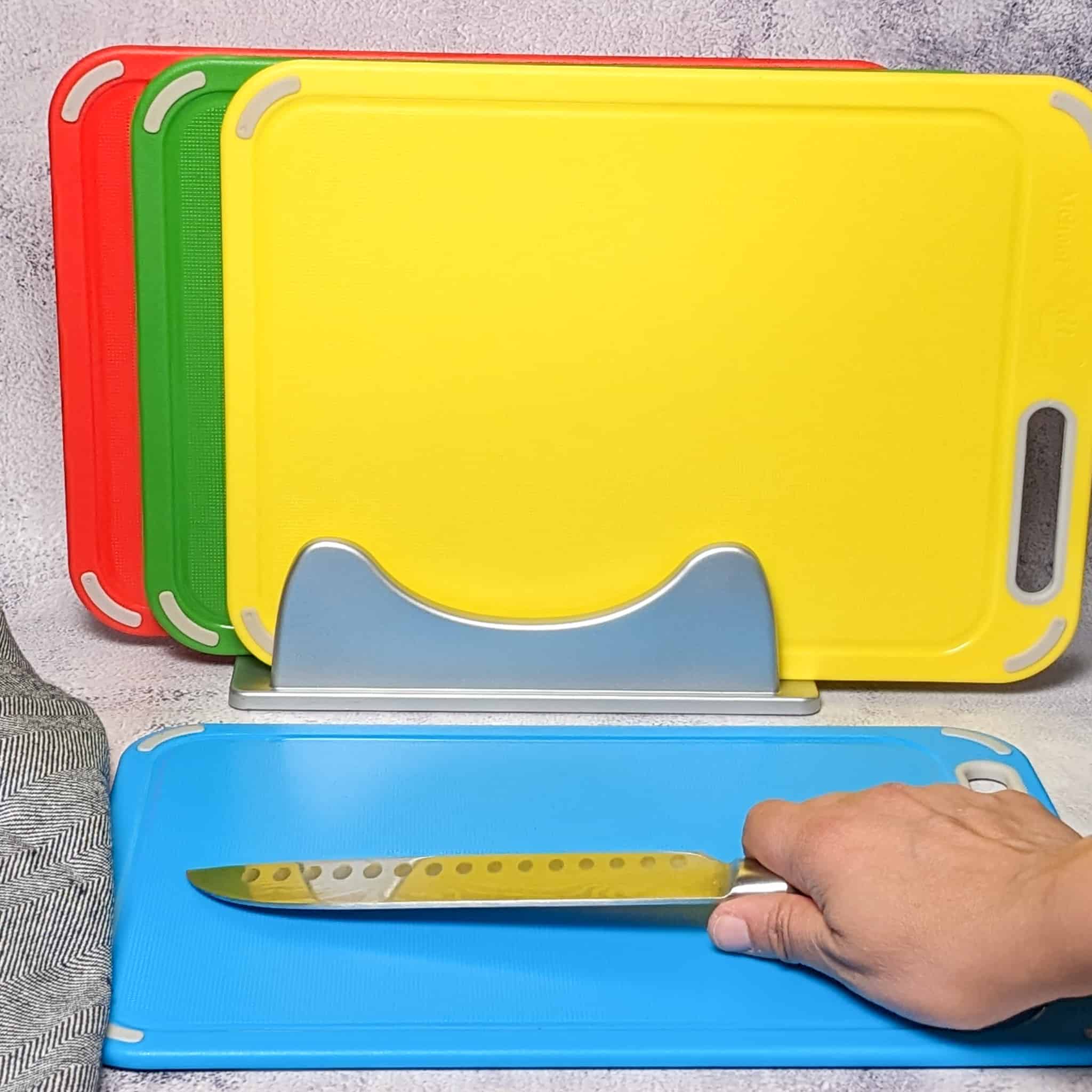
My Review: I absolutely love this Plastic Cutting Board Set of 4 with a Storage Stand! The color-coded boards are a lifesaver for preventing cross-contamination, especially when I’m switching between meats and veggies. The plastic is super sturdy, so I don’t have to worry about it flexing while I’m chopping. What really stands out for me is how easy they are to use after chopping. I slide everything straight into the pot, which keeps my kitchen clean and saves time. Cleanup is such a breeze, too; they go right into the dishwasher without any warping. Plus, the storage stand keeps everything neat and organized. These boards have made cooking so much easier and more enjoyable!
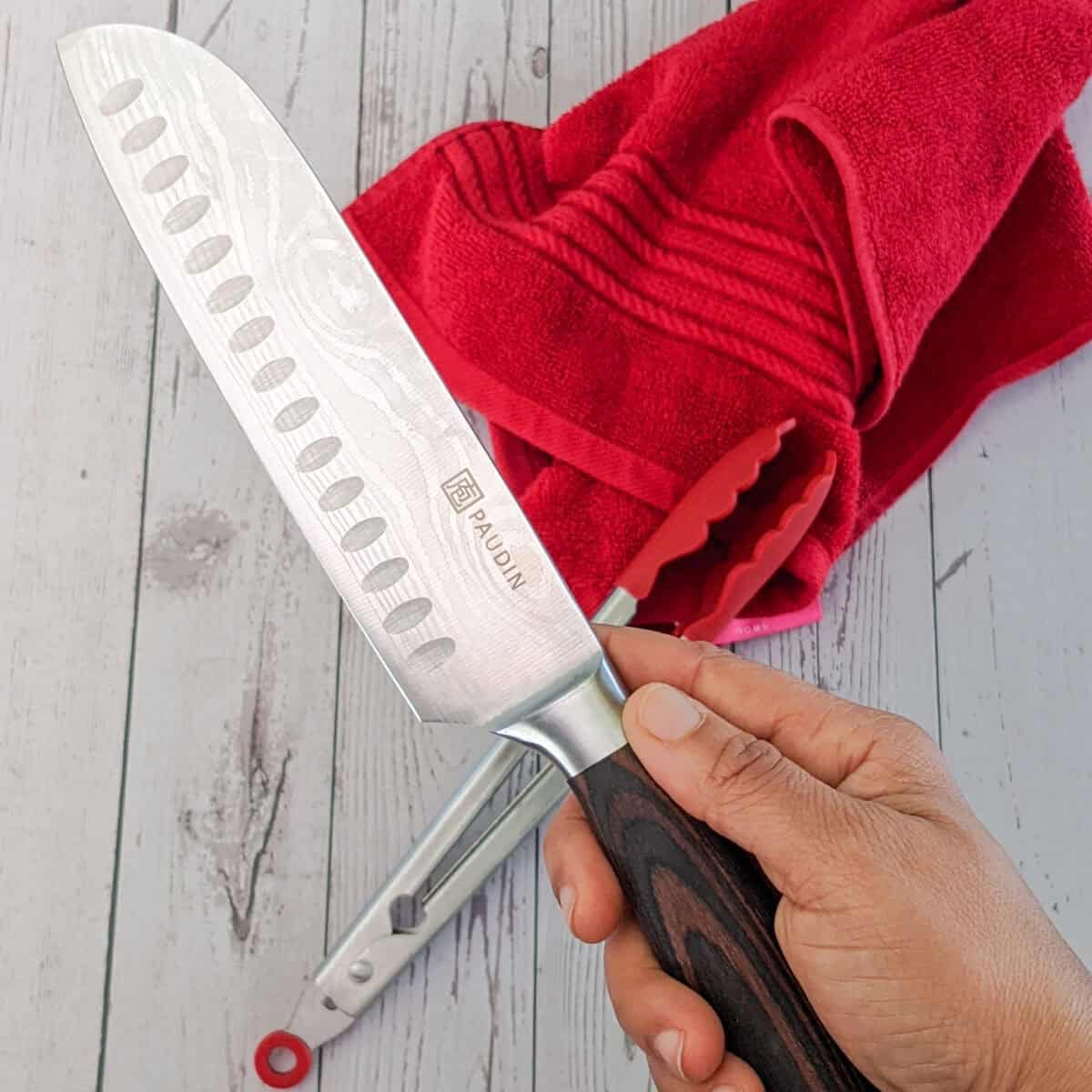
My Review: This knife is well-made. Super solid and multi-functional. It is made with high-carbon steel, so it will not rust. Slicing meat, like fish, is easier with the grooves. It doesn’t stick to the knife. The handle has an excellent grip and isn't heavy. For some background, a Santoku is a versatile Japanese kitchen knife characterized by its straight edge and "sheepsfoot" blade, designed for precise slicing, dicing, and chopping. Its name means "three virtues," referring to its ability to handle meat, fish, and vegetables efficiently, making it a staple in both professional and home kitchens.
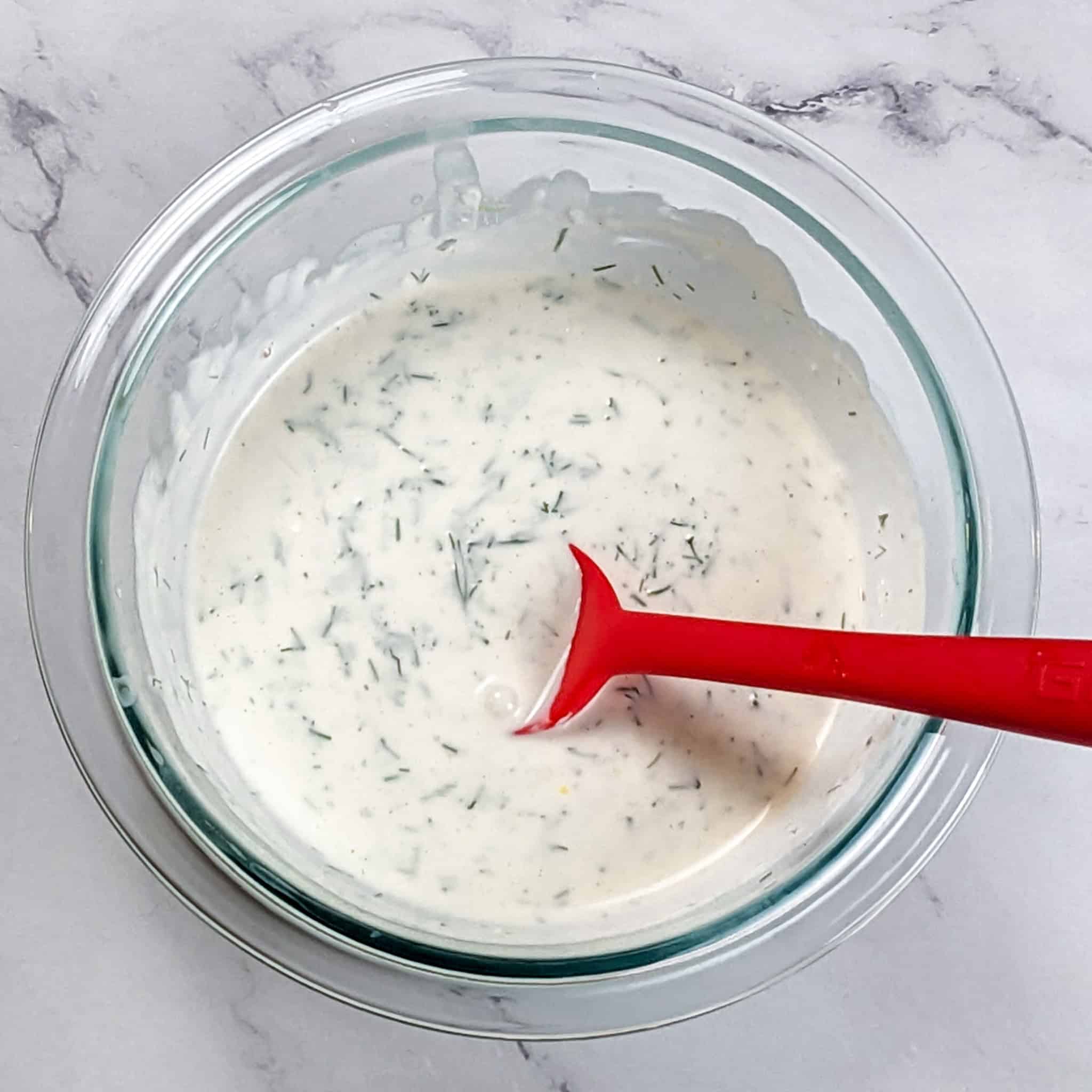
My Review: I love the clean, classic look of this Pyrex 3-piece glass mixing bowl set. It’s a staple in my kitchen. Pyrex is known for its durability, and these bowls definitely live up to that reputation. I use them for everything from mixing batters to storing leftovers, and their microwave-safe feature makes them super multifunctional. They’re also easy to clean and stack nicely in the cabinet. The only reason this isn’t a five-star for me is that I always have that little fear of breaking them when I’m using or storing them, even though they’re made to last.
My Review: If you're looking for the best versatile tool in the kitchen, the Korean Barbecue Shears are the perfect choice. These stainless steel scissors are built to last, durable, and ready to tackle raw and cooked foods with ease. Inspired by Koreans who use kitchen shears to cut scallions, pork belly, and meats over the pot or grill without a cutting board, I bought these for their practicality. They've become essential for portioning ribs, trimming meats, or prepping veggies, thanks to their sharp, long, serrated blades. If you haven’t tried proper kitchen shears, start with these!

Storage and Reheating
Learn how to properly store leftovers and reheat them so they stay fresh and flavorful. Learn more about Understanding Food Temperature Safety Zones: Cook, Store & Serve Safely.
Storage
Allow the kimchi fried rice to cool completely, then transfer to an airtight container. Store in the refrigerator for up to 3-4 days. If the rice starts to dry out, add a small splash of water or kimchi juice before reheating to bring back moisture and flavor.
Reheating
- Stovetop (best method): Warm a nonstick pan over medium heat with a small drizzle of neutral oil or a spoonful of water. Stir occasionally until hot and steamy.
- Microwave: Heat in 30-45 second bursts, stirring between intervals to reheat evenly. Add a few drops of water or kimchi juice if the rice seems dry.
Add freshness when serving: Top with fresh scallions, sesame seeds, or a quick fried egg to bring the dish back to life.
Substitutions
Find easy ingredient swaps to fit dietary needs or what you already have in your pantry.
Dairy-Free
- Yay! This recipe is already dairy-free.
Gluten-Free
- Bonus! This recipe is also gluten-free.
Vegetarian
- Protein Options: Use vegan kimchi instead of traditional kimchi (which may contain fish sauce or shrimp paste) and add protein with pan-fried tofu, tempeh, or a soft scrambled egg. You can also bulk it up with vegetables like mushrooms, spinach, zucchini, or shredded carrots for a heartier, plant-forward bowl.
Convenience
- Soy Sauce: If you're out of soy sauce, use tamari, coconut aminos, or a light splash of fish sauce for savory depth.
- Sweetener: No brown sugar? Swap with honey, maple syrup, or a pinch of white sugar.
- Rice: Use white short-grain or jasmine rice if you don't have leftover brown rice.
- Scallions: Substitute green onions with chives, leeks, or a bit of finely chopped yellow onion.
- Protein Option: Add a quick protein source, such as eggs, canned tuna, tofu, or leftover rotisserie chicken.
- Kimchi: If the kimchi is low, stretch it with extra kimchi juice and a handful of sautéed vegetables.
- Gochujang: Replace gochujang with Korean chili pepper flakes, chili crisp, or a small dab of sriracha for heat.
Change Heat Level - Modify the recipe's heat level to your liking and learn more about the Scoville Scale and Chili Pairings.
Variations
Explore fun twists and creative ways to make this recipe your own.
- Toss in frozen veggies like peas, carrots, corn, or edamame for extra nutrients.
- Boost flavor with last-minute toppings like nori strips, sesame seeds, or furikake.
5 Quick Cooking Tips
Your Cooking Tips Resource Guide - Become a better home cook with tips to help you cook more efficiently on the Cook's Notebook tab.
- Avoid Fresh Rice: Use day-old cold rice for the best fried rice texture-freshly cooked rice tends to get mushy.
- Depth of Flavor: Let the kimchi caramelize slightly before adding rice to deepen flavor and reduce acidity.
- Notable Kimchi Flavor: Add a splash of kimchi juice for brightness, or extra gochujang for more heat.
- Add Eggs: Scramble eggs directly into the kimchi or cook them separately to place on top-both work beautifully.
- Toasted Sesame Oil: Finish with sesame oil off the heat so the nutty aroma stays bold rather than burning off.
Frequently Asked Questions
Here is a list of common questions I have answered. If you have any questions, please write them in the comments below.
Yes, but let it cool completely and spread it out to dry slightly. Warm rice tends to clump and soften too much when stir-fried.
Eggs, tofu, pork belly, ground meat, shredded chicken, or Spam are common choices-this recipe is a flexible base.
Yes, use vegan kimchi (free of fish sauce/shrimp paste) and swap egg for tofu or edamame for plant protein.
It's often caused by using fresh rice. Cold short-grain rice fries best because excess moisture has evaporated.
Add more gochujang or Korean chili flakes for heat, or reduce them and increase soy sauce for a milder bowl.
More Korean Recipes
Looking for other Korean-inspired recipes like this? Try these:
- Easy Sheet Pan Spicy Miso Salmon Rice Bowl
- Sesame Chili Salmon Rice Bowl
- Sweet and Spicy Seafood Neoguri with Mushrooms, Spinach, and Fried Egg
- Sweet Spicy Sticky Gochujang Chicken Stir Fry

Cooking Tips and Tutorials
If you found this tutorial helpful, you'll love my Cook's Notebook collection. From knife skills and flavor bases to time-saving tricks and essential equipment guides, this section is packed with chef-tested lessons to help you cook with confidence.
- Seasonal Produce Guide: What Fruits and Vegetables Are in Season?
- How to Roast Food: The Fundamental Principles of Roasting
- 2026 Fall Seasonal Produce Guide: Fruits and Vegetables to Enjoy This Season
- Indian Cooking Techniques That Changed How I Think About Food
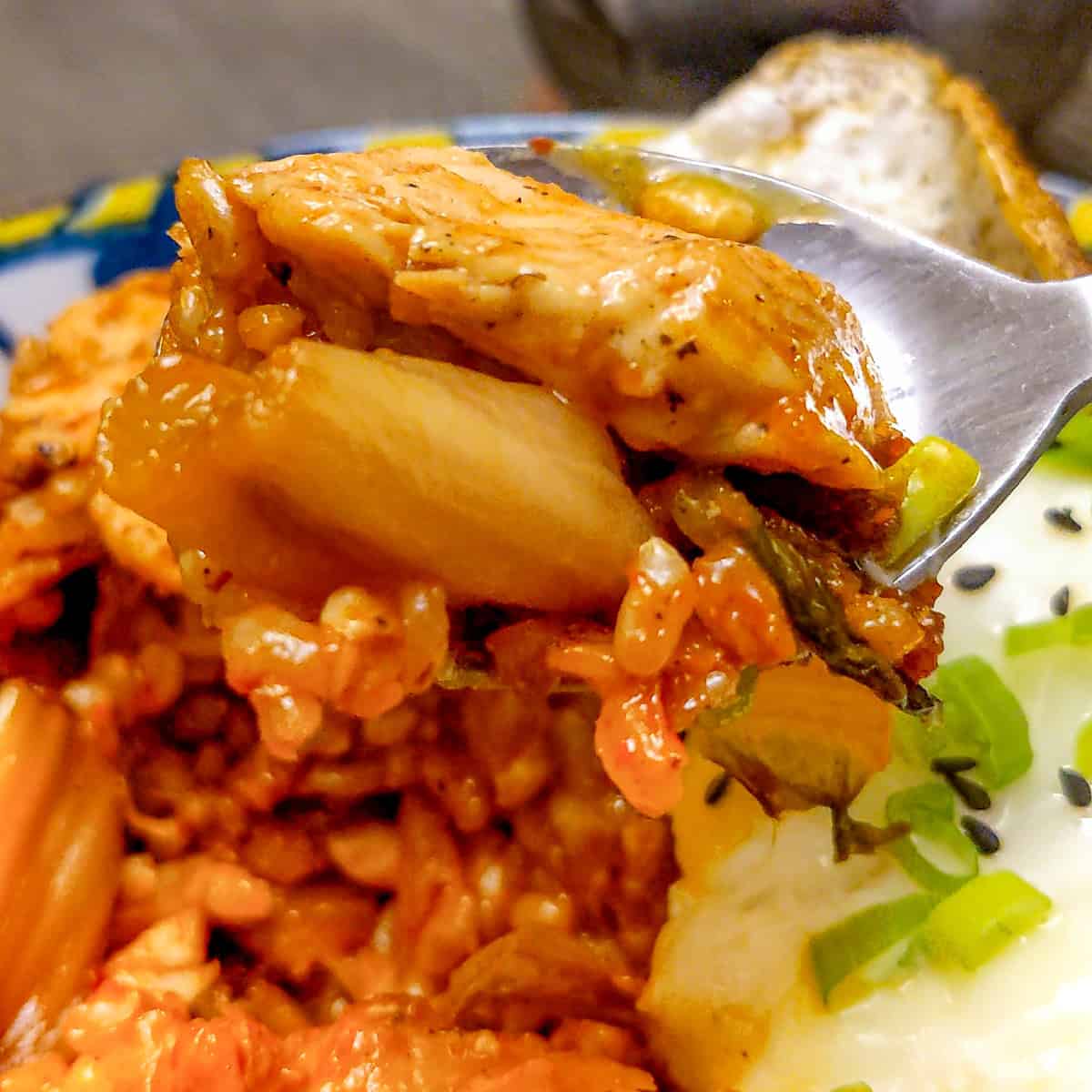
Kimchi Fried Rice Recipe: Stir-fry onion, scallion whites, and chopped kimchi in oil. Add cold rice, then season with soy sauce, kimchi juice, sugar, and gochujang. Finish with sesame oil and top with a fried egg and scallions. Ready in about 10 minutes.
📖 Recipe

Kimchi Fried Rice Recipe - Simple Base You Can Build On
Ingredients
Rice
- 1 tablespoon neutral oil canola, avocado, or vegetable oil
- 2 cups cooked rice preferably day-old brown sushi rice or any short-grain cold rice
Aromatics
- 1 cup well-fermented kimchi large chopped
- 3 tablespoons kimchi juice juice from the kimchi
- ½ small onion finely chopped for ground meat or sliced for sliced meat
- 1 scallion chopped (green parts reserved for garnish)
Seasoning
- 1 teaspoon low-sodium soy sauce for gluten-free, search for gluten-free soy sauce
- 1 teaspoon brown sugar or Korean Corn Syrup, balances the acidity of the kimchi)
- 1 tablespoon gochujang paste a Korean chili paste and/or 1 teaspoon gochugaru, a korean chili powder (optional, for extra heat)
Topping
- 2 large eggs
- 1 tablespoon toasted sesame oil
- 1 teaspoon sesame seeds
Equipment
- Large Skillet or Wok
- Silicone Spatula or wooden spoon
- Small Bowl optional
Instructions
- Save Time in the Kitchen: Read the instructions thoroughly, then gather and prep all your ingredients before cooking! Learn Prepping Tips.
- Heat Oil: In a large skillet or wok over medium-high heat, add neutral oil.
- Adding Protein? Sauté and cook the thinly sliced or ground meat. Then, remove and set aside.
- Sauté Aromatics: Add the onion and the white parts of the scallion. Cook 1-2 minutes until fragrant.
- Add Kimchi: Stir in the chopped kimchi and cook for 2-3 minutes, until softened and slightly caramelized.
- Add Rice: Break up clumps of cold rice and stir-fry until evenly coated and heated through (about 3-4 minutes).
- Adding Cooked Protein? Add your cooked protein.
- Season: Mix in gochujang, soy sauce, sugar, and a splash of kimchi juice. Stir until well combined.
- Adding Eggs: Scrambled Eggs? Push the rice aside to create a hole in the middle. Crack and add the eggs (1 per serving). Using your spatula or wooden spoon, stir the rice until it scrambles. Once scrambled, remove the pan from the heat, drizzle some toasted sesame oil, and combine everything with the rice.Adding Fried Eggs? Plate up the kimchi fried rice. Add oil to the hot pan, and fry each egg to your desired doneness (e.g., easy over, crisped bottom, etc.). Top the rice dish with the egg. Drizzle the toasted sesame oil
- Finish the Dish: Garnish with chopped green scallions and sesame seeds.
Notes
- Tofu: pan-fry cubed firm tofu until golden for a vegetarian option.
- Pork Belly: crisp in the pan first, then add kimchi to build flavor.
- Ground Meat: ground beef, turkey, or chicken works well
- Chicken: use rotisserie chicken or sauté bite-size pieces.
- Beef: use thinly sliced prime rib or small chunks of steak bites.
- Spam or Ham: a classic Korean addition for salty richness.
- Shrimp: cooks fast; add after the aromatics and stir-fry until pink.
Nutrition


Chef Maika Frederic-Liebman
Chef and Educator
Professionally trained Haitian-American chef Maika Frederic is the creator of Just Maika Cooking, where she shares globally inspired recipes, cooking techniques, ingredient guides, and food safety tips designed to help home cooks become more creative and confident in the kitchen. Combining years of professional culinary experience with a passion for teaching, she makes global flavors approachable through practical, accessible instruction for cooks of every skill level.
SUBSCRIBE: 👈To my YouTube Channel to Get Notifications of New Videos.
Have a Comment or Question?
If you have a question or comment about this post, please post it below. You will definitely get a quick response. It also helps our other readers to stay informed. Thanks!

Leave a Reply