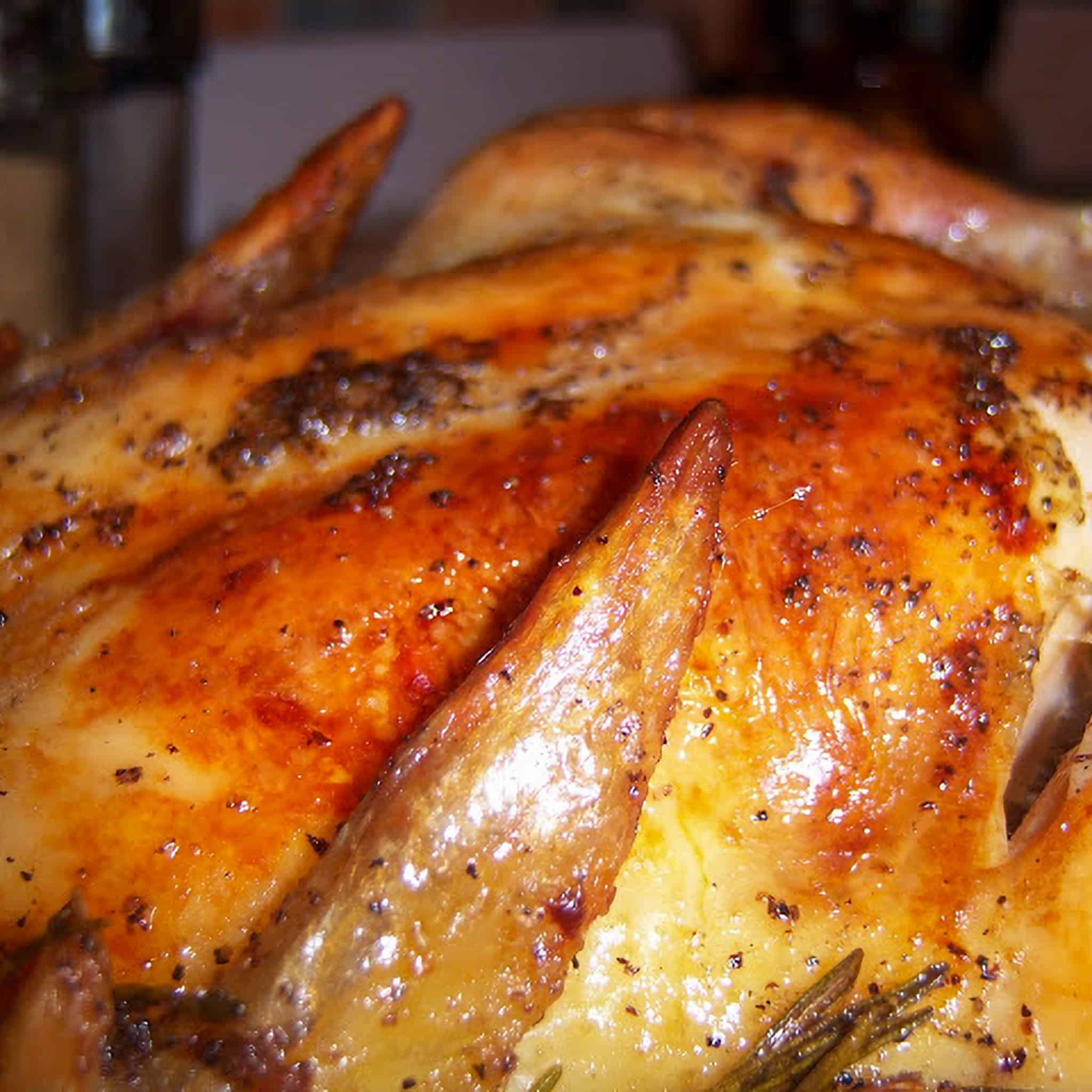
Rosemary Garlic Roasted Chicken with Pan Gravy
A whole chicken seasoned with fresh rosemary, garlic, butter, salt, and black pepper, then oven-roasted over aromatic vegetables until juicy with crispy golden-brown skin. Finish the flavorful pan drippings with chicken stock and shallots to make an easy homemade pan gravy.
Servings 6 Servings
Calories: 393kcal
Ingredients
Rosemary Garlic Roasted Chicken
- 1 whole chicken 3 to 4 pounds
- 1 head garlic halved horizontally
- 4 fresh rosemary sprigs
- 2 tablespoons unsalted butter softened
- 1 teaspoon kosher salt plus more as needed
- ½ teaspoon freshly ground black pepper plus more as needed
- 2 medium carrots cut into 1½-inch pieces
- 2 celery stalks cut into 1½-inch pieces
- 1 medium onion cut into 1½-inch pieces
- 1 tablespoon olive oil
Pan Gravy
- 2 tablespoons reserved fat and pan drippings
- 1 small shallot minced
- 2 cups chicken stock preferably unsalted or reduced-sodium
- 2 tablespoons cornstarch
- 2 tablespoons cold water
- 1 teaspoon chopped fresh rosemary or thyme optional
- Kosher salt and black pepper to taste
Equipment
Instructions
- Save Time in the Kitchen: Read the instructions thoroughly, then gather and prep all your ingredients before cooking! Learn Prepping Tips.
Prepare the Chicken
- Preheat the oven: Heat the oven to 425 °F.
- Dry the chicken: Remove the chicken from its packaging and remove any giblets from the cavity. Pat the chicken thoroughly dry with paper towels.
- Add the garlic and rosemary: Rub the cut sides of the garlic over the outside of the chicken. Place the garlic halves and 2 rosemary sprigs inside the chicken cavity. Tuck the remaining rosemary around the chicken.
- Butter and season: Rub the softened butter over the entire outside of the chicken. Season the chicken, including the cavity, with salt and black pepper.
- Prepare the roasting pan: Place the chicken breast side up in the roasting pan. Arrange the carrots, celery, and onion around the chicken. Toss the vegetables lightly with olive oil and season as desired. Tuck the wing tips underneath the chicken to help prevent them from burning.
Roast the Chicken
- Start at high heat: Roast the chicken at 425 °F for 20 to 25 minutes to begin browning the skin.
- Reduce the temperature: Lower the oven temperature to 350°F and continue roasting for approximately 40 to 50 minutes, depending on the size of the chicken.
- Check for doneness: Insert an instant-read thermometer into the thickest part of the breast and the innermost portion of the thigh without touching bone. Continue cooking until the chicken reaches a safe internal temperature of 165 °F.
- Rest: Transfer the chicken to a serving platter and loosely tent with aluminum foil. Rest for 15 minutes before carving. Prepare the gravy while the chicken rests.
Make the Pan Gravy
- Reserve the drippings: Carefully skim excess fat from the roasting pan, leaving approximately 2 tablespoons of fat and the flavorful pan drippings.
- Cook the shallot: Place the roasting pan over appropriate stovetop heat, if your pan is stovetop-safe, or transfer the drippings to a medium saucepan. Add the minced shallot and cook until softened and aromatic.
- Add the stock: Pour in the chicken stock and scrape up any browned bits from the bottom of the pan. Bring to a gentle simmer.
- Make the slurry: Whisk the cornstarch and cold water together in a small bowl until smooth.
- Thicken the gravy: Gradually whisk the slurry into the simmering pan juices. Cook until the gravy reaches your desired consistency.
- Finish and serve: Remove from the heat. Stir in fresh rosemary or thyme, if using. Taste and adjust with salt and black pepper. Carve the rested chicken and serve with the roasted vegetables and pan gravy.
Notes
Recipe Inspiration: This recipe was originally inspired by classic roasting techniques I studied in Julia Child's Mastering the Art of French Cooking and The Escoffier Cookbook. I first cooked and documented my version on my original food blog on July 9, 2007, and have updated the instructions to reflect what I've learned since.
Side Suggestion: Cheesy Au Gratin Potatoes with Sharp Cheddar and Nutmeg.
Don't Rely on Time Alone: Whole chickens vary in size, and ovens cook differently. Use the cooking time as a guide and an instant-read thermometer to determine doneness.
For Crispy Skin: Pat the chicken thoroughly dry before adding the butter and seasonings. Excess surface moisture can interfere with browning.
No Constant Basting Needed: My original 2007 recipe called for basting the chicken every 10 minutes. I skip that step today so the oven door stays closed and the skin has a better opportunity to remain crisp.
Chicken Stock: Unsalted or reduced-sodium chicken stock gives you better control over the final gravy because the seasoned pan drippings already contribute salt.
Optional White Wine: For additional flavor, deglaze the roasting pan with a splash of dry white wine before adding the chicken stock. Let the wine reduce before proceeding with the gravy.
Storage: Remove leftover chicken from the bones and refrigerate in an airtight container for 3 to 4 days. Store the gravy separately when possible.
Freezing: Portion the cooled chicken into freezer-safe containers. Freeze the gravy separately for easier reheating.
Reheating: Reheat the chicken gently with a small amount of chicken stock or gravy to help prevent the meat from drying out.
Leftover Chicken: Use leftover roasted chicken for chicken salad, sandwiches, wraps, soups, grain bowls, or quick weeknight meals.
Nutrition
Calories: 393kcal | Carbohydrates: 11g | Protein: 27g | Fat: 26g | Saturated Fat: 8g | Polyunsaturated Fat: 5g | Monounsaturated Fat: 11g | Trans Fat: 0.3g | Cholesterol: 108mg | Sodium: 609mg | Potassium: 460mg | Fiber: 1g | Sugar: 3g | Vitamin A: 3721IU | Vitamin C: 7mg | Calcium: 42mg | Iron: 2mg
Tried this recipe?Please Leave a Review!

