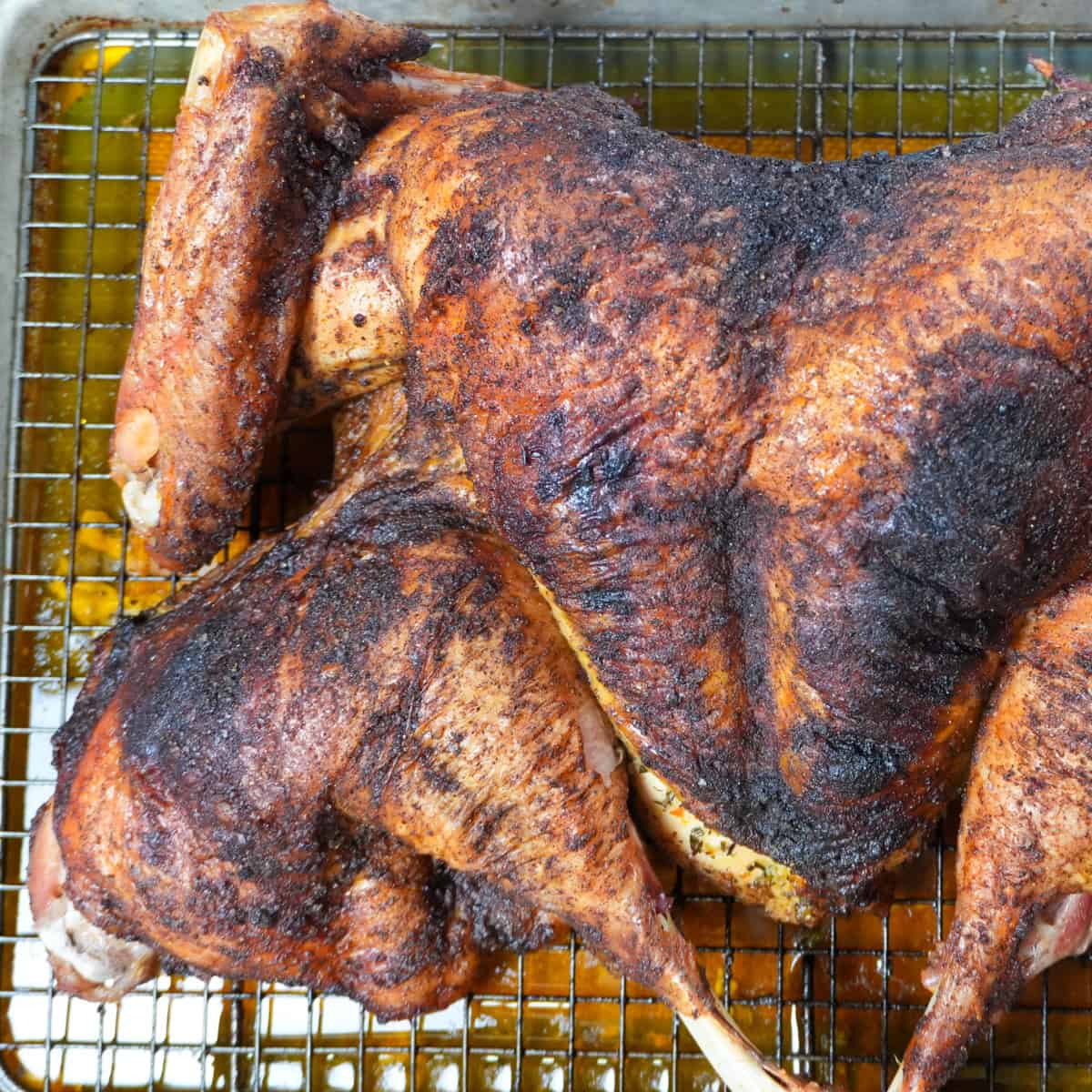
Haitian Style Creole Spatchcock Turkey (Seasoned with Epis)
This Haitian-style spatchcock turkey is seasoned with aromatic Haitian epis, garlic, citrus, and herbs, then roasted with a smoky Creole seasoning oil for beautifully browned skin and juicy, flavorful meat. Removing the backbone helps the turkey cook more evenly and faster than traditional whole roasting. Perfect for Thanksgiving, holiday gatherings, or a special family dinner.
Servings 12 servings
Calories: 376kcal
Ingredients
Turkey
- 1 whole turkey 12-14 pounds, fully thawed
Under the Skin: Haitian Epis Marinade
- ½ cup Haitian epis seasoning
- 4 cloves garlic minced
- 2 tablespoons fresh rosemary chopped (or 1 teaspoon dried)
- 2 tablespoons fresh thyme leaves or 6-8 whole sprigs
- 2 tablespoons olive oil
- 2 tablespoons unsalted butter softened
- ½ teaspoon ground black pepper
- 1 lemon juiced
- 1 orange juiced
- kosher salt to taste (taste the marinade or just add ½ to 1 tablespoon)
Over the Skin: Smoked Paprika and Creole Seasoning Oil
- 2 tablespoons olive oil
- 2 tablespoons Creole seasoning preferably salt-free
- 1 tablespoon smoked paprika
Equipment
- Kitchen Shears or Kitchen Knife
- Paper Towels for patting turkey dry
- Mixing Bowl small one to combine seasoning
- Probe Thermometer or Instant-Read Thermometer
Instructions
- Spatchcock the Turkey: Place the fully thawed turkey breast-side down on a large, sturdy cutting board. Using heavy-duty poultry shears, cut along both sides of the backbone to remove it completely. Turn the turkey breast-side up and press firmly on the breastbone until the turkey lies flat. Tuck the thin wing tips underneath the breasts to prevent burning. Save the backbone for making Spatchcock Turkey Backbone Gravy.
- Prepare the Turkey: Place the flattened turkey breast-side up on a large, heavy-duty rimmed sheet pan fitted with an oven-safe wire rack. Make sure the turkey fits entirely within the pan. Pat the skin thoroughly dry with paper towels to remove excess surface moisture.
- Make the Haitian Epis Marinade: In a mixing bowl, combine the Haitian epis, minced garlic, rosemary, thyme leaves (if using), 2 tablespoons olive oil, softened butter, black pepper, lemon juice, orange juice, and optional kosher salt. Mix until evenly combined into a seasoned paste. If using whole thyme sprigs, reserve them for the next step instead of mixing them into the marinade.
- Apply the Epis Marinade: Carefully loosen the skin over the turkey breasts and thighs without tearing it. Spread the epis marinade evenly underneath the skin and over the exposed meat on the underside of the turkey. If using whole thyme sprigs, tuck them into different areas underneath the skin, distributing them around the breasts and thighs. Remember to remove the woody stems before carving and serving.
- Marinate and Air-Dry the Turkey (Optional but Recommended): For deeper flavor and crispier skin, place the seasoned turkey on its wire rack over the rimmed sheet pan and refrigerate uncovered for 8-24 hours at 40°F (4°C) or below. Keep the turkey on the lowest refrigerator shelf, away from ready-to-eat foods, to prevent cross-contamination. This allows the epis marinade to flavor the meat while the refrigerator's circulating air helps dry the exterior skin.
- Preheat the Oven: Preheat the oven to 400°F (204°C). Position an oven rack in the lower-middle section, ensuring enough clearance for the turkey.
- Prepare the Smoked Paprika and Creole Seasoning Oil: In a small bowl, combine the remaining 2 tablespoons of olive oil, Creole seasoning, and smoked paprika. Mix thoroughly until the spices are evenly distributed. Just before roasting, brush a thin, even coating over the turkey's exterior skin.
- Roast the Turkey: Place the turkey breast-side up on its oven-safe wire rack inside the heavy-duty rimmed sheet pan. Roast at 400°F (204°C) without adding broth or water initially. Estimate approximately 7-10 minutes per pound, based on the turkey's original weight before removing the backbone. For a 12-14-pound turkey, allow approximately 1½-2½ hours, depending on its thickness and your oven.
- Rest the Turkey: Remove the turkey from the oven and carefully transfer it to a large cutting board or serving platter. Let it rest for 20 minutes before carving to reduce moisture loss. Reserve the pan drippings if making gravy separately.
- Carve and Serve: Separate the legs and thighs from the turkey. Remove each breast from the breastbone and slice the meat across the grain. Remove any whole thyme sprigs and woody stems before serving. Arrange the carved turkey on a serving platter and serve with your favorite Thanksgiving sides and Haitian Turkey Backbone Gravy, if desired.
Short on time? Skip the overnight refrigeration and roast the turkey the same day.
Keep the turkey refrigerated until ready to roast.
Avoid using too much oil or letting the seasoning pool; it should be a grainy paste.
Begin checking the internal temperature 20-30 minutes before the earliest estimated finishing time. Insert a probe thermometer into the thickest part of the breast without touching bone. Continue roasting until the thickest parts of both breasts and thighs reach at least 165°F (74°C). Monitor the pan drippings throughout roasting. If they begin to scorch, carefully add a few tablespoons of hot water to the sheet pan as needed, keeping the liquid below the rack. If excessive drippings accumulate, carefully remove some to prevent overflowing.
If the skin browns too quickly, loosely tent the darker areas with aluminum foil. Basting is not necessary.
Video
Notes
- Roasting Time: At 400°F, estimate approximately 7-10 minutes per pound using the turkey's original weight before removing the backbone. A 14-pound turkey may take approximately 1 hour 40 minutes to 2 hours 20 minutes. These are planning estimates, not guaranteed cooking times. Always use a thermometer to confirm doneness.
- Overnight Marinating: For deeper flavor, season the turkey underneath the skin and refrigerate uncovered for 8-24 hours. This helps dry the skin for better browning. Same-day roasting also works.
- Salt Adjustment: Check the turkey packaging for an added salt solution and check whether your epis and Creole seasoning contain salt before adding kosher salt.
- Easy Thyme Shortcut: Instead of stripping tiny thyme leaves from their stems, tuck 6-8 whole fresh thyme sprigs underneath the skin in different areas of the turkey. Remove the woody stems before carving and serving.
- Smoked Paprika: The tablespoon of smoked paprika adds smoky flavor and a deep reddish-golden color. Watch the skin closely during roasting because the spices can darken at 400°F.
- Crispier Skin: Keep the epis marinade underneath the skin and apply the exterior smoked paprika oil just before roasting. Avoid frequent basting.
- No Roasting Pan Needed: A sturdy rimmed sheet pan with an oven-safe wire rack works well, as long as the flattened turkey fits completely inside and the pan can safely collect the drippings.
- No Added Broth: Start roasting without additional liquid. Add small amounts of hot water only if the drippings start to scorch.
- Save the Backbone: Refrigerate or freeze the backbone for homemade turkey stock or Spatchcock Turkey Backbone Gravy.
- Food Safety: Cook the turkey to at least 165°F in the thickest parts of the breasts and thighs. Refrigerate leftovers within two hours.
Nutrition
Calories: 376kcal | Carbohydrates: 4g | Protein: 47g | Fat: 19g | Saturated Fat: 5g | Polyunsaturated Fat: 4g | Monounsaturated Fat: 8g | Trans Fat: 0.2g | Cholesterol: 160mg | Sodium: 242mg | Potassium: 558mg | Fiber: 1g | Sugar: 2g | Vitamin A: 905IU | Vitamin C: 13mg | Calcium: 41mg | Iron: 2mg
Tried this recipe?Please Leave a Review!

